
How to Make Dua: The Etiquette of Calling upon Allah
The etiquettes of dua are among the most beloved ways to approach Allah. This blog covers the ways you can unlock the power of your dua.
Authored by Roohi Tahir
Published: March 26, 2026 •Shawwal 7, 1447
Updated: April 8, 2026 •Shawwal 20, 1447
Read time: 9 min
Call on Me and I will answer you...”1
How many times have you read these words and thought, “Does this really apply to me?” The good thing is, it’s not about who you are; it’s about who He is.
The directive sounds simple, yet for so many of us, talking to God doesn’t come naturally—at least, not in the same way we open up to our closest friends, entrusting them with our innermost thoughts. With God, sometimes we just freeze, not knowing where to start. For many of us, an absence of dua is chalked up to not having learned how to pray as a child, to a forgotten habit, to inflated self-reliance or reliance upon others.2 For some, this void goes unnoticed. For others, it becomes painful—the pain of an unfulfilled or delayed response, pent up and misplaced anger toward God, low self-worth, or even guilt.
Why me? How can I approach God with my sins? I’m not worthy. It’s too late.
Our false perceptions can make us feel distant from God. But beneath that distance lies a deeper issue, one that affects all of us, even those who routinely make dua: We don’t truly know Him as He has taught us to know Him. And, in critical moments, we forget who He is.
Know the One you call out to
Allah is the One, the most Merciful, our Master. He is the most Generous, the most Forbearing, the perpetual Forgiver and Healer. While He is Almighty, He is also the most Just and Kind, the Seeing, the Hearing, and the All-Knowing, perfect in His wisdom and in His decree. To Him belong these and all of His perfect names.3 The more we reflect on His majesty, the more our reverence and love for Him strengthens and fortifies our hearts. We become mindful that we are His beloved servants, utterly dependent on and in need of Him. It is He alone who guides us and protects us; without Him we are unable to take the next breath or a single step in the right direction—toward gratitude, humility, and conviction that He alone answers.
ʿUmar ibn al-Khattab profoundly demonstrated his awareness of God and his understanding of the true essence of dua when he said, “I am not worried about whether my dua will be responded to, but rather I am worried about whether I will be able to make dua at all. So if I have been guided to make dua, then I know that the response will come with it.”4 These words exemplify ʿUmar’s complete submission to and trust in God, in His divine mercy, generosity, and wisdom. That trust gave rise to a deep certainty within him: that whatever outcome followed would be the best one, even if he himself could not yet perceive it.
Dua is about knowing God. It is an expression of gratitude for His guidance, the guidance that inspires within us both the desire and the ability to call upon Him. In this sense, the very act of making dua is itself among the greatest blessings bestowed upon us. Dua is a divine gift. It is an invitation from the One we seek, the One to whom we wish to be closest. Through it, we shed the weight and darkness within our hearts and lay our deepest concerns and pleas before Him, all while acknowledging that He knows us better than we know ourselves.
He wants to hear from you. He is always ready to listen and to respond, no matter how often or how long your call may be. It does not matter how distant you feel or how deficient you believe yourself to be. Your friends will eventually tire or fall short, but God is always accessible, always attentive, and always in control of the outcome. Even if the entire universe were to call upon Him simultaneously, it does not lessen His response to you in the slightest.
Dua is the key that unlocks the door to our purpose: to worship Him, to seek His pleasure, to draw near to Him, and ultimately to find contentment with His decree in all our affairs. The Prophet ﷺ captured the essence of dua when he said: “Supplication is worship itself.”5 We are reminded of this reality each time we recite the opening chapter of the Qur’an: “You alone we worship, and You alone we ask for help.”6
We cannot afford to take the blessings of guidance and dua for granted. For this reason, that reminder comes at least seventeen times each day in our prayers. One of the clearest signs of faith and trust in Allah is calling upon Him with certainty that He will respond.7 Your dua is your private and direct conversation with Him, unlike any other. There are no intermediaries, no delay in reaching Him, and no need for interpretation. He is your Protective Guardian who protects you at all times. He is the One in whom you place complete trust, without fear of betrayal. The Prophet ﷺ further motivated us by emphasizing the power of dua: “Nothing repels divine decree but supplication, and nothing increases lifespan but righteousness.”8



Unlock the power of your dua
More often than we would like to admit, our dua becomes just another ritual, a mechanical act to be checked off our list. In an age of constant distraction, where countless things compete for our attention, we rush through it inattentively, promising ourselves that we will be more present when we have more time. We’re often hasty, giving up when we don’t see instant results. Yet when it comes to worldly means, we rarely lack time, energy, focus, or patience. Think of a time when you desperately wanted something. How much effort did you put into preparing your approach to your parents, your boss, or that person in authority who could influence the outcome for you? Perhaps you wanted permission, a promotion, a vacation, or to be excused or forgiven. Whatever the case, you likely chose your words carefully. You thought about the right time and the right place. From childhood, we’ve been conditioned to ask politely, to show dutifulness to our parents, and to even plead, with the utmost respect and dignity, in the hope of receiving a favorable response. We instinctively understand that preparation and presence matter when the outcome is important to us.
Now imagine how you would prepare for a conversation with your Lord, the most Merciful and most Generous. No comparison does Him justice, for He is above every comparison. And yet, unlike any human authority, He does not grow weary, nor is He constrained by mood, timing, or limitation. Know that whenever you spontaneously call upon Him, He is too shy to turn you away empty-handed.9 Moreover, He Himself has taught us the most blessed and rewarded ways and means by which to supplicate to Him—the etiquettes that serve to unlock the power of your dua.
ʿAbdullah ibn Masʿud expressed his profound understanding of the etiquette with which to approach God when he said that the act of giving charity reaches God before it ever falls into the hand of the person in need.10 He was keenly aware that his charity was, in reality, an act of worship directed to his Lord. His statement demonstrates his wish to perfect his devotion, seeking His pleasure and hoping for its acceptance and reward. In the same way, we must strive to perfect all acts of worship, especially our dua, with the help of the recommended etiquettes taught by the Prophet ﷺ himself, beautifying it outwardly and inwardly for our Lord.
The etiquettes of dua are among the most beloved ways to approach God. They can be incorporated into our daily routines with intention, discipline, and consistency. Here are a few ways you can unlock the power of your dua:11
1. Be sincere
The foremost requirement of dua is sincerity, seeking from God alone. This internal dimension of worship, hidden from all but God, is a virtue we must diligently nurture in every action we put forth.
2. Be patient and attentive
The Prophet ﷺ also instructed us to not be hasty. He said: “Every one of you will have his supplications answered, as long as he is not impatient and says: ‘I have supplicated but I was not answered.’”12 Patience, therefore, is itself part of the etiquette. Remind yourself of whom you are calling upon, and that He always answers you. Set aside time, even if only a few moments, to remove distractions and focus on your dua, just as you would when speaking attentively to someone you deeply respect and love. This presence nurtures humility, devotion, and purpose, qualities that all emanate from the heart and must be nurtured with conscious effort.
3. Be in the right state
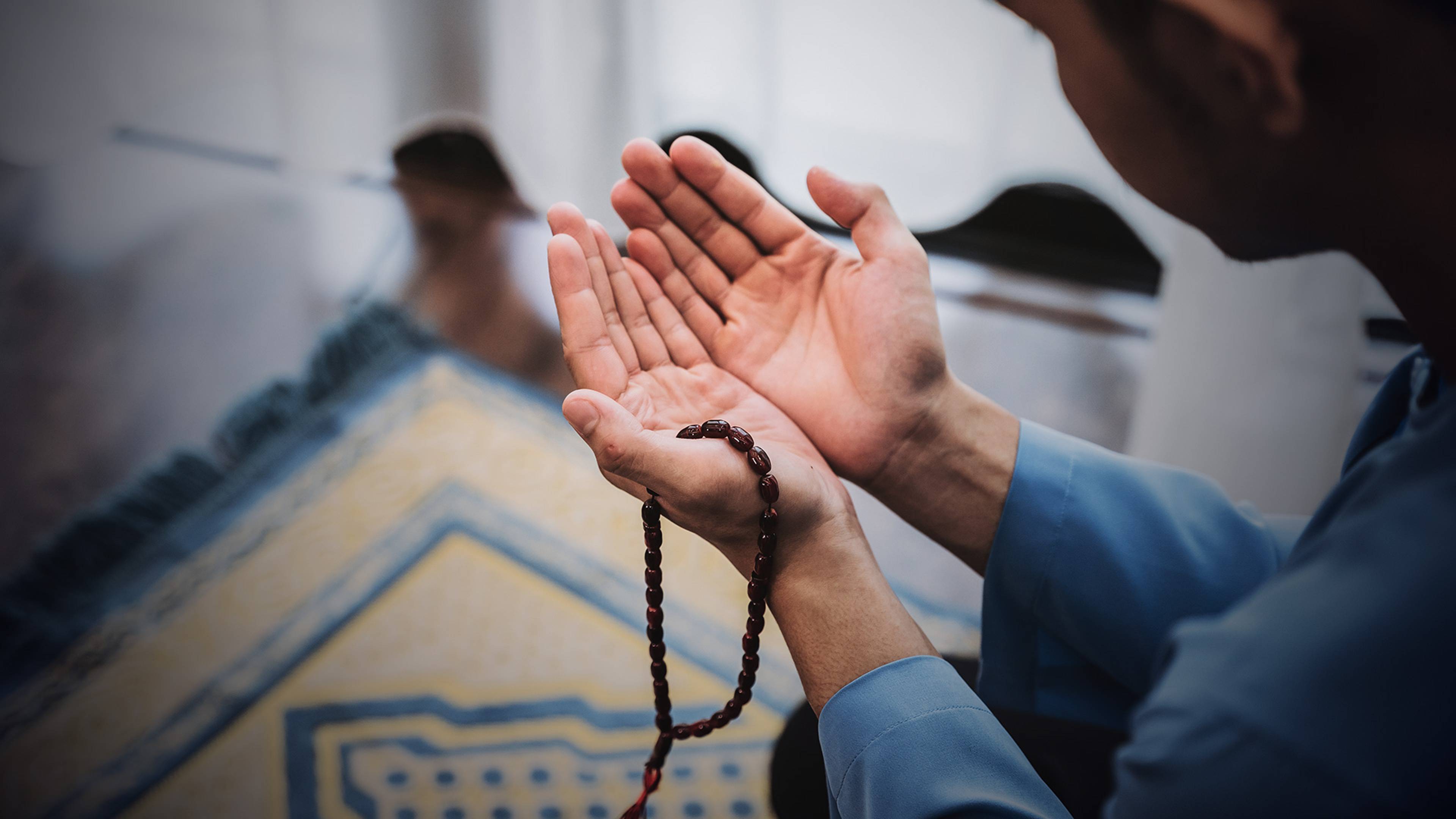
There are also outward etiquettes of dua, which include physical actions. It is recommended to be in a state of wuduʾ, to face the qibla (the direction of prayer), to raise one’s hands, and to verbalize your dua, following the example of the Prophet ﷺ. These etiquettes demonstrate reverence and excellence in your worship and in seeking the pleasure of your Lord. Although He is always aware of your deepest thoughts and intentions, and accepts even your unspoken dua, He loves to be called upon.
4. Praise God and His Messenger ﷺ
The most effective dua includes praise of God and sending salutations upon the Prophet ﷺ. One should ask only for what is permissible, avoiding the prohibitions of God. The Prophet ﷺ said: “There is no Muslim who calls upon Allah, [a call] within which is no sin or cutting family ties, but that Allah will give him one of three responses: He will quickly fulfill his supplication, He will store it for him in the hereafter, or He will divert from him an evil similar to it.” They said, “In that case, we will ask for more.” The Prophet ﷺ said, “Allah has even more.”13 The most comprehensive supplications are found in the Qur’an and in the teachings of the Prophet ﷺ, whose words eloquently and concisely demonstrate these etiquettes. He taught us to be humble in acknowledging our faults, to seek forgiveness, and to call upon God by His Beautiful Names.
5. Take advantage of optimal times
There are also specific blessed times, places, and circumstances in which dua is especially accepted. These include, but are not limited to, the last third of the night, Fridays, after performing wuduʾ, following the adhan, in prostration, in the final sitting of the formal prayer, on the Day of ʿArafa, and while fasting. The Prophet ﷺ cautioned us to “beware of the supplication of the oppressed, for there is no veil between it and Allah.”14 This is divine reassurance to every victim that you are heard, and you will be recompensed. No injustice goes unchecked, and no oppressor escapes accountability. Among the accepted supplications as well are the dua of the traveler, the parent for their child, and a person’s dua for another in their absence, along with many other Prophetic teachings that encompass dua for this world and the hereafter.
6. Look to the prophets
We are further inspired by the supplications of the noble prophets. There is the humble repentance of Adam, the persistence of Nuh, the desperate yet hopeful call of Yunus from the depths and darkness of the ocean, the soft whispers of Zakariyya, the submission and foresight of Ibrahim, and the Prophet’s profound love for his followers, reflected in his constant prayers for them. It was Musa who made a humble plea to his Lord in a moment of desperation, only for it to become the means to miraculous openings: “My Lord, I am in desperate need of whatever good You may send me.”15
God blessed him with divine guidance, a righteous family, prophethood over an enslaved nation, and eventual freedom from their tyrant ruler.
—
In the end, dua helps us to cultivate our relationship with Allah. It is the living expression of our knowledge of God, our trust in His wisdom, and our certainty in His mercy. When we understand who He is, as He has taught us to know Him, our supplication transforms from routine words into conscious worship. Through dua, we return to our Lord again and again, refining our hearts, realigning our purpose, and placing every affair into the care of the One who is always listening, always near, and always sufficient.
Discover the beauty of key duas from the Qur’an and Sunnah using our dua app Ameen.
References
1. ^
Qur’an 40:60.
2. ^
Dua is Arabic for supplication to God. It includes the remembrance of God, including praise and exaltation of God, as well as pleas to God for oneself or others.
3. ^
Qur’an 7:180. “The most excellent names belong to God: Use them to call on Him.”
4. ^
Ibn al-Qayyim, al-Fawāʾid (Dār ʿAṭāʾāt al-ʿIlm, 2019), 141.
5. ^
Sunan al-Tirmidhī, no. 3247, graded ṣaḥīḥ.
6. ^
Qur’an 1:5.
7. ^
The Messenger of Allah ﷺ said, “Call upon Allah with certainty that He will answer you. Know that Allah will not answer the supplication of an unmindful and distracted heart.” Sunan al-Tirmidhī, no. 3479, graded ḥasan by al-Albānī.
8. ^
Sunan al-Tirmidhī, no. 2139, graded ḥasan by al-Albānī.
9. ^
The Prophet ﷺ said, “Verily, Allah is dignified and generous. He would be shy when a man raises his hands to Him to turn them away empty and disappointed.” Sunan al-Tirmidhī, no. 3556, graded ṣaḥīḥ by al-Albānī.
10. ^
Al-Ṭabarānī, al-Muʿjam al-kabīr, 2nd ed. (Maktabat Ibn Taymiyya, n.d.), 9:109, no. 8571.
11. ^
For a comprehensive account of the etiquettes of making dua, see: Yasir Qadhi, Duʿā: The Weapon of the Believer (Al-Hidaayah, 2001).
12. ^
Ṣaḥīḥ al-Bukhārī, no. 6340; Ṣaḥīḥ Muslim, no. 2735.
13. ^
Musnad Aḥmad, no. 11133, graded jayyid by al-Arnaʾūṭ.
14. ^
Ṣaḥīḥ al-Bukhārī, no. 4347.
15. ^
Qur’an 28:24.





Senior Fellow
Roohi Tahir is a Research Fellow at Yaqeen Institute for Islamic Research. She has a bachelor’s degree with honors in computer engineering from Boston University and is a graduate of the BMAIS higher Bridge to Masters diploma and currently pursuing a master's degree in Islamic Studies from the International Open University. She is also the Founder and Instructor of Nourish Your Soul, a platform for Islamic education.
Disclaimer: The views, opinions, findings, and conclusions expressed in these papers and articles are strictly those of the authors. Furthermore, Yaqeen does not endorse any of the personal views of the authors on any platform. Our team is diverse on all fronts, allowing for constant, enriching dialogue that helps us produce high-quality research.
Want to appear on Yaqeen?