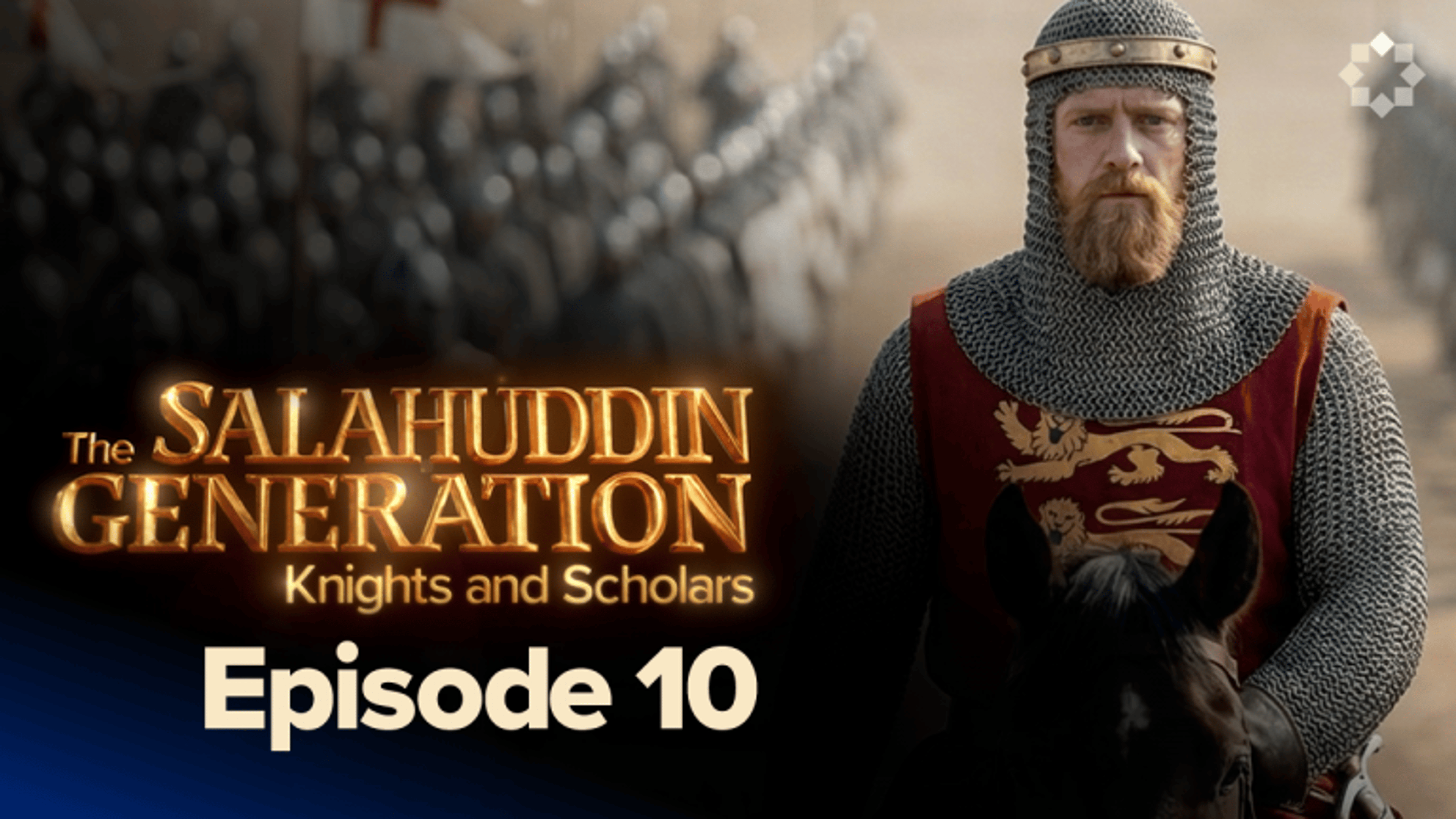
The Salahuddin Generation
The Rise of the Assassins | Ep. 1 | The Salahuddin Generation
Before Salahuddin could unite the Muslim world, earlier leaders had to address deep internal divisions.
When radical groups like the Qarmatians stole the Black Stone and extremist factions terrorized scholars, visionaries like Nizam al-Mulk responded by building institutions—the Nizamiyya schools—that would educate the generation of scholars who would guide leaders like Nur al-Din and Salahuddin.
This episode draws on leading historical works about Salahuddin and the revival that reshaped the Muslim world. If you’d like to explore the era more deeply, we recommend:
- How the Generation of Salahuddin Appeared — Dr. Majid Irsan Al-Kailani
- The Rare and Excellent History of Saladin — Ibn Shaddad
- Salahuddin al-Ayyubi — Dr. Ali Muhammad al-Sallabi
- Saladin: The Triumph of the Sunni Revival — A.R. Azzam
- For young readers: Saladin: Noble Prince of Islam — Diane Stanley
Sign up for exclusive updates on this series: https://yqn.io/59594c
This transcript was auto-generated using AI and may contain misspellings.
00:00Do you feel that we're living in the worst time in our Islamic history?
00:15This Ummah, we used to have a glorious past, we used to be so strong, look at us now, this is the worst point. Today we live in a different time ya akhi, we live in a time of betrayals and enemies
00:26that gather around us and the Ummah is not the same and we feel a sense of hopelessness. Is it so hard to return back to our glorious day? Do we think that we can even recover from our bitter reality?
00:41What if I told you that our Ummah has lived through times much darker than today? Welcome into the first episode of the generation of Salahuddin between knights and scholars.
00:55It is my pleasure and my honor to be here with you to share a story that changed me on a personal level, helped made me a better person, a story that made me hopeful for a
01:06better tomorrow for our Ummah, a story that I hope that will make you as well hopeful and give you a feel of izzah and honor no matter what happens around us. The story of the generation of Salahuddin Al-Ayyubi.
01:20We will see through this series that our Ummah was in a much worse position than it is today and that the Ummah recovered from this situation. How did a generation come from such a hopeless situation to raise the banner of Islam again
01:35and recover what the earlier generation lost? How did this state of izzah was born from a state of humiliation?
01:43Salahuddin was not by himself, he was a representative of a generation, a generation of knights, scholars, old people, young people, men, women.
01:55His generation was the generation that liberated Jerusalem. We don't need a superhero, one man by himself to do the work, but we do need an entire generation
02:06that knows how to work together, whom have one representative and bi-idhnillah this is the road forward. The story of the generation of Salahuddin is not a bedtime story intended to put our
02:19kids to sleep, it's a story for the Ummah, men and women, to wake up and rise to the occasion.
02:27To start our series today, we're not going to start with Salahuddin is born, because
02:51typically that's the way most people would start the story with, the birth of the hero and how his youth and what he did, that will not do justice to the story we want to share.
03:02As we said, the biggest challenge that Salahuddin is going to face is not the outside invaders, it is not the Crusaders, it's not the outside forces, it is the corruption that infested
03:13the Muslim Ummah, the corruption within that went all the way from the rulers to the scholars to the people as we'll see. And that was the biggest challenge that will face the generation of Salahuddin Al-Ayyubi.
03:25So let's go back in time and open a window before Salahuddin, how was the Muslim Ummah? At that time, the Khilafah was the Abbasid Khilafah. The Abbasid Khilafah once in its golden age, capital is Baghdad, ruled by people like Harun
03:39al-Rashid, powerful empire, the superpower of its time, Baghdad is a glamorous city, city of knowledge with libraries, public baths, order was established, unity, strength, power,
03:51it is the superpower, but one century before Salahuddin, Baghdad is no longer this way, the Abbasid Khilafah is now weak, the Khalifah is no longer controlling this entire region, the Khalifah's authority is only within his palace.
04:05When you look to what Ibn al-Jubayr and other people described Baghdad at the time, sectarian violence, gangs taking over the city, fighting each other, and it is said Baghdad was almost half destroyed.
04:17It is not the glamorous city it used to be, but it didn't stop there. On the political realm, something else happened, something else that was one of the biggest challenges that the Muslims faced in those times, and it was one of the biggest challenges
04:32as we'll see that the generation of Salahuddin had to deal with. A new sect appeared on the stage. This is not a political party, this is a new ideology, al-Ismaili sect.
04:46So who are the Ismailis, what happened? They picked a name, and their name that they picked was al-Fatimiyyin. And it's very interesting, why shouldn't we call them by this name? I mean that's what they named themselves, shouldn't we be speaking about al-Dawla al-Fatimiyya?
05:01You know, the Fatimi state if you will? And the reason is interesting, some scholars point out this and say they called themselves al-Fatimiyyin because they know all the people in this Ummah.
05:11We love the Prophet (ﷺ), we love Ahl al-Bayt, who doesn't love Fatimah, the daughter of the Prophet (ﷺ). So they wanted a title that makes them beloved to Muslims.
05:22We are al-Fatimiyyin, we're people that love the Prophet (ﷺ), and our lineage goes back to him, we're just renewing the message of the Prophet (ﷺ). So outwardly, that's what they portrayed.
05:35Inwardly, you can see the deception, the deviancy in their creed was so much. So scholars warned and advised not to call them with their name al-Dawla al-Fatimiyya.
05:45One other way to call them is what they called themselves with what they believed in. They identified as al-Ismailis, and that's their sect, that's their belief. So that's what we chose.
05:58So in this series, I will refer to them as the Ismailis, because that is a name they picked for their own creed. And that helps us focus that this is not just a political entity, it is a political entity
06:11with a different creed. The Ismaili creed is based on the following. They claimed that their first Imam, Ubaidullah al-Mahdi, is a descendant of the Prophet (ﷺ). They believe the Imam is the light of God.
06:24The Imam knows the unknown. The Imam knows the unseen. And some of them says the Imam is God himself. They gave their Imam such an authority that the Imam now is the walking Qur'an.
06:38And therefore, of their creed, you don't need the Qur'an. The Qur'an was for the Prophet (ﷺ) and the companions. But because you have the Imam, he is the one to tell you what the Qur'an means. He is the one that can legislate. So they started changing things.
06:52So if we pay zakah 2.5%, they change it. They made it 12.5%. When we pay zakah, zakah has to go to specific sources described in the Qur'an. They change that.
07:05Now it's 12.5% that goes to them, right? So once the Imam has that power, he has the power to legislate. Therefore, he can change salah, can change zakah. That is a threat. They added something else which was very deviant.
07:19They said the Qur'an, every verse in the Qur'an has an outward meaning and has an inward, a hidden meaning. A batin meaning. Batin means what? Hidden. That's one of the names of this sect. They call them al-batiniyyah.
07:32Those who believe in a hidden inward meaning. Every single verse in the Qur'an, there is a hidden message in it. And let the Imam tell you what's the hidden message. So whenever the Qur'an says the word al-malaika, angels. No, no, no, no. That's the outward meaning. What's the inward meaning?
07:47Angels, they are the people, the du'at of the Ismaili madhhab. People that preach the Ismaili madhhab. Those are the malaika. And you can imagine the amount of confusion and deviancy this will cause.
08:00And of course, outwardly, they said what? We are from the people of the household of the Prophet (ﷺ). We're here to reform Islam. We're here to bring things back. And they promised people prosperity.
08:11Now their Imam Ubaidullah al-Mahdi succeeded in going to Morocco. And people started to follow him. And he succeeded in overtaking North Africa. And North Africa fell under the Ismaili madhhab.
08:25When they took power, scholars described terrible things. Ubaidullah al-Mahdi one time got one of the scholars and told him, do you witness that I am a prophet of Allah? And that scholar told him, if you bring the sun on one hand and the moon on the other
08:38hand, I will not say that. And he ordered him to be killed. They banned Salat al-Tarawih. After Salat al-Isha, no public gatherings. Everybody should stay home, you know. So they established rules that were very, very strict.
08:50Al-adhan, they changed the adhan, the call of prayers. So they started changing things. Of the things they did is they would get animal heads. They would, you know, donkeys or cows, they would get the heads and they would hang the heads on the masajid.
09:05And under those heads, they would write down the names of the companions. Astaghfirullah. Abu Bakr and Umar and Uthman. And in their view, those companions are kuffar. Astaghfirullah.
09:15And they started cursing and insulting the companions in the masajid in public. It was a terrible time. Some of the scholars tried to rise against it. And they started realizing scholars are not needed because we have the Imam.
09:29Why do you need fiqh anymore? The Imam will tell you. So nobody should rule with the madhhab of Imam Malik. Madhhab of Imam Malik is banned. Anybody that rules with it will be tortured and killed.
09:41While they originated in North Africa, another group called al-Qaramitah started appearing in the city of Al-Bahrain. And those Qaramitah, they actually succeeded in taking al-Hijaz. They entered Mecca.
09:54Their leader, Abu Tahir al-Jannabi, he goes to the Kaaba and he sees people making tawaf. It is said he started killing the hujjaj around the Kaaba. Some say 30,000 were killed inside the haram by this man.
10:08While he's killing those people, he says, Ana Allah, I am God, me, astaghfirullah. And I'm by God. I create people and I choose to kill them. And after killing all those people, he looks and says, Ayna al-hijaratu min sijjil?
10:23Ayna al-tayru al-ababil? Mocking the Qur'an. When Abraha came to destroy the Kaaba, we know the story in the Qur'an. How Allah sent birds and, you know, that threw stones from hell. And he says, where? I don't see the birds. I don't see any stones falling from the sky.
10:37I am God. And he took the bodies of the people that he killed and threw them in the well of Zamzam. The black stone of the Kaaba. He took the black stone of the Kaaba, sent it to Al-Bahrain, his capital.
10:51The Kaaba stayed without the black stone for 22 years. But that movement of the Ismaili didn't stop there. They continued to move and eventually they succeeded in taking Egypt.
11:03Egypt is a big country, wealthy, full of resources. Egypt fell to the Ismaili movement. It is said that they were the ones, by the way, that founded the city of Cairo. The capital of Egypt today is Cairo. Cairo in Arabic is what?
11:17Al-Qahirah. What does it mean? From the word Al-Qahir. Al-Qahir is one of the names of Allah. Al-Qahir is the one that's irresistible. And the story of Cairo is the following. When they got Egypt, the Ismailis, the Dawla al-Ubaidiyya,
11:31they wanted to build a capital. And they said, we want to build a capital that's invincible, that will stay forever, nobody can overpower it. And it is said that they went to the astrologers. They believed, unfortunately, in astrology,
11:44which is, as we know, is completely against, we do not go to an astrologist to predict the future. They did. And the astrologist told them there is this star called Al-Qahir. We call it Al-Qahir, the irresistible. If you wait till that star appears
11:59and build your city in that location, it will be invincible and it will be irresistible. And that's how they built the city of Cairo. Now, this is not just a political movement. It's a political movement that has an ideology behind it.
12:14Once they took Egypt, they did two things. The first thing, which is extremely dangerous, they want to spread their ideology. See, it's not just taking different lands. No, no, no, no. It's about changing the ideology of people. So they established a school
12:27that was dedicated for the Ismaili madhhab. Al-Azhar University today is one of the biggest Sunni universities in the world. It was Salahuddin Al-Ayyubi and later of his generation that converted Al-Azhar from that Ismaili
12:41to the Sunni creed. But the Azhar was founded to spread the creed of the Ismailis. So now they're doing what? They're fighting on the ideological plane, which was a major threat to the Muslims.
12:54Eventually, the Ismailis started going to the cities of Sham and Sham fell to them. And it did not stop there. Their eyes went to Al-Hijaz, Mecca and Medina. Mecca and Medina, unfortunately,
13:07fell under the rule of the Ismailis. And it didn't even stop there. They wanted to spread more. And indeed, one of their followers, one person that was in Baghdad, the city of the Khilafah,
13:21his name is al-Basasiri, converted to the Ismaili madhhab and revolted in Baghdad. And he revolted and succeeded in taking power and actually removing the Abbasid Khalifah from power. And Baghdad fell under his control.
13:36And again, terrible things happened to the scholars and the wazir and people there. He did terrible things to them. And Ibn al-Athir says, this was almost a dark year that almost extinguished the light of Islam. And hope came in a new group,
13:49a group recent converts to Islam. They're not Arabs, they're the Seljuks. They're recent converts to Islam, but they are still fighting for the cause of Islam. They're still zealous. When they saw what happened in Baghdad, they came and they fought
14:03and they took the city of Baghdad back. And they succeeded in putting the Khalifah back in power. Now, the Seljuks, they were powerful at the time. They controlled the area, which is modern day Iran,
14:16modern day Central Asia, which was known as Khurasan, Turkey, Asia Minor, and they were still even fighting with the Byzantine Empire, but one of the greatest people, the seed of hope, if you will, the wazir of the Seljuk Empire,
14:31his name is Nizam al-Mulk. His efforts led to the appearance of Salahuddin later, because Nizam al-Mulk, he had a lot of goodness in him. He inclined so much to accompany righteous people, always listened to them, always listened and humbled himself
14:45in front of their admonishment. And they say he liked it so much when somebody pointed out something wrong he's doing, because it caused him to kind of be internally broken. And then he will humble himself and start crying and listening and changing himself.
15:00Modesty, humility was a characteristics of Nizam al-Mulk. And they say he was very patient, very clement, used to forgive with ease, used to pardon people, used to be very generous. Every day he would wake up, he'd start his day by doing what?
15:14Donating 100 dinars for the sake of Allah Subhanahu Wa Ta'ala. He used to give charity left and right. He used to be always in the state of wudu. If he breaks his wudu, he goes, renews his wudu, prays two rak'ah. If the adhan was called, he would stop whatever he's doing
15:28and make sure to go and pray on time. He used to fast on Mondays and Thursdays. He used to say that, you know, all what I wish for is a small place to rule and a masjid where I can worship. Then he said, and then I changed.
15:41All what I wanted, maybe a small village and just a masjid. And he says, now I completely changed. I just want a loaf of bread and a masjid where I can worship Allah in. But Nizam al-Mulk was not only a righteous figure in himself.
15:55He was a visionary. He saw that the problem of the Muslim Ummah is not just political. That the Ismaili movement is not a political foe. That the battle is not just on the battleground between two armies. The Muslims are confused.
16:08The creed of the Muslims are distorted. That true ilm is challenged. And there is an ideological movement by the Dawla al-Ismailiyya, right? Which they call themselves al-Fatimiyyin by the way, right?
16:20And he said to confront this, he decided to do something that changed the course of history. He started building schools. He said the way to reform the Muslim Ummah is not only the outward, it's the inward.
16:32And it starts with ilm, starts with education and knowledge. And therefore in every big city, Naisabur, Baghdad, all the big cities, even smaller cities, he would build great schools and make sure to surround them with endowments.
16:47And then would announce, anybody who wants to study, come, there is scholarship. The state will spend on you. Then he started inviting the top scholars of the time. Brought them, honored them, raised scholars up.
16:59You know, start teaching and start teaching people about Islam and start unifying people about what is Sunni Islam and reforming the creed. It's a big movement. Nizamiyyah school was such a unique organization.
17:10You go there, you study both the religious and the secular. You study both fiqh, hadith, you know, tazkiyat an-nafs. And also you study math and accounting.
17:20It was from the Nizamiyyah school that we have great people that will help Salahuddin later. People like Ibn Shaddad, the teacher of Salahuddin, the one that wrote his biography. As a matter of fact, even great scholars like Al-Hafidh Ibn Asakir himself,
17:34the greatest hadith scholar that lived in that century. One that founded the ilm of hadith in that century. The teacher of Nureddin Zinki and later the teacher of Salahuddin Al-Ayyubi came from the Nizamiyyah school.
17:47There was a righteous man living at the time. And he's poor, he has two children, Ahmad and Muhammad. And that man was, you know, sick at the end of his life. And he went to one of his friends and said,
17:59take my wealth, please take care of my kids, make sure that they learn. Make sure that they're righteous kids. He passed away. His friend took the kids and did his best being a righteous person. To raise them to be good Muslims. But he ran out of money. And he's poor.
18:13So he went to the kids and says, I can't spend on you. I don't know what to do. But there is only one solution in my head. What is it? He said, maybe you should go to the Nizamiyyah school. Those schools that are built by Nizam al-Mulk. Why?
18:27Not only you're going to learn, but they're going to spend on you. They're going to take care of all your needs. You know, so from one side you're learning Islam, but the other side is what? They'll suffice you. Right? And indeed, they go and start learning.
18:42One of those people, the young Muhammad, grows up to be one of the great scholars of Islam. This is Muhammad ibn Muhammad ibn Muhammad Al-Ghazali. Imam Al-Ghazali. That is his story.
18:56Imam Al-Ghazali was brought in this environment. Learned from the top scholars of the time. Imam Al-Juwayni and Al-Qushayri. Learned in the top school. Eventually, he was so bright, and he became the dean of the school of Nizamiyyah. Imam Al-Ghazali has very interesting stories.
19:11One of his stories that shows his sincerity. That he was traveling one time to gain knowledge. And in his travel, back in the time, you had to travel, go to a library if you want a book. You have to copy it yourself. There is no copier.
19:23So he copied all the books he need. And on the way back to his city, bandits, you know, raided his caravan. And the chief of the bandits came, and Imam Al-Ghazali was so concerned. No, no, no. Don't take my books. He tells the bandit.
19:38Don't take my, take everything else. Please don't take my books. This is my knowledge. I'm a scholar. It's of no benefit to you. Don't take it away. This is my knowledge. And the bandit looked at him, and he said, what kind of scholar are you? You call yourself a scholar?
19:52What knowledge is this, that a person like myself can take away? And then he gave him his books back. Imam Al-Ghazali, being who he is, looked at this situation and said, Hadha mustantiq. This is someone that Allah Subhanahu Wa Ta'ala made to say the truth.
20:06He's a bandit, but what he said is right. Imam Al-Ghazali decided from that day, every single book I know has to be what? In my memory. He memorized everything. Nobody can strip me again out of my knowledge.
20:20So he was known to be very articulate, very good in debates. And he took the top position in an Al-Nizamiyyah school, started teaching. SubhanAllah. And it's very important when we speak about a scholar, especially from a historical perspective,
20:32to understand the time in which he was born. As you can see, Imam Al-Ghazali was facing a very turbulent time. Born in a time where you had the Ismailis, and you had the philosophers, and you had people fighting,
20:44and he was born in such kind of a state. When he was in power, and in the Nizamiyyah school, one of the first thing Imam Al-Ghazali did, he was a very sincere person. And he was very articulate and very powerful. He studied thoroughly the Ismaili madhhab.
20:59Then he wrote a book, and he called it Fada'ih Al-Batiniyya. The Scandals of the Batini or the Ismaili Movement. In this book, in a very polite way, he illustrated to people all the falsehood of this madhhab, and why it doesn't make sense.
21:13And everything that they say, he was able to rebuttal. And clearly demonstrated to people that this is a false creed. And that book spread everywhere. And was used by the schools of Nizam al-Mulk
21:24to start now combating the Ismaili on the ideological plane. But he didn't stop there. There were some philosophers of the time that put philosophy above Islam kind of. And that you can reach Allah Subhanahu Wa Ta'ala through philosophy.
21:38He went to the philosophers, and he studied philosophy. He wrote another book called Tahafut Al-Falasifah. The Incoherence of the Philosophers. So Imam Al-Ghazali contributed what? Two books that fought the two ideological threats
21:53that were facing the Muslims at the time. Something else happened. Another deviant sect appeared. The Ismailis, again, split into two. A deviant sect of a deviant sect.
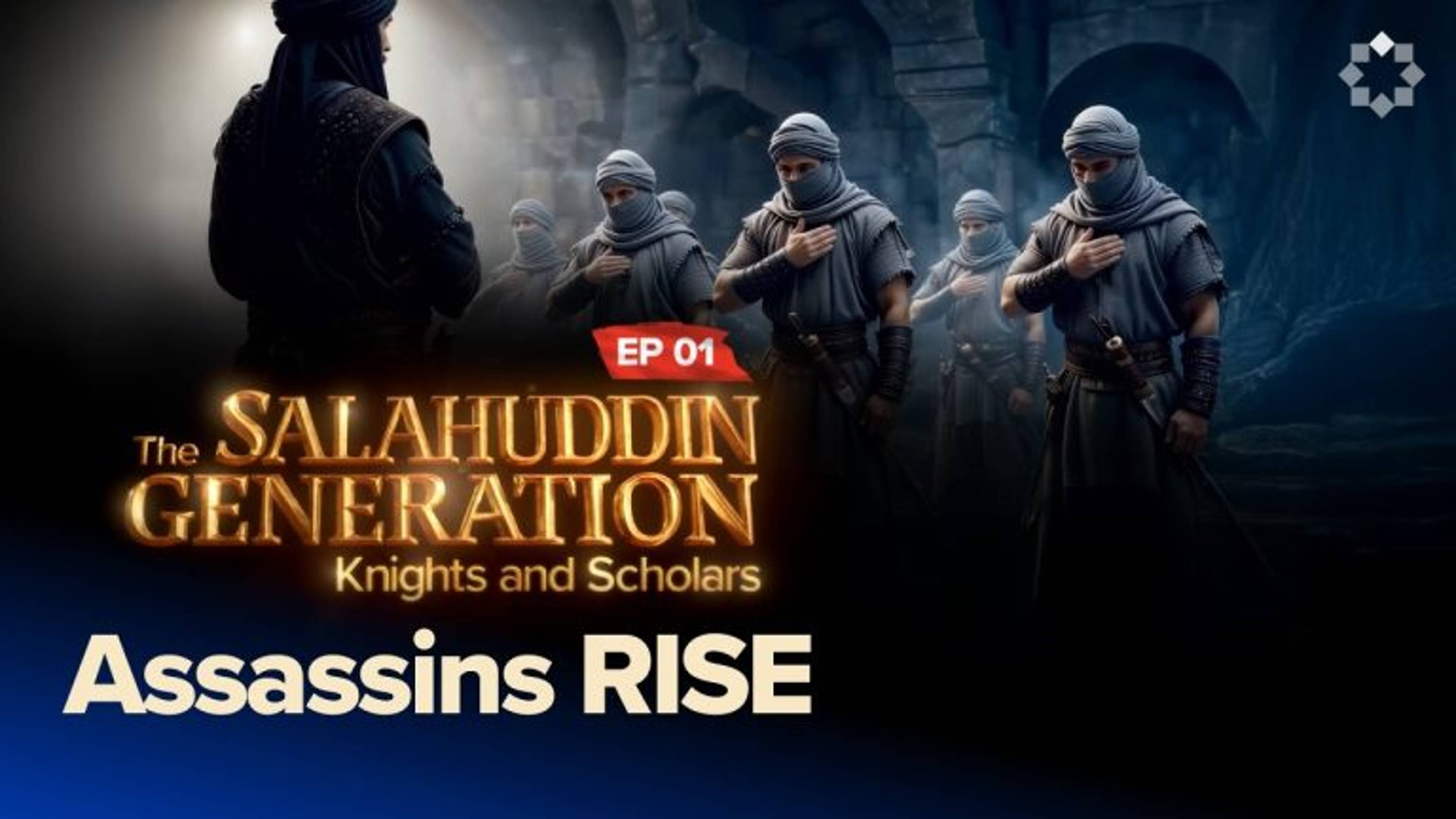
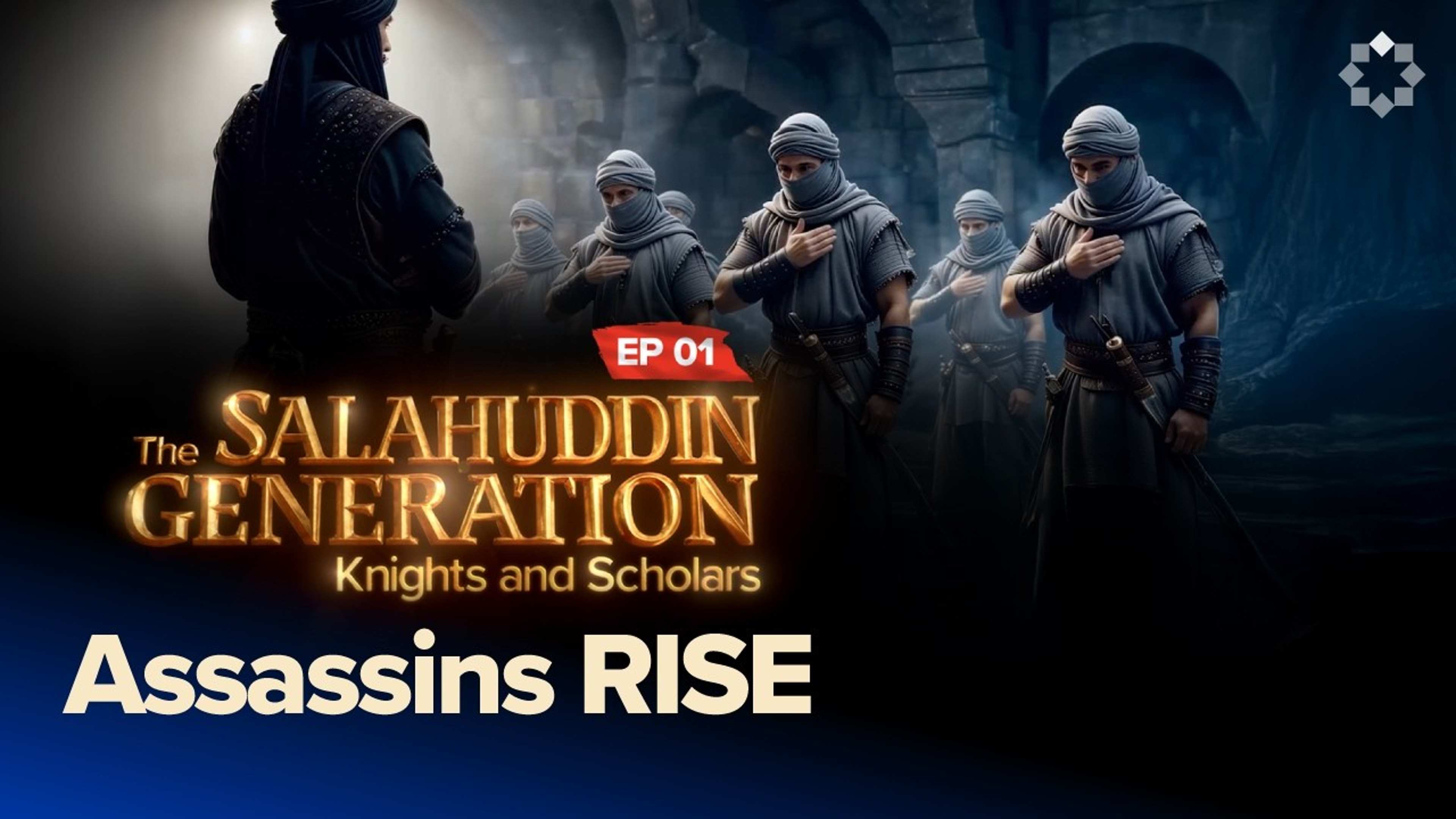
22:07This sect that appeared was one of the most dangerous sects of its time. One that will confront Salahuddin. One that up till today, people speak about. Video games even is present regarding that sect. That is the Assassins.
22:21The Assassins, it's a real sect that appeared in the time. Their founder, Al-Hasan ibn al-Sabbah, his name, right? Differed with the Ismailis in Egypt. Regarding who should be the Imam and some things regarding their faith. So he decided to do what?
22:35Make his own sub-sect. But he decided to follow a different way. His idea was instead of forming armies, big armies, by which he confront his opponents, he raised Assassins. Very loyal Assassins.
22:49Almost brainwashed Assassins. And he placed them everywhere. If anybody was to confront him, he would order the Assassins to kill him. But how did that play? Why was it very dangerous? First, let's see how he raised those Assassins.
23:03There is a lot of myth and a lot of sayings about the Assassins. They were so feared even by the Crusaders themselves, right? It is said that the way Al-Hasan ibn al-Sabbah did it, is he used to get young kids and they would start teaching them that this is Al-Hasan ibn al-Sabbah,
23:17this is your Imam, he knows everything. And they would use drugs. And this is, according to that view, the origin of the name. The Assassin, it's an English word. In Arabic, they call them Al-Hashashiyyin. From the word hashish.
23:32Hashish is like marijuana. And according to that story, that he used hashish and some drugs with the students. And then he would deprive them of that. And then when they need it, and you know, they feel the pain,
23:45and they would tell them, make du'a for Al-Hasan ibn al-Sabbah. And they would sit in their cellars and start making du'a sincerely. Then they would give them an overdose. And they would carry them into what was an artificial Jannah.
23:57According to this story, this man in his fort, Al-Mawt, right? Or Qal'at Al-Mawt, or the Eagle's Nest. He had a valley, and that valley, he built in it artificial rivers of milk, artificial rivers of honey,
24:10you know, flowers, trees, nice. And he would carry those men. They wake up and they find themselves in this place. What's going on? And they're very happy. And then they will give them another overdose. They carry them back to their cellar, right? And then they wake up and they tell them,
24:24see, you made du'a for Al-Hasan ibn al-Sabbah, you are in Jannah. In a way, he used drugs to convince people. In a very manipulative way of his authority and power. One way or the other, those, the people that Al-Hasan ibn al-Sabbah raised,
24:39were brainwashed. They would do anything for their leader. To the extent that even the Franks, the Crusaders, when they came later on, and they went for the Assassins to ask for their service, right? To demonstrate to the Franks their power,
24:52their leader went, and then he asked the Crusaders, do your followers really submit and follow you? And then the man said, yes. He said, okay, let me show you something. And then he looked to one of his followers on top of a mountain,
25:05and he pointed and told him, jump. And the man jumped and died. And then he looked to another man, jump. And the other man jumped and died. Then he looked to the Crusader and said, do your men follow you like my men follow me?
25:19So they had such an authority, people under them really believed in them. But the most dangerous part that they did is the following, is that they ordered their men to pretend to be other people and hide within different communities. What do I mean by that?
25:34So some of them would go pretend to be Christians and worship in a church. Some of them would go pretend to be a Shaykh and worship in a mosque. Some of them would pretend to be a merchant. Some of them will pretend to be soldiers, and they're spread everywhere.
25:46Nobody will know them. They'll spend years there. And if necessary, all what al-Hasan ibn al-Sabbah has to do is to order one of them to do what? Kill whomever he wants to kill. One of the most powerful weapons of the Assassins were not just their assassination.
26:01They made it a point that they will do it in public, especially Friday prayers. Why? Because they want to spread fear among the Muslims. They want to be feared. They want the hearts of the masses to be afraid from them.
26:13They wanted to spread among everybody their power, their strength, that everybody should watch what he's saying. How would they do that? At the time, there was no media, but they utilized something else. They utilized people.
26:26When they made their crimes in front of people, what did people do? People hurried, and everybody would speak. Everybody would tell his relatives, Did you see what happened today? Did you see what happened today? The news would spread.
26:38They used people to spread fear amongst themselves. There is a story, just to show you how serious the Assassins were. The Assassins faced Salahuddin Ayyubi. He had to deal with this sect.
26:51And it is said, when they attempted to do that, Salahuddin started fighting them. And they sent someone to negotiate with Salahuddin Ayyubi. So Salahuddin enters, and he has his personal guards, and the Assassin sits in front of him and tells him,
27:05I want to discuss with you privately, order your guards to go out. And Salahuddin refused. You know, like, no, this is an Assassin. He said, those are people I know, I trust them. You can speak in front of them, but I'm not going to let them go out of this place.
27:19And all of a sudden, this Assassin looked to the soldiers of Salahuddin, and he said, now. And the two soldiers of Salahuddin took off their swords, and pointed towards the neck of Salahuddin.
27:32They were Assassins pretending to be the soldiers of Salahuddin. So basically, the message was, what, see, you're under my grip. And the message was, if you do not stop attacking us,
27:43we'll kill you, or your family members, and all the leaders of your army. So al-Hasan ibn al-Sabbah used this method of, what, assassination. His Assassins were spread everywhere. And if you dare speak against them, or if you dare to move against them,
27:57he orders some of the Assassins to do what? Kill the head that's leading that effort. Now, who do you think was the first victim of this order of the Assassins, this deviant sect, al-Hashashiyyin?
28:11One day, Nizam al-Mulk, he's walking, and he goes and sees some righteous people. Like, every day, one of them comes close to him, and the guards are like, yeah, we know those people. And as Nizam al-Mulk starts to giving him some money,
28:24he grabs him from his belt, gets a poisonous dagger, and stabs Nizam al-Mulk. It was an Assassin pretending to be a righteous person with those poor people around Nizam al-Mulk.
28:35And of course, the guards were shocked, but it was too late. The last words of Nizam al-Mulk, he said, Ashhadu an la ilaha illallah, wa ashhadu anna Muhammadan rasool Allah. Afawt, afawt, afawt.
28:49He said, I pardon him, I pardon him, I pardon him. Of course, the guards did kill the man, the Assassin, right? But Nizam al-Mulk was one of the very first victims of this sect. When Nizam al-Mulk died, what happened?
29:02The Seljuk Empire after him split. And now we had the situation we described. The followers started splitting, and Baghdad was under one ruler, Sham divided, as we said before, into different states,
29:15and the area of Khurasan under another ruler, and Asia Minor, division happened. That was the state of the Muslims before the Crusaders appeared. When we hear such kind of horrific events, the question,
29:29are we that bad today? If I look at modern day reality and say it is so bad, well, we were in a worse spot before, and the Muslim Ummah recovered. If we recovered before, we can surely, surely recover today.
29:42Rest assured, wallahi, brothers and sisters, yes, modern day reality is bitter, but we still have a lot of goodness. We are much, much better than before, and we recovered before, as you'll see, which brings hope for us.
29:54If we can recover from this, we can recover from what we are in today, Inshallah.