Focal Point
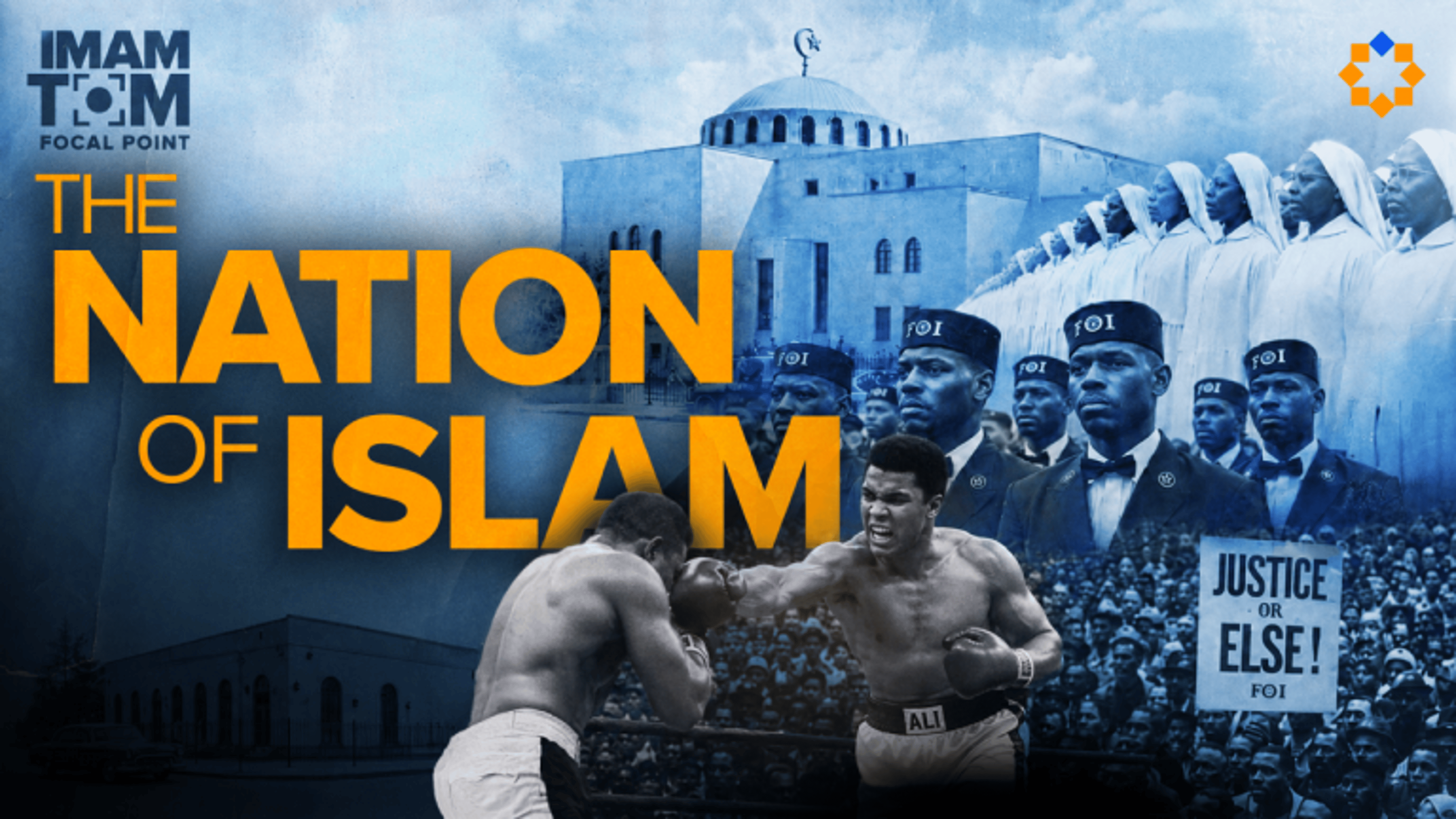
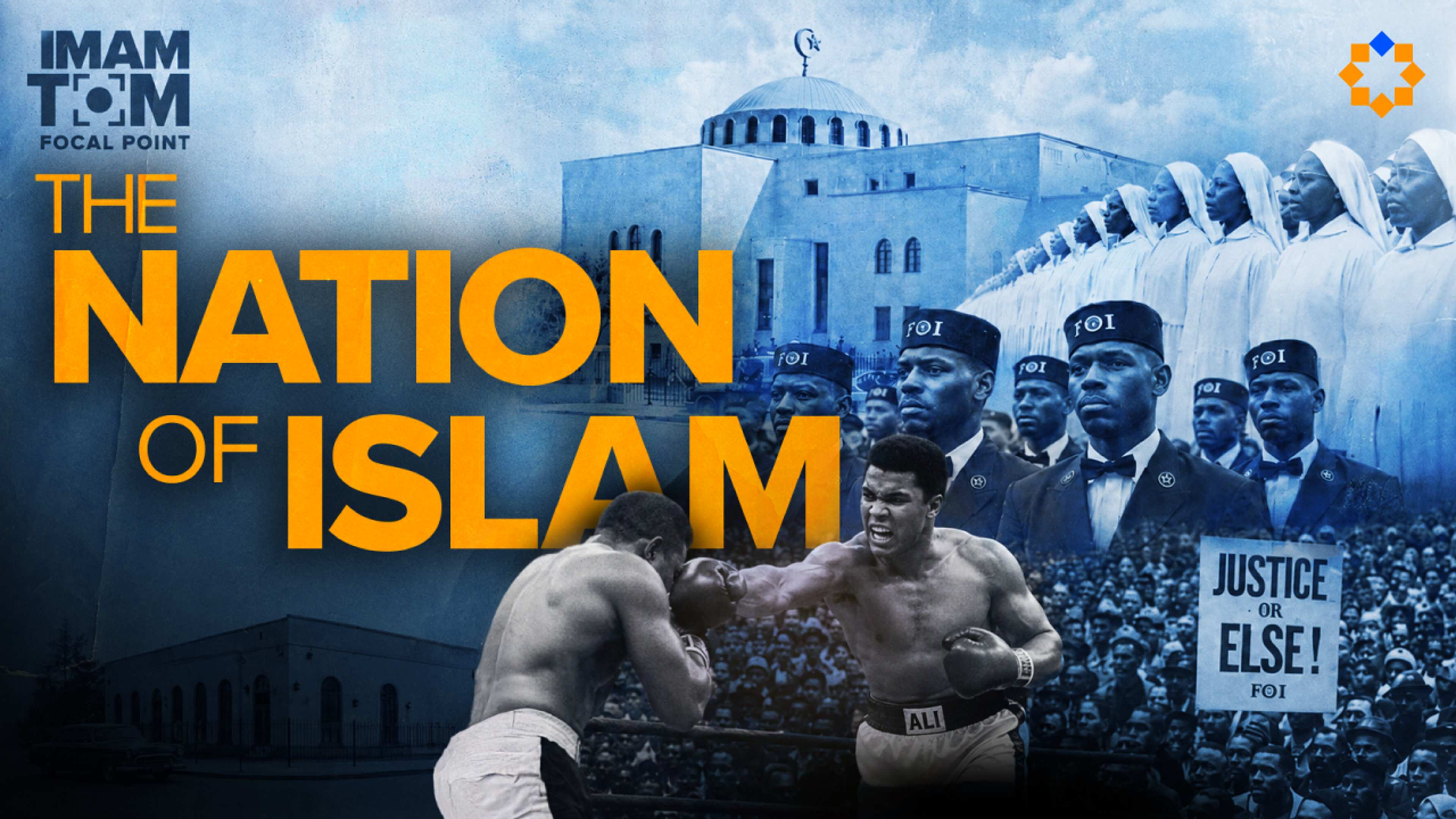
Why the Nation of Islam Terrified America | Focal Point with Imam Tom Facchine
What does it take for a minority community in the West to live with dignity?
In this episode of Focal Point, Imam Tom Facchine examines the Nation of Islam within the broader history of state surveillance and the struggle for communal self-determination in America.
The episode does not present the NOI as a model of orthodox Islam. Instead, it distinguishes its theological errors from the serious historical questions it raised: how communities build institutions, resist criminalization, protect dignity, and construct power on their own terms.
This transcript was auto-generated using AI and may contain misspellings.
00:00What does it actually take for a minority community in the West to live with dignity? Building something real, moral, economic, spiritual.
00:12Something that is an organic expression of our beliefs and our principles. For many Black Americans in the mid-20th century, integration produced a paradox. Access did expand, but power did not.
00:25Presence increased, but protection did not follow. Citizenship did exist on paper, but security remained out of reach. And when communities attempted to build something independent, when they tried to construct
00:36power rather than simply petition for it, they weren't merely ignored. They were surveilled, mischaracterized, criminalized and targeted. This episode is about one of the most serious historical responses to that condition, the
00:50Nation of Islam and the broader Black nationalist movement of the 1960s and 70s. But before we begin, we need to say something very important. Most of what you've heard about the Nation of Islam, whether from critics or admirers, it tells a very, very simplified story.
01:04It fixates on the NOI's racial theology, the separatist slogans, its most provocative rhetoric. And in doing so, it misses the actual history. Scholars like Sheikh Mohammed Jabir have argued that we need to resist these flattened narratives.
01:19The real history of Islam and Black nationalism in America is way more complex than that. And it's also more strategically sophisticated. And it's also more spiritually serious than the popular version allows, a version where
01:32Black Americans who were born as American Sunni Muslims are acknowledged and their stories are told outside of the Nation of Islam. But today we're going to be looking at what even the popular version of the Nation leaves out. Here's the first thing that you have to understand. Black nationalism was not a monolith.
01:47When people discuss Islam and Black nationalism in America, the conversation almost immediately collapses into the Nation of Islam, its theology, its leaders, the scandals. But this is a serious historical distortion.
02:00The NOI was the most visible expression of a much broader, contested, and diverse set of movements. Political scientist Melanie T. Price defines Black nationalism through four organizing commitments.
02:12One, the right of people to determine their own collective future. Two, the necessity of building independent economic, political, and intellectual institutions. Three, the importance of limiting dependence on systems that reinforce inferiority.
02:26And four, an internationalist consciousness that connects local struggle to global movements against oppression. These four commitments were shared across organizations that deeply disagreed on strategy,
02:37theology, and vision, whether it's the NAACP's integrationist wing, or SNCC, or CORE, or Pan-Africanist movements, and yes, also the Nation of Islam.
02:47To reduce all of this to the Nation is to miss how contested and alive this conversation actually was. And within the Nation of Islam itself, the picture is more complex than the headlines suggest.
02:59The organization faced serious internal theological challenges, including from Elijah Muhammad's own son, Akbar, who had studied at Al-Azhar and had returned to question his father's teachings. And he was actually banned from the NOI as a result.
03:12The tension between Black nationalist Islam and orthodox Sunni Islam was present from the beginning, not just at the 1975 transition. Holding this complexity is not an option for this story.
03:23It's actually the prerequisite for understanding what the history actually means. Now, to understand why Black nationalism took root when it did, you have to understand the world that it was responding to. After World War II, millions of Black families migrated north and west, chasing industrial
03:38employment. What they found was a different version of the same system, racially segregated housing enforced by federal policy, underfunded and overcrowded schools, chronic unemployment as wartime industries contracted.
03:52And in place of structural reform, all they got was intensified policing. And now civil rights legislation had been passed, but as Malcolm X observed in a speech at the London School of Economics just three weeks before he was assassinated in February
04:041965, the political victories of the civil rights movement had not resolved the material reality of Black urban life. He said in that speech, quote, it is the African revolution that produced the Black Muslim movement.
04:17It was the Black Muslim movement that pushed the civil rights movement, and it was the civil rights movement that pushed the liberals out into the open, where today they are exposed as people who have no more concern for the rights of dark-skinned humanity than they do for any other form of humanity.
04:31Now that is a striking claim, and it deserves to be taken seriously rather than dismissed. Malcolm X was arguing that the confrontational presence of the Black nationalist movements, their refusal to accept gradualism, their insistence on self-determination, that was
04:45precisely what created the political pressure that forced civil rights progress at all. Detroit auto worker and activist James Boggs observed that the NOI enjoyed the quote, support
04:56of the masses of Negroes, end quote, not primarily the middle class nor the educated professionals, but working-class Black Americans who experienced daily dispossession and found in the movement a response that spoke to their actual conditions.
05:10A single organizational detail captures this orientation precisely. The Muslim Girls Training and General Civilization Class that the NOI's internal women's development program had was held on Thursdays.
05:21Thursday was the traditional night off for domestic workers. This was not an accident. It was an organization that knew who its community was and it built around their lives. Now what distinguished the Nation of Islam from most political movements of the era was
05:35not its rhetoric, but rather its infrastructure. The NOI was building and it was building in real time. It wasn't simply caught in theorizing what Black autonomy might look like.
05:46It actually was busy constructing it at the local level that looked like barbershops and bakeries and restaurants and neighborhood businesses that all circulated money within the community.
05:57And at a larger scale that looked like farms and agricultural operations, meat packing facilities, clothing production, financial institutions, and even the Muhammad Speaks newspaper, which was one of the most widely distributed Black publications in the country.
06:11Internally, the Fruit of Islam provided male training and discipline and the Muslim Girls Training program developed women's capacities. The Universities of Islam created a parallel education system from primary school on upward. This was not just symbolic autonomy.
06:25It was material. The NOI created what scholars have called a moral economy. That's an economic system in which labor, consumption and reinvestment were understood as collective religious responsibilities rather than individual pursuits.
06:39Capital circulated internally. Employment was created for working-class members. Dependence on hostile or exploitative external systems was very intentionally reduced. There's a quote here by B.S. Jeffries.
06:51The Nation of Islam created a theology and practice of liberation that was fashioned in response to the Western interpretation of Christianity intermingled with white supremacist ideology by reclaiming control over religious doctrine.
07:02The NOI enabled Black Americans to exercise authority over their spiritual lives. Now, the membership figures, they tell a complex story. While the Nation of Islam claimed over 100,000 members, some scholars like Claude Clegg estimate
07:16that the active peak was closer to 20,000. With the FBI, they estimated as few as 5,000 full-fledged members in 1965. But the raw membership numbers misses the point entirely.
07:27The NOI's influence extended far, far beyond the card-carrying members through its businesses, through its newspaper, through the public presence, especially through Malcolm X, whose
07:36rhetorical reach went well beyond their membership to college campuses and major media nationwide. As researcher Garrett Felber argues, the Nation of Islam led the struggle against criminalization
07:47and policing well before the rise of the Black Power era, a contribution that has been systematically obscured in popular accounts of the civil rights movement. Most discussions of Islamophobia treat it as a post-9/11 phenomenon, but the architecture
08:01of Islamophobia in America has much deeper foundations, and the story of the Nation of Islam is where those foundations become visible. The process of delegitimization began with knowledge production, specifically how the
08:14Nation was defined by those who had the power to define. In 1938, the first academic study of the Nation of Islam was published under the title, quote, "The Voodoo Cult Among Negro Migrants in Detroit."
08:27This wasn't the work of an independent scholar operating in isolation. This was a Detroit professor and a Detroit police detective that were exchanging information with each other. And that actually very well captures the academic knowledge production and its relationship
08:41with law enforcement and surveillance, that they weren't parallel systems that were isolated from each other. They worked hand in hand and were integrated.
08:52The next major public turning point came in 1959 when NWTATV in New York broadcast a five-part documentary that was called "The Hate That Hate Produced." Its producers were Mike Wallace, who later became famous through "60 Minutes," and Louis Lomax.
09:06The documentary did not present the Nation of Islam as a religious or social movement. It positioned them as a hate group. They tried to make them seem like a Black version of the KKK, framing Black nationalist self-assertion itself as Black supremacism.
09:21Wallace himself later acknowledged that the documentary was the first time, quote, "that the Black Muslims came to the attention of white America." Within a month, Time Magazine ran a feature called, quote, "The Black Supremacists," end quote.
09:33quote, describing Elijah Muhammad as, quote, purveyor of cold black hatred. Malcolm X recalled the documentary, quote, was edited to increase the shock value, end
09:43quote, that it functioned less as journalism and more as a provocation designed to generate fear. And it worked. When it was established, it cascaded outwards. Journalists amplified it. Academics reinforced it.
09:56Law enforcement acted on it, using the, quote, fanatic Negro association characterization to justify surveillance and repression that would otherwise have required justification.
10:07Now, this is a type of epistemic violence, the power to define how a group is understood and therefore how it can be treated. It didn't require overt lies. It just required control over the categories, which religion counts as legitimate, which
10:20community counts as threatening and which political demand counts as reasonable and which as extremist. Garrett Felber, who we mentioned previously, he actually wrote a book entitled Those Who Know Don't Say. And his quote is pretty revealing.
10:35He says that those who say don't know and those who know don't say. The first half of this aphorism pertains to a set of journalists, scholars, and state officials who positioned themselves as experts on the Nation of Islam throughout the Cold War.
10:49Carceral officials in particular became producers of knowledge. They shaped public discourse about black nationalism and Islam while influencing local and national policy.
11:00The second half refers to Muslims in the Nation of Islam who engaged in an anti-colonial, anti-racist, and anti-carceral religious movement, despite the external labels assigned to them, but often remained strategically silent regarding their political engagement.
11:14That's found on page eight. So there's a recurring pattern that historian Garrett Felber calls the dialectics of discipline. As state control intensified, the internal discipline of the NOI intensified in response.
11:27Rather than fragment under pressure, the movement had to become more organized, more strategic, and more deliberate. And nowhere was this pattern more visible than in the prison system itself, as this is a part of the history that's almost completely absent from mainstream accounts of the civil
11:42rights era. Muslim inmates faced, and we still do, but they faced at those times targeted restrictions. They were denied access to the Qur'an. They were punished for praying.
11:53They were placed in solitary confinement, known at that time as the box, for observing religious practice. Prison officials monitored everything from food consumption. They specifically checked who was refusing pork in order to identify Muslims.
12:07One New York commissioner of corrections stated publicly, quote, we just can't allow a Muslim to parade around the prison yard, carrying a prayer rug and kneeling on it at least five times a day facing Mecca to say his prayers.
12:19We haven't got a mu'adhdhin in a minaret to call the faithful to prayers. That was Commissioner Paul McGinnis. He said that in 1960. The absurdity of the statement kind of speaks for itself.
12:29I mean, the prison commissioner is publicly stating that Muslim prayer is somehow a threat that would require institutional containment. But the Nation of Islam's response was not to fold or buckle or collapse.
12:41It was disciplined and it was collective, organized, and you can be sure it was resistant. Prisoners organized sit-ins and hunger strikes. They coordinated mass filings of legal challenges, what Felber calls writ writing campaigns,
12:53turning the courts into sites of contestation over what it meant to be a human being rather than property of the state. They even intentionally filled solitary confinement cells until the punishment lost its coercive effect.
13:06And then there's the moment at Folsom Prison in August 1962, and that deserves its own special attention. Twelve men were meeting in the prison yard when a guard approached and began taking photographs of the gathering.
13:19Now the guard expected to provoke a response, a disorderly response, maybe a confrontation, something he could report. But instead, as soon as the sergeant approached with his camera, one of the men said, they want to take our picture, so let's give them a good one.
13:34And another one said, face east and pray to Allah. And at that, the twelve men formed a line and they raised their hands and they prayed. Now what the guard received wasn't the image of disorder that he was going for.
13:45He actually received a photograph of twelve men in serene prayer facing Mecca inside a California state prison, all under surveillance and all unbowed. And that demonstrated the discipline of the movement.
13:57The state's response to Muslim prison organizing reveals something very important about how power tries to manage religion. When incarcerated Muslims requested access to the Qur'an, the full Arabic text, and correspondence
14:09with their own religious leaders such as Malcolm X, the state denied these requests. But it didn't deny all Islamic access. Instead, prison authorities picked and chose.
14:20They channeled prisoners towards the movement of their choosing, and that happened to be the Ahmadiyya movement. They provided the Qur'ans, but only English-speaking Qur'ans, translations.
14:32And they allowed correspondence, but only with Ahmadi religious leaders. Felber writes that this was, quote, an early precursor to the contemporary good Muslim bad Muslim dichotomy, end quote.
14:43The state's practice of distinguishing between Islam it found acceptable and the Islam that it found threatening, and then using institutional access and denial to reinforce that distinction is something that we're very, very familiar with today.
14:55So the pattern is more than just familiar, it's actually structural. In surveillance programs, CVE, government engagement frameworks, in the implicit pressure
15:05on Muslim community leaders to perform a particular kind of acceptability or respectability politics to condemn this group and condemn that group, all in exchange for access to power.
15:17And there is a final detail from this period that's almost unbearable in its directness. When Elijah Muhammad was imprisoned and he requested a copy of the Qur'an, that request was denied. And what he was told was, quote, that is what we put you in prison for.
15:31The Nation of Islam did not approach the legal system passively. They studied it. They learned its procedures and turned its own machinery against the state. This strategy, which Felber calls courtroom theater, reached one of its clearest expressions
15:45in a 1958 case in Queens, New York. The conflict began when two New York detectives who falsely identified themselves as FBI agents attempted to force their way into the home of John X. Mallette.
15:56The men of the household happened to be away at a meeting, and at the door came Yvonne Mallette and other women who refused the officers' entry and successfully warded off the police.
16:07Yvonne called her husband, and a little over an hour later, the detectives returned and tried to sneak in through the side entrance. Detective Kiernan fired a shot through the door. The shot that he fired nearly missed Yvonne.
16:20Inside, behind a locked door, there was a pregnant Betty Shabazz, Malcolm X's wife, and Minnie Simmons, who was bathing her four-month-old child, and they listened to police threaten to shoot through the door.
16:32Outside, John Mallette was beaten, kicked, and had his clothing torn from his body. And when the case came to trial, the Nation's response was very, very precise and organized. They brought their own stenographer to record the proceedings.
16:47That means their own record, independent of the official transcript. They carried dramatic physical evidence into the courtroom, a bullet-ridden green door and John Mallette's torn, bloodied clothing. The Fruit of Islam acted as ushers and guards. They controlled the corridors.
17:01They photographed everybody who entered. They documented the police, the witnesses, the officials, everybody. The NOI framed the case not merely as a criminal matter, but as a violation of black womanhood
17:12and religious sanctity, demanding that black women receive the same sanctity of home routinely extended to white women by the legal system. The strategy reached a new intensity in what became known as the Stokes Trial, following the most devastating incident of the period.
17:26On April 27, 1962, two LAPD officers stopped Monroe X. Jones and Fred X. Jingles outside Mosque No. 27 in L.A., claiming to suspect the clothing that they were unloading from a car might be stolen.
17:40An altercation drew other Muslims from the mosque. Officer Donald Weiss shot and killed Ronald Stokes, the mosque secretary, as Stokes walked towards him with his palms raised. Weiss later testified he thought Stokes was going to choke him.
17:55Another Muslim, William X. Rogers, was paralyzed. Several others were seriously wounded. During the subsequent lineup inside the mosque, officers reportedly told the men, We ought to shoot these. And you know what he said. It began with an N. We got them lined up.
18:09We ought to shoot them in the back and kill every one of them. We just killed some of your brothers out in front and we ought to kill you too.
18:23Here is the police department shooting up a house of prayers. When the trial began in 1963, the NOI transformed it into a public event. Members filled the courtroom daily. Men sold Muhammad Speaks newspapers in the courthouse corridors.
18:37Women organized and secured separate seating. And Malcolm X himself sat in the gallery with a camera, taking photographs of the officer who had killed Ronald Stokes. And he told the press, Quote, I'm taking pictures of a murderer. Think carefully about that moment and what it represented.
18:52The police, accustomed to being the ones who surveilled, who documented, who defined, were now on the other side of the camera. They were the ones being written about. They were the ones being documented and surveilled. They were being watched. They were having their names written down.
19:06The Nation of Islam, Felber observes, had appropriated the very tools of the surveillance state. Photography, stenography, courtroom security procedure. And it turned them back on the state itself. The watcher had become the watched.
19:19Malcolm X, whose real name is Al-Hajj Malik Shabazz, is the most well-known figure associated with this history and also the most consistently misunderstood. His biography is often told as a story of evolution
19:32from a street criminal to an NOI minister to an internationalist Muslim, as though each stage just completely replaced the previous one. But the trajectory is actually a lot more interesting than that. After time in Boston and New York, Malcolm X was arrested at 20 years old,
19:47convicted of robbery and sentenced to 10 years, of which he served approximately six and a half. In prison, he became a voracious reader and encountered the teachings of the Nation. Following his release in the early 1950s, he joined the organization and rose rapidly through its ranks,
20:01eventually becoming its most important spokesperson and organizer. His rhetorical gifts are still to this day unmatched. Literary techniques, humor, the kind of compressed logical clarity formed the foundation of his public speeches.
20:14By 1963, he was one of the most requested speakers on American college campuses, and his words were almost always covered by major media. The rupture with Elijah Muhammad came in 1963, when Malcolm was suspended for commenting publicly
20:29on the Kennedy assassination, which was in violation of the organization's directives. The real tensions, of course, were much deeper. Malcolm's growing stature as a voice for orthodox Sunni Islam, his relationships with international Muslim figures,
20:42and his recognition by the Muslim world threatened the NOI's campaign to establish Elijah Muhammad's own theological legitimacy. Malcolm left the Nation in 1964. He completed hajj,
20:53which dramatically reinforced his transition towards Sunni orthodoxy. He made two trips to Africa and founded the Organization of Afro-American Unity. He was assassinated soon after, on February 21st, 1965.
21:06Now here's the argument that Sheikh Mohammed Jaber makes, and it's one that the standard account of Malcolm's life almost entirely misses. The US government's deepest fear was not Malcolm X, the black nationalist. The black nationalist frame was paradoxically manageable.
21:21It confined the struggle to one racial community, and it could be characterized as separatism, as reverse racism, as domestic fringe concern. They've already got the prepackaged responses for how to deal with that. But what the state could not contain
21:35was Malcolm X, the universal Islamic voice. Once Malcolm's framework shifted from race-based nationalism towards a universal demand for justice grounded in Islam, once white Americans began seriously engaging
21:47with the spiritual and egalitarian dimensions of what he was saying, rather than dismissing him as just another black revolutionary, the entire dynamics of his movement threatened to change. Islam's insistence on the equality of all human beings, regardless of race, its international scope,
22:02its capacity to speak across racial lines, that was the real threat. A movement that could reach disparate groups across racial and ethnic boundaries, that was way more dangerous to the existing order than could box you in, pigeonhole you,
22:16put you and confine you within one community. The authorities, according to Sheikh Mohammed, needed Malcolm to remain a black nationalist because a universal Islamic leader of his stature was something they did not have any answer for
22:30or any framework to contain. This reframes the question of Islamophobia entirely. The repression was not simply about race. It was about suppressing the universal potential of Islam itself, the possibility that religion might serve as the basis
22:44for a cross-racial internationalist justice movement, a question that often goes unasked. Of all the frameworks available, Pan-Africanism, Marxism, secular black nationalism, various strands of Christianity, Islamic liberation theology,
22:58why did Islam become such a powerful language of liberation for black Americans in this period? The answer is much more than strategic or instrumental. For many black Americans, Christianity had been experienced through a white supremacist social order,
23:13a religion whose institutional forms had blessed slavery, justified segregation, and offered accommodation instead of resistance. The NOI's counter-theology directly addressed this. It argued that the religious framing that black Americans had been given
23:27was itself a tool of domination and that reclaiming theological authority was inseparable from reclaiming political and economic authority. Islam offered something different, a global community, an entire ummah in which blackness
23:41was not considered a deficit, a theological tradition that insisted on the equality of all human beings before Allah, Subhanahu wa Ta'ala, a civilization with its own intellectual heritage, its own history of scholarship and science and art
23:54untouched by the specific history of the American racial formation. Listen to how one member, James X, described this in Muhammad Speaks in December 1964. He said, Islam has raised my sights
24:07above attempting to seek equality in another people's society, and that has made me realize that I must try to help re-establish the society of my own. Islam has made me conscious of true freedom, justice, and equality.
24:20Through Islam, my efforts have been mobilized, stabilized, and directed toward the path that leads to peace and happiness while we live. The religion of Islam fills the void in my life by giving me black history, religion, and achievement.
24:35It makes one think creatively and completely on plans for fulfillment. With hope for the future, Islam has saved me from hell. What he's describing is not merely a change of belief. It's a reorientation of the entire self,
24:49where the eyes look, what is counted as possible, what your horizon, who one's people are, what kind of future we can even imagine. And there is a very profound Islamic dimension here. In the Islamic intellectual tradition,
25:03knowledge is not just information. It's actually transformation. It's supposed to be embodied. It's a true understanding of reality. It begins with a recognition of our relationship to Allah, subhanahu wa ta'ala, as the source of all existence.
25:16And that's supposed to change how we see absolutely everything. And it's supposed to also shape everything that we build, including how we organize our communities and what we even consider worth pursuing. The Moroccan philosopher Taha Abdurrahman, he puts it this way. Quote: So long as Muslim society
25:31does not find the way forward developing its own concepts or reformulating the concepts of others as if they were ab initio its own, there's no hope of escaping the intellectual perplexity that afflicts the minds of those within it.
25:44That can be found in his 2006 book, Ruh al-Hadatha. The Nation of Islam, for all of its problems, it intuited something very, very important here. It refused to simply adopt the Western framework and apply an Islamic veneer on top of it.
25:59It attempted, even if imperfectly and even with significant doctrinal errors, to build a world organized according to different principles entirely. The question it was asking was genuinely serious. What does it look like
26:13to organize economic life, social relations, education, political struggle from a foundation that's not actually borrowed from the dominant culture? And that question didn't die with the Nation. It still remains unanswered
26:26and it's still one of our most urgent questions. One of the most significant aspects of the Nation of Islam that popular accounts consistently understate is its internationalism. The NOI did not understand itself as a domestic minority. It understood itself
26:39as part of a global majority of people of color that were resisting white supremacy. In 1955, the Bandung Conference in Indonesia brought together 29 Asian and African nations, the first major gathering of the non-aligned movement against European colonialism.
26:54Malcolm X drew directly on this model. He called for a domestic Bandung Conference in Harlem. That would unite diverse Black organizations against the common enemy mirroring the global anti-colonial strategy. In 1959,
27:07Malcolm X traveled to the Middle East and Africa as an emissary for Elijah Muhammad. He met with Egyptian President Gamal Abdel Nasser and high-ranking officials in Saudi Arabia, as well as Sudan and Nigeria. The Amsterdam News described Elijah Muhammad during this period as quote,
27:21the internationally recognized spiritual head of the fastest growing Muslim group in the West. Even earlier, during World War II, the Nation of Islam had taken a position of remarkable defiance. It characterized the conflict as a white man's war,
27:35and it refused military service with members claiming to be registered with Allah rather than the U.S. military. According to Felber, the NOI constituted the largest group of Black men incarcerated for draft resistance as conscientious objectors.
27:49And there is something important in the wave of African independence movements of the 1950s— Ghana, Guinea, Senegal— for how the NOI understood its own moment. These were not distant events. They were in the NOI's eschatological framework, confirmation that the global order was shifting.
28:04The approaching end of white colonial rule was not wishful thinking. It was actually happening. It was happening continent by continent across the global South. As one recent convert reflected in 1956, quote: As Muslims,
28:17we do not feel that we are a minority of any kind. We know instead that we are part of the vast Muslim world. End quote. This is a theological and political reorientation of the deepest kind. You're not small. You're not an embattled minority
28:30in someone else's country. You are part of the majority of humanity. You are connected to a civilization that spans continents and centuries. The Nation of Islam's decline and transformation is usually told as a straightforward story. Elijah Muhammad died.
28:45His son, Warithuddin Muhammad, took over and he guided the movement towards orthodox Sunni Islam while Louis Farrakhan revived the earlier model. This is accurate as far as it goes, but it misses what the transition actually reveals. The tension between Black nationalist Islam
28:59and Sunni orthodoxy wasn't resolved in 1975. It had been going on for decades. Akbar Muhammad, Elijah's son, had studied at Al-Azhar. He returned with serious theological objections to his father's teachings and he was actually banned from the NOI
29:12in November of 1964. That's just months after Malcolm's assassination. Malcolm himself, after his Hajj, had been engaged in precisely the same theological critique. He argued that the NOI's racial doctrines were irreconcilable with the universal brotherhood
29:27that he had witnessed in Mecca. What Warithuddin Muhammad did in 1975 was accelerate and institutionalize a transition that had been in process for years. And it was a transition shaped by sustained engagement with the global Sunni Muslim community. Visitors from Egypt
29:41and the United Arab Emirates had come to the Muhammad household, if you will, even during Elijah's lifetime. The African-American Muslim community, including the NOI, also played a significant and often overlooked role in the integration of Muslim immigrants
29:55who arrived after the lifting of immigration restrictions in the 1960s. The Black Muslim community was, in many cases, the existing infrastructure into which immigrant Muslims entered. The schism that followed Warithuddin Muhammad's reforms
30:08with Farrakhan reconstituting the NOI under its original theological framework, that created kind of two trajectories that continue to the present. One moved towards alignment with global Sunni practice and what Jeffries calls, quote, conventional Islamic
30:23and American cultural acceptance. And the other preserved the Black nationalist theological orientation and the racial analysis at the cost of remaining theologically distinct from mainstream Islam. For our purposes, the lesson is this: the organizational decline
30:36of Black nationalist separatism did not resolve the question it was asking. The questions about communal dignity, economic self-determination, faith-based solidarity, and Muslim self-construction in America, these didn't go away. They're still very much open.
30:50We need to be theologically precise here because the episode's credibility depends on it. The Nation of Islam's racial theology, its foundational doctrines about racial identity, divine selection, and the origins of white people, none of those are orthodox Islam.
31:04Warithuddin Muhammad was right to dismantle these doctrines and Malcolm X was equally right to recognize their incompatibility with the universal Islam that he encountered at Mecca. But the NOI is not just a theological model.
31:16Here is what Imam Rashad Abdurrahman has described as social intelligence, and it matters for separating the theological critique from the strategic inheritance. Many of the goals that the NOI pursued are not only compatible with Islam, they are demanded by Islam.
31:31Self-determination, economic independence, community safety, collective dignity, the reduction of dependence on systems that produce our own exploitation, the construction of institutions through which a community governs its own life. The Prophet, peace be upon him,
31:45established independent Muslim institutions in Medina. It was one of his first acts and they weren't based on race, they weren't based on ethnicity, but they were based on Deen. The early Muslim community didn't wait for inclusion into the dominant social order, it built that order.
31:59What Imam Rashad calls social intelligence is simply the practical and logical effort of a community to address its own specific conditions, to build self-sufficiency, to ensure its own safety, to keep its economic resources circulating internally,
32:13and to address the specific challenges that face its members. That's not nationalism. It is just simple, basic communal responsibility. Islam's universalism and a community's specific social intelligence, they're not in conflict.
32:27A Muslim community can maintain universal brotherhood in the ummah while still attending to the particular conditions of its own local members. They're not competing commitments. In fact, they are complementary ones. And we started this episode with a question and it's time for us to answer it.
32:41What does it actually take for a minority Muslim community in the West to live with dignity? The historical answer from this period, it's not comfortable. It's not advocate louder or engage with more mainstream institutions. The NOI's answer was very, very clear.
32:56Simply build. Reduce your dependence. Construct institutions. Discipline yourselves internally. Control your own narrative. Connect your local conditions to a global framework. It's also worth being honest about one of the deeper warnings
33:11in this history. The passivity and fatalism that can settle into Muslim communities and what we mean by that is the tendency to accumulate religious knowledge without asking how it transforms our social and economic organization. That's exactly what the NOI,
33:26whatever its theological errors, they refused. Taqwa, iman, and action. They're not separate compartments. The soul responds to what we build. It doesn't merely respond to what we claim we believe. Allah subhanahu wa ta'ala says
33:40in Surah Al-Ma'idah, verse 93, "There's no blame on those who believe and do good for what they have consumed before the prohibition as long as they fear Allah, have faith, and do what is good. Then they believe and act virtuously. Then become fully mindful of Allah
33:54and do righteous deeds for Allah loves the doers of good." That's a cycle. The cycle is taqwa, iman, action. It's not just taqwa alone. It's not just iman inwardly. Action, construction, the bringing of belief
34:09and Allah's order into the material world. Can Muslim communities today imagine economic systems rooted in ethical frameworks rather than just dominant market logic? Can they build institutions that circulate capital internally and create employment for their own members? Can they construct
34:24educational environments that don't simply imitate or replicate the assumptions of secular modernity? Can they resist the "good Muslim, bad Muslim" dichotomy, the implicit demand to perform acceptability in exchange for access
34:38and instead insist on the terms of our own engagement with broader society? These are not rhetorical questions. They're very, very practical and they have concrete answers, but we have a choice to make. The NOI attempted to answer them under conditions of
34:53intense surveillance, criminalization, state-sponsored epistemic violence, direct physical repression. The question for us is not whether we can replicate their model. It's whether we can match their seriousness. The Nation of Islam
35:06was not a theological model for Sunni Muslims. That's true, but it was something else. It was one of the most serious attempts at Muslim self-construction in American history. It was an experiment in what it looks like
35:19to organize a community's economic, educational, social, and spiritual life according to principles other than those that are just offered by the dominant culture. It demonstrates that Islam can build.
35:33It's not just for inspiration. It also demonstrates that resistance can be paired with creation. It's not just a destructive force. It also demonstrates that a community can be the subject of its own story rather than the object in someone else's.
35:47It also demonstrates the cost when that project is distorted by a theological error. And it also demonstrates that there is a possibility of transition, of course correction, that a community can find its way from a severe but flawed beginning
36:01to something that is truer. What Malcolm X became at the end of his life, a universal Muslim voice, al-Hajj Malik Shabazz, insisting on the dignity of all human beings connected to a global ummah grounded in the undistorted theology of Sunni Islam.
36:15That's precisely what made him the most dangerous to the existing order. And precisely that's what made his trajectory most instructive for us. Dignity is never going to be granted. It's something you have to build. It's something that's constructed. The work is ongoing.
36:29The question is whether it will be done with the seriousness that the moment requires. you
36:47you