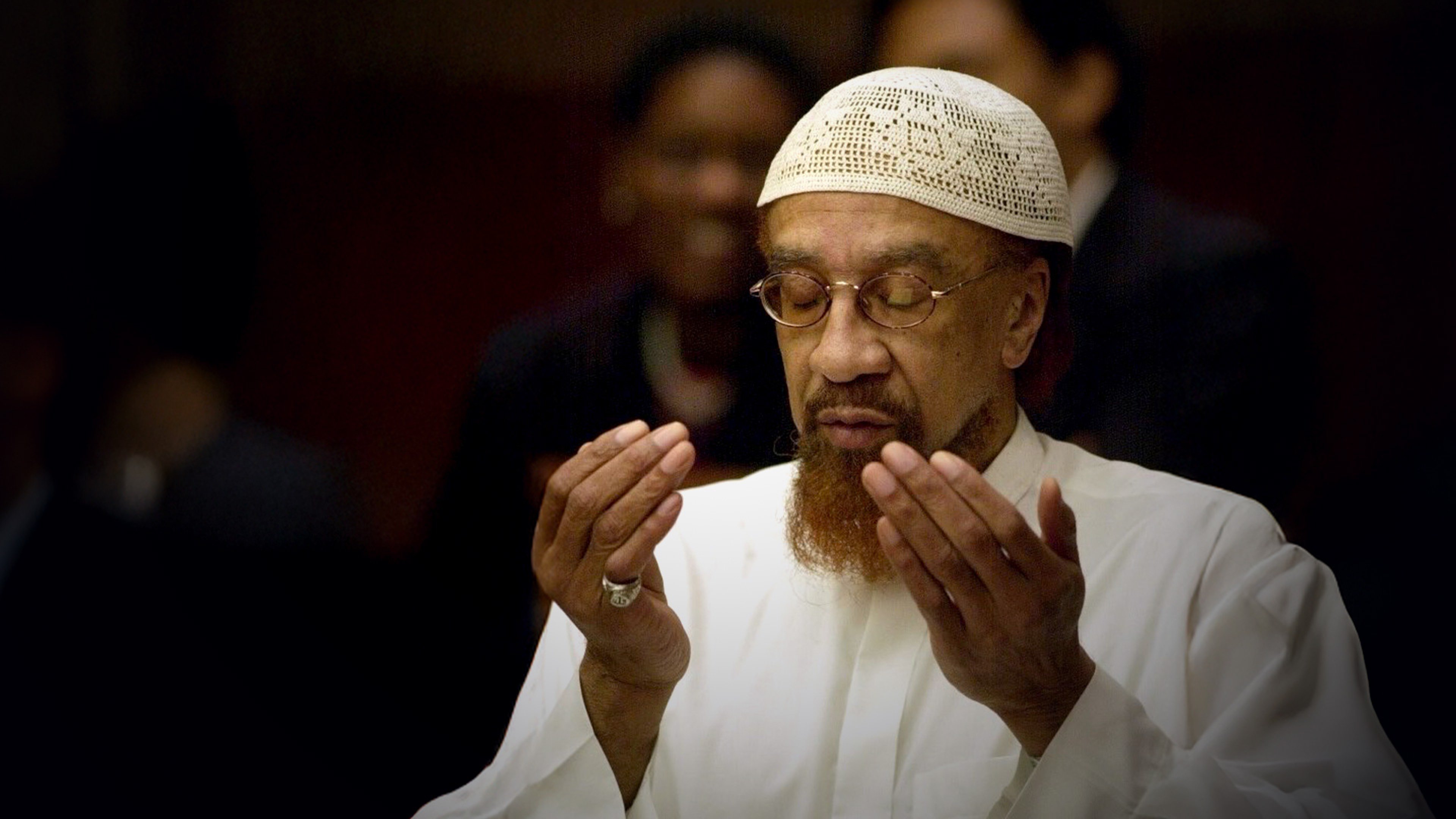
When I reflect on what I have been able to accomplish in service to the community by the grace of Allah, the goals “completed” never occupy my heart or mind as deeply as those left unfinished, especially the places where I know I should have exerted more effort. One such glaring example is our beloved Imam Jamil Al-Amin, Allah have mercy on him. He returned to Allah the Exalted, on Sunday, November 23, 2025. He is now free from the shackles of this world, but spent nearly twenty-five years unjustly incarcerated. While the system imprisoned his body, it never touched his spirit, alhamdulillah.
Growing up in Cleveland, Ohio, in the ‘80s and ‘90s, I saw Imam Jamil’s work firsthand. Soon after accepting Islam in the early ‘70s, he began organizing a community in the West End of Atlanta. Community organizing was not new to him; he had served as the Chairperson of the Student Nonviolent Coordinating Committee (SNCC).
An icon of the Civil Rights Movement,
1 he drew on his experience and extended his efforts well beyond Atlanta. What eventually became known as Al-Ummah, or the national Jamaat, spread across the United States—and even, as I heard, into the Caribbean. That was how I came to know Imam Jamil and Al-Ummah in Cleveland. Communities competed to host the national gathering, the Riyaadah, where sports were central and spirits ran high.
My father, Dr. Sirajul Husain, Allah have mercy on him, who settled in Cleveland in the late ‘70s, ensured that my siblings and I were fully connected to the African American Muslim community. We looked forward to the Riyaadah whenever Cleveland hosted, especially at the Cuyahoga Community College downtown campus. My father and I used to joke that there must be a height requirement of at least six feet to join Imam Jamil’s Jamaat. And sure enough, the imams I grew closest to, Imam Khalid Abdus Samad and Imam Mutawaf Shaheed in Cleveland, Dr. Ihsan Bagby, and later Imam Khalid Griggs and Imam Khalil Abdur Rahman, Allah have mercy on him, in North Carolina, were towering figures just like him. Nowadays, we hear the phrase “unapologetically Muslim,” but the Jamaat of the ‘80s embodied that spirit long before the term was coined. Under Imam Jamil’s leadership, we saw unapologetic Islam lived through his speeches, community building, and advocation of self-sufficiency through Jamaat-owned businesses. We were witnessing the construction of a Prophetic community, right in the West End and across the country.
While pursuing my PhD, I became involved with the Muslim Students Association of the United States and Canada (MSA National) and reconnected with Imam Jamil as one of the most sought-after speakers on college campuses and at MSA conferences. That generation of students was blessed. We heard directly from a former Civil Rights Movement student leader who implored us to learn our faith, practice it, and conduct ourselves with utmost confidence as Muslims. His book, Revolution by the Book - The Rap Is Live, was released in 1993 and was a major source of inspiration for thousands of Muslim youth. Imam Jamil discussed aspects of his book at the last MSA continental convention where he spoke on Labor Day weekend, 1999, in Chicago. He was arrested just months later in March 2000 on false charges and wrongfully convicted on March 9, 2002. Those who studied the Civil Rights Movement understood: Outspoken, charismatic leaders like Imam Jamil would eventually be unjustly targeted.
Between his arrest and sentencing, MSA National helped bring together various youth groups and MSA chapters to form the Student Alliance for Imam Jamil (SAIJ). I noted at the time:
At times when it was not politically correct to openly challenge injustice and oppression, Imam Jamil Abdullah Al-Amin stood tall and firm, and spoke a word of truth in the face of the unjust and the oppressors. Today, it is our turn to stand tall and firm and show our unwavering support for the innocence of Imam Jamil Al-Amin. For Imam Jamil is not the only one on trial; you, I, and all those who fight injustice and oppression are on trial.2
We mobilized across the country for a full and fair investigation. Indeed, one of our largest rallies in support of Imam Jamil was planned for Washington, DC, on Friday, September 15, 2001, but was canceled after the tragic events of September 11. Still, the MSA continued mobilizing efforts to educate people about the false charges against Imam Jamil and the mounting evidence proving his innocence, and to call for his release. Even after his conviction, MSA National issued a
press release expressing profound shock and disappointment at the guilty verdict, and calling upon students to join SAIJ and continue supporting the legal efforts to file an appeal and compile a stronger case for a new trial.
It was bittersweet in the early 2000s as we first laid the groundwork for what became the Muslim Alliance in North America (MANA). Imam Jamil’s absence was deeply felt, though the Jamaat was ably represented by deputy amir
Imam Asim Abdul Rashid of Philadelphia, may Allah have mercy on him. It was clear from the outset that those present—Imam Siraj Wahhaj, Sheikh Hamza Yusuf, Dr. Sherman Jackson, Dr. Ihsan Bagby, and many others—were determined to raise awareness and continue demanding his release.
I visited Imam Jamil a couple of times while he was incarcerated in Fulton County.
3 It was humbling. He would ask what he could do for
me and for the community. It was my first time visiting someone in prison, and during that first visit I struggled to steady myself emotionally. This was our Imam, unjustly imprisoned, separated from his family. I felt inadequate, unsure what to say: Why hadn’t the community mobilized more intentionally? A date had not yet been set for his trial; how was he feeling? Sensing my fragile emotional state and before I could express any apology for our neglect, he redirected the moment entirely. He asked about
us, the students, their faith, the state of the Muslim community. His calm and soothing voice reflected his firm faith in Allah’s promise. As he spoke, a calmness came over me, and I realized for the first time that he was at peace, unshaken by his imprisonment, with full conviction in Allah’s ability to exonerate him. He was free and I was the one shackled by worldly attachments and fears. We spoke at length, losing track of time, until a guard signaled that visiting hours were ending. As I stood to leave, Imam Jamil asked, “Is there anything I can do for you?” I was speechless.
One of my deepest regrets is that we did not do enough for our beloved Imam Jamil. There were efforts no doubt, but not with the steadfastness and commitment he deserved. We did not consistently support his family, raise funds for legal expenses, and, most importantly, keep his case burning at the forefront.
This was a man who led both the Civil Rights Movement and the Muslim community. He rarely asked for anything, and he deserved more from us. Over nearly twenty-five years, his physical health deteriorated, but his spirit remained unbroken, sustained by a constant connection with the Qur’an and the seerah.
We should have done more. We could have done more. The only solace I hold is that at Yaqeen Institute, under the leadership of Dr. Omar Suleiman, we were able to illuminate his
story for an entirely new generation, many hearing his name and profound contributions for the first time. We also bring light to a
documentary project that is doing the same.
4 I remain indebted to our beloved Imam Jamil for shaping the tone and tenor of my service to the community. May Allah grant him the highest station in Paradise, and may we carry forward his legacy with honor.
Take a moment to reflect on the life and legacy of Imam Jamil Al-Amin (may Allah have mercy on him, and forgive us for not doing more). Let learning about his contributions to the ummah inspire a deeper sense of responsibility, gratitude, and personal commitment—and join us in resolving to never again allow our leaders to suffer in silence. Explore his story and the story of other Muslim prisoners who have been unjustly incarcerated.