Jump to:
Lecture
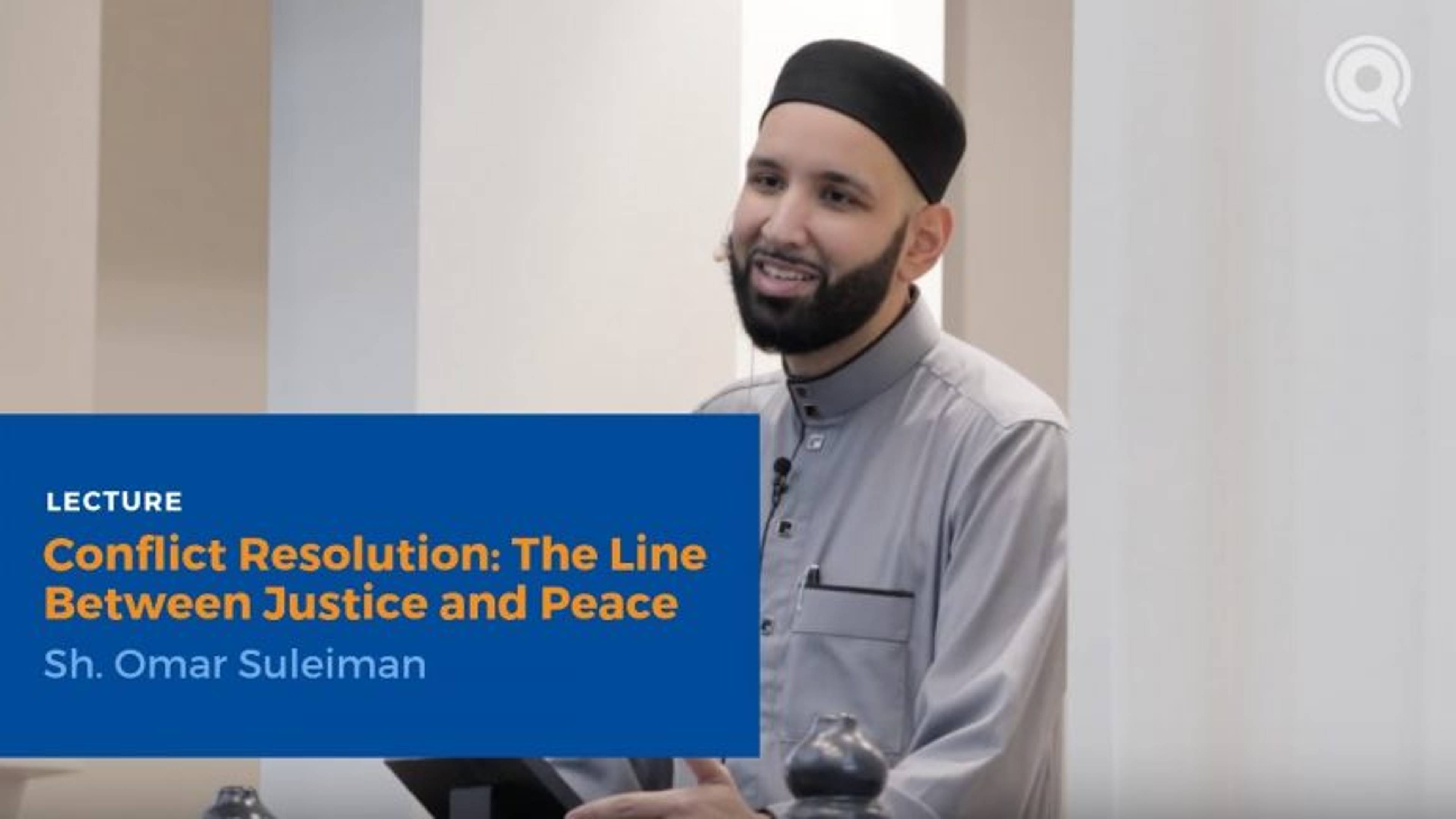
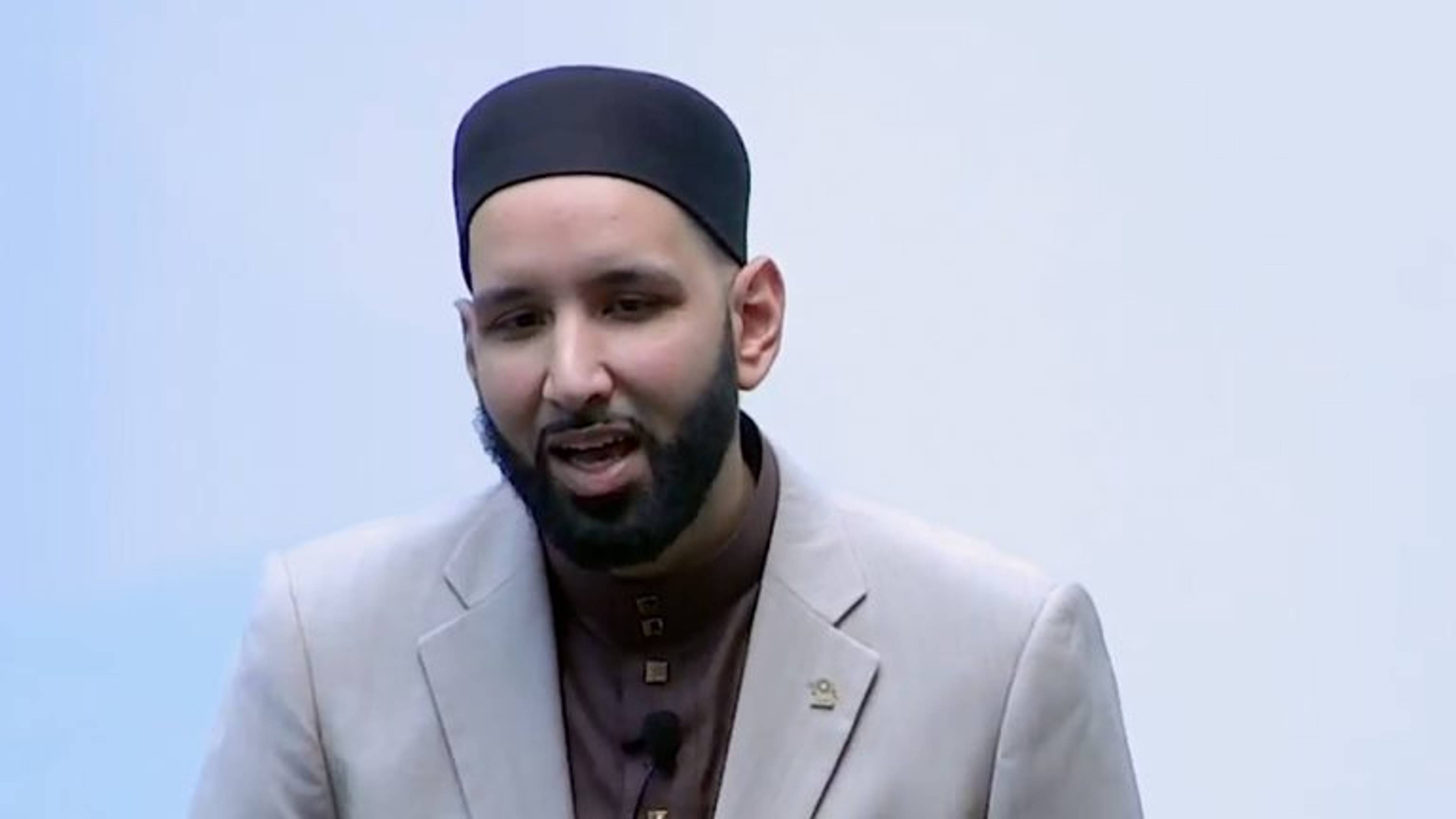
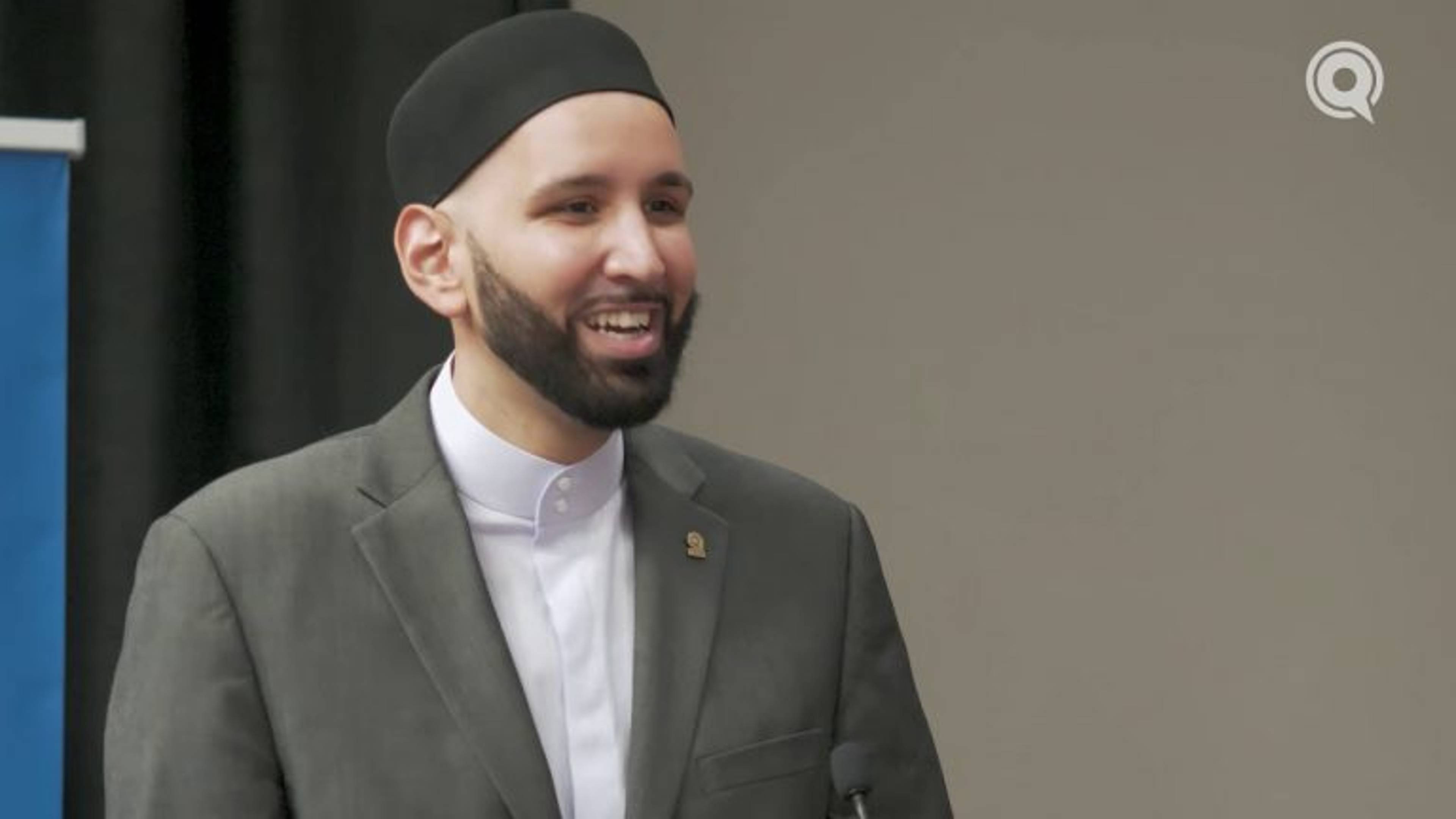
Finding Solace Through Patience and Wisdom | Dr. Omar Suleiman
In times of hardship, how can we expand our perspective as an Ummah? As we grieve for the soul of our souls, Khaled Nabhan (rahimahu’llah), and for our brothers and sisters in Gaza, Yemen, Sudan, and beyond, while celebrating the joy in Syria, Dr. Omar Suleiman reflects on how patience and wisdom—fueled by unwavering trust in Allah (SWT)—can restore clarity, broaden our perspective, and bring hope to the Ummah as a whole.
This transcript was auto-generated using AI and may contain misspellings.
What if I no longer can find the motivation to act because I don't have the capacity to understand? Bismillah wa alhamdulillah wa salatu was-salamu ala rasulillah wa ala alihi wa sahbihi wa man wala
Dear brothers and sisters, I wanted to reflect today upon the relationship between two qualities that subhanAllah connect to our full being in incredible ways.
And they are the qualities of patience, as-sabr, and wisdom, al-hikmah. Now before I get there, I want to start off with the fact that many of us are hurting
when we see the martyrdom of our brother Khalid Nabhan, may Allah subhanahu wa ta'ala accept his shahada
and may Allah subhanahu wa ta'ala allow him to meet his beloved ruh al-ruh, his beloved soul in Reem, to meet his beloved Tariq, to meet all of those whom he lost from his family and all of the shuhada of Gaza
and beyond them all, to meet the Prophet ﷺ while he is pleased with him. Allahumma ameen. Many of us are reeling when we see that a man like that has been stolen from us,
but we're also finding comfort when we see the smile on his face that transcends even life. And subhanAllah, as we're looking at what is happening in Syria, where we've seen people come out from the dungeons
and people who have been able to return home after long years of displacement, and we're finding joy for our brothers and sisters in Syria,
it's important for us to also take a step back and to recognize things have only gotten worse for our brothers and sisters in Gaza, and things continue to be worse in Sudan, and things continue to get worse in places like Yemen.
And so it's important for us to take a step back and to remind ourselves not to turn away from those places of devastation, because we now see a place of victory,
but instead to transfer that same hope that we now have seen fulfilled in Syria, and of course it is still early, may Allah subhanahu wa ta'ala allow it to be completed,
but to see that same hope transferred to other parts of the Ummah, especially Gaza, especially Palestine. Now, building on that, here's what I want to talk about.
We have a tendency to be impulsive, and when we are impulsive, we can be impulsive with our hearts, we can be impulsive with our thoughts, we can be impulsive with our tongues, we can be impulsive with our actions.
And I was reflecting on these two treasures that the Prophet ﷺ mentions of qualities, and how they particularly relate to Gaza today, and to the various things that we are seeing today,
that could shut us down potentially if we don't understand how to understand, if we don't understand how to understand. And they are the qualities of as-sabr and al-hikmah.
And the Prophet ﷺ, when he speaks about as-sabr, when he speaks about patience, the Messenger of Allah ﷺ mentions, وَمَا أُعْتِيَ أَحَدٌ عَطَاءً that no one is given a gift, a treasure, that is greater,
خَيْرًا وَأَوْسَعً that is greater and more expansive than as-sabr, that patience is the most precious blessing that you can have. And what the Prophet ﷺ is referring to,
is not just the reward that comes with patience, but also the perspective. You know, the ulema talk about this idea of a'usar, what is expansive about patience. It's expansive in that it can make all of your qualities beautiful.
It's expansive in that it can make you patient with your desires, it can make you patient with tribulation, it can make you patient with your good deeds so that you actually see them through. So it's expansive in that sense.
But it's also expansive in that it gives you an expanded view on the world that's around you. It expands your perspective. Now the Prophet ﷺ, in one narration from Abu Hurayrah (رضي الله عنه) who talks about hikmah, when he talks about wisdom,
الحكمة ضالة المؤمن hikmah is the lost property of the believer. It's a treasure. And whoever finds it, then it is for him. They have the greatest right to it when they find it. And so you have this idea once again of a treasure.
Patience is the most expansive treasure that a person could have. Hikmah is the lost treasure that you should be pursuing and seeking your entire life and trying to find wherever you can, pursuing it everywhere.
Now I want you to think about the output of hikmah and the output of sabr and how these two things are related, especially when we see things that otherwise could shut us down emotionally as well as intellectually.
And of course worse than all that, spiritually. Sabr protects you from being impulsive with your desires. It protects you with being impulsive with tribulation,
with responding in a way that's not favorable to your akhira, in a way that's not pleasing to Allah subhanahu wa ta'ala. And could stop you from being impulsive when it comes to your good deeds
because you don't see that they are yielding the results that you wanted them to yield right away. And so you give up halfway through and you don't demonstrate resilience. Sabr stops you from being impulsive in that regard.
It stops you from being impulsive with your reactions. Hikmah also stops you from being impulsive. How so? Hikmah stops you from passing judgment on a situation that is premature
and that will essentially shut down any type of action that could potentially come out of that and stunt your growth of understanding of the situation that's in front of you. Hikmah allows you to take a step back.
So if you think about what hikmah actually is, what wisdom actually is, it comes from hakam, it comes from the horse's reins. You hold your horse back. You allow yourself to govern your thoughts. You allow yourself to govern your tongue.
That's why most of silence or most of hikmah is actually silence as the ulema teach us that a person who can practice as-samt, they can practice silence in the face of something that everyone else has commentary on.
That in fact is wisdom, a person holding back. There's a narration that's attributed to Luqman al-Hakim (عليه السلام) that if speaking is from silver, then silence is from gold. And so most of your wisdom is being able to hold your tongue
and to wait to see a situation unfold. And in the process of holding your tongue and holding your thoughts, you allow your perspective to grow. Because if you think about what silence allows you to do,
silence allows you to let things play out further before you speak on them. It allows you to grow your perspective on something and to see things through.
And Allah subhanahu wa ta'ala rewards that silence, that deep ponderance by giving you deeper perspective. And so you don't act too quickly. You don't think too quickly. You don't pass judgment too quickly.
You don't speak judgment too quickly. And especially when it comes to Allah subhanahu wa ta'ala, these two things can sometimes actually be interchangeable. If you think about Musa (عليه السلام) and al-Khidr (عليه السلام). When al-Khidr (عليه السلام) says to Musa (عليه السلام),
إِنَّكَ لَن تَسْتَطِيعَ مَعَيَ صَبْرًا that you will not be patient with me. He wasn't talking about Musa (عليه السلام)'s inability to be patient with great tribulation.
He was talking about Musa (عليه السلام) rushing to judgment in regards to a situation. And Allah subhanahu wa ta'ala was expanding the wisdom of Musa (عليه السلام) by exposing him to greater perspective.
And so what does this mean for us in this present day and everything that we're witnessing today? I hear many people saying understandably in the midst of their despair, Look, I just don't get why this is happening.
And it's too much. And I can't understand it. And I feel like I can't do anything anymore. I feel like I'm being shut off. So you see the direct tie between wisdom and patience.
You see others subhanAllah who have this deep trust in Allah subhanahu wa ta'ala
whose entire perspective is derived from the knowledge that Allah subhanahu wa ta'ala is always planning. And so long as Allah subhanahu wa ta'ala has the greater picture,
then I am able to be patient with that greater picture. And in the process, you know what Allah subhanahu wa ta'ala rewards that patience with? He rewards it with wisdom. And so Allah 'azza wa jal exposes to you a greater part of the picture
so that you start to see things with more clarity because you're not allowing your emotions to clock your judgment. You're not allowing the deep pain that you understandably have because Allah subhanahu wa ta'ala tells you to have empathy.
Allah subhanahu wa ta'ala tells you to feel for your brothers and sisters, but you're not allowing that empathy to shut you down to where you lose clarity of the situation. None of this means that your heart doesn't break.
None of this means that your tongue doesn't speak. But it means that your heart breaks in a way to where you present it to Allah subhanahu wa ta'ala to put back together. That you speak only that which is pleasing to Allah subhanahu wa ta'ala
even when you can find no words because of everything that is happening. That your thoughts as they start to get darker, you remind yourself Allah is the light of the heavens and the earth.
That Allah subhanahu wa ta'ala is the only solution that I have to clear my mind, to clear my heart so that I can continue to move forward.
So patience stops you from being impulsive in regards to your actions. Wisdom stops you from being impulsive in regards to your thoughts. And subhanAllah I just want to share this because it was something that I found remarkable.
I was speaking to someone who I find to be deeply wise, who I find to be deeply optimistic about the situation always. And I feel like Allah subhanahu wa ta'ala has gifted him with so much.
You know, he was sitting with someone who was complaining about the current situation, understandably so, Israel's opportunism, the fact that they are now occupying greater parts of Syria even though they were occupying many of those parts before,
but people are now waking up to that and they're expanding into that territory. Gaza seems to be shrinking, the cost seems to be this, the cost seems to be that. And he was saying, look, this is going to be khair bi-idhnillah.
And he had such a spin, you know, a positive outlook on this, that it was remarkable to me. He said, if they occupy more,
then this will make them occupiers of greater than just the Palestinian people. And in the process, you will have more people that will rise up against them bi-idhnillah.
And if they occupy less, then this will be a means of their retreat. And Allah subhanahu wa ta'ala will show them that retreat will come from different directions as well. He was able to point out something in everything.
Now, you don't have to present a precise optimistic outlook on everything. But the idea of being optimistic, because you know that Allah subhanahu wa ta'ala is in control,
the idea of trusting Allah's sight over your eyes is what allows you to have wisdom. The idea of trusting Allah's knowledge over your knowledge is what allows you to have wisdom.
And the idea of trusting Allah subhanahu wa ta'ala's reward over your impulsive reaction is exactly where the gift of patience comes in.
And so no believer is given a treasure that is more expansive than patience. And with that great expansive treasure of patience is that lost treasure of wisdom.
And so the believer is able to proceed with clarity, to proceed with steadfastness. Now think about the shaytan, al-'ajalatu minash shaytan. Haste is from the devil.
And haste being from the shaytan means that hasty thoughts are from the devil, that hasty deeds are from the shaytan, that Allah subhanahu wa ta'ala calls you instead to proceed with a sense of urgency,
but to not let that urgency be a transgression of the boundaries that he has put on your thinking, on your emotions, on your actions, in moments where we feel so caught up in the devastation that we are seeing.
You know subhanAllah, I had written something along the lines of the only way that here makes sense is with the hereafter, right? It's the only way to really deal with here right now is to know about the hereafter,
is to know about the akhira, that if we were relegated to this box of this dunya, to this box of this world, then we would all be in ma'isha tan-dhanka.
We would all be in this constricting life, this constricting suffocating life, because we don't understand that there's more to the outside of this box. But what gives us hope, alhamdulillahi rabbil alameen,
is that not only is the box that's in front of us not as clear to us as we may think it is, but that what is outside of the box is so much greater than what is inside of the box.
May Allah subhanahu wa ta'ala grant us patience. May He grant us wisdom. May Allah subhanahu wa ta'ala grant us steadfastness. May Allah subhanahu wa ta'ala allow us to proceed with clarity, with action,
with that which is pleasing to Him, even when we find the most devastating things happening to our brothers and sisters in Gaza, and when we want to shut down. May Allah subhanahu wa ta'ala allow us to instead move to the next level of our action.
Allahumma ameen. Jazakumullahu khayran. Wassalamu alaikum warahmatullahi wabarakatuh.