fbpixel

The 10 best days are here.

Give your sadaqah
The Story of Hajar: Uncovering Certainty in Uncertainty - Sh. Omar Suleiman | Lecture
Is Islam to Blame for ISIS?
Is Islam to Blame for ISIS?

Islam’s Take on Modernity and Progress
Islam’s Take on Modernity and Progress

Prophet Muhammad - The Epitome Of Mercy
Prophet Muhammad - The Epitome Of Mercy

Cultivating Conviction (Yaqeen) - Mohammad Elshinawy
Cultivating Conviction (Yaqeen) - Mohammad Elshinawy

Why Some American Muslim Youth Are Doubting Their Faith
Why Some American Muslim Youth Are Doubting Their Faith

Rise up to Reclaim Our Narrative #SupportYaqeen
Rise up to Reclaim Our Narrative #SupportYaqeen

How Prophet Muhammad (PBUH) Dealt With His Enemies - Sh Omar Suleiman
How Prophet Muhammad (PBUH) Dealt With His Enemies - Sh Omar Suleiman

Dr. Jonathan Brown - How to Approach Hadith - Verifying and Understanding Hadith
Dr. Jonathan Brown - How to Approach Hadith - Verifying and Understanding Hadith

Religious Minorities Under Islamic Rule - Tesneem Alkiek

Religious Minorities Under Islamic Rule - Tesneem Alkiek

Reviving a Lost Sunnah: Adoption and Foster Care in Islam
Reviving a Lost Sunnah: Adoption and Foster Care in Islam

Reclaiming the Narrative About Our Prophet ﷺ | Part 1
Reclaiming the Narrative About Our Prophet ﷺ | Part 1

Reclaiming the Narrative About Our Prophet ﷺ | Part 2
Reclaiming the Narrative About Our Prophet ﷺ | Part 2

Why Do Innocent People Suffer? - Sh Omar Suleiman
Why Do Innocent People Suffer? - Sh Omar Suleiman

Repentance in Islam, Tawbah A Cornerstone of Faith - Roohi Tahir | 16th MAS-ICNA Convention
Repentance in Islam, Tawbah A Cornerstone of Faith - Roohi Tahir | 16th MAS-ICNA Convention

Dealing with Isolation: Learning from Islam’s Original Converts - Omar Suleiman | Lecture
Dealing with Isolation: Learning from Islam’s Original Converts - Omar Suleiman | Lecture

Does Islam Need Saving? An Analysis of Human Rights | Nour Soubani | 16th MAS-ICNA Convention
Does Islam Need Saving? An Analysis of Human Rights | Nour Soubani | 16th MAS-ICNA Convention

Islam, A Coherent Social Justice Tradition | Omar Suleiman | 16th MAS-ICNA Convention
Islam, A Coherent Social Justice Tradition | Omar Suleiman | 16th MAS-ICNA Convention

The Pursuit of Certainty - Sh. Yaser Birjas | Lecture
The Pursuit of Certainty - Sh. Yaser Birjas | Lecture

Seeds of Greatness: Malcolm X and Muhammad Ali
Seeds of Greatness: Malcolm X and Muhammad Ali

Atheism: Doubting Your Doubts - Asadullah Ali | Yaqeen in NY
Atheism: Doubting Your Doubts - Asadullah Ali | Yaqeen in NY

The Infinitely Merciful and the Question of Hellfire - Mohammad Elshinawy | YM Youth Conference 2017
The Infinitely Merciful and the Question of Hellfire - Mohammad Elshinawy | YM Youth Conference 2017

Appreciating Scholarship: Intro to Islamic Law - Tesneem Alkiek | Yaqeen in NY
Appreciating Scholarship: Intro to Islamic Law - Tesneem Alkiek | Yaqeen in NY

Station of Certainty | Lecture
Station of Certainty | Lecture

Personal Accountability in Life and Faith - Sh. Mohammad Elshinawy | Lecture
Personal Accountability in Life and Faith - Sh. Mohammad Elshinawy | Lecture

How Yaqeen Works to Educate the Public - Dr. Jonathan A.C. Brown | Making Principled Progress
How Yaqeen Works to Educate the Public - Dr. Jonathan A.C. Brown | Making Principled Progress

How Yaqeen Heals Internalized Islamophobia - Dalia Mogahed | Making Principled Progress
How Yaqeen Heals Internalized Islamophobia - Dalia Mogahed | Making Principled Progress

Contextualizing the Life and Mission of Jesus | Lecture
Contextualizing the Life and Mission of Jesus | Lecture

An Imam & A Pastor in Conversation on Loving Jesus
An Imam & A Pastor in Conversation on Loving Jesus

How Yaqeen is a Resource for Our Community - Sh. Omar Suleiman | Making Principled Progress
How Yaqeen is a Resource for Our Community - Sh. Omar Suleiman | Making Principled Progress

Conversations at The Carter Center: Harmonizing Religion and Human Rights
Conversations at The Carter Center: Harmonizing Religion and Human Rights

Meaningful Solidarity - Sh. Omar Suleiman | Lecture

Meaningful Solidarity - Sh. Omar Suleiman | Lecture

Combating Islamophobia with Marketing and Design | #SXSW19
Combating Islamophobia with Marketing and Design | #SXSW19

Racism in Our Ranks | Khutbahs with Purpose
Racism in Our Ranks | Khutbahs with Purpose

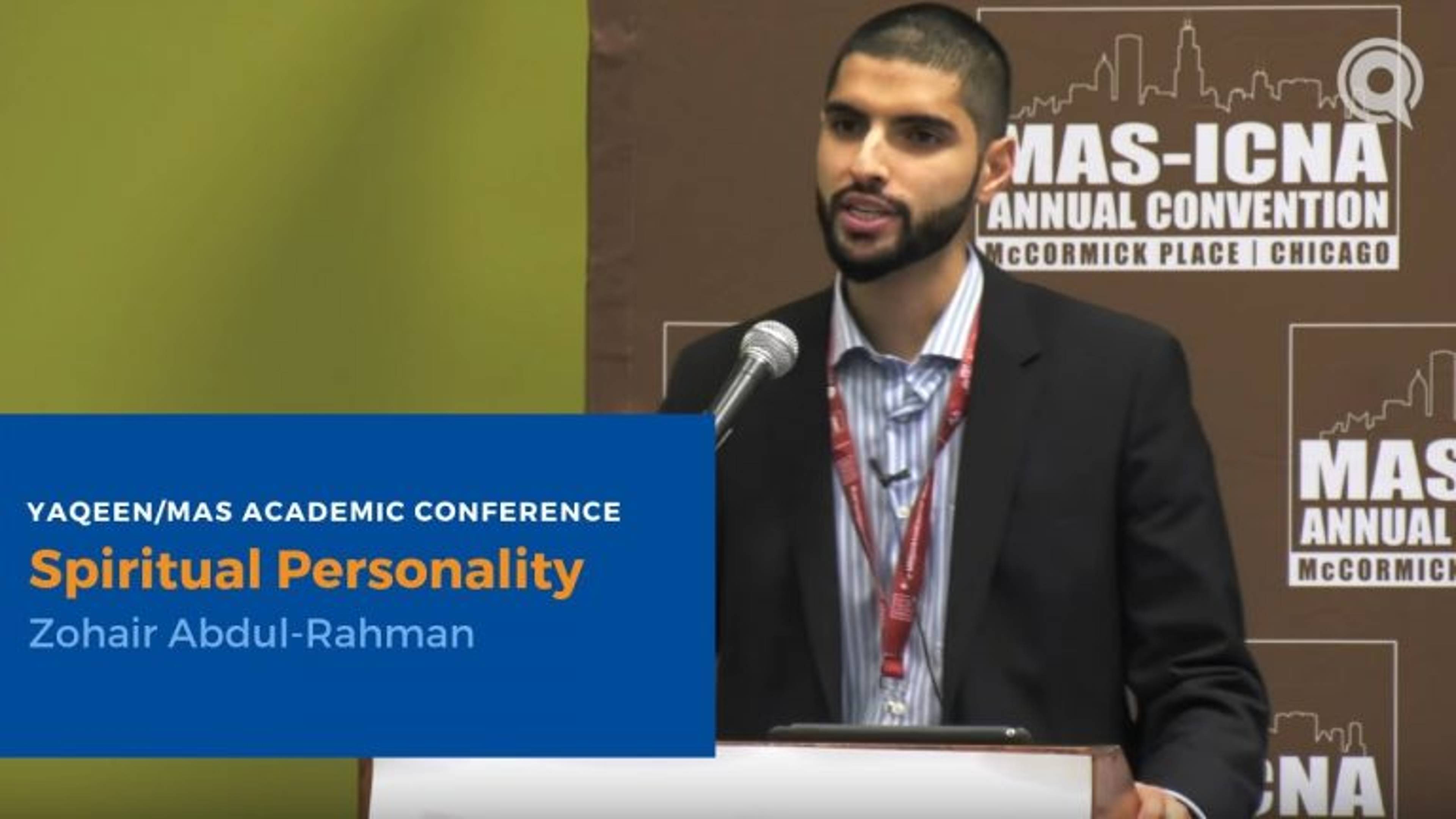
Spiritual Personality - Zohair Abdul-Rahman | 2018 Yaqeen/MAS Academic Conference
Spiritual Personality - Zohair Abdul-Rahman | 2018 Yaqeen/MAS Academic Conference

Conflict Resolution: The Line Between Justice and Peace - Sh. Omar Suleiman | Lecture
Conflict Resolution: The Line Between Justice and Peace - Sh. Omar Suleiman | Lecture

The Flexibility of Islamic Law - Tesneem Alkiek | 2018 Yaqeen/MAS Academic Conference
The Flexibility of Islamic Law - Tesneem Alkiek | 2018 Yaqeen/MAS Academic Conference

To Know Him is to Love Him | Introduction by Sh. Omar Suleiman
To Know Him is to Love Him | Introduction by Sh. Omar Suleiman

The Role of Parents in Instilling Faith - Roohi Tahir | Yaqeen/MAS Academic Conference
The Role of Parents in Instilling Faith - Roohi Tahir | Yaqeen/MAS Academic Conference

Perfection and Beauty | Episode 1 | To Know Him is to Love Him
Perfection and Beauty | Episode 1 | To Know Him is to Love Him

Hope and Potential | Episode 2 | To Know Him is to Love Him
Hope and Potential | Episode 2 | To Know Him is to Love Him

Bonds and Relations | Episode 3 | To Know Him is to Love Him
Bonds and Relations | Episode 3 | To Know Him is to Love Him

The Story of Hajar: Uncovering Certainty in Uncertainty - Sh. Omar Suleiman | Lecture
Playing

The Story of Hajar: Uncovering Certainty in Uncertainty - Sh. Omar Suleiman | Lecture

Gracious Dealings | Episode 4 | To Know Him is to Love Him
Gracious Dealings | Episode 4 | To Know Him is to Love Him

Gift Giving | Episode 5 | To Know Him is to Love Him

Gift Giving | Episode 5 | To Know Him is to Love Him

The Generous | Episode 6 | To Know Him is to Love Him
The Generous | Episode 6 | To Know Him is to Love Him

Navigating Adolescence - Dr. Altaf Husain | Reframing the Gender Question

Navigating Adolescence - Dr. Altaf Husain | Reframing the Gender Question

Keeping Masculinity from Trending Toxic - Dr. Jonathan Brown | Reframing the Gender Question
Keeping Masculinity from Trending Toxic - Dr. Jonathan Brown | Reframing the Gender Question

Why Does God Ask People to Worship Him? - Sh. Mohammad Elshinawy | Lecture
Why Does God Ask People to Worship Him? - Sh. Mohammad Elshinawy | Lecture

Addressing the Topic of Trauma and Faith - Sh. Omar Suleiman | ISNACON 2019
Addressing the Topic of Trauma and Faith - Sh. Omar Suleiman | ISNACON 2019

The Impact of Trauma on Faith - Sarah Sultan | ISNACON 2019
The Impact of Trauma on Faith - Sarah Sultan | ISNACON 2019

The Rising Tide of Atheism - Sh. Mohammad Elshinawy | ICNA 2019
The Rising Tide of Atheism - Sh. Mohammad Elshinawy | ICNA 2019

The Duha Approach: A New Model to Treat Trauma - Najwa Awad | ISNACON 2019
The Duha Approach: A New Model to Treat Trauma - Najwa Awad | ISNACON 2019

How Islam Addresses Grief - Dr. Altaf Husain | ISNACON 2019
How Islam Addresses Grief - Dr. Altaf Husain | ISNACON 2019

Understanding Traumatic Grief - Najwa Awad | ISNACON 2019
Understanding Traumatic Grief - Najwa Awad | ISNACON 2019

Calling Out to Allah With Meaning - Sh. Tahir Wyatt | Lecture

Calling Out to Allah With Meaning - Sh. Tahir Wyatt | Lecture

Slavery in Islam - Dr. Jonathan AC Brown | Lecture
Slavery in Islam - Dr. Jonathan AC Brown | Lecture

The Gift of Receiving Good Counsel - Dr. Hatem ElHaj | Lecture

The Gift of Receiving Good Counsel - Dr. Hatem ElHaj | Lecture

Roots and Implications of Pop Culture | Firm Roots
Roots and Implications of Pop Culture | Firm Roots

Effects of Islamophobia on the Brain - Dr. Jibran Khokhar | Firm Roots
Effects of Islamophobia on the Brain - Dr. Jibran Khokhar | Firm Roots

With Hardship Comes Ease | Dr. Omar Suleiman
With Hardship Comes Ease | Dr. Omar Suleiman

A Conversation with Afreen Fatima on the Plight of Indian Muslims | Dr. Omar Suleiman
A Conversation with Afreen Fatima on the Plight of Indian Muslims | Dr. Omar Suleiman

How the Prophet ﷺ Inspired Young People | Dr. Omar Suleiman
How the Prophet ﷺ Inspired Young People | Dr. Omar Suleiman

When the Qur’an Changes You | Dr. Omar Suleiman
When the Qur’an Changes You | Dr. Omar Suleiman

What Does Allah Really Want From Me? | Dr. Omar Suleiman
What Does Allah Really Want From Me? | Dr. Omar Suleiman

Fueling Your Faith: A Guide to Preparing for Ramadan | Dr. Omar Suleiman
Fueling Your Faith: A Guide to Preparing for Ramadan | Dr. Omar Suleiman

Be In This World A Stranger or a Wayfarer  | Dr. Omar Suleiman
Be In This World A Stranger or a Wayfarer | Dr. Omar Suleiman

Becoming the Best Version of Yourself | Dr. Omar Suleiman
Becoming the Best Version of Yourself | Dr. Omar Suleiman

Abu Bakr's (ra) Rare Speech | Dr. Omar Suleiman
Abu Bakr's (ra) Rare Speech | Dr. Omar Suleiman

To Love the Prophet ﷺ More Than Yourself | Dr. Omar Suleiman
To Love the Prophet ﷺ More Than Yourself | Dr. Omar Suleiman

Grieving Doctors of Gaza | Dr. Omar Suleiman
Grieving Doctors of Gaza | Dr. Omar Suleiman

Did the Prophet ﷺ See You in The Future? | Dr. Omar Suleiman
Did the Prophet ﷺ See You in The Future? | Dr. Omar Suleiman

Is Religion Making Us Complacent? I Dr. Omar Suleiman
Is Religion Making Us Complacent? I Dr. Omar Suleiman

Consumerism and The Inflation of Self | Black Friday | Dr. Omar Suleiman
Consumerism and The Inflation of Self | Black Friday | Dr. Omar Suleiman

Is Syria Really a Good Thing ? | Dr. Omar Suleiman
Is Syria Really a Good Thing ? | Dr. Omar Suleiman

Finding Solace Through Patience and Wisdom | Dr. Omar Suleiman
Finding Solace Through Patience and Wisdom | Dr. Omar Suleiman

Age is Nothing but a Number | Making An Impact | Dr. Omar Suleiman
Age is Nothing but a Number | Making An Impact | Dr. Omar Suleiman

Tested Like the Prophets | UK Tour Wembley Stadium Lecture by Dr. Omar Suleiman
Tested Like the Prophets | UK Tour Wembley Stadium Lecture by Dr. Omar Suleiman

Waiting for The Mahdi or A Miracle | Lecture by Dr. Omar Suleiman
Waiting for The Mahdi or A Miracle | Lecture by Dr. Omar Suleiman

Why Did Allah Mention The Number 19? Your Test of Faith | Dr. Omar Suleiman
Why Did Allah Mention The Number 19? Your Test of Faith | Dr. Omar Suleiman

Finding Resilience Beyond the Illusion of Power | Lecture by Dr. Omar Suleiman
Finding Resilience Beyond the Illusion of Power | Lecture by Dr. Omar Suleiman

Preparing for Ramadan - Making the most in Shaban | Lecture by Sh. Mohammad Elshinawy
Preparing for Ramadan - Making the most in Shaban | Lecture by Sh. Mohammad Elshinawy

The People of Gaza Are Undisplaceable | Dr. Omar Suleiman
The People of Gaza Are Undisplaceable | Dr. Omar Suleiman

How to Reinvent Yourself This Ramadan | Dr. Omar Suleiman
How to Reinvent Yourself This Ramadan | Dr. Omar Suleiman

Kashmir Is Calling: Keynote at International War Crimes Tribunal, Bosnia | Dr. Omar Suleiman
Kashmir Is Calling: Keynote at International War Crimes Tribunal, Bosnia | Dr. Omar Suleiman

The Most Amazing Wedding I’ve Ever Been To | Dr. Omar Suleiman's South Africa Tour 2025
The Most Amazing Wedding I’ve Ever Been To | Dr. Omar Suleiman's South Africa Tour 2025

This Is What Made The Prophets Unstoppable | Lecture by Dr. Omar Suleiman
This Is What Made The Prophets Unstoppable | Lecture by Dr. Omar Suleiman

What Is Allah Preparing You For? | Lecture by Dr. Omar Suleiman
What Is Allah Preparing You For? | Lecture by Dr. Omar Suleiman

27th Night Special Du’a Stream by Dr. Omar Suleiman #LaylatulQadr
27th Night Special Du’a Stream by Dr. Omar Suleiman #LaylatulQadr

Khatm al-Quran Du’a 2026 by Dr. Omar Suleiman

Khatm al-Quran Du’a 2026 by Dr. Omar Suleiman

Lecture

The Story of Hajar: Uncovering Certainty in Uncertainty - Sh. Omar Suleiman | Lecture

Sh. Omar Suleiman explores the story of Prophet Ibrahim through Hajar and what we can learn about having certainty in times of deep uncertainty.
This transcript was auto-generated using AI and may contain misspellings.
Dear brothers and sisters, as we go into these blessed days of Dhul Hijjah, a lot of the focus and attention will naturally be on Ibrahim, peace be upon him. And he is in the
Qur'an Ibrahim, he is in some of the qiraat Ibrahim, he is an amazing figure, one who we take our ritual from, our deen from, the great grandfather of the Prophet, salallahu
alayhi wasalam, who resembled the Prophet salallahu alayhi wasalam most and the Prophet salallahu alayhi wasalam's way resembles his way the most. This is millat abikum Ibrahim,
this is the way of your father Ibrahim alayhi wasalam. The Hajj is a commemoration of Ibrahim alayhi wasalam. When you pray you mention Ibrahim alayhi wasalam in every single salah.
We honor this man in so many different ways. And there is something about that that I want to focus on. Had it not been for the tests and trials that Ibrahim alayhi wasalam endured
and the way that he endured them, many of the reasons that he is celebrated for would not exist in the Qur'an and in our history. Let me repeat that in a different way. As
Ibrahim alayhi wasalam was going through his trials, not only did he bear his trials with such patience and such nobility and sidq and truth and this loyalty and gratitude to Allah
subhanahu wa ta'ala as he went through those trials. Those trials became the means by which he was elevated, became the stories that we tell that are in fact the reasons that he
is honored. He is first honored by revelation and by being abu al-anbiya, the father of the prophets and a person who did much good. But if you look through his life, much like
many of the prophets that we find in the Qur'an, the reasons for his honor trace back to his most difficult moments, his lowest points and how in his lowest points he had the highest
iman and faith. And that's why we celebrate him. Those are the stories that are told in the Qur'an and the sunnah of the Prophet salallahu alayhi wasalam. And the thing about Ibrahim
alayhi wasalam is that everyone in his family has a perspective. And all of them have a very similar story of tribulation and trial that is unique to them, but it all comes together
to make this beautiful family. So from the perspective of Ibrahim alayhi wasalam, you have a prophet that is rejected by his people, rejected by even his father, despite being
the most eloquent of the prophets, as Ibn Kathir rahimahullah mentioned, afsah al-anbiya, despite being able to articulate intelligent arguments, despite the reputation he had with
his people, he leaves his people rejected by every single person in the town except for his wife, Sara. The perspective of Sara and the ending was not pretty. The ending
is him being stripped down and thrown into a fire. And Allah protecting him from the burning of that fire, but the pain of being stripped down by your father and thrown into a fire in front of the people, that doesn't depart by the fire being made cool for Ibrahim
alayhi wasalam. That's painful. And only having your wife Sara to travel with you outside of that place. There's the perspective of Sara being married to Ibrahim alayhi wasalam,
being his only follower in his town, being childless in that situation with no sight of anyone that would take over after they depart from this world that would inherit
the prophethood of Ibrahim alayhi wasalam. Late into their age, they didn't leave Haran when they were young. They left after many decades of humiliation and struggle. And they
start to make this journey. And then the other people start to become a part of the story. Each one of them having a very unique perspective and one that requires a lot of patience and
trial and tribulation. Then comes Hajar. Then comes Ismail. Then comes Ishaq. Then comes Yaqub and Yusuf. It's a legacy of tribulation and patience shown in that tribulation as
each one of them goes through a different struggle that is unique to them but completes this family of sidq, of truthfulness and patience. And so I want to actually view the story of
Ibrahim alayhi wasalam today from the perspective of Hajar. Hajar is a very unique person in the Quran and the sunnah of the prophet salallahu alayhi wasalam. Her intervention into the
story is so different. Most of the time when you look through the stories of the prophets, you see that the believers themselves, the prophets themselves are rejected and then
end up in a situation where they are hostage to an oppressor. Like Yusuf alayhi wasalam, going from being the favorite son to being a slave and a prisoner. Most of the time the
prophet is put at the mercy of someone else. Hajar's story is very different. She has the opposite cycle. She is put at the mercy of a prophet and his wife and then put into the
spiral of uncertainty and has to figure it out along the way in a very unique way to her perspective and in a way that we can all take lessons of conviction and certainty in
times of deep uncertainty. So where does this woman come from and what is her legacy and what is her perspective in this entire story and her intervention into this legacy of Ibrahim
alayhi wasalam? The ending of it is at no point on these 24 hours on any day of the
year is she not being honored and celebrated in Sa'i. This woman who could have died rejected and forgotten, instead is honored like no other woman in history with people constantly
commemorating her patience and her ritual all the time. Tell me when you could go to Sa'i and not find someone doing that. The legacy is the prophet alayhi wasalam telling
his followers that one day you're going to go to a place called Masr, Egypt, and treat the people with a special type of love because they are the descendants of our mother, Umm
Ismail, Hajar alayhi wasalam. So they're special people because they descend from the same special woman that I descended from. This is a woman from Masr. How does she come into
the story of Ibrahim alayhi wasalam? Ibrahim was traveling with his wife Sara to find a new place to settle and to give da'wah. Sara is a righteous woman and as Sara goes with
Ibrahim alayhi wasalam they pass through Masr and there is a pharaoh in Masr, a tyrant, and this is a long hadith in al-Bukhari that explains this story. This tyrant, this pharaoh
in Masr that takes two attractive women, kills their husbands, and takes them for himself. And so Ibrahim alayhi wasalam when he was asked about her he said, she is my sister.
He was not lying because she is his sister in faith. And the pharaoh called Sara because she was a beautiful woman. And he took Sara into his palace and he began to approach her.
Sara made wudu as she was taken into the palace of this pharaoh. And as the man started to approach her she called upon Allah subhanahu wa ta'ala with a beautiful dua. She said,
O Allah, if you know that I followed you and your messenger only in obedience and in accordance with the truth, meaning I'm not just a believer because I'm married to Ibrahim alayhi wasalam.
You know that I am a mu'mina. You know that I am a believer that was willing to take on the struggles in my unique way. If you know that I was truthful in following your messenger
Ibrahim alayhi wasalam and in abiding by the truth, then protect me from this man. As he started to approach her and she made that dua, he was overcome by a temporary paralysis.
He froze. And something started to happen to his body and then she said, O Allah, if he dies the people will say that I killed him and then they'll kill me. So don't let
him die, just hold him back from me. So he's stuck and he can't touch her, but he's not dying because Sara is saying don't let him die because if the people walk in and I'm
here and there's a dead pharaoh, then that's the end of me and my husband. So then he unfroze, he regained his ability, he started to approach her again. She made dua to Allah subhanahu
wa ta'ala a second time and it happened to him again except this time his shaking became more severe. And so she said, O Allah, if he dies people will say I killed him, so don't
let him die, just protect me from his harm. So Allah protected her again. Third time he comes at her again with the same thing. He's not learning his lesson. She made dua against
him again and the shaking became more severe. She said, O Allah, don't kill him because the people will say that I killed him and then they'll come for me and my husband. Instead what happened is when he came out of it the third time, he called his guards, he says
laqad arsaltum ilayya shaytana, you sent a devil to me. This woman is not a normal woman, she's a jinn, she's a devil. He said, so get rid of her and give her ajr, give her compensation,
send someone with her to get her away from me so she doesn't harm me. He became afraid of her harm, said get her away and give her something too. The ajr was hajr, was a slave
girl named hajr. Now her name is not actually hajr, ajr just means a compensation, a reward.
Hajr literally means ha ajruki, here is your reward. So hajr means your reward. So he said take her and you and your brother, leave, get out of here, please, no harm intended
and no harm reciprocated, just leave. So she smiled and she said Allah protected me, Allah
protected me from the tyrants and gifted me with hajr. So they took hajr with them. Hajr is not a believer yet, this is not the story of a prophet being taken as a slave. This
is the story of a woman that was in the house of the pharaoh, serving the pharaoh, like Asiya, but under very different circumstances. She's not the wife of the pharaoh, she's just
a servant girl in the palace of the pharaoh, has no idea who Ibrahim is, for all she knows, Sara could indeed be the shaytan, the demon that the pharaoh thinks she is. So he says
take her with you. So they travel with hajr. Hajr observes the iman, the belief of Ibrahim
alayhi salam and Sara. Hajr becomes a believer by witnessing it. And just like Sara was truthful
in her iman, hajr was truthful in her iman. Sara goes from being the servant of the pharaoh,
to being transferred as a servant in the household of a prophet, to now being married to a prophet. Ibrahim alayhi salam takes her as a wife, she gives birth to Ismail, she's a believing
woman now, look at the change of her status. Look at the change of her status. How many more women were there in the palace of the pharaoh? But Allah chose her for this remarkable
journey to be brought in in this way. And she has a child, Ismail. Ibrahim and Sara had not been able to conceive for all of these years and Allah subhanahu wa ta'ala gives
them Ismail. Now this is where if you start to read narrations and stories and things start to come into play you can misconstrue the situation because the next part of the
story is that someone would say that Sara said get rid of her, take her to the furthest desert and abandon her over there. That is not the Islamic conception of the story. Yes,
Sara had ghira then, she was jealous of Hajar, but Ibrahim alayhi salam would not go and
abandon Hajar and her child and his child because Sara asked him to do so and we'll know this later on in the story from a very direct question, did Allah command you to
do this? So Ibrahim alayhi salam takes Hajar, this believing woman, and her son Ismail and
he takes her to Mecca and the child to Mecca. At that time the Kaaba is buried under the dirt, under the sand, the foundations of the Kaaba that Ibrahim alayhi salam would be told
one day to raise. It's there but it's buried under the sand, the foundations of the Kaaba are there. Ibrahim alayhi salam knows he's in sacred territory, he knows that in this
vicinity there's Baytullah al-Haram, there's the sacred house of Allah subhanahu wa ta'ala where when Ibrahim alayhi salam doesn't ask questions, if qala lahu rabbuhu aslim qala
aslamtu li rabbil alameen, Allah tells him submit, he says I submit. He doesn't ask more questions, he just goes with it and he takes Hajar as commanded by Allah subhanahu wa ta'ala
to Mecca. Crude mountains, hot deserts, no water, no buildings, no tribe to settle it
and Ibrahim alayhi salam sets up a little area for them, leaves them with some dates, a little bit of water and in great sadness Ibrahim alayhi salam starts to walk away.
Imagine how painful this was for Ibrahim alayhi salam. All the du'as he had made for a child and you've got to leave him in a desert. He would not have Ishaq for 13 years by the way.
So it wasn't even like immediately the response came from Allah subhanahu wa ta'ala, he came home and he had a child through Sara and Ishaq. No, 13 years, over a decade before he would have another child after he made du'a to Allah subhanahu wa ta'ala for all of these years
and now you have to walk away from Hajar and Ismail. Ibrahim alayhi salam as he's walking
away, Hajar like any woman would do, any human being would do, she says, what are you doing? Are you going to leave me here? في واد غير ذي زرع غير ذي ما
In a place where there's no fruit, no vegetation, no water, what am I doing here? What's going to happen? Ibrahim alayhi salam is overwhelmed with emotion and he can't answer her. And
then Hajar says to him, Allahu amarak bihaza, did Allah command you to do this? Did Allah
command you to do this? Ibrahim alayhi salam signifies yes. Nods his head or points or gives her the signal that yes, this is Allah commanding me to do this. I'm not doing this
out of my own desire. This is Allah's command. Hajar at that point does not say to him, well
in that case, at least do this, do this, this and that, fine, I'll forgive it, you can go, but make sure you do this, this, this and that first. Hajar at that point with full
conviction, full certainty, she says, la yuday'un Allah. She said that Allah is not going to lose his people. I'm not worried then. Complete sakinah, complete trust, complete tranquility.
Imagine this situation here, she's going to be left in the desert with a baby, no one around her, but she says Allah does not lose his people. Ibrahim alayhi salam walks away
with great sadness as he disappears from her sight. This is where many of the ulama say this is exactly where, imagine the moment of Ibrahim alayhi salam now, behind the mountain
where he turns back and he can't see his wife and his child anymore. And he says, rabbi inni askantu dhurriyati biwadi ghayri dhi zara'in ainda baytikal muharram. Oh my Lord,
I've left my family there around your sacred home. Again, it wasn't built yet, raised, he doesn't know where, but it's somewhere here. I've left them here, oh Allah, in a
place where there's no vegetation, where there's nothing to even physically sustain them. Rabbana liyuqeemu sala, oh Allah, allow them first and foremost to be sound in their faith, let
them establish the prayer. And then he makes dua to Allah subhanahu wa ta'ala, faj'al af'idatan min al nasi tahwi ilayhim. Let the hearts of people come towards them, let them incline
towards them. Now sometimes the dua is so sincere and Allah accepts the dua in a way that you can't even imagine. Because Ibrahim alayhi salam is saying that perhaps it's just
the tribes, let the tribes find him, let the people find them and take care of them. But Ibrahim alayhi salam would have never imagined this level of honor that she has in the hearts
of people that we are commemorating her, how many thousands of years later, and celebrating her and celebrating her great grandson Muhammad sallallahu alayhi wa sallam in the way that
we do. Warzuqhum min al thamarat, and let them have some fruits, let them have some sustenance as well, so provide for them, oh Allah. Now subhanallah, as this happens, now
we know later on in the story the tribe of Jurhum will come. A tribe will see that there are some birds flying around and they will know that there is water. Later on in the
story the tribes come, they settle, they end up with a civilization, a small civilization around them. But at this moment, dear brothers and sisters, Hajar, when she says Allah will
not let us go to waste, Allah does not lose his people, at this moment when Hajar goes back, Hajar is demonstrating and encompassing some of the most beautiful ayat, the most
beautiful verses about what it means to trust in moments of uncertainty. Hajar is demonstrating what the Prophet sallallahu alayhi wa sallam said, ana inda dhanna abdi bi, I am what my
servant expects of me. I am what my servant expects of me. You expect good from Allah, Allah will give you good. So when she calls out and she says that Allah will not let us
go to waste, Allah does not lose his people, that is ana inda dhanna abdi bi, demonstrated, I am what my servant expects of me. Husn adh-dhan in Allah, good expectation of Allah. Second
thing is this, wa man yattaqillaha yaj'al lahum makhraja, wa yarzuqhum min haythu la yahtasib, the one who is conscious of Allah subhanahu wa ta'ala, Allah will always make a way out for them and provide for them in ways that they never would have imagined or
expected.
When she goes back now and she's looking at her baby and the sun is getting hotter and she has no water and there is nothing coming from sight and she's there standing next to a safa, looking around, running around for her baby,
and at no point questioning her faith, at no point calling out to Allah like, oh Allah, enough, completely certain that Allah is going to provide for her, and the Prophet sallallahu alaihi wasallam says as she's running around looking from mountain to mountain,
imagine no one in Mecca, no buildings in Mecca, no tribes in Mecca, it's a hard sight to imagine, going from mountain to mountain top, calling out, seeing if there is even a distant traveler, she raises her head, fa-itha Jibreel, she sees Jibreel alayhi wasallam.
And Jibreel alayhi wasallam simply strikes the ground with his heel and zamzam starts to pop out. He struck it so deep that we're still drinking from that strike today.
The Prophet sallallahu alaihi wasallam smiled and he said, RahimAllahu um Ismail, may Allah have mercy on the mother of Ismail. Because when the water started coming out, she was afraid that it would come out, burst out, and that it would dry up on the surface, so she carved out the area of zamzam to contain the water and said, had she not done that, zamzam would have touched every part of the earth.
May Allah have mercy on the mother of Ismail. She carves it out, she drinks from that water, and she starts to suckle her son Ismail. Complete confidence and trust in Allah subhanahu wa ta'ala.
And then Jorhum sees the birds flying around and they say, well, where birds fly around, there must be water, so they start to settle around her. They ask permission to settle around her in zamzam. And the rest of the story is as we know it. That history.
But dear brothers and sisters, I want you to connect yourself to the story of the moment through the perspective of Hajar alayhi wasallam and what she went through in that moment and how she is honored.
The Prophet salallahu alayhi wasallam, thousands of years later, would stand on Safa. And by the way, zamzam is right next to Safa. It's way closer to Safa than it is to Marwah.
The Prophet salallahu alayhi wasallam, thousands of years later, would stand on that same mountain of Safa. And he would call out to the people to believe. And all of the people that he thought loved him, turned their backs on him and walked away.
Imagine that painful moment of the Prophet salallahu alayhi wasallam standing on Safa. That type of loneliness is different. He calls out to them and says, if I was to tell you there's an army on the other side, would you believe me?
He said, of course. You are sadiq al-ameen, the trustworthy, the truthful. We always believe you, O Messenger of Allah. You never lie to us.
And then he says, I'm a Messenger of Allah, and they turn away from him. His uncle curses him, mocks him, and they turn away from him. And the Prophet salallahu alayhi wasallam is standing alone on Safa and watching everyone turn their backs on him and walk away.
This is not Ibrahim alayhi wasallam turning his back and walking away from Hajar alayhi wasallam out of the command of Allah subhanahu wa ta'ala.
But think about him standing in that spot and watching the people turn their backs on him in the same place that Hajar was left completely alone thousands of years later.
And then the Prophet salallahu alayhi wasallam triumphs. Two decades later, he comes back and he stands on Safa again. And this time, thousands and thousands and thousands of believers around him, surrounding him, as he stands on Safa.
And the Prophet salallahu alayhi wasallam remembers, I stood in this spot 20 years ago and everyone turned their back on me. But here I am now, and there are thousands of believers from all over, not just the people of Mecca, the people of Medina, and all over, Salman, al-Farisi, Sohaib, al-Rumi, people from all over the world sitting in front of him.
And the Prophet salallahu alayhi wasallam, being reminded by Allah as he reminds of Allah subhanahu wa ta'ala, that so long as you have that certainty in Allah, that it doesn't matter what your circumstances are, Allah does not lose his people.
Allah does not lose sight of his people. Allah does not let the reward of his people go to waste. Allah does not let his people in despair. Allah does not lose his people.
The Prophet salallahu alayhi wasallam had to go through that moment of lowness to be celebrated in that moment of highness.
The Prophet salallahu alayhi wasallam was humbled in that moment, his head down, asking the people, did I deliver the message to you properly? Asking Allah, Allahumma inni balakht, Allahumma fashhad, O Allah I delivered the message, O Allah bear witness to it.
But he had to go through that moment of hardship to really appreciate that moment that he was in now.
And guess what? When we go there and we do Safa and Marwa and Sa'i, you know what we say? The Prophet salallahu alayhi wasallam made one dua as he would go through.
The dua between Safa and Marwa is all from your heart, in your language, whatever you want to say. But the one prescribed dua, the Prophet salallahu alayhi wasallam says at Safa and Marwa, every time and teaches us to say,
La ilaha illa Allah wahda, anjaza wa'da, wa nasara abda, wa hazama al ahzaba wahda.
There is no God but Allah alone. Anjaza wa'da, he fulfilled his promise to Hajar and to the Prophet salallahu alayhi wasallam.
And to Ismail to make of him a great nation. And he fulfilled his promise to the Prophet salallahu alayhi wasallam to support him and to make of him a great nation.
Wa nasara abda, and he supported his servant, he gave victory to his servant. When everyone else turned away and it was only Allah, Allah gave victory to his servant.
Wa hazama al ahzaba wahda, and Allah alone destroyed all of those that sought to oppress the Prophet salallahu alayhi wasallam. That came from all regions to oppress him, instead Allah brought believers to him from every direction.
Dear brothers and sisters, the lesson from all of these Prophets, the lesson from all of these stories and all of these perspectives,
is that if Allah has you under his control and his protection, whether you're standing on a mountain or you're sent into a sea,
whether you're in a palace or you're in a desert, the same circumstances matter nothing to Allah subhanahu wa ta'ala.
Because Allah subhanahu wa ta'ala does not let his people in loss. May Allah subhanahu wa ta'ala have mercy on our mother Hajar, send his peace and blessings upon our father Ibrahim alayhi wasallam,
and our Prophet Muhammad salallahu alayhi wasallam, and grant us those same characteristics and traits and allow us to shine in our darkest moments, so that our highest moments are actually in the hereafter.
May Allah subhanahu wa ta'ala forgive us when we question and see us through every difficulty. Allahumma ameen.