fbpixel
Our communities are broken. Here’s how to fix them | Iman Cave
Iman Cave

Our communities are broken. Here’s how to fix them | Iman Cave

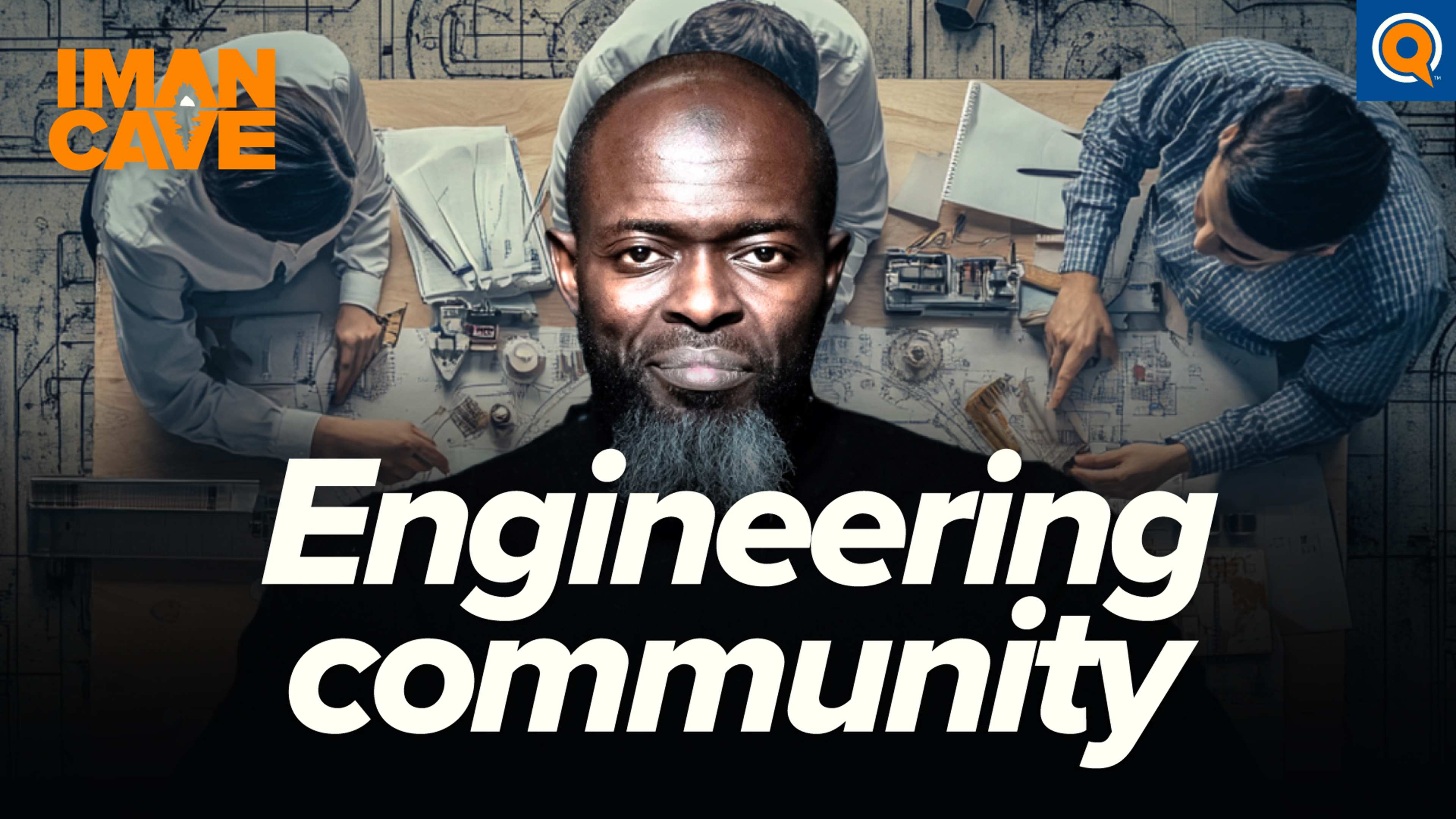
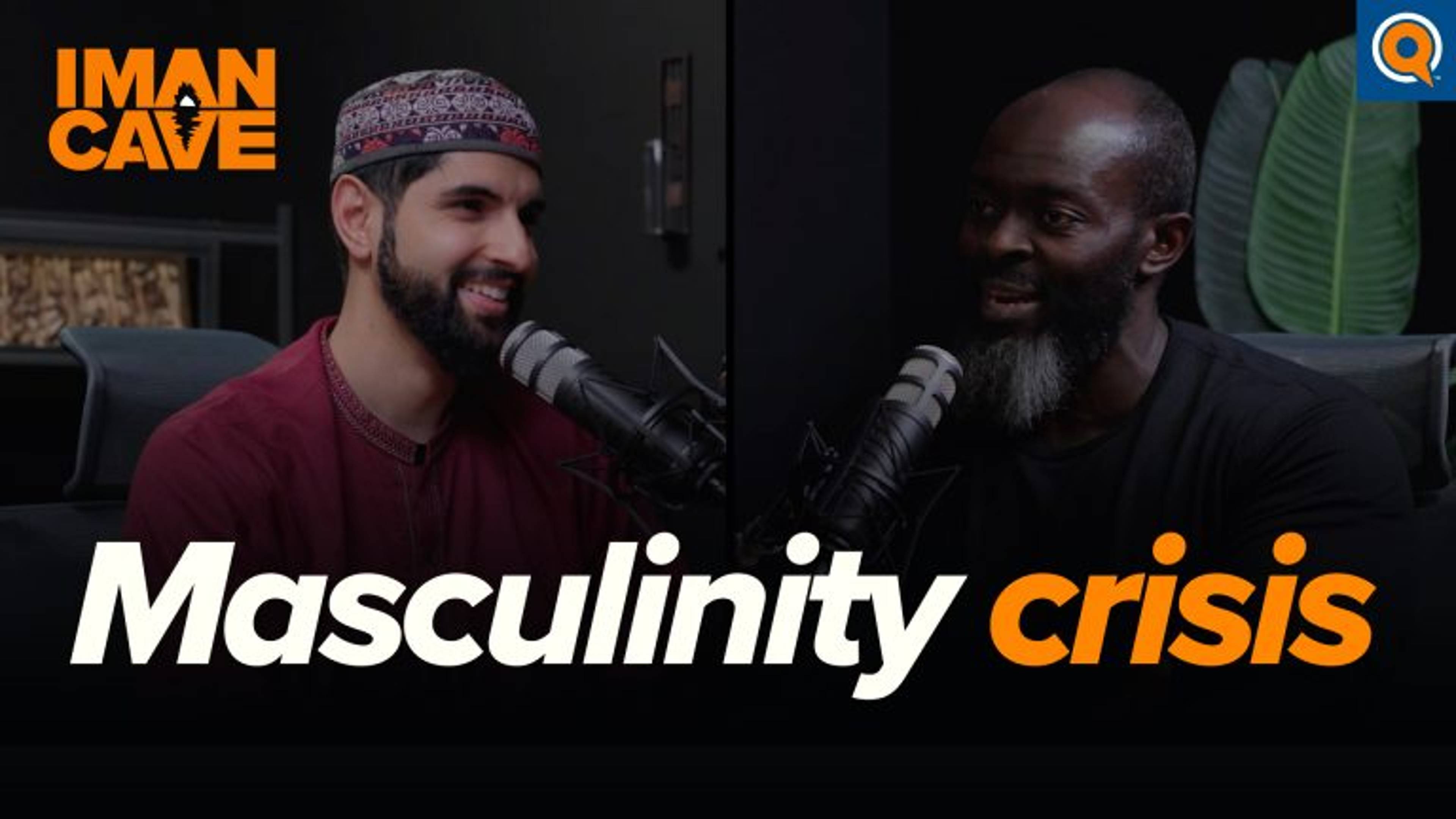
Among the responsibilities of a man is to establish and maintain communities. So how do we build those communities? Sh. Abdullah Oduro invites therapist and founder of Simply Sukoon Faizan Majid, and engineer and founder of AIC Publications Amir Makin to discuss how men can engineer and lead communities that are strong, self-sufficient, and safe, both physically and intellectually.

This transcript was auto-generated using AI and may contain misspellings.
00:00As-salaamu alaykum wa rahmatullahi wa barakatuhu. May the peace and blessings of Allah be upon you all. How's everyone doing? I'm Abdullah Oduro and welcome to the Iman Cave
00:13where we discuss issues of male excellence while being grounded in faith. Community. One of the words inside community, or the only word that you find inside of this beautiful word, is unity. What is the responsibility of the man,
00:27the son, the father, the grandfather, the uncle, and the family in maintaining that unity under the same roof, in the same neighborhood, in the same village, in the same state, in the same country?
00:40Does the man particularly have a responsibility in maintaining the unity of people, of a people, or of his people? We're gonna talk about that today.
00:51The responsibility of unity in the community, establishing a community and maintaining that community. What are the pitfalls within that and how does that help in male excellence? We're gonna do that with none other than,
01:05mashallah, as you've seen before, Brother Faizan, mashallah, mental health therapist, founder of Simply Sukoon, which translates to be simply? Peace. Simply peace, mashallah.
01:17And that's what therapy, its goal is to bring peace to the soul and to the heart, mashallah, and to the people around. Alhamdulillah, bi-Alameen. And today we have a beautiful guest, mashallah, known him for a long time, Brother Amir Makin. Mashallah, salam alaykum. Wa alaykum salam.
01:31How you doing, man? May Allah bless you, may Allah bless you. Amir Makin is an electrical engineer and founder of AIC Publications. Also, he is an entrepreneur and he is involved
01:45in the general community here in Dallas, mashallah, tabarak Allah, and he has been involved with a lot of work that we're going to talk about, bi-idhnillahi ta'ala, by the permission of Allah Subhanahu Wa Ta'ala. Firstly, when you hear the word community,
01:58we'll start with you, Faizan, what comes to your mind? To me, it's people coming together, generally for a common goal. And the hope is that they're aligned towards that goal,
02:11but it's really about us coming together. Sometimes I think of culture as well, us coming together over food, over common goals, common insights, common ideas, common values. Common values, okay. That's the, that's what I think of
02:26when I think of community. Brother Amir. I think of social, political, and economic independence being established as the goal for everybody
02:38in that community, for the men, the women, and the children in every capacity in terms of intellect and economics. So everything that is being done in that community
02:50is leading towards that goal of establishing that community from a social, political, and an economic independence so that all of their resources are controlled and dictated within that community. Masha'Allah, you see that answer is, Masha'Allah, it's gonna be articulated
03:04in some of the literature here, Masha'Allah, Tabaraka Allah. And I think from that answer is a segue into, we mentioned AIC Publications, that you are the founder of AIC Publications. If you can tell us what AIC stands for.
03:18AIC stands for attain the knowledge, innovate for success, and command your future. Attain, innovate, command. Correct. I like that, Masha'Allah, Tabaraka Allah. Masha'Allah, Tabaraka. When was this established?
03:31I established the company in 2012. And I did that because I wanted my own children to be able to have representations that look like them
03:42of people doing exactly what I'm talking about now. Making themselves independent with their own resources. There had to have been some seed that pushed you to do this type of work.
03:57Yes. So if we can rewind for a minute and see where were you born and raised and what were the seeds that were planted to push you to establish AIC? I was born and raised in Illinois. My mother and father married nearly 60 years
04:11until the day he passed. Masha'Allah, Masha'Allah, Tabaraka Allah. And they were madly in love to the day that he died. Masha'Allah. And every time that we would go somewhere, my father and I, especially when I was young, we would dress alike.
04:25You know, until I got bigger and, you know, dad, I want to kind of be my own man and stuff, right? But everywhere we would go, he would always introduce me as, this is my right hand man. As even as a little boy.
04:39And I would always say, I'm not a man. You know, you're on your way to be a man. He would always remind me of that. And whenever we would meet anybody, he would always introduce me as not just his right hand man, but, you know, this is, you know, he's going to do great things, you know,
04:53to the point where, you know, everyone in the Western hemisphere is going to know. And I would hear him say things like this. I'm like, okay, I don't know what a hemisphere is, but I better figure it out. So, you know, go get a dictionary and okay, this is the hemisphere. Okay, he's talking about all this region and all of that.
05:08And every time that I would either go to school, he would always want me to do more. If the school is wanting you to do this, when you come home, I'm going to want you to do this. And in order for you to not be bored,
05:20I'll incentivize you with whatever it is you like. All right. And I was the only boy of four girls as oldest. I'm the youngest. No, I was not spoiled. All right.
05:33That's usually what people think, but no. So the growing up, I think my father realized him being the only boy, he doesn't have a brother. So let me give him, you know,
05:45more of the manliness that I want him to have growing up. With growing up with your father, Mashallah Tabaraka Allah and him being, I guess, you know,
05:56your hero in the example for you of what a man should be, and then calling you his right-hand man. What was it that pushed you? Because also you're a board member of Masjid al-Islam,
06:11which is the oldest mosque in Dallas. And it was established in 19- Community goes all the way back to the 1950s. So, I mean, with that, as you've seen with the resume, Mashallah, he's established his own publication company, electrical engineer, entrepreneur, and also a board member of Masjid,
06:24the oldest Masjid in Dallas, Texas. Moving on to these books, what motivates you to write them? But before that, Mashallah, I want to make sure that I gift you, just to make things clear. And this is what is termed as Jollof rice. No.
06:39This is Ghanaian. Oh, man. No, we don't want no smoke. We want smoke, no problem. Oh, thank you. This is Ghanaian Jollof rice. Not Senegalese, not Nigerian, Ghanaian Jollof rice. Yes, yes, yes.
06:53Mashallah, thank you. I mean, this is one of the best gifts that can be given. Thank you. Alhamdulillah. I didn't know I was gonna get this. This is great. Alhamdulillah. And hopefully you'll go to Ghana one day, inshallah. Inshallah. Yes. The way you're speaking makes me think
07:06there's competition between Jollof rice. No competition. You'll see in the comments, there's absolutely. Alhamdulillah. No competition. Alhamdulillah. So, now, mashallah, I really thank you for bringing these books.
07:19Alhamdulillah. I see that you have here, for instance, he has Aisha the Navigator, parts one. He has book three, you know, and they're different titles. So Aisha the Navigator, Queen of the Nile.
07:33You have Aisha the Navigator, Trains a Leader. Aisha the Navigator, Handles the Bully. One, Handles the Bully, one and two. One and two. You have Ali the Inventor.
07:47Ali the Inventor, Guides City Council. Ali the Inventor, Saves the Garden. Okay? And then we have A Worthy Muslim, Quranic Tools Needed to Overcome Oppression
07:59and Imperialism in Order to Institute Justice. So, are these your two major characters, Ali and Aisha? Correct. These are supplementary characters
08:12that I created for a larger program, which is designed to promote science, technology, engineering, and math. And Ali the Inventor uses science and math
08:24to solve any kind of problems. And Aisha the Navigator uses understanding of history and geography for community building and purposes. And the program, which is the 10 Minute Engineering
08:38STEM program for gifted and talented education is the larger program that I use to supplement those messages through the characters. Masha'Allah, that's beautiful, man. And that's another company that you own, is EduSTEM, isn't that correct?
08:52The AIC Publications and yes, EduSTEM, correct. And STEM standing for science, technology, engineering, and math, masha'Allah, which is manifest through these two characters and how they're using that knowledge of those sciences
09:07to change the world. I mean, not to even say, I mean, for example, so when you have Aisha the Navigator handles the bully, I don't wanna give up the trailer, but what science does she use in particular here
09:22to handle the bully or what skill? She goes back and understands the history of Queen Nzinga. Mm-hmm. And she uses what she learns from that understanding
09:36of historical time to get over this bully situation. Wow, okay. Aisha the Navigator, Aisha the Navigator. And they can find this on AIC.com? AICPublications.com. AICPublications.com, masha'Allah, masha'Allah,
09:50Tabarak Allah. May Allah bless you, man, this is beautiful. And I love how you have this, a worthy Muslim, Quranic tools needed to overcome oppression and imperialism in order to institute justice, alhamdulillah.
10:01So here, what was the motivation behind writing this book? The motivation there came from being able to try to take the language of the Quran
10:14and the life of Prophet Muhammad (ﷺ), and indigenize it where black people in America can really understand how to implement it in their daily lives. If I kept running to a lot of brothers
10:28that were having problems finding jobs, having problems finding a way to fit inside their community, they might be the only Muslim in their family, and they're trying to relate the Quran to their family so their family could understand it,
10:43or they're trying to relate the Quran to their daily life when they spend nine out of 10 of their time around non-Muslims. So how can they go into the Quran and deal with a boss
10:56that may, they have to explain, I need to go make salah. How can I go get a prayer break? Well, what you may wanna say to your boss is,
11:08if Johnny over here is taking multiple smoke breaks, then why can't I take one five-minute break for salah? I literally had to do that, man. Yeah, really?
11:21Yeah, I had to do that. When I was in the hospital, I had to tell them, there's a time that I take prayer. Just when I was in my interview, I said, on Fridays, if there's a possibility, either for me to leave at 12.30, one o'clock,
11:34depends on the time of the year, or I'll work Saturdays, because people don't want to work Saturday. So I'll work Saturdays, give me Friday off, but during the day, depending on what surgery it is, I used to work as a surgical tech, so I'm gonna have to pray. And they said, well, Abdul, I said, just a lot of times we see people
11:49go and take a cigarette break. Takes longer than five minutes, doesn't it? Right. I said, okay. So we need to just take a prayer cigarette. I mean, which one is better? I mean, you tell me, you know what I'm saying? You know, but no, mashallah, it's really giving those tools.
12:02And I like how you mentioned, and this is very important, sometimes people don't like to talk about it, and I don't fully agree with that approach, being that they say, okay, we're all Muslims, and they say we don't see color, right?
12:16Islam doesn't see color, but Muslims may. And throughout the history of Muslims implementing their Islam or practicing Islam, there's glitches, we're human beings. So I noticed how you have all of your characters,
12:29you know, Aisha is an African-American, she's an African-American young female with hijab on. Ali is an African-American young male that's helping and getting involved in society. What's the main reason you did that?
12:44In America, and I'd say probably throughout the world for the last 500 years, the most oppressed in terms of economically and the one that's been denied full rights of humanity has been black people,
12:58black Africans, black African-Americans for the last four or 500 years. And the methodology that was done to maintain that system of dehumanization started with the destruction of all our images in terms of the way we see ourselves.
13:13I'm not talking about idols, but the way we saw ourselves as providers, protectors, maintainers, guardians, independent individuals who could go into the ground and extract the resources and build up a community. All of that was denied to us.
13:27And that system was reinforced by making those destructive images of us as caricatures, of us as lazier individuals who couldn't think. Okay.
13:38In turn, it produced in a lot of blacks an offset of inferior complex. While those who are perpetuating this on us get more confident in their mythological
13:52superiority complex. So getting to the point of always seeing people who look like you that are doing something positive, it turns something on in your brain that says, yes, I can do this. And that's important you mentioned that
14:06because the mythological superiority complex is not only amongst adults. Yes. It's amongst children. And that's why I love it when you have a young black woman,
14:19young black girl, educating herself and then implementing her education to help change, make a healthy social change. And that's what it's about.
14:31I mean, it's bringing the theoretical readings to life. And that's very, very important, subhanAllah. Unfortunately, sometimes it's the adults that impose that on the youth.
14:42Like Malcolm, when he was a young boy and one of his instructors told him, he said, I wanna be a lawyer. He said, no, be realistic. You work good with your hands. Right, subhanAllah. And that subhanAllah, it's beautiful
14:57because as I was telling Faizan earlier, I love you, my Muslim brothers and sisters, but there's a lot of times when I get off the minbar, giving the khutbah, they say, or they say, brother, mashAllah, your voice, it reminds me of Bilal.
15:12I'm like, you heard Bilal before? Man, I never knew you were Bilal, brother, mashAllah, you're pretty old, mashAllah. But normalizing this for youth to where it's not like, oh, black people too are Muslim.
15:26You know, it's like, no, that's always been part of the equation. I wanted to ask when it comes to these publications, there's a level of representation for black people when it comes to these professional fields,
15:38but it's also black Muslims in these professional fields. So was there an intentionality behind kind of doing this double good, not just professional fields,
15:50but also black Muslims in professional fields? So I'm curious about the intentionality behind that. Yeah, most definitely, most definitely. I am unapologetically.
15:59Black and Muslim. I'm unapologetically Muslim and black. I don't try to separate the two or to try to go out of my way to downplay one at risk of the other.
16:10You know, as I see in the society, you know, people can be who they want to be in any other way, while others, especially black people, are sometimes made to feel as if we have to kind of shrink somewhat.
16:27I'll give you an example. I was working as an electrical engineer and I left for Jumu'ah and I had already prearranged with everybody that, OK, on Fridays I'm gone, blah, blah.
16:37So on this particular Friday, the president of engineering decides that he wants to show everyone, all the engineers, his appreciation for everything we've been doing.
16:47So when I come back from Jumu'ah, everybody's got a beer. They've got some type of alcoholic beverage that he went out and got.
16:56Happy hour. Right. It turned into happy hour. So I come back ready to work. And as soon as I come in and they're all drinking and one looks at me and he kind of smiles and smirks.
17:07One engineer like, OK, well, what's he going to do? And then the president of engineering, he says, oh, I'm so sorry, I forgot you don't drink.
17:17And I said, oh, hey, as long as you guys stay here so that I can get home safely and I don't have to worry about a DUI with one of you behind the wheel, I'm good.
17:32And that kind of like the one that had the smirk on his face, kind of it turned from a smirk to, you know, he just did not like that answer because that was an attempt, at least on the guy who had the smirk.
17:44Let me bring you down a little bit. You know, let me bring you down. And so these kinds of instances, we have to have a confidence that comes from our understanding of Quran and our understanding of the history of different people and our people that have gone through.
18:07And no one is going to give that to you. But you, the keys to your liberation are not going to come from those who benefited from your oppression.
18:16So that's beautiful. Right. That's beautiful. And I mean, that's the segue into the establishment of the community.
18:22I mean, even though AIC is a company that is there to help, dare I say, establish a type of understanding of who they are, which will hopefully enable them to establish communities.
18:34But when it came to you establishing the community, you know, within Masjid al-Islam and partaking in that, what were some of the challenges that you faced?
18:43Like you just mentioned as an electrical engineer and as a man, you know, graduated from college and then going to electrical engineering. I mean, you're thinking about, OK, you have to take care of my family, which will be my family and establishing the community here in Dallas.
18:57How was that in the very beginning for yourself? It is very trying when you're dealing with previous generations.
19:07And as generations progress, technology advances and some may want to move forward with it. Some may want to stay stuck in what they're comfortable with.
19:22And you have the tasking of making the ones that want to stay back with what they're comfortable with, of trying to make sure that they are still included.
19:36And the ones that are moving forward, progressing, you still got to make a way for them to condition themselves to leave the breadcrumbs for the ones that are comfortable staying where they are. So you serve as a liaison between the two.
19:49Correct. And then at the same time, you have to realize that both are going to get mad at you because somebody went and picked up the breadcrumbs that I thought were going to be left for me.
20:00And then the ones that want to move forward. OK. I'm having to pull more people because these breadcrumbs are not enough for them.
20:10All right. So you have to be a liaison for that and you got to be a sponge and be able to absorb the hits and the brickbacks and compartmentalize as well. And then you got to learn how to decompartmentalize on your own.
20:24You have to know that people are not going to like you when you're doing the right thing, but they may end up loving you later when they see the fruits of it. Right. You know, you said establishing the community.
20:33And I'm almost sure many of you young men that are boards of masjid or you've gotten a new position to where you may supervise over someone your father's age, that they may not.
20:43Like you said, some of them are in their ways and they're not ready or willing to, I don't want to use the word progress, to be introduced to new things that will cause a certain change that will require them to get out of their comfort zone.
20:58Yes. That's good. You know, and that is where, you know, you as a man, how old are you at that time? Probably about 41. I don't know, you know, realizing, OK, you know, you have to show a level of respect to them.
21:10Right. But respectfully disagree. Right. Right. And at the same time, you don't want those ones that have innovative ideas to run away. Yeah. As with your, as with the breadcrumbs coming.
21:24I think it's a beautiful point in masculinity because you have to know how to be the peacemaker, even in the household. Right. Right. Because if you're going to be the leader, you've got to be the one that's a peacemaker as well. Right.
21:36Because those foundations are set, but there may be times to where the foundations, they may kind of, the ends will get loose because they're not sticking to them. So coming back and establishing that. And then also the fact of, you know, people showing that there's pleasure with you.
21:51Right. I mean, that happened numerous times with the Prophet (ﷺ), he would call people to the Deen of Islam and there would be people that would openly show that there's pleasure with him in front of people that looked up to him and followed him. I mean, physical, physical abuse.
22:04So I think that's a huge, a huge element of rites of passage of learning how to deal with difficult situations from people that you thought wouldn't bring those difficulties.
22:14The thing about it is, you know, we hear the Hadith that, you know, whoever builds a house for Allah, Allah builds a house for them in paradise. Yeah.
22:24But we never stop to really ponder on the fact that you've got to build a foundation in a house. You've got to build basic building blocks, two by fours. You need tools. You need hammers. You need nails. You need men.
22:38All right. You need somebody that's going to be risky. And once you're starting to build that second story, OK, I'll climb the roof. OK, so what's the safety harness so that if something happens to you, you don't hurt yourself if you fall off? Right, right.
22:53All right. So all of these things, and that's what we do in engineering as well, is we focus on building. But now we also have to think about the safety.
23:01How are we going to protect someone who does something out of not knowing from their own self and being endangered?
23:10So if we're building a masjid or doing something, how do we keep information that could be used in a bad way from someone that may not know how to use that information?
23:29Uh-huh. OK. All right.
23:30And how do we transition the ones that are comfortable where they are to this new place that we want to be without them thinking that my old position is going to be compromised? Compromised.
23:45Yeah. It's almost like this constant pushing for growth. But it's also with hikmah, with control. The ones that don't want to move, you've got to get them to move.
23:59The ones that are moving, you want to get them to kind of hold back and temper the pace that they're moving at. Right. And then one other thing that you mentioned that I really like, the idea of while you're doing all this, also figuring out how to take care of yourself and decompartmentalizing.
24:14Yes, the next part. That was, I'm curious as to how you do that, because that sounds rough. There are times I don't answer the phone. OK. You know, I don't answer the phone. There are times I won't go near a computer.
24:27There are times where I will go to the gym and just put a towel over myself and sit in the sauna. You know, and that helps clear me out. Or I'll sit inside my car and just take some me time.
24:41Or I'll get something indulgent, you know, whether it's sweet treat or Jollof or something like that. I'll do that.
24:49And there are times when, you know, my family looks at me and they can tell, OK, he's kind of, you know, he's upset right now. So let me just go do something else. You know, he'll come down off of, you know, whatever's going on.
25:02Those are the things that I end up having to do. And I learned those from watching my father. He had a, today we call them, Iman caves. You know, Iman caves is this. But he had a basement, you know, and he built his workshop in the basement.
25:16He'd go down and build different things and just do whatever. My mother didn't really bother him when he went down there. He would have, you know, TV or something. He'd bring himself some ice cream or had a separate freezer, you know.
25:29And you know, when he would sneak an ice cream, you know, you didn't go down and ask for anything, you know. Or he'd make sure it'd be a flavor that he knew the kids didn't like. So, you know, so I'll do something like this. Right. Right.
25:43So, you know, I can do something like that, you know. You know, they're going to eat this. Well, you know, they put this on here and nobody want that, you know. Oh, you don't like to eat this. Oh, wow. Too bad.
25:55So, on the same way I have my cave, it's my gym. There's a refrigerator there. I just need a little television in there, man. Right. Right. You know, like you said, I mean, it's very, very important to decompartmentalize. I mean, we see that in the Cave of Hira, in the Prophet (ﷺ), the Cave of Hira.
26:09Having that time alone is so important for the man and even the woman, the mother. I mean, I'm almost sure within your therapy, you've probably talked to him. You know, the man has to have time for himself and the woman as well, having time for herself. I'm the woman.
26:22May Allah bless our wives and our mothers, man, because they give everything, you know, to where they forget about themselves, you know, and also the men too, but in a different way. And I like how you mentioned, I always tell this in my community as well,
26:36and the older gentlemen in their 40s that have family for a while and they, what they would term as, and you can tell me this is accurate, the midlife crisis. I'll never forget one older gentleman. He told me, man, sometimes you're just going to have to sit in your car, like you said.
26:51When you come home from work, before you go in the house, he said, go to the coffee shop, go do something. But you see, you say decompress because the family doesn't deserve that. Right. Man, that hit me like a ton of, I wasn't even married yet.
27:05He said, that hit me like a ton of bricks, but it made so much sense. So I can imagine when you're dealing with the elders and the youth and you're like this being pulled
27:17and you're about to be torn because you have to separate. That separation is really, really important. So what about maintaining that?
27:29I mean, also within maintaining, we talked about establishing it and within the establishment, mashallah, you just had a groundbreaking ceremony for the Masjid. Congratulations, the Masjid al-Islam and the process of finishing that.
27:42But the community has been established. Yes. But now I guess it's fair to say you're at a different phase of maintenance. Correct. Right? Right. Because you're trying to, I mean, mashallah, it's a multimillion dollar project.
27:56Alhamdulillah. And shout out to those that have contributed and those that have promised their contribution. Alhamdulillah.
28:04What is it like maintaining that structure of community with those that may ask, you know, as in the Quran,
28:19متى نصر الله When is the help of Allah coming? الأن نصر الله قريب The help of Allah is near. What is it like? I mean, what are some of the pitfalls with the actual maintenance as the days go by? Do you see people giving up?
28:33Do you see people trying to move on? I see people that love to give lip service. Okay. All right. And then when it's time to do work, Allah, they're gone.
28:47All right. And I try as best I can to remind them of Bani Israel. When Allah said, you know, I'm going to give you the promised land. All right.
29:00And one thing he could have done, but he didn't. He said, this is going to be yours. All right. There's people in it already, but you got to fight them. You got to go in there and fight. Now, he could have said, being it is. Kun, fayakun, and that's it. That's it.
29:15All right. But he made them have to fight for it because he knew, even after everything they had been through, oppression, slavery, and all this kind of dehumanization,
29:28he knew that if you don't have to fight to establish your presence in this land, then you won't be able to fight to maintain your presence in this land from somebody else who's going to want to come and take it from you.
29:41So I kind of try to reemphasize that point to the community by letting them know this is something we have to do. Allah is not, he can say, being it is. And there's the Masjid. There's a business. There's this.
29:56There's everything we need. But he, no, he didn't do that for Bani Israel, and they had prophetic guidance with them in their presence. So who are we to think that we're going to have it easier,
30:09even though we've already got air conditioning? We've already got, you know, three, four kinds of different beds, electric beds. We've got automobiles. We don't have to come to a camp, you know, in a camel. We've got running water, plumbing, you know, you know,
30:23we don't have to go dig a hole and relieve ourselves. So we've already got a level of ease. That's a beautiful point. Yeah, that's a beautiful point. I mean, you mentioned, Shu'ayb mentioned this point that, you know,
30:37there's a point where you're going to have to fight. There's no way except to, you know, I think it was Tariq bin Ziyad, if I'm not mistaken, when he told his people, ayna al-mafarru? He said, there's nowhere else to run. They were standing on, he said,
30:50al-bahru wa ma'makum wal-jayshu wara'akum. He said that the sea is in front of you and the army is behind you, meaning that we have to turn around and fight. And that's what they call Jabal al-Tariq, because it was on that Gibraltar,
31:04was the translation they mean, because he was on that mountain. And I love how you mentioned that, because, you know, with a man, there has to be a level of risk. And that risk brings the rizq. Like when you have that risk,
31:19you're relying on something greater than yourself. And that's where the purpose ties in, which makes the Muslim, with his purpose in life, much more transcendent, much more greater, much more unstoppable. I mean, when you're relying on Allah Subhanahu Wa Ta'ala
31:34and you move forward, bismillah, I mean, who's gonna, there's no way that you can lose hope because your hope is in the one that created everything. So, and in building a masjid, you know what I'm saying? Within that process, it's important, like you said,
31:48you know, to kind of, you know, and as an engineer, it's beautiful because as an engineer, you get to apply those principles. Look at the bigger picture, right? It's much bigger than the both.
31:59This argument or this disagreement, the bigger picture, our grandchildren, you know, which again, a man has to be a visionary and be willing to take those risks.
32:09Embracing positive discomfort. Like this is an aspect of it. When you're building a community, there has to be a level of, okay, things are going to be a little uncomfortable.
32:18And it's okay for that to happen. Like it's okay for that to be the case. And what you mentioned about relying on Allah, you know, one of the things I tell some of my clients is,
32:28when it comes to trusting Allah and building tawakkul, I feel like that can only be done in moments of discomfort. You can't do that when things are easy.
32:38Because things are easy, then alhamdulillah, everything's going well. It's no big deal. And it's the same for a community. In order to build that sense of community and the goodness that comes out of that positive discomfort, that discomfort has to be there.
32:51You need discomfort for growth. And I'm seeing that in exactly what you're mentioning.
32:56Always doing something hard and seeking that discomfort, because you know that it's going to be some pleasure. And that's what, when you were mentioning earlier, you know, when things are given to him, the beautiful,
33:08when they said, you know, barely, we'll sit, we'll wait. We'll sit and wait. Right? You won't value it. You won't value it at all. If you don't go through those hardships, you won't value it at all.
33:21And I think that's where we're at, to where it was hard to establish, and I'm not going to give this up that easy, right? To where, you know, maintaining it is going to take a fight for us, for anyone to just come and take that from us.
33:35I mean, these companies you have, mashallah, AIC, what are the future goals of it? What's the vision for it?
33:41I think what we really want to do, one of the goals, is I want to train other people to create similar companies. Publishers that may want to do that.
33:52The second goal I want to have is, last year, certain universities have finally come around to the understanding that a lot of the entry tests that they're having to colleges have been culturally biased.
34:06Certain colleges and universities have now said, we're not going to accept those tests. They've developed alternative procedures for admitting students for different levels of majors, for science and engineering.
34:18I want to get AICpublications.com to a point where we are one of those alternatives. Wow.
34:25So I want to grow all of our tutorials and guidance that we give out to get to that point. So that's my long-term goal. Mashallah.
34:36And we established the Ten Minute Engineering GATE program, Gifted and Talented Education program, as a way to get folks on that track. Okay.
34:46You know, it's made for not just elementary kids, but anybody that is interested in technology, but they don't know where to start. So they're not intimidated by it.
34:56For a lot of black kids or just black people that come from that environment, math is intimidating. Science is intimidating. It's looked at as a foreign language. Right.
35:07And all you see is numbers with gobbledygook presented to you by somebody who's telling you this is important, but they never tell you why or how it can be applied. I was one of them, man.
35:18I mean, I still remember, I guess since the therapist is here, the traumatic experience that I had from my algebra tutor. I still do not like algebra.
35:27I mean, I'm not going to blame her, but she has a huge contribution to my trauma. You know, Subhanallah, this reminds me of when we were going through our master's.
35:38A lot of the research that they teach us about or teach us from is based off of a specific demographic that doesn't apply to cultural minorities. And that's problematic because the research, the way we do things, the way we do therapy, and I found that.
35:52I found that when it comes to application to a minority, to Muslims, especially minority Muslims, the methods that they use for white people is based off of white people.
36:06The methods that they use for them, they don't work. So I have to change things and I have to do things a little bit differently. And there's not much research on that.
36:16So I'm loving this, like the direction of AIC publications, if it gets to a point where testing and barriers to entry into these fields can be changed.
36:26And I wonder if even the learning process, can the learning process be changed to where it's more relevant to minorities? And maybe you would have liked algebra if the learning process was different. Right, right.
36:40So all that is there, but it's just we need someone to do it. And I love hearing this. Yeah, yeah.
36:46What have you seen with the family structure because of the presence of the communities?
36:57So, for instance, you see it was very difficult to make or there were challenges and opportunities when establishing the masjid, for example.
37:06What have you seen with the has there been an influx of families that have come around because of that masjid where people will say, wow, there's community here? I want to I want to join. That is something that's increasing.
37:20Mashallah. It is something that's increasing. And there are more people that steadily say, OK, how can I get involved? And they're looking for a directive to be given. It's a directive with deliverables.
37:34And that's the thing. And you have to have that available. So those individuals don't feel wasted on their motivation is not just dissipated.
37:43So you have to have something that they can be directed to doing. OK, no matter how minuscule. It's got to be something. OK, so let me ask you, let's get a little deeper then.
37:55So when someone, a young man wants to start his nonprofit organization, he has a vision.
38:03He wants to start his organization clothing line or he wants to start a certain type of company. He has a couple of friends that are going to join him.
38:12It's fun in the beginning. At what point would you tell a man you got to have a direction that you're going? And when people come on, you need to know exactly what you want to give them or else they will leave.
38:23At what phase would you tell that young man that I would tell them that a phase one B, one B, one B and phase one A is making sure that they understand exactly what it is they say they want.
38:38If they say I want my own clothing line, for instance. OK. Do you know how you're going to make the clothes? Where are you going to make them at?
38:50No. OK, let's get you understanding that. Do you know whether or not you want to be incorporated or LLC? Let's get you understanding that. Now, are you willing to do those kinds of things?
39:03You willing to get the answers to those questions? Yes. OK, cool. Now, one B is you got to understand you're going to end up working probably 12, 13, 14, 15, 16 hours a day.
39:17Are you willing to do that and do everything else that you already are responsible for? Are you really ready to do that? If you're really ready to do that. OK, cool. We can get some going. All right. If you're really ready to do that, you know what?
39:29Then you know what? Maybe the rent that you might have to pay here. You know, we can we can cover that a little bit. All right. The time that it would normally charge you for accessing this space.
39:41You know, I'll eat that for you. All right. But this is what you have to do in complication for that. Complimentary for that. You've got to make sure that your content or whatever it is you're going to be developing or whatever clothes you're going to be developing.
39:55When we need you to develop some clothes for us and our fundraising initiatives, you got it. That's interesting because that's that's the first that's the first step you mentioned.
40:03But when he gets his employees or people that want to work with him, just as you get people that want to come in the masjid and say, give me something to do. You know, it's beautiful because he has to sit and look at his weak spots and that's going to require humility.
40:17He says, OK, LLC, S Corp, C Corp. I don't want to deal with none of this, but I'm going to have to learn. Be uncomfortable to learn this because I have a vision.
40:29And I think that's SubhanAllah. You know, when it comes to establishing and maintain that community, the vision always has to be there.
40:36I mean, constantly reminding them of the vision is something you probably got to do with the ones that want to stay with that and the ones that want to the ones that want to move, move, move, move. You know, with the establishment of that community and the maintenance of it.
40:48What have you seen with regards to, you know. The family man or the son that the communal effort and the unity within the family, it may be kind of shaky.
41:01What have you seen with like the sons in these households, in these communities, even, you know, what are some of the traits that they face that they're that they're affected by negatively?
41:11When when they don't have a figure to look up to, then that they're lost.
41:18They're lost. But I like to I like to tell them that it's not they're not a lost cause. Maybe lost for a time being, but they can find another figure.
41:32And that's why I feel like there's an importance of having that community, because when it comes to the family system, yes, your father and mother generally should be the role model that you have.
41:43They kind of push you forward and push you towards doing these incredible things, inshallah. But if that's not there, then there can be other people that can step in from your community. And that's why it literally takes a village.
41:56Right. That's why you need people around you that can be role models that are leaders that, I mean, look like you that are doing these incredible things. And they can be the ones that can be your mentor. They can be your guide.
42:09And then they're not so lost anymore. And things transition for them. That's beautiful. That's beautiful. So within within the community, establishing the masjid, right, and then maintaining and the maintenance of it.
42:22What have you seen with like the mentorship programs and how important that is kind of what he's saying about, you know, the kids? I mean, you know, we can say having a hero or someone that they look to.
42:31And I always mention it's important to have those uncles that are around that'll that'll put them in check in the corner with nobody knowing, like, bro, I saw you, man. You know what I'm saying? I saw you, man. You got a job. I told you I was like, you have a job, man.
42:45We try to talk to her for it. I mean, you can talk to her, but just go talk to her father and be ready to be asked some crucial questions. I mean, Islam has parameters for a reason. It's not strict.
42:57Like you can't look her direction if you're interested. There's a process. It's totally OK. And that's also the beauty of community, man, is that, you know, someone can look at a young man and see, man, I've known you since you were so on.
43:11You're not you're not suitable for her, man. She's not going to work. Man, she's too strong for you. You know, she's too aggressive or the opposite. You know, you know, the process of advice, a companion, you know, about two to two men.
43:24And, you know, he gave the advice. When you see that, when you see that with the young men and the importance of mentorship, is there some type of programming in regards to that as well?
43:35There are four principles I stick to protectors, providers, maintainers and guardians.
43:40OK, MG. And we can do that at every phase of our lives, whether we are boys or young men, sons, uncles, friends, husbands.
43:50You know, we are we protecting money? Are we protecting physical security? Are we protecting historical knowledge and understanding?
43:58Are we protecting legacy of our elders? Are we maintaining the elders connection to our community by reminding them of what they've done?
44:09Because as they get older, they may forget. You know, it's because of you, uncle, that I'm able to be here. You know, you took the brickbacks when you were having to sit at the back of the bus. And now because of you, I'm here.
44:21OK, so thank you, uncle, for that. Thank you, auntie, for that. You know, and it connects them to here and it lets them see they're still showing respect.
44:30I'm at ease a little bit more. I mean, those events at the masjid and the youth are playing ball. And, you know, at the end of the event, you know, the imam or the board member gets up on the microphone and makes the jokes just like you did.
44:44And it's so beautiful because here now we know sister Sakina is not, you know, everybody knows sister Sakina. But then the young man is seeing how to appropriately deal with people. Right. Right.
44:56And that's what community really, really does. And, you know, shout out to the elders that have helped establish the community. And then the younger the younger generation that helped to maintain that community.
45:07But the maintenance and the drive that they had was from the elders. But individuals yourself serving as a liaison, it really plays a huge role. And it's all inclusive and how that strengthens it.
45:18What's your take on volunteership, like of young men getting involved in volunteership and what effects have you seen with that?
45:29That has been a little bit of a struggle because the young men have so much pulling on themselves. They have so much pulling them to be in every place except the Muslim place.
45:41So one of the things that I've seen that's kind of worked is giving them an opportunity to showcase what skill they have.
45:49OK. Because a lot of them are just they're shy, but they don't want to be known as being shy. So if you kind of trick them into talking about what it is that they like to do.
46:02All right. And then give them an opportunity to showcase it. Many of them will rise to the occasion or they will.
46:12Be attracted to those who are doing it on their own and they'll kind of go along with that. And this is one of the things that I've seen. There's a young man I know.
46:21He's very, very quiet, very, very quiet. And when I talk to him, I just get loud every time I see him. Hey, all right. And he'll come in. He'll, you know, kind of do this a little bit.
46:35And then when I hear he'll crack a smile and then a little bit more smile. Then outcomes his hand, you know, and then he's coming to embrace me. And then he'll start talking a little bit and letting me know what he's doing and where he's going.
46:49But putting him on that level of being able to let him showcase himself like that to know that, hey, you're not just here, but I'm glad you're here.
47:04We're glad you're here. Your presence is needed and it's valued. He may not know the value he has, but letting him know that one young man.
47:15And you were talking about Strait of Gibraltar. I call him the general. All right. His he is his namesake is Tariq. And from a little boy, I would always see him.
47:29He's just I mean, just a ball of everything. All right. And that knows he had a little, you know, anger problem, you know, a little kid. And one day I put him aside. I said, you know what?
47:42You're a general. And I explained to him what a general was. And I explained to him who Tariq General Tariq was. And I said, yeah, and he sailed through this small little tiny passage.
47:52And it was because of him that the African Islamic influence ruled Spain for 800 years and had. They continued. We'd be in very different geopolitical circumstances around the world.
48:05But you are General Tariq. So if it's OK with you, when I see you, I'm going to salute you because you salute generals in the military. Did you know that? He said. So I salute him.
48:18So I've watched him grow up and every time we see each other, we salute. But I've watched him grow and he'll come out of his shell a little bit. You know, the anger is kind of subsided. And I ask him and it's been a long time since I nicknamed him that.
48:32And I asked him one time, I said, do you know why I call you General? So, yeah, I said, tell me. And he remembered everything verbatim. Wow. That's it, man. That's that's beautiful.
48:44And that's the message to parents is make sure that your young men are involved in the communities that they're giving from themselves for something greater than themselves. And I love how you say that. I watched him grow.
48:55That's part of the maintenance of the community, because we can easily give up and not want to take risks and go back in our homes, be with our families, but be separated as a community. But when we go through the hardships together, we can only get stronger, you know.
49:09And that's what's beautiful about the word unity and community, because the community is and should be.
49:14It's kind of like an expectation of unity, which is very important for our young men and for our older men as well, is that they are involved in their respective communities because they will have all that.
49:27They will go through these qualities that they need to have in order to be a strong, solid Muslim man.
49:33Just this idea, the story that you just mentioned, there's look at where you're at, like all this is happening in this community. Yeah. Like it requires a young, the younger boy to be a part of the community.
49:47But it also requires someone from the community caring about the younger boy as well. So this is a message not just for the parents to send to make their younger children a part of the community, but also parents be a part of that community as well. There are other kids over there that might need you.
50:02Yeah. And I think that's beautiful that just that aspect of it, just being there and being there for the community and supporting them, even if it's just giving a salute every single time you see them. Yeah. It'll make a world of difference. Yeah. It'll make a world of difference.
50:15And I mean, there's research and research on just the fact of how mentorship can change kids' lives. I love hearing stories like this.
50:23You know, as deep as you mentioned, man, it's because I remember one brother, he said that a young boy came up to him and started talking to him and asking for advice.
50:35The brother was like, I didn't know what to offer. I don't know who I see. Yeah, but he came to, you know, and he saw his face. He's like, man, I'm valuable. Like, I have something to offer.
50:51Yeah. And take that responsibility seriously. Yeah. And because when he realized that it hit him, it really hit him like, man, I have something to give to this community by this young child that I never would have thought would come to.
51:06Who? What? When? Where? Why? But it's so beautiful when you create, by the permission of Allah, that mechanism and that environment and atmosphere for all of this to take place.
51:17And it has to be essentially and ultimately men that establish that along with, mashallah, the women and sisters as a support system.
51:25But part of the masculinity and embodiment of masculinity of the man is to volunteer in their respective communities, which helps leave a communal legacy, which is a strong way of worshiping Allah Subhanahu Wa Ta'ala.
51:41May Allah Subhanahu Wa Ta'ala bless all of you for tuning in to the Iman Cave and tune in for our next episode. So don't forget to leave comments. Any comments, mashallah. We read them and we try to answer the questions directly or indirectly.
51:55May Allah Subhanahu Wa Ta'ala bless you all. And don't forget to go to AICpublications.com and to tune in and look at the literature, mashallah, Tabaraka Allah and to join the contribution in helping educate our young brothers and sisters.
52:09As-salamu alaykum wa rahmatullahi wa barakatuh.