The trust that binds people together in a diverse society is among the greatest of blessings, for Allah created humankind as nations and tribes that they may know one another, not despise one another (cf. Qur'an 49:13). History bears witness that whenever a people set out to destroy another, they first sought to strip them of this trust by painting them as liars and dangers to society. This pattern preceded the genocide of the Tutsi in Rwanda, when Hutu leaders spread the claim that the Tutsi were a hateful and dishonest people, and it preceded the Holocaust, when Nazi propaganda revived old slanders of Jews as untrustworthy. As Dr. Wibke Timmermann observed, hate speech "regularly, if not inevitably, precedes and accompanies ethnic conflicts," and without such incitement genocide would find no sympathetic audience among the general public.
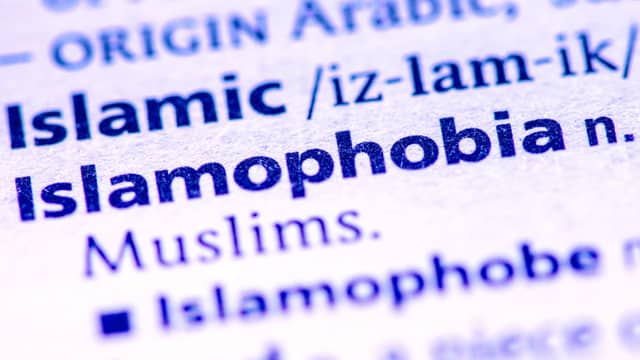
In our own age, the same weapon has been turned against the community of Islam and against some 1.6 billion Muslims. Terms such as Shariah and Jihad have been seized upon by those hostile to the faith, who choose to affirm the corrupted meanings assigned to these words by terrorists rather than the meaning held by the mainstream of the believers. For the Muslim community understands Jihad to be a striving undertaken for the sake of God to protect the lives and rights of others, and understands Shariah to be a divinely ordained way that enjoins the treatment of all human beings in the best of manners. When confronted with this gap between what they wish these words to mean and what Muslims themselves affirm, the peddlers of Islamophobia resort to a crude device: they declare all Muslims to be habitual liars, and to lend this charge a veneer of credibility they invoke an Arabic word, taqiyya, claiming it is a doctrine commanding Muslims to deceive non-Muslims.
Yet the true origin of this term is a ruling permitting a believer to conceal his or her faith when threatened with persecution or attack by forces hostile to Islam, as indicated in the Qur'an (16:106 and 3:28). The word itself carries the sense of being "fearful," as recorded in Lane's Lexicon (p. 310), and it expresses a matter of common sense recognized by every people and every faith: that when one's life or the lives of others are threatened on account of belief, it is right to conceal that belief. A well-known parallel is that of Corrie Ten Boom, who lied to the Nazis about the Jews she was sheltering, and no person of moral conscience would fault her for lying to save lives from murderous criminals. Since taqiyya has only ever been used in Islam to refer to Muslims preserving themselves from mortal danger by concealing their faith, this alone should dismantle the false claim that Muslims are generally taught to lie to others.
When this misrepresentation is exposed, its promoters retreat to another concept, citing the saying of the Prophet ﷺ that "Warfare is deceit" (Ar. khida'ah). But here too they find no support, for this reference to stratagem in war has been echoed by nearly every civilization known to history. It is most famously associated with the Chinese philosopher Sun Tzu, who wrote in The Art of War, "All warfare is based on deception... when we are able to attack, we must seem unable; when near, we must make the enemy believe we are far away; when far away, we must make him believe we are near." Behind the frightening use of foreign terminology, then, lies nothing more than an ordinary notion shared by all peoples. Moreover, by the unanimous consensus of the Muslim scholars, deceiving the enemy on the field of battle (khida'ah) is clearly distinguished from treachery (khiyanah) or the breaking of a covenant, the latter being universally forbidden.
What the promoters of the taqiyya myth deliberately ignore is that, while Islam permits the concealment of faith in the face of persecution, it nowhere grants Muslims a general license to lie with the intent to deceive. On the contrary, Islam condemns dishonesty in the strongest terms as a trait opposed to true faith and a mark of hypocrisy. Ayesha, the wife of the Prophet ﷺ, reported: "There was no behavior more hateful to the Messenger of Allah than dishonesty. A man would lie when narrating something in the presence of the Prophet, and he would not be satisfied until he knew that he had repented." Furthermore, Muslims are bound to be wholly truthful in conveying the teachings of their religion, for the Qur'an declares that among the gravest of evils is for a person to invent a lie against God (cf. Qur'an 39:32).
As for the Muslims of the United States, they have been present since the earliest days of the nation, establishing mosques, schools, and institutions that have served the wider community. They are, by every measure, well integrated socially, culturally, economically, and politically. In over two hundred years, there has never been a single instance of this community attempting to overthrow the system, nor of a mosque or an Imam implementing an alternative body of law, nor of Muslims promoting activity that would infringe upon the rights of their non-Muslim neighbors. Yet in the present climate of heightened hostility, a Texas state Representative sent one of the authors, along with other Muslim leaders, a loyalty test demanding that they affirm American values. Rather than approaching in the spirit of friendship, he chose a course grounded in suspicion and intimidation, disregarding decades of interfaith dialogue and civic engagement, though he might easily have reached out to any of the more than half a million Muslims in Texas. Such loyalty tests are not new in America; they imply a second-class citizenship, a status the authors reject. Like the anti-Shariah bills passed in many states, these maneuvers win cheap approval from a fearful public while achieving nothing in actual regulation.
The refrain "You can't trust them—some may be good, but too many have a secret agenda" is the very racism that flourished before, during, and after Executive Order 9066, which condemned nearly 120,000 Japanese-Americans to internment camps in one of the most shameful episodes of American history. The same script has now found a home in anti-Muslim bigotry. Its narrative casts the Muslim community as a single unified body, regardless of nationality, age, or religiosity, all programmed to wage "civilization Jihad" and incapable of any honest, mainstream expression of faith. Its proponents first impose their own definitions upon Islamic terms such as Shariah and Jihad, then demand that Muslims either reject those terms as caricatured or, upon clarifying their true meaning, be accused of taqiyya. This traps the believer in an impossible bind: renounce the tenets of the faith to escape persecution, or explain them honestly and be branded a liar.
This tactic of dismissing all that Muslims say as falsehood is a classic instance of "poisoning the well": rather than defeating an opponent through reason, one destroys their credibility before they may speak. Those who complain that "Islamophobia" is merely a word used to silence criticism themselves wield taqiyya in precisely the same manner, denying mainstream Muslims the right to voice the understanding held by the overwhelming majority of believers worldwide. The pattern is plain: first comes the falsehood that Muslims do not condemn terrorism; when proof is presented that they do, they are told they are lying and concealing their intentions. Beyond the lie that all Muslims lie lies a deeper reality—that its promoters were never concerned with any truth about the Muslim community or Islam in the first place.