fbpixel
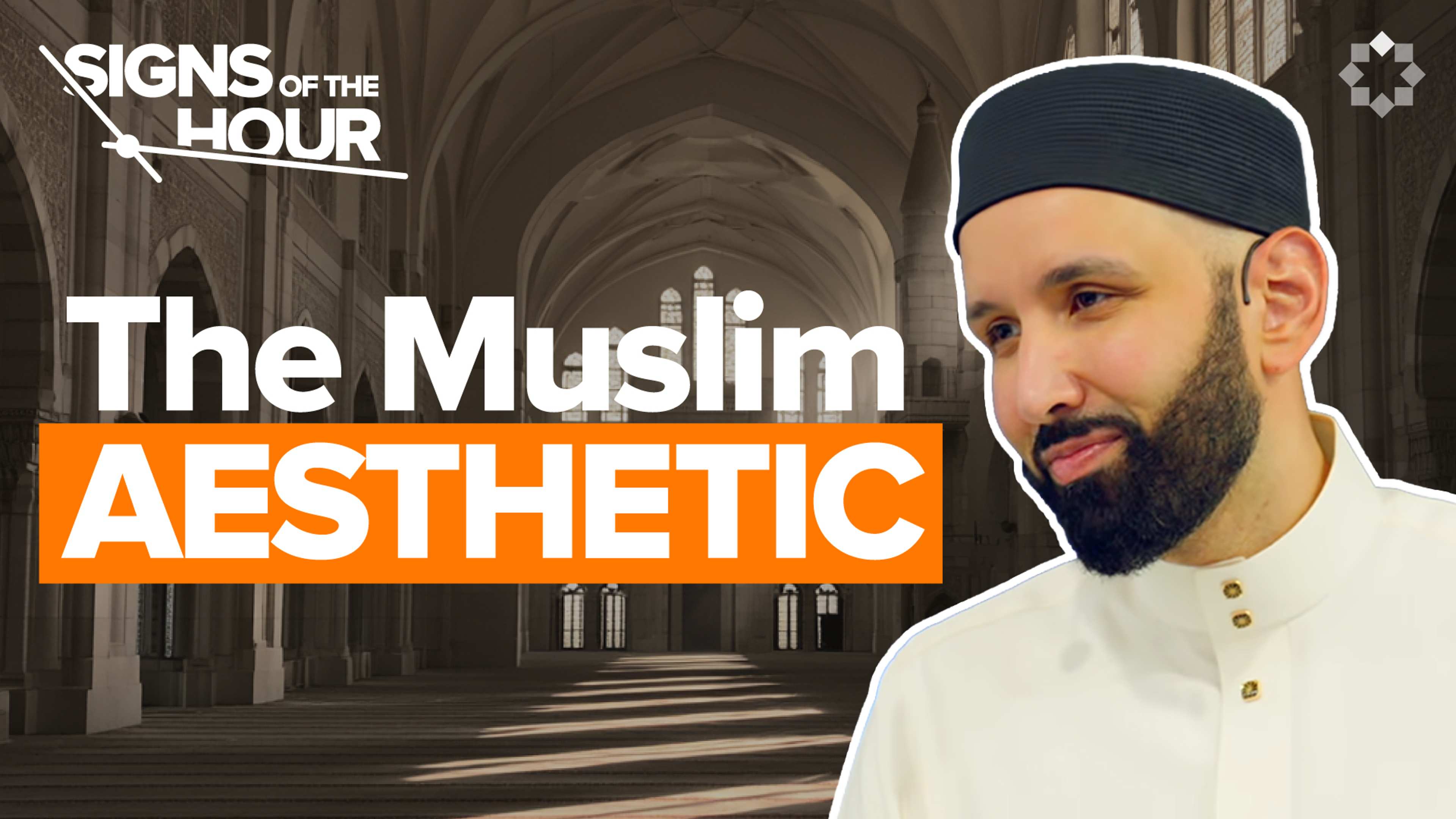
A Beautiful Masjid With Empty Rows | Signs of the Hour Ep. 13
Signs of the Hour

A Beautiful Masjid With Empty Rows | Signs of the Hour Ep. 13

A time will come, the Prophet ﷺ said, when people gather in the masjid and there isn't a single believer among them.

Dr. Omar Suleiman unpacks that warning alongside several others: mosques built to compete rather than to function, mushafs that grow more beautiful while fewer people actually read them, and a Companion who wept after watching someone recite the Qur'an for payment.

This episode of Signs of the Hour asks a harder question than whether our masjid is beautiful enough. It asks whether there's still a living faith inside it.

This transcript was auto-generated using AI and may contain misspellings.
00:00What happens when religion remains as form without substance? It becomes all about the decoration of it, the aesthetics of religion. There will come a time where people will gather in masjids and there will not be a believer amongst them. The chandeliers, the carpets, the minarets, right?
00:14The architecture, it can also become a tourist destination. People will come, they'll take pictures, they'll take their videos, but it's not a place where you go and you actually honor as a masjid. What does the masjid mean to you? Is it a gathering place? Is it just a community space?
00:35So welcome back, alhamdulillah. We had a break for a few weeks, but insha'Allah ta'ala we'll be continuing with the series on signs of the hour. We ask Allah subhanahu wa ta'ala to make us amongst those that are prepared for whatever he has decreed and we ask Allah subhanahu wa ta'ala
00:50that he always finds us in a state that is pleasing to him. Allahumma ameen. May Allah 'azza wa jal allow us to see the truth and to follow it and may Allah subhanahu wa ta'ala allow us to see falsehood for what it is and to avoid it. The hadith of the Prophet, may Allah's peace and blessings be upon him,
01:04the famous du'a that is narrated, Allahumma arina al-haqqa haqqa wa-rzuqna tiba'a wa-arina al-batila batila wa-rzuqna ijtinaba O Allah show us the truth as truth and allow us to follow it and show us falsehood as falsehood and allow us to avoid it
01:19is a guiding du'a for what we're going to be covering insha'Allah ta'ala in the next few lessons. May Allah 'azza wa jal protect us. Allahumma ameen. So the last time we left off with the hadith of the Messenger of Allah, may Allah's peace and blessings be upon him,
01:32where he talks about the lizard hole, the idea of this ummah, the ummah of Muhammad, may Allah's peace and blessings be upon him, essentially repeating the mistakes of the nations that came before it. And so you have this huge body of literature in the Qur'an
01:46about Bani Israel and what happened to the prophets of Bani Israel and the communities of Bani Israel and the Prophet, may Allah's peace and blessings be upon him, now telling us that by the end of time, we would have followed them in all of the things
02:00that led to the favor and the privilege of Allah subhanahu wa ta'ala being rescinded from them, right? And so the decline of their ummah resulted in nubuwwah, resulted in prophethood being given to the Prophet,
02:13may Allah's peace and blessings be upon him, and another ummah, which of course was always decreed, but there is istibdal, there's a switching of those ummahs with another ummah. The decline of this ummah is the end of the world, right?
02:26The end of this ummah is the end of the world, right? When we actually follow into all of those footsteps. And so tonight, it's really ironic by the way, because we're in the middle of masjid construction. So please don't judge the hadith
02:40that I'm going to share insha'Allah ta'ala without first understanding the explanation. But tonight we're going to talk about what happens when religion remains as form without substance. We'll start with that and then we'll talk about
02:52the rebranding of evil form as good substance. Now I want everyone to see themselves in these hadith because especially when we talk about like the way that masjids they're going to be towards the end of time, you're like, well, I'm not on a masjid board.
03:07I'm not on a masjid committee. I'm not an imam. I have nothing to do with printing Qur'ans or doing anything that is in regards to the construction of that which is religious. So I'm not included. Well, first and foremost, remember you're observing signs. That's the first thing.
03:22You're observing signs. Number two, you might find yourself in a situation where there's some participation in some presentation of religion, whether it's in architecture or in a structured presentation of religion, whatever it may be, and you have a role to play
03:36in the way that religion is experienced and presented in the 21st century, especially in the West, especially when modernity is subsuming religion in the way that it is, right?
03:50And so what happens first and foremost when religion becomes form without substance? And I want to start with the hadith of Anas ibn Malik (may Allah be pleased with him), who says,
04:02Qala Rasul Allah, may Allah's peace and blessings be upon him, "La taqoom al-sa'atu hatta yatabahahu an-nasu fil masajid." The hour will not be established until people boast with their masjids. Now, there are other narrations that are very famous.
04:12For example, people will boast with the height of their buildings, and we'll talk about materialism, and that's a whole section in Alamat Al-Sa'ah, right? In Ashrat Al-Sa'ah, in the signs of the Day of Judgment,
04:27people competing with their houses, people competing with their gardens, people competing with their cars, people competing with buildings, basically a world of vanity. But where it becomes most problematic is when it manifests itself in religion itself.
04:40Remember in jahiliyyah, what made these people so ugly in what they were presenting was not just the idolatry, but they were using the Ka'bah now. They were using what Allah made sacred as pieces of their jahili desires,
04:55of their ignorant pleasures, and their ignorant power moves, right? So, the Prophet, may Allah's peace and blessings be upon him, said, there comes a time where people begin competing in masjids.
05:08There are two ways that the ulama interpreted this, first and foremost, and they're not contradictory. One of them, and this is a genre of narrations, is in decorating the masjids in vanity.
05:22So, going overboard in the decoration, in the beautification of the masjid itself, in the embellishment of the masjid itself. So, just like when you're trying to build your house, sometimes you spend way too much money on something that is entirely pointless.
05:37And so, being pointless and extravagant is excess in the construction of the masjids, which if you look around, subhanallah, and you look at other places of worship,
05:51and you look at some of the empty churches, right? Especially here in the United States, where you can literally find articles named "The Emptying Church Problem." And you look at how much money was put into the construction of these churches, and how little of it perhaps was put into the ability of Christianity,
06:03to use the church example specifically, to survive, right? Modernity, and to transition from generation to generation, a transfer from generation to generation.
06:18And now they're on sale. And you think about what went into that construction. Could you not foresee a similar thing happening to masjids, right? So that's one interpretation of this hadith, of people will start to boast with the masjids,
06:32that they build with vanity and not function, right? It loses its spirit. It becomes all about the decoration of it, the chandeliers, the carpets, the minarets, right? The architecture, the aesthetics of religion.
06:45That's one. And the other interpretation, not contradictory, but also to be built upon it, is when one group of people doesn't like this masjid, but also to be built upon it, is when one group of people doesn't like this masjid,
07:00they go and they build another masjid, and masjids start to become like the original Masjid Quba and Masjid al-Dirar, that Allah 'Azza wa-Jall talks about in the Qur'an, right? The Prophet, sallallahu 'alayhi wa-sallam, is building a masjid with his companions in beauty
07:15and whose foundations are taqwa, virtue, and piety. And another group of people, the hypocrites, go and they build another masjid, right? But the intention is competition.
07:27And so think of the Arabs in their jahiliyyah. My idol has to be better than your idol. I have to control this group. I have to control that group. Let's move our tribe here. Well, this person wants to be the custodian of this idol and this shrine. So let's go build this here.
07:42And then think about how that manifests in masjid. And you'll hear many people lament, by the way, right? The old days when we had to be forced as communities into centers, right? But now as the community grows,
07:56it's easier to separate and to build multiple masjids. Is it a problem when you build multiple masjids? No, it's a good thing. Is it a problem when you build multiple masjids out of mutual rivalry? Yes, absolutely. That's the irony of it.
08:10You go to Madinah al-Munawwarah and you see where Masjid al-Nabawi is and then you see Masjid al-Ghamama and you see like where all the musallas were at the time. There's nothing wrong with that because those masjids were not being built out of mutual rivalry, out of competition
08:24or out of, you know, personalities or ego. They were built out of having more places to worship Allah, Subhanahu wa-Ta'ala. It was function. And we pray that Allah 'Azza wa-Jall make that the case of our masjid here. Allahumma ameen, right? It's function. It's a reality and it's a way of growing
08:38the 'ibadah of Allah, Subhanahu wa-Ta'ala, not the nafs, not the selves, not the egos. But how many stories do we have? How many bad examples do we have of masjids, actual houses of Allah? This isn't me competing with my neighbor, with my house.
08:53Using the house of Allah, Subhanahu wa-Ta'ala for mutual rivalry and competition and people starting to build masjid and build communities out of competition, right?
09:07And then while this masjid is doing this, so we have to do that too. Not because it makes sense, but so that we can compete with them, right? So that we're not inferior to them. So these are the things that the Prophet, sallallahu 'alayhi wa-sallam, is warning.
09:21He's warning about masjids becoming monuments, 'alayhi al-salatu wa-al-salam, the way that other places of worship can become monuments. And he's warning, 'alayhi al-salatu wa-al-salam, about masjids becoming places
09:33where people can compete with ego, right? Built out of community groups, cults, right? This group doesn't like this group. It's racial, it's ideological, it's sectarian. It's this madhhab versus that madhhab.
09:48It's this city of this country versus this city of this country. Both in a country that's not that country. It's strange, it's weird. But when people have money and power and a lot of time on their hands and a lot of ego in their heads, right?
10:02This starts to happen. So we start to cut out different places of worship and the Messenger of Allah, sallallahu 'alayhi wa-sallam, talks about this idea of masjid now being used for these dunya reasons. Then there's a narration of Ibn 'Abbas
10:17radi Allahu ta'ala 'anhu who says that the Prophet, sallallahu 'alayhi wa-sallam, said, "Ma umirtu bi-tashyid al-masajid. I have not been commanded to go overboard in the decoration of the masajid.
10:31And he said, sallallahu 'alayhi wa-sallam, you will decorate your masajid kama zaharrafat al-yahud wa-al-nasara— the way that the Jews and the Christians decorated their places of worship. You will follow the previous nations
10:44in that trend of the decoration of the masajid. These are hadiths. Again, we're in the middle of a masjid construction. These are hadiths that we have to admonish ourselves with. The Prophet, sallallahu 'alayhi wa-sallam,
10:59was not against beautiful architecture. The Messenger of Allah, sallallahu 'alayhi wa-sallam, was not against the beautification of the masajid. Allah 'Azza wa-Jall says, "Khudhu zinatakum 'inda kulli masjid." You take your best appearance to the masjid.
11:11Then obviously the masjid has to have a cleanliness to it, has to have a beauty to it. But he's talking about vanity. Sallallahu 'alayhi wa-sallam, that you're not talking about clean and dignified and beautiful and functional.
11:24You're talking about just going overboard, right? And so you start to see like the chandeliers and you start to see the carpets and you start to see sacred space becoming scenery, right? Becoming things for the eyes to admire,
11:39not for the hearts to find their awakeness through with Allah, Subhanahu wa-Ta'ala. There's a really interesting historical argument
11:51that took place early on, by the way, in Islam with 'Umar ibn 'Abd al-'Aziz, Rahimahu Allahu Ta'ala. 'Umar ibn 'Abd al-'Aziz, when he took the khalifah, he was notorious for wanting to undo
12:04many of the excesses that he had seen in some of the khulafa' of Bani Umayyah before him. So he wants to undo that and he wants to undo injustice and he wants to demonstrate with his own self,
12:17a supreme level of zuhd, right? Of asceticism and so his own palaces, no more. His own dress represents a great deal of humility. And so one of the things that he wanted to do,
12:31as he's getting rid of his own palaces and he's getting rid of even the jewelry of his wife and stripping his own personal life of vanity. One of the things that he wanted to do, was he wanted to remove some of the ornaments
12:46and remove some of the embellishments of the masajid, particularly the great masjid in Damascus, Masjid al-Umawi.
12:57He wanted to remove some of it, but this shows hikma. He found the balance because some of the scholars mentioned to him that this actually provides, some of it provides a counterweight
13:10to the Byzantine architecture and the churches that are being built. And there is a power that comes, not amongst each other and not vanity, but a power that comes to some of the beautification of these masajid, some of its decoration
13:23and its grand nature. And so he left it, radiyallahu ta'ala anhu, which shows you that, you know, we should absolutely love the history of Islamic architecture. I mean, how much 'izzah do you feel?
13:36How much dignity and honor do you feel when you see the masajid that have been built throughout Africa, throughout Asia, throughout Europe, right? The old masajid throughout Islamic history that became the marvels of civilization and they were actual centers of good, right?
13:51So much was happening through those masajid. They weren't being built as empty monuments. They were being built as living masajid. So there is a fine line and some of that is going to change from context to context and be left to good judgment, right?
14:05Amongst the people as to what is extravagant and lavish and what is functional because some of you might be saying, why do we even build a masjid? Let's just go buy an old Walmart and turn it, well, I don't think Walmart's ever actually go out of business, right? But like go find a warehouse
14:20and make it a prayer space, right? And there's some truth to that, but then there's the opposite of that as well, which is like we need to get this specific carpet, right, that's been stitched together in Turkey or whatever it may be and make sure
14:35that it comes in one piece and not, you know, it has to be spread out and we're going to, you know, stand up and fundraise in Ramadan for this extravagant chandelier. Alhamdulillah, we actually don't have a chandelier here, right, so we can, it's one thing we can boast about, right?
14:49I'm using quotes for those of you. That will listen to this lecture in audio, right? I'm only joking. But the point is, is that there is something to say about structures and the Messenger of Allah ﷺ mentioned that. Now,
15:00I want to bring it to us at a more personal level. Abu Darda radiallahu ta'ala anhu, it's narrated from him, he said, إِذَا زَخْرَفْتُمْ مَسَاجِدَكُمْ وَحَلَّيْتُمْ مَصَاحِفَكُمْ فَالدِّمَارُ عَلَيْكُمْ
15:15It's actually a very scary riwayah, very scary narration. He said, when you see that your masajid have become overly decorated, and when you see that your mushaf, your copies of the Qur'an
15:28have become colored and beautified, then know that destruction is upon you, that it's a sign of the Day of Judgment. In another narration, فَعَلَيْكُمُ الدِّثَارُ, that ruin is upon you.
15:41This matches up to what the Messenger of Allah ﷺ was talking about, where literacy actually grows. You know, I was just listening to a historian talk about this, subhanallah, that
15:54it's only in the last 100 years or less that the majority of the world's population has this much access to literacy. Like for all of human history, the majority of people could not read, right?
16:06Literacy was not something that was as widespread as it is. So literacy is widespread, information is widespread, but 'ilm is on the decline. Knowledge is declining. The lack of 'ulama and 'ilm, the lack of
16:18scholars, people of knowledge, and knowledge is on a rapid decline. So the increase in literacy does not equal the increase in knowledge. Likewise, you might be thinking, like you're talking to
16:31someone back then, you're saying, oh my God, there are going to be these beautiful mushaf copies all over the world. They're going to be turned into monuments, they're going to be turned into frames for our homes, they're going to be turned into all sorts of things, right? And beautified in the
16:45way that they are. We can put them up in our car, we can wear them in certain ways, we can do all of this. But while the Qur'an is being decorated, it's also simultaneously being what? Deserted.
16:59Right? Less people acting upon it, less people memorizing it, less people reading it with the depth that it's to be read with. And so those two things can also be in parallel, right? So it's
17:11not just that the Qur'an is growing in terms of publication or decoration, it's that it's actually zayyanuhu fee quloobikum. Right? Like Allah beautifies iman in your heart, some of the 'ilm
17:23I mentioned in tafsir of that, that Allah 'aza wa jal beautifies the Qur'an in your hearts, right? So it is zayyanuhu fee quloobikum, zayyanuhu fee quloobikum. The beauty of faith, the beauty of the Qur'an
17:35in the heart. Now again, someone might say, what does that mean? Does that mean like we shouldn't have frames of the Qur'an? It depends what your intention is with that frame. Does that mean that,
17:48you know, like these tajweed colored mushaf copies are a sign of damar or a sign of tragedy? Actually, ironically, I'd say subhanallah it's the opposite, because that's for function. You're actually
18:00trying to read the Qur'an with tajweed, that's beautiful, right? I would not apply, and Allah knows best, this narration to that, because that's pure functionality, and that's something that we're trying to grow a connection to the Qur'an. But when the Qur'an becomes, you know, the thing
18:13that everyone puts on the wedding card, or is recited in the beginning of a wedding, where everything in that wedding contradicts the Qur'an, that's a sign of the desertion of the Qur'an, the Qur'an being deserted. When there's all of this money being spent on like, how am I going to
18:29get this perfect, you know, beautiful frame that's going to be put here? But then in that same household, there isn't a raghbah, there's no desire to learn the Qur'an, to memorize it, to act upon
18:40it, to maybe sponsor Qur'an schools, or people to learn the Qur'an around the world, or to have mushaf copies in places where they're still using the alwah, because they don't have the actual mushaf copies,
18:50they can't get access to it, that's where the problem is. It's a misdirection of priorities on both an individual level and a communal level, and so you have to look at yourself individually,
19:00like, do I like the Islamic aesthetic, or am I trying to penetrate myself with that Islam? Then as a family, like, is my house a house of Qur'an? Is my community a community of Qur'an? Is my
19:12festival a festival of Qur'an, in that it's honoring the Qur'an? Then you even come to the masajid, and there are these very interesting ahadith, where the Messenger of Allah, salallahu
19:23alayhi wa sallam, for example, mentioned, that a person passes through a masjid and does not pray
19:34two rak'ahs in it, and a person only gives salam to those that they know. Shaykh 'Umar al-Ashqar, rahimallahu ta'ala, when he talks about how sometimes the same phrase
19:50will be put into different contexts. So, for example, people not giving salam except to those that they know. It has an enriching meaning in every context, so sometimes it's a sign of the
20:04hour, in that there is no more community. There's no more community, right? People don't give salam to each other because there's no more community. It could also mean there is a departure from
20:17our Islamic identity. So, instead of saying salam to your family and friends, you say everything else. How do you greet people?
20:26Or it's the class distinctions, right? Which a lot of the ahadith about giving salam only to those that you know have to do with class, that the ummah once again
20:37becomes divided tribalistically upon class, upon things not by taqwa, because if faith is what binds us, then salam is supposed to be for everybody. But I only give salam to people of a
20:47certain distinction, or only within my family, or whatever it may be, right? But the point is that you have to read the portion that is oft quoted within the particular hadith that it is quoted.
21:01And so, in one narration, the Prophet ﷺ mentions that the masajid will be taken as turuq,
21:09as pathways, right? So, the masajid become pathways. What does that mean? Few things. Some of the 'ulama mentioned the conquests of Muslim lands,
21:24right? And it's very painful, for example, when you look at a place like Andalus and Qurtubah, and you look at even more painful, by the way, what's happening to Masjid al-Aqsa, may Allah protect it, Allahumma ameen. So, the conquests and the desecration of Muslim lands,
21:37or the abandonment of those places by the Muslims, so they don't pray in them anymore. And I'm not going to name Muslim countries here, but like you go to places in the world, in a Muslim world,
21:47and you see these beautiful masajid, beautiful masajid. And around that masjid is, you know, the marketplace and whatever it may be, and people are just walking right by them.
22:01And when the time of iqamah comes, there's hardly one saff in there. But outside of that masjid, this is in a Muslim country, not under occupation, outside that masjid, it's hundreds, thousands of
22:12Muslims, right? But the masjid is becoming just a pathway. People walk by it, people walk through it, but they don't actually honor it the way that it's supposed to be honored as a masjid.
22:23And of course, it can also become a tourist destination. People will come, they'll take pictures, they'll take their videos, it'll become, you know, great content for online, but it's not a place where you go and you actually honor as a masjid. And by the way,
22:38subhanallah, I take this as a personal challenge for myself, and I was, as I was preparing for tonight, I was actually criticizing myself, reproaching myself, that sometimes even when
22:48we travel to a Muslim country, we go to a place and you see a masjid there, honor that masjid as a masjid. Make sure you honor it as a masjid. Like, schedule, even if you're going to go and you're going to visit this area or whatever it may be, schedule yourself so that you might catch
23:01Salat al-Jama'ah there as well. Honor it as a masjid as well, right, when you're going to these places throughout the Muslim world, so that you're not contributing to the masjid becoming
23:11just a pathway, right, a tourist destination. And that's what happens when architecture is built
23:18without, right, the vision and the, you know, the transcendence of faith and the transferring
23:27of faith from generation to generation. May Allah protect us from our masjid becoming like that. May Allah protect our masjid from becoming empty and becoming places where they're only looked at for
23:38architecture and they're not full of people who are worshiping Allah subhanahu wa ta'ala. And the end of this particular part of it is where you have a narration like the one from Abdullah ibn 'Amr
23:52and this is mawquf to him. He said, that there will come upon, there will come a time where people will gather in masjid
24:07and there will not be a believer amongst them. May Allah protect us. Allahumma ameen. Now, this thing, this particular narration is referring to the end end, right? So, you take,
24:19you back project and you say, well, how many of us when we come here are amongst those people that are focused on Allah subhanahu wa ta'ala. We come here seeking Allah 'aza wa jal's pleasure. We don't come here for anything but that, that connection with Allah subhanahu wa ta'ala and charging
24:33yourself with that. Like, what does the masjid mean to you? Is it a gathering place? Is it just, we should have a community, but is it just a community space? Is it just to see other people or is it that I want to get the reward of being in the house of Allah subhanahu wa ta'ala. I want
24:47to honor the house of Allah subhanahu wa ta'ala, right? And as I mentioned early on in the series, when you take the hadith of the seven that are shaded under the throne of Allah, or I may not have mentioned it in this series, but when you take the hadith of the seven that
25:02are shaded under the throne of Allah subhanahu wa ta'ala, actually, if you apply each one of those categories to yourself, you're protected from all of the corruption of the signs of the day of judgment. So one of them, one of the people that are shaded under the throne of
25:15Allah subhanahu wa ta'ala is what? A person whose heart is attached to the masjid. And that is building the masjid, cleaning the masjid, you know, coming to the masjid, inviting to the masjid,
25:29right? That the masjid is a centerpiece to that person's heart and that is one of the ways that we protect ourselves individually and we protect people, and we protect our communities as well
25:40from that doomsday, from that end of time. There's another narration from 'Imran ibn Husayn radi allahu ta'ala anhu, from the Prophet salallahu alayhi wa sallam, which then comes to the mushaf itself, the Qur'an itself. And he says that the Prophet salallahu alayhi wa sallam said,
25:55man qara al-Qur'an, fal yas'ali allaha bihi, fa innahu sayaji'u aqwamun yaqra'una al-Qur'ana yas'aluna bihi an-nas. And it's actually said that 'Imran saw a man later on in the state and he started
26:09to cry and he said, inna lillahi wa inna ilayhi raji'un, because he saw someone reciting the Qur'an and asking for money as he recited the Qur'an. And he remembered this hadith of the Prophet salallahu alayhi wa sallam, right? And this is actually subhanAllah something with the sahaba
26:23that they had these narrations and then they lived to see some of these signs manifest and it broke their hearts because they never thought they would see these things, right? What does this refer to?
26:35First and foremost, this hadith actually has a profound meaning for everybody about how you read the Qur'an, the first part of the hadith. Man qara al-Qur'an, fal yas'ali allaha bihi. Whoever
26:47reads the Qur'an, ask Allah with the Qur'an. Can anybody tell me what you understand from that? Fal yas'ali allaha bihi. Ask Allah with it. What does that mean? It's okay to guess.
27:03What is it? Use the du'as from the Qur'an. Very good. And that's one element of it. What else?
27:09So use the du'as from the Qur'an. JazakAllah khair. If Allah mentions Jannah, stop and ask Allah for Jannah. If Allah mentions the fire, stop and ask Allah for protection from the fire. If Allah
27:23mentions a praiseworthy trait, stop and ask Allah that you have that praiseworthy trait. If Allah mentions a negative trait, stop and ask Allah that you avoid that negative trait. That's what the
27:33meaning of this hadith is, right? Ask Allah with the Qur'an and that is one of the greatest ways that you find a connection with the Qur'an. When the Qur'an becomes that personal to you, so you're not
27:44just going ayah by ayah, ayah by ayah. There's a place for doing just tahfiz, right, where like I want to memorize right now and so I'm just going through it. But there has to be a reading of the
27:54Qur'an that exists in your life regularly, not just in Ramadan, regularly that includes what the Prophet salallahu alayhi wa sallam is mentioning here, that fal yas'ali allaha bihi, that you're asking Allah with the
28:05Qur'an. It is one of the greatest ways to fill your heart with the Qur'an because it aligns your priorities then and it actually enriches your du'as in an amazing way. So obviously take the
28:17du'as that are direct from the Qur'an. Sometimes Allah tells you exactly what to say and then sometimes you derive as you're reading the Qur'an, yas'ali allaha bihi, you stop and you say Allah
28:27just talked about this, this is what I want from this and this is what I don't want from this. And the Prophet salallahu alayhi wa sallam said there will come a time where people recite the Qur'an and they'll ask
28:36Allah by it and this is of course when the primary purpose then of the recitation of the Qur'an. Now is it permissible for a person to be paid for teaching the Qur'an? Yes it is. The ulama talked
28:48about this way back, right. Obviously you have a Qur'an teacher, you have someone that's going to dedicate their time, but when it becomes the primary purpose and a person starts to sell
28:59everything that's religious and not even sparing from that the Qur'an itself, that I won't recite the Qur'an unless I'm going to be paid and when religion becomes paid content online and that's
29:10the only way that people start to you know use it, then it loses its purpose. So it's one thing when a person is compensated as a necessity for what they do. It's another thing when that becomes
29:24the primary purpose by which revelation is used because again then you start to resemble that which came before.