Dogma Disrupted
What The Mental Health Industry Gets Wrong
Mental health has become a widely discussed and emphasized subject, particularly in the last five years. While mental health services are a critical component to healthcare, the mental health industry operates on multiple underlying dogmas that are opposed to the Islamic worldview.
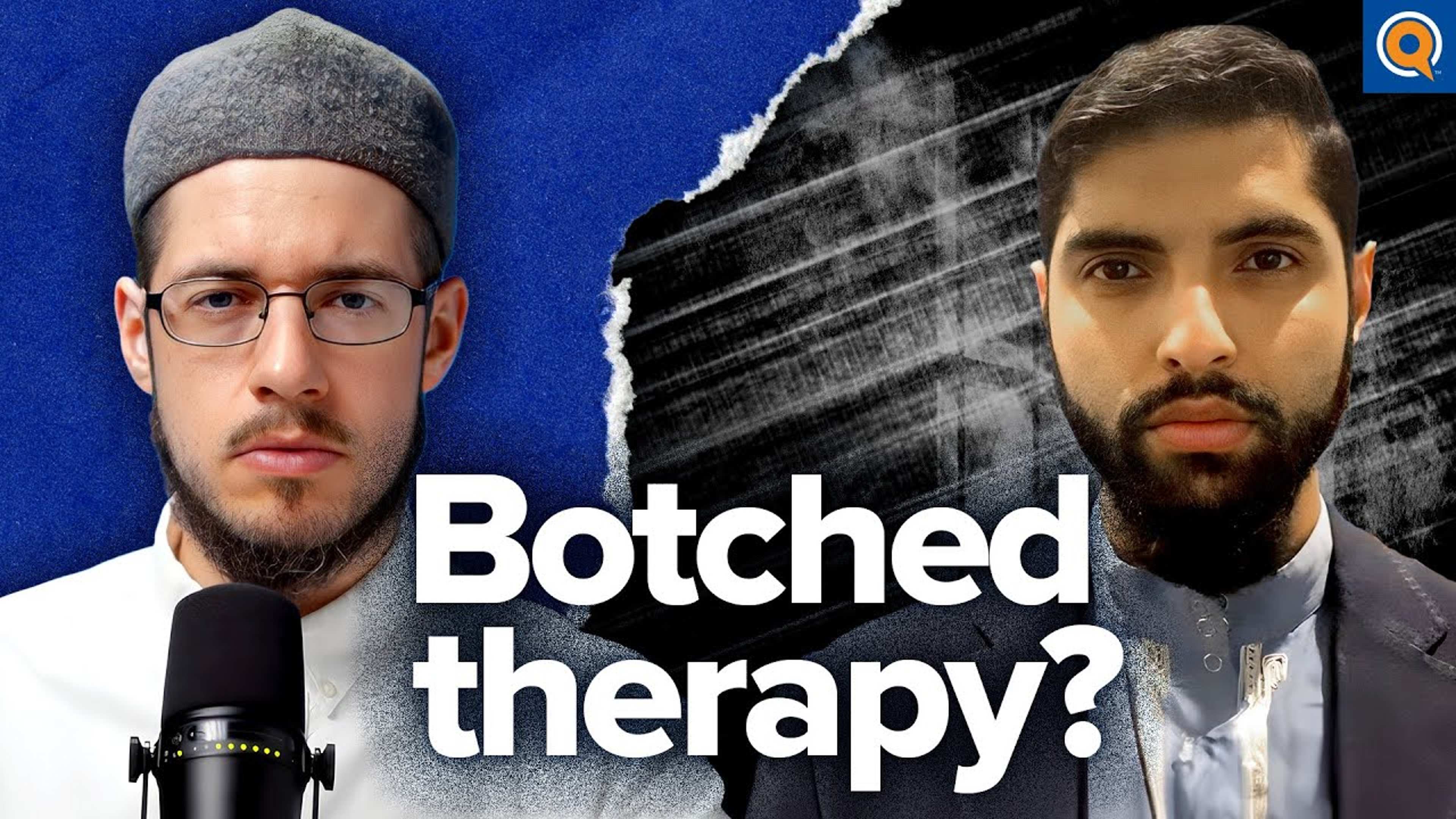
Dr. Zohair Abdul Rahman joins Imam Tom Facchine to bring to light four key dogmas at play that both Muslims who seek access to these services and practitioners themselves should keep in mind when facing this paradigm.
Want to listen on the go? Check out Dogma Disrupted on your favorite podcast platform.

This transcript was auto-generated using AI and may contain misspellings.
00:00Islam is not therapy. Salah is not exclusively therapy. Now, yes, of course, Islam is therapeutic. Salah is therapeutic. But it's not just like part of this bag of, oh yeah, you can try this yoga.
00:11Yeah, you're Muslim, right? Yeah, yeah, you can try some dhikr and, you know, do what you want. We're not disparaging your mental health practitioner, the GP that you're going to, a psychiatrist you're going to, or even a psychologist at all. That's not what we're doing at all. We're really trying to save mental health. We're basically saying that,
00:25yes, but not enough. And it's got some baggage. And if it were purified through an Islamic lens, then it would actually completely hit the mark.
00:37As-salamu alaykum wa-rahmatullah and welcome back to Dogma Disrupted. Today we're talking about the mental health industry. Now, mental health is something that's gotten a lot more attention in the last five to ten years, and with good reason. With people losing their sense of what this life
00:52is even about, we have people who are sort of searching for purpose and feel depressed more than ever. And this has touched the Muslim community in the West just as much as it's
01:01touched any other community. However, in our zeal to pick up and to pay attention to long-neglected mental health issues, are we unwittingly swallowing dogmas and ideologies that actually
01:15undermine our faith? To help us unpack this, we've brought back to the program Dr. Zuhair. Welcome back. It's great to see you again. Good to be back.
01:26So that's the basic premise for this episode, is that we're sort of deconstructing the mental health industry. Mental health is something that everybody agrees is important. However,
01:36mental health, how we approach mental health, there's not just one way, right? So give us a sense of where the industry sort of is at. What's the default approach to mental health? What are
01:48the stakes involved? And are there ways in which we're actually undermining our own faith in our attempt to take care of something that is really worthwhile?
01:59Jazakumullahu khayran. Alhamdulillah. So when you look at mental health as a concept or as a phenomenon in the West, it has a very short history, actually, in the sense that just as
02:13you mentioned, for the Muslim community starting to realize the importance of it and the importance to put resource into it and to actually think about it. Same thing from the Western point of
02:23view. In the academy, prior to the psychoanalytic movement, you had William James in the late 1800s
02:32or so, who started to kind of focus on this idea of the mind. And then you have the psychoanalytic movement. So those are figures like Freud and Jung, who start to speak about the subconscious
02:47elements of the human mind and how they affect our conscious elements. And then you start to get, of course, the empirical sciences start to really take over the idea of psychology.
03:00Now Carl Jung said something very interesting, which is that the West has lost its soul, and it has replaced it with this field of psychology. And so he recognized that because
03:15of the disavowal and the disregard of religion, from the Western point of view, their soul had
03:22essentially kind of been neglected. And so psychology was born out of this need to fill
03:30that space that was previously filled in Western civilization with religion and with beliefs and with spiritual practices. And so it's interesting, as the decades went on, as I said, the empirical
03:44sciences started to really take over the idea of the human mind and the study of the human mind.
03:52And so when we see today in the 2020s, almost exclusively most of psychology is rooted in,
04:00number one, the assumption or the worldview of naturalism, the idea that our mind states that we experience can all merely be reduced to biological phenomena. And so this is, I guess
04:15you can say, the academic background or backdrop, in a brief sense, of mental health. Because, of course, mental health flows from the way that a person conceptualizes the mind itself. Then
04:29we understand what is mental health. And so mental health, from the Western point of view, is rooted, a lot of it, and in terms of the therapeutic approaches, a lot of it is actually rooted in
04:41naturalism, in terms of the framework and these sorts of things. Even when people start to understand and recognize the need for multidisciplinary approaches to mental health,
04:52so not just medications, but also social factors, and also individual factors and family and
05:01environment and all these sorts of things, this is all done with the recognition and understanding that fundamentally it's all about the brain and whatever is good for the brain, and that's how
05:12it's studied. So that's really, this is really fascinating. If I might just pause here to zoom out and to give a sense of the stakes here. What we're not saying, we're not saying that mental
05:22health is not important, right? And we're not saying that, for example, that if you're clinically depressed that you just need to pray more, or you just need to, or that everything is
05:33jinn possession, right? Because these are sort of the tropes and stereotypes that, unfortunately, there are parts of our community that respond to actual mental health issues with sort of the opposite problem. And maybe we could say that history is almost
05:45swinging wildly back and forth between two pendulums, and so, or excuse me, the historical pendulum is swinging back and forth between two extremes. And what we're simply trying to say is
05:56that let's not get taken to the other extreme now, and just because there's an auntie or an uncle out there that thinks that everything is jinn possession, that doesn't mean that absolutely everything is neurons and neurotransmitters and hormones and chemicals, right? Is that there,
06:10you know, we do have a paradigm, an Islamic paradigm, that talks about who the human being is, and the Western paradigm is actually very, very sort of in opposition to our Islamic paradigm of
06:24the definition of who a human being is. And so you're saying that this naturalism is like the first step, like we're making a laundry list, right, real quick, of what are the hidden or implicit
06:35sort of assumptions of this entire field, or at least the vast majority of the field? Number one would be naturalism, this idea that everything exists within the physical,
06:48observable world. Maybe we haven't developed the technology yet to be able to detect it, but we're certain that if we keep on going and progressing that we're going to get to the point where we can explain everything in terms of natural consequences, cause and effect,
07:02this material stimuli, right, causes this material effect. Is that fair? That's a very good summary, and also a very good kind of way of understanding this whole
07:14situation with recognizing we're still talking, we're not neglecting the importance of mental health or whatever way you want to describe the, you know, the mood state and the thinking patterns
07:25and these sorts of things of an individual. But as you said, recognizing that when we are approaching this subject, making sure we don't come with the same philosophical baggage or with
07:39the same ideological baggage, you can say, as those in the West. So as you said, number one, I would say there's two main core pillars, you can say. We have the pillars of Iman, of course,
07:51right? The six pillars of Iman. I'd say that the two pillars of mental health ideology are naturalism from a worldview point of view. So that obviously, when we say naturalism,
08:03that basically means that everything in existence, as Imam Tom was mentioning, can be reduced fundamentally to the elements, to the fundamental elements, like the elements that you see in the
08:18periodic table. Everything can be reduced to those fundamental elements, in essence. The second pillar, the second rukun, is humanism. Humanism is essentially a, you can say,
08:30it's the idea that everything that is done, or everything that is pursued should be done
08:42with the purpose of enhancing the human experience, you can say. And this very human-centered type of
08:49approach to things. And so when it comes to things like therapy, and when it comes to things like approach, generally speaking, Western mental health is very focused purely on what makes a person
09:03happy. I know that's a very simplistic way of saying it, but fundamentally that's what it comes down to. I could say maybe the maximization of pleasure and the minimization of pain, right?
09:15To give just a concrete example, like when, you know, because obviously I'm a convert, and I have lots of, you know, all of my family is non-Muslim. Whenever somebody's sort of at end-of-life care, the one thing that everybody talks about is pain, pain management, pain management, pain management,
09:30to the point where it's almost mechanical, and people aren't talking about the soul, and they're not talking about dying well, or transitioning to the next life, or anything like this. They're talking about, well, how much morphine to give, and etc. And well, at least they died, you know,
09:44without pain. That's like the single only concern, actually. SubhanAllah. I think there are two competing kind of sub-elements within this idea of humanism, in terms of what a person should
09:59pursue. Hedonism, I think, is a big one, as you mentioned. And it's interesting, you mentioned end-of-life and the focus of this, and that's something I noticed as well. It's something that the medical fraternity recognizes, and it's one of the things, actually, that they mention as being
10:13unrealistic expectations from people. And there's this pushback to try and have patients recognize that sometimes completely eradicating pain is not realistic as a treatment goal, and that there's
10:26going to be some level of pain and discomfort. But people are quite pain-phobic. I mean, obviously, who likes to be in discomfort, right? But it's interesting, because it's become the ultimate
10:38goal, essentially, as you mentioned. Within humanism, it's almost like—sorry to interrupt again, but I'm just trying to follow the thoughts—with humanism, which draws us to the life of this world, as opposed to the life of the next world, it's that pain loses meaning,
10:52because if the primary world that we exist in is this dunya, this worldly life, and therefore the ends or the outcomes that we're being attuned to are not the ultimate outcomes of the next life,
11:08they're outcomes in this world, then pain is only an obstacle. Pain is only something that really stands in our way or is annoying or unpleasant, whereas when we bring in a fundamentally
11:20spiritual worldview, then pain is actually purposeful, right? And we have throughout the Qur'an and throughout the sunnah, right, various types of pain that if you're patient, that you'll
11:31actually accrue virtue, you will, you know, raise in rank on the day of judgment or in the afterlife. So what makes pain tolerable is that it actually has a telos, it has a purpose to it. And when
11:40what we're saying is that the humanistic framing of mental health or any sort of medical enterprise removes the purpose from pain entirely, and therefore can only be sort of a miserable
11:53experience. SubhanAllah, so beautifully put. And as you mentioned, there's so many hadith that emphasize this point of the meaning behind pain. Pain is redemptive. And as you said,
12:03pain can be virtuous if it's borne with patience, and it can lead to virtue, like sabr. You know, it's interesting when you read the athar of the companions visiting each other when they were sick. And they would all mention this point. I mean, the general,
12:18the generic du'a that a person is meant to say when a person is visiting the sick, there are many other du'as and ad'iyah as well. I was just reading in Adab al-Mufrad, actually, there's a chapter about visiting the sick and whatnot. And it's very interesting how much
12:33the focus, as you said, is not on removing the pain, it's actually on increasing the meaning in the pain. It's two very different things, right? Like, they're not trying at that point. And
12:45obviously, they don't have access as well to be able to do that. But it's interesting that even when they did have access, so we have the instance where there was a sahabiyyah who was suffering from
12:55what appears to be epilepsy, as she was getting recurrent seizure episodes. And she had the opportunity to remove the suffering completely. What was it? It wasn't some medication, it wasn't,
13:07you know, the neuro-optics that we have. But it was the du'a of the Prophet ﷺ, which would have been mustajab. And it would have been completely removed. And it was a very
13:20interesting thing that the Prophet ﷺ gave her the option, look, if you're patient, you have Jannah in front of you. And she said, okay, just make du'a that my aura doesn't get uncovered,
13:30subhanAllah. And so, and so she went on with it afterwards. And the narrations of some of the tabi'un that they would see her in the Ka'bah, around the Ka'bah, and say, that was the lady,
13:43that was the famous lady, she became like a legend in the area because of her decision. And as you said, I think what you said is so beautiful, which is the idea that pain is an excellent point here that shows the difference between humanism and between tawheed, which is that,
13:57and this is everything in life, right? It's all about endowing meaning to things in life. And so it's not about removal completely of pain. And if that happens, that's good. We always take
14:08the easy option. The Prophet ﷺ was confronted with two decisions, he would always choose the easier one. يُرِيدُ اللَّهُ بِكُمُ الْيُسْرَ وَلَا يُرِيدُ بِكُمُ الْعُسْرَ Allah wants ease and not hardship. 100%, we take the easier way. But we recognize if it has to be
14:21borne, then we're going to bear the pain with recognizing its meaning. Now, one of the things I want to mention just within this idea of humanism as the second rukun of the mental health
14:34I want to mention just within this idea of humanism as the second rukun of the mental health dogma, you can say, is that even those, so there's a push to recognize that hedonism is ultimately doesn't make a person actually happy in the long term, even in this life.
14:49Like we talk about long term in the next life, and people recognize that. And people have recognized that for a long time, actually.
14:58So eudaimonia, which is basically the alternative to hedonism, which is this Greek concept that is a universal concept, but it was a Greek concept attributed to Aristotle,
15:08which is the idea that the happy life or the good life is a life that's lived with virtue. And that's where true pleasure is derived from, rather than just kind of the lower kind of
15:19hedonistic pleasures. And this is something that you see within the mental health industry as well, which is encouraging kind of quote, unquote, meaningful activities and volunteering and helping others. But here's the thing, and this is the thing that we need to recognize.
15:34It's all, it's so important about the framing of it. See, for them, human pleasure is the end. Mental health and mental well-being is the end. That is their goal. As a civilization at
15:46this stage, their goal is mental well-being. That's why mental health has become so big, because this is for them, this is their dunya, this is their jannah, right? Even the Prophet
15:58ﷺ mentioned that, right? This is their jannah. And so for them, mental well-being is the most important. You know, by the way, the most common issue that comes to a general practitioner, and I work in general practice now in Australia, I'm pretty sure it's the same in other countries as well, is mental health. That is actually the primary concern that a person, the one a person is most statistically likely to walk in with. So this is a huge issue.
16:10What does that say about diagnosing where we're at in terms of history and civilization?
16:26The thing is, to point out the emperor with no clothes, I mean, I know correlation doesn't equal causation, but the further and further the West has gone away from religion and God and spirituality and any concept of revelation, of course, they were from the people of the book, they had some remnants of that truth and guidance.
16:33The further and further away they're getting from that, it's almost like you see then the curve of depression and anxiety, and it's increasing more and more. You know, one in seven children under the age of 12 would have experienced some sort of mental health issue or crisis. This is statistics in Australia.
16:52It's something that, when you look at the statistics, it keeps rising, rising, rising, and you have to just scream out, the people don't know why they're here. There's this genuine sense of nihilism, of what is the point of life?
17:09And what the mental health industry is doing is it's trying to actually provide therapy, not by pushing people along this path and trying to actually discover their purpose, but by completely ignoring it and giving them tools and drugs and therapy and distractions to distract their mind from those sorts of questions, which is the very interesting thing.
17:25They are turning iʿrāḍ and ghaflah into therapy, and they're medicating people's pain, internal pain, with this. Now, I want to be very clear here, by the way. I think this is an important distinction to make as well.
17:52Everything we've been talking about, particularly what I've been saying now, it's not referring to those more biologically-rooted mental health conditions. And here's the thing that people need to recognize.
18:08People think, and it goes back to the naturalism point, so the ruqya number one with naturalism, which is this idea, everyone thinks, oh, all depression is biological. Even some Muslim speakers I've heard say this, like, oh, depression, don't think that this is spiritual or whatnot.
18:22And this is a true statement. You can have high iman, but still have issues with depression and these sorts of things. It's biological. This is an incorrect kind of way of framing it, because, look, here's the challenge. This is one of the things one of my psychology mashāyikh used to say, which is that every mind state is a brain state, but you don't know which way the causal arrow is pointing.
18:37So if you say, oh, everything's all biological, that's because everything that's in your mind, Allah has made some correlation in your brain. That doesn't mean that everything is fundamentally reduced to your brain at all. As they say, correlation doesn't equal causation.
19:04And so, with this, it's very important to categorize depression into two generally different types. And actually you find this categorization very early on in the Muslim tradition. Abu Zayd al-Balkhi, actually, was one of the earliest, I believe, to actually have made this distinction. You see this distinction also in Ibn Qayyim as well. He makes it in Zād al-Ma'ād as well, which is the difference between endogenous depression, or biologically rooted depression, and reactive depression.
19:19There are many different terms to describe these sorts of things. But basically, one of the types of depression is something where the person's life is totally fine. No sad event has happened. It's not like they've got this life of trauma, but they're experiencing, quote unquote, the symptoms of depression.
19:45And usually this kind of symptom presentation is more the focus on fatigue, can't get out of bed, you're in bed for like 18 hours, low energy, completely lethargic, just low mood, no motivation, not because of anything else.
20:00This is something that's a lot more the idea, and there's nothing that's happened. They might even have a religious, you know, good family, everything of this religion, whatnot. This is something that seems to be more naturally rooted and more biological in its nature and its etiology.
20:22And this is something Ibn Qayyim mentions, actually, and he says that for these conditions, because they're coming from nature and whatnot, then its dawā' is also found in nature as well. And they had different kind of remedies and stuff that they would use, actually, quote unquote, antidepressants and whatnot, that they would use in their time to help boost mood and these sorts of things.
20:36But anyway, that's one side. But there's a second side. And this second side is something that is very clearly not necessarily—it's very clearly linked to actual issues, either dealing with trauma, loss of a loved one, or like, if you look at the content of their thought and their rumination, that purposelessness of life and the fact that they feel like, what's the point of these sorts of things?
20:54And it really seems, this kind of way of presenting, it really seems like they're crying out for looking for some purpose, looking for some meaning in their life. So these are very different things. And sometimes, what happens is actually not sometimes, this is what's happening, which is that we are pathologizing kufr.
21:21As an industry in the West, they are pathologizing kufr. What does that mean? What that means is that the pain that a person feels in their heart, because they don't have—
21:42Sorry? Dance lessons or something like that. And it'll solve this underlying, fundamental, existential crisis that you're kind of experiencing that Allah actually created in you to experience in order to propel you to try to figure out why you're here in the first place.
22:23Beautifully said, beautifully said. And that is the big issue that we're seeing actually here when it comes to the issue of mental health. And so, as you were saying, so the way of dealing with this existential angst, you know, one of the criteria for major depressive disorder is nihilism.
22:40So there's basically the way it works to get this diagnosis, which, by the way, there's a lot of debate as well about the way that mental health is categorized and the way mental illnesses are categorized in the diagnostic labels.
23:03In medicine, every other disease is categorized based on etiology, based on its cause, what causes it, not based on symptoms. We don't look at a set of symptoms, generally speaking, and say, oh yeah, you've got coronavirus because you've got a headache and a sore throat and fever.
23:14No. How do you diagnose coronavirus? You actually go and you see there's a cause of coronavirus and it's the actual coronavirus itself. There's a cause of the flu, it's influenza A or influenza B. There's a cause of a heart attack, quote unquote, a myocardial infarction, and there's ways to investigate to actually see the etiology that is causing the disease and causing the symptoms.
23:34We don't diagnose a heart attack just based on chest pain. I've got chest pain, it's this. No, you do further investigation and then you find the cause and say, yep, this is the cause. And so categorization of diseases are based on causes, on etiology.
23:53But when it comes to mental health, categorization of diseases are not based on etiology. They're based on symptoms. And the reason is because they actually don't know the etiology.
24:07They have different models and different ways of trying to understand what causes it. And this is the thing, people in popular kind of mental health, people just assume, oh yeah, it's biologically related. No, they don't know why this happens.
24:20Okay, I need to tease out the consequences of what you're saying because that actually never occurred to me before. They are operating on a paradigm that is purely naturalistic. So they're operating on a paradigm that everything has to be caused biologically.
24:32And yet they're taking the causation of a mental illness on complete faith. There's no investigation, there's no tests that's being run, no one's scanning your brain, looking at the different balance of chemicals, this chemical, that chemical, this hormone, that hormone in your brain and say, oh yes, not enough of this.
24:47Oh yes, too much of that. Oh no, this is in the wrong place. Which would sort of seem to be the end game of a naturalistically rooted mental sort of epidemiology. They're literally just taking it on faith, right? That's very, very…
25:07And actually, so what you said about scanning the brain, technically best practice is to actually investigate, but not for a mental illness diagnosis, to see whether or not those symptoms are caused by a more medical or you can say organic cause, they call it.
25:24So that would be considered true mental illness?
25:41No, it wouldn't be. It'd be like, yeah, that's the interesting thing, right? So they'd be like, oh, the reason why you're feeling like this is because actually your iron's really, your vitamin D is really low. Or you scan your brain, oh, you've got this tumor or something in your brain, and that's what's changing your personality. Or they check your thyroid, oh, your thyroid is really low. That's what this is, hypothyroidism, it's not depression.
25:44So you actually, once a patient comes, you actually rule out all the actual organic causes, and once you've exhausted your list of potential causes, then you say, okay, you fit the criteria, and then you look at the criteria. Who makes these criteria? It's called the Diagnostic and Statistical Manual of Mental Disorders. It's basically a convention of psychiatrists that come together and whatnot, and they basically make these symptoms go forward, they speak about their practice, they look at the statistics and whatnot, and they basically make these criteria.
26:04I wouldn't want to say they're completely arbitrary, obviously they're not completely arbitrary, but based on their practice and experience and whatnot, they come up with symptom profiles, and they have these criteria. Who came up with these criteria? Just human beings. It's not like it's something like, oh, 100% like, and so for depression, there's two you have to have, at least one of them, which is anhedonia, loss of pleasure in regular types of activities, and depressed mood.
26:32And then there's all these other ones that you can see, and if you've been experiencing them for a certain amount of time, months and months, and you've excluded everything else, then you've been given this diagnosis of depression.
27:01And as we said, it's not based on etiology, because oftentimes they don't know the actual biological cause, they can't find one.
27:13And so this comes to that issue when it comes to naturalism, which is something that they recognize themselves. And by the way, in the global health initiative of things, where people are trying to increase the general health and well-being of the world in places of lower socioeconomic status, to have more equitable access to healthcare like we have in the West, which is a very noble pursuit, there's this idea of global mental health, which is, oh, okay, we also have to do this for mental health.
27:20But you're actually seeing from within the industry, a lot of postmodern critiques being applied to the mental health industry, which is interesting.
27:43I can imagine. It would just be like law and development work and aid work, which all has very substantial critiques about first world, third world, global north, global south.
27:53This is an imposition, because it's not just that the people making these diagnostic criteria are just human beings, that's one aspect, but they all tend to come from a certain place.
28:05And they all start to operate within a certain metaphysical paradigm, a list of assumptions about, as we said, who is the human being, what is real, what is not real, is there a soul, are we going to take those into consideration?
28:15So if you come to a place that is maybe more traditional, whether it's in Africa or in Asia and somewhere else, and they might say, oh, yeah, this happens, and this is from jealousy or this is from this other sort of spiritual malady, even a sickness of the heart, then they would epistemically not be able to even consider that as valid knowledge.
28:30So there's a coloniality of knowledge that's going on, where certain things are legible as knowledge and fact and truth, and other things are completely rendered illegible in those sort of paradigms.
28:52Yes, exactly, exactly how you put it. And so this is the big issue, because then you're going to enforce kind of this, they call it medical imperialism, that you're enforcing your way of looking at mental health based on your cultural context and the way you understand things, because there's recognition of, you know, you're not categorizing based on causes, you're just doing symptom profiles.
29:04And then you're saying, this is what it looks like. And everyone recognizes this, anecdotally at least. Many of the psychiatrists I trained with, they would say, look, if you go to, so you're looking at something like schizophrenia, which is characterized by a lot of psychotic features, so delusional thinking, auditory hallucinations, and these sorts of things.
29:29And so it was interesting, one of the psychiatrists I was training with, he basically said that if you look at schizophrenia here in the West, it's very different than you see people coming from Asia or coming from Africa, and when they come with schizophrenia, I was like, what do you mean?
29:45He's like, here in the West, schizophrenia, a lot of the people, very aggressive, sometimes it's misdiagnosed because a lot of it has drugs that are kind of put together with it. It's a lot more of an aggressive form. Versus if you look there, he's like, that's true schizophrenia you see there. Because it's not the drugs that are there, they're withdrawn, they're very quiet, they keep to themselves, and these sorts of things.
30:01So it's interesting, because of course culturally it can manifest in different ways. And sometimes Muslims will take this idea, because as you said, if they go to traditional culture and say, oh, this is not evil eye or this is this, this is just depression, it's biological. This is a huge issue, and we should not be saying phrases like this, because this goes against even our way of understanding our own mind and the things that influence our thoughts and everything like this.
30:25And so we have to be very careful here. It's not as scientific as many people think it is. This is an attempt, and this is an attempt, I'm not trying to be completely cynical of the mental health industry here, it's an attempt to try and deal with this epidemic of depression and anxiety, so mostly mood disorders.
30:51Epidemic of depression and anxiety. How can we help the people? Because of course, when you're living depressed and anxious, it's not good for society, it's not good for the person, it's against their concept of humanism of living well as well. And so they're doing their best in terms of trying to understand, trying to then create programs, create therapies.
31:11One of the biggest things that disproves naturalism is actually the things that are used to help treat mental illness, and particularly mood disorders. So people are saying, oh, it's all just biological, it's all just biological, it's a physical phenomenon.
31:28One of the things that's really interesting is that, I'll never forget one of my psychology professors, Dr. Davis' name, for those who went to McMaster might be watching this, legendary psychology professor. He was very critical of the way that people would claim certainty about things like in reducing mental illness to just biological points.
31:44And he used to always say that when it comes to the issue of neurotransmitter imbalance and whatnot, and the medications that are given to try and correct this imbalance, this is not even the main kind of aspect that we should be focusing on.
32:06It has been shown to actually improve symptoms, like if you correct that imbalance, it doesn't even necessarily improve symptoms.
32:21And you see a lot of the research that's coming out with that from a purely biological point of view. And he's saying, which is correct, we don't know why a lot of these drugs work. We're just taking it, as you said, on faith. But it works, and we see it in the trials.
32:36A person's mood is boosted and whatnot. What is the mechanism? They're not sure yet. And I'm sure they'll find a mechanism. I'm not saying that there's not. But this is the point about trying to think too much about this is all biological. And here's the really interesting thing, which is, when a person undergoes therapy, like cognitive behavioral therapy,
32:51which is an interesting term, by the way, cognitive behavioral therapy, changing or adjusting your way of thinking, or your way of interpreting the world, your beliefs, and your actions.
33:03إيمان وعمل صالح, right? This is meant to be religious activity, right?
33:13Adjusting your thoughts and whatnot to make it more aligned with your purpose and your actions as well. So they call it CBT, cognitive behavioral therapy. When they look at it, that actually changes your neurotransmitter profile as well and these sorts of things.
33:24So how is it that something metaphysical, like thought, has no physical content there? You tell me what a thought is made out of.
33:38It's not made out of anything. It's immaterial. It's metaphysical. How is something metaphysical causing physical changes in your brain? This is one of the most amazing things that actually disproves naturalism.
33:49Because why is any conscious thought affecting your brain? And how is it that your brain is going into a metaphysical realm and causing something metaphysical?
33:59Where is the interface here between the physical and the metaphysical? And mental health becomes an area where actually this becomes very palpable. Where a person, if they notice and pay attention, they should think,
34:13wait a second, why is this working? Why is therapy changing their neurotransmitter and whatnot? So this is the point I'm trying to make when we talk about, oh yeah, it's not that this person just doesn't have their purpose in life or is distant from Allah or anything like this.
34:26It's because there's an imbalance in neurotransmitters. It's like, well how do you know it wasn't the fact that they were distant from Allah and the fact that they don't know their purpose in life, that it caused the neurotransmitter imbalance, that it causes chronic changes in the brain.
34:39Because it goes both ways. The biology can affect your thoughts, but your thoughts can also affect your biology. Right. Yeah, this is a classic sort of thing that a lot of scientism and a lot of naturalism falls into.
34:50Confusing the answer of how with the answer of why. And so if you discover a mechanism and you claim to have solved the riddle of,
35:01well, why something happens, but you really haven't accounted for it holistically, you've just sort of uncovered the mechanism by which it is achieved. Right. And that doesn't do anything.
35:15You can simply back up the chain of cause and effect further than that to get into other realms. Right. Exactly. And that is very, very interesting. So it seems like there's a very deeply hidden contradiction in probably the standard operating procedure
35:27or the assumptions of most of the mental health industry. And it's sort of based around this definition of what is the mind and really the problem of consciousness, which is something that a lot of people bring up.
35:41There's only really a small percentage of the population that would go full hard materialist on this issue and say that even your thoughts are simply the sum of individual neurons firing and stuff like that.
35:50Most people intuitively recognize that thought is something that escapes the physical world,
35:58even if it has structures or organs that assist it or facilitate or things like that.
36:05And so what we're seeing here is that we have a whole field of knowledge and this affects intervention and affects medication and affects, you know,
36:18sort of how people are going to try to help people. And it's only operating both. It's only operating on a naturalistic sort of assumption,
36:31even though its own methods belie that assumption and demonstrate that there is more to reality than just the physical, natural world.
36:39Exactly. And what's really interesting as well is that you look at something like mindfulness. So before I get there, as you said, it's very interesting that their methods start to belie
36:54this kind of actual epistemological kind of foundation of the way that they... They're very kind of selective and inconsistent in the way that they understand things
37:06because the push of this field is going beyond naturalism 100%. They're recognizing the need for the social aspect to be adjusted,
37:17your environment, your family, therapeutic relationships with different people. They're recognizing all of this. And oftentimes, this is what happens a lot in medicine, which is that medicine advances beyond the science a lot of the times
37:30and the science catches up after. This is what evidence-based medicine really means, which is the idea that we're not going to wait to recognize and understand the framework and the mechanism of things. We're going to go based on the trials and whatnot.
37:43This drug works. This drug works. It works. The outcomes we want occur. That's it. We don't know the mechanism. That's fine. The science will catch up. And it usually does. But it's interesting because in mental health, it's the same push.
37:56So they're going and they're focusing on evidence-based things. What are actually things that are going to boost mood and whatnot? And you find they're moving further and further away from medication focus only and they're starting to incorporate other things
38:09and the recognition of the need for, you know, exercise. And that's something actually that I personally published in a few journals, lifestyle types of interventions, things about the gut-brain axis and exercise and depression. I did a literature review.
38:23Exercise for mild to moderate depression, in terms of the severity, exercise is as effective as an antidepressant. Wow. And you have CBT. They're all like equally effective.
38:37If you look, they actually have a pie chart of all the ingredients of successful therapy. There's a very small component. That's the actual therapy, which is interesting. That's actually the minority part. But what's a larger part is your relationship with the doctor,
38:50the psychologist, or the psychiatrist. Your therapeutic relationship. You have trust. Is there a sense of, you know, feeling of ease? All these different things that they put as ingredients of the therapeutic relationship. That's far more important. But it's like, wait a second.
39:04If this is all biological, why is this the relationship affecting the actual biological aspect? This is the point we mentioned earlier. But the point I wanted to say here is that as you're starting to recognize these things, they don't have a mechanism for it. And when it comes to this, it's not going to catch up
39:18because it's going to recognize that there is this aspect of a ruh, that there is something more to human being than just biology. But mindfulness, meditation, coming from the Buddhist tradition, this has become like almost a mainstay and something that is
39:32part of therapy now. You have apps and all the mental health apps, they all include mindfulness. And if you look at mindfulness, it's so interesting because it has the illusion and the appearance of something spiritual, like truly spiritual.
39:46You know, taking some time away. And the goal of mindfulness, and it's really in opposition to dhikrullah, because the goal of mindfulness is really
39:59this idea of making sure that you basically don't, with your thoughts, you don't try and grab onto them, you don't try and wrestle with them, you don't try and adjust them. You basically observe them, exactly, right?
40:11This idea of observation of what your thoughts are. Dhikr is an active pursuit. It's an active ritual. It's something that is totally different. Mindfulness, there's no purpose in life, is there? There's no purpose to anything.
40:25You're doing it for what reason? The end is mental well-being. But dhikrullah, there's a purpose. You're thinking about your purpose. You're thinking about Allah subhanahu wa ta'ala. Verily, in the remembrance of Allah
40:39do hearts find rest. But they will never recognize that or say anything in this regard. And this is the thing that's really interesting. Muhammad Asad mentions this, and many of the other kind of 20th century early European converts to Islam,
40:53they mention this point that basically the West and Europe has a complex vis-à-vis Islam, which is why they'll never recognize it, and they'll be quicker, and it's an interesting prediction, they'll be quicker to adopt Near Eastern traditions and start to bring that
41:07to fill the void of their spiritual death than Islam. And why is that the case? They give different reasons. So Muhammad Asad says that it's because Islam reminds them of their failure. Because Islam is so similar to Christianity.
41:21Islam is so similar to Christianity. In terms of its belief system, it has a theology, it has a practice. They failed to make Christianity the driving force of their civilization. And they've completely,
41:36and they said that the only way forward is to remove ourselves from the Abrahamic-Semitic push of the prophetic movement. Islam, on the other hand, has a worldview, it has a theology, it has law, it has ethics. Whereas Buddhism and Hinduism
41:50have none of that. It just has, you know, the meditation aspects. There's no worldview, there's no theology or anything like this. Yeah. So you read my mind because that was going to be this whole train of thought was going to be my next question
42:04because in the beginning we were talking about how therapy by following evidence and not waiting around for the biological mechanism to be discovered has gotten ostensibly, at least in optics,
42:18more faith-based. There's sound therapy and music therapy and then this recognition of religion. And now you have therapists that are actually advocating for your own personal religious practice
42:32and then practices like yoga and meditation, etc. etc. I was going to ask the question, though you covered part of the answer, which is someone could be tricked, right? A Muslim could be tricked and say, well, look, there's no contradiction
42:46between the mental health industry and my faith because look, they're actually supporting my practice of Islam. And if you would indulge me to fill in the other half of your answer, I would respond to that by saying, well,
43:00look at the secular power that's being demonstrated by equating your practice of truth that Allah has revealed with yoga, with meditation, with music, with going to a church and praying to a cross,
43:14etc. etc. etc. People misunderstand secularism and secular power and obviously this is my hobby horse that I'm always riding. They
43:28misunderstand and they expect secular power to look like other types of power that they're maybe more familiar with. Someone coming down really hard and forcing something down your throat, etc. etc. But secular power
43:42is much more of a power to categorize and a power to play referee. And so when we said that you're in the therapy room and you're not allowed to bring certain knowledges into it, you're not allowed
43:56to say, well, someone gave me the evil eye and now I'm really bugging out. That's a location of secular power that gets to say that is not knowledge. Sorry. You can go believe that. It might have functional benefits.
44:10Maybe it gives you a sense of calm to be able to think about things that way. But we can't recognize it as truth. That's one place where secular power shows up. And the other in the ability to categorize things
44:24and put things into the same category, basically to put Iman and Kufr in the same category, and to say that your genuine preserved religious rights and beliefs and things that are actually objectively
44:38pleasing to the creator of the world is the same as doing this sort of godless exercise. And we can have an argument and say that maybe in a distant past there was some practice that was revealed to a prophet that's now lost.
44:52But now, what does it mean to people? It's not a practice of prayer. It's not a practice of orientation. It's simply I do yoga either to look good or to feel good. I do meditation
45:06not to look good, just to feel good. And this is the secular paradigm and the humanist paradigm sort of invading, rearranging these things in different categories and exerting control over sort of our choices and our whole process.
45:20Exactly. And it even comes to the point where a person's doing Islam for therapy. Islam is not for therapy. That's not the point of it, right? Islam is for us to submit to our creator. And this is one of the things that
45:34sometimes, it's amazing. There is definitely, I mean, if you look in our shari'ah, there's hikmah throughout all of it, from the beliefs to the practices, to the laws, to the ethics, everything. There's hikmah everywhere because Allah is Al-Hakeem. And it's something Ibn Qayyim
45:48argues for fervently in I'lam and others as well. And many of the ulama, especially from the Hanbali school, this idea that there's hikmah in the actions of Allah. And that means in his decisions and in his
46:02commands, there's hikmah, there's wisdom, there's rahmah, there's justice, there's a purpose. And so 100%, and I think it's an incredible scholarly endeavor that many scholars throughout history have gone and they've tried to derive more and
46:16more hikmah and wisdom behind all these different practices. You have Ihya' Ulum al-Din by Imam al-Ghazali. You have, as well, recently, Shah Waliullah ad-Dahlawi, Hujjatullah al-Balighah. These works that look to basically draw out the hikmah of
46:30all the things that we do. But it's important for us to understand that that's not why we do them. That is not why we do them. We do our practices out of submission. A loving,
46:44willful surrender to Allah Subhanahu wa ta'ala. Recognition of our weakness and our vulnerabilities and a trust. A trust. A deep trust and a love in Allah Azawajal. That's why we do what He tells us to do. Then later on we discover the
46:58thing, it's like we have to justify to people, oh you should lower your gaze because it has these benefits and then your marriage will be better and then it causes your brain to look in different ways. Alhamdulillah, great. I actually love this
47:12line of investigation and if you look at some of my work I'm guilty of this type of stuff as well. But, we have to understand that, no, you lower your gaze first because Allah said that in the Qur'an. And then afterwards you reflect and you say,
47:26Subhanahu wa ta'ala, what an incredible wisdom in this. And so this is important. Islam is not therapy. Salah is not exclusively therapy. Now, yes, of course, Islam is therapeutic. Yeah. Salah is therapeutic.
47:40And it is something that is useful in this regard. But it's not just like part of this bag of, oh yeah, you can try this yoga and if, you know, maybe you're Muslim, right? Yeah, yeah, you can try some dhikr and, you know, do what you want. No, but when it comes to these things, it's important for us
47:54to kind of anchor ourselves and recognize that this is the main way forward when it comes to issues of mental health and feelings of, you know, low self-esteem and these sorts of things. And coming back to something, which is, again, because I want to emphasize
48:08this, and maybe I'll emphasize again at the end, because I don't want anyone to misunderstand us here at all, more than misunderstand me, which is, we're not disparaging the mental health, you know, your mental health practitioner,
48:22the GP that you're going to, a psychiatrist you're going to, or even a psychologist at all. That's not what we're doing at all. And as I was saying, oftentimes because you have all this money and research being put in,
48:32a lot of the things are very helpful and do help people, especially when they're in real severe kind of conditions and stuff like this. I mean, there's mood disorders that are mild to moderate, that is probably a lot more relevant to what we're describing, right?
48:45That mild to moderate anxiety, mild to moderate depression. But there's obviously severe depression, there's psychotic depression, there's schizophrenia, there's mania with bipolar and these sorts of things, very serious mental health conditions.
48:56In which case, you do find these do not attend and they're not as relevant to what we're describing. Like mental health is a very broad term. We're really focusing on the majority of mental health that we see in the population,
49:09which is the mild to moderate depression and anxiety and whatnot. This is what we're talking about, the more kind of severe types of mental health, this is not what we're describing.
49:21And it's important, of course, to recognize, we don't want to disparage trust, of course, in people if they're having like a nice psychologist or whatnot, and they feel like, oh my God, it's all gone and all these things. No, no, that's not what we're saying at all.
49:32What we're doing is we're critically examining the knowledge structures and foundations of this. And we're showing, as you said so eloquently, the secularizing force of the West and how it applies to this as well.
49:46Really reflecting on that. You would have purpose, you would have all of the latent benefits, the functional benefits of etc, etc. But more important than that, you would be in a submissive and loving relationship with your creator,
50:00and you would attain to the highest good, which is paradise, inshallah, right? So it's really just about trying to save something.
50:11So maybe you can take us through, we talked about epistemic asymmetry and the coloniality of knowledge and things like that.
50:18What are some things, I know you had some in mind that are excluded that we would include if we're going to save the mental health industry,
50:27and we had our own sort of truly, not just slap the Islamic mental health label on the front of it,
50:35but if we had a truly Islamic mental health, what are some of the things that we would see as being incorporated and included in it that are systematically excluded right now? Excellent. So we would include the biology part of it.
50:49And so when we talk about naturalistic reduction, we're not against the idea that there are biological elements in the formulation of a person's mental illness. That's number one. We do recognize the biological element, and this is within our tradition as well.
51:01This is not new. This is not, oh, in the 21st century, we've become enlightened about this. This is something that's been recognized within the medical tradition and within mental health in the Islamic tradition. Dr. Malik al-Badri, rahimahullah, passed away very recently.
51:15He was part of this project that discovered this manuscript very recently, just like a few decades ago, by Abu Zayd al-Balkhi,
51:23which is basically a diagnostic, a DSM, you can say, from the, I think he passed away in the early 3rd century, if I'm not mistaken, or 2nd century. It was very early.
51:33And Abu Zayd al-Balkhi, he has the categorization of mental illness, and he recognizes the endogenous, more biologically rooted depression. And as I mentioned as well, Ibn al-Qayyim as well, Zad al-Ma'ad also recognizes this. So this is part of the formulation, which is our biology.
51:46Sometimes Allah ﷻ might create a person with a predisposition to experience more extremes of the emotions, to be more neurotic. This is one of the personality traits as well, and the big five personality, neuroticism.
51:57And so there is certainly, the way in which Allah ﷻ creates it, there's certainly a biological component to it, and we can observe that. But that doesn't mean that it's the ultimate cause of that, and that's the important point, that we're making that distinction.
52:09Because what actually can cause metaphysical things, it's a bit strange that something physical can cause something metaphysical. So there's clearly some other things that are there, and there's clearly some aspects that we don't fully understand, or we don't necessarily fully understand.
52:23It's a very difficult philosophical problem. The second aspect, of course, is to recognize the spiritual reality to things, that we have a ruh within us. And that's ruh, what is the life support of this ruh?
52:36This ruh is fed with the dhikr of Allah. It is quenched its thirst from the fountain of the Prophet ﷺ, through ilm and knowledge, through dhikrullah, through remembering Allah, through connecting with Allah.
52:49This is the way that the ruh is kept alive, and not, you know, diseased. And of course, the effect of things like jealousy, and arrogance, and narcissism, and these sorts of things as well, on the soul.
53:01And that the soul has an effect, of course, on these aspects of our mind and our consciousness. The soul has an effect on the way that we feel connected with Allah. The way if we feel distant, the way if we feel withdrawn, if we feel lonely, and these sorts of things.
53:14So there is a spiritual element there that is part of this entire picture. And in fact, it is, you can say, the core of it. And this ruh is connected, in some way, to our biology. And this is recognized in our theology.
53:27If you look at the discussions of what's there between a nafs, and a ruh, and a badan. Many of the ulama, they came up with this idea that the ruh, when it mixes with the badan, becomes the nafs. And when it is separated from the body, then it is the ruh.
53:41And so this interesting separation, that there is a different phenomenon of a human experience,
53:50that when the soul mixes with the body, that there is an effect of the body on the soul, and the soul on the body as well. And it produces what we know today as the human experience, with their shahawat, and their desires, and all these different things in our brains.
54:03Now, the third thing that I would say is part of this, of course, is the social environment as we understand our relationship with others.
54:11As Allah subhanahu wa ta'ala mentions as well, the rahm, the womb, is min ar-rahman, is actually derived from ar-rahman. That Allah subhanahu wa ta'ala, the effect of Allah's rahman in this world is found in the family.
54:23And so if you're seeking rahman, if you're seeking healing, that's within relationships, that's within family, that's within ukhuwwah, within brotherhood. So there's a social element there, of course, in this relationship, and speaking to others. And this is recognized within mental health as well.
54:37The last thing I'll mention, because others as well, but the last thing that I'll mention, which is very important as well, that I find as well, speakers will go to either extremes on this, and people will go to extremes with this. It's a bit of a controversial thing to say.
54:50But the world of angels and demons, the shayateen, and the jinn, and the mala'ika, the angels. As a believer, this is like the second ruqad in the arqad al-iman, amantu billahi wa mala'ikatihi.
55:03This realm is not just a theoretical realm, it interacts with us on a daily basis. The angels, and the jinn, and the shayateen are around us on a daily basis.
55:14If you look at the sunnah of the Prophet ﷺ, a lot of the adhkar are made to protect ourselves from a lot of the evil effects that can come from this realm. The angels are there to protect us in this realm.
55:27You know, if you say Ayat al-Kursi, before you go to bed, there's an angel that's there in your bed, warding off demons that may come to you. What do you think, what kind of effects do you think a demon will have on you? Or a shaytan that will have on you?
55:41They're going to be things that we call today mental health and mental health symptoms. No doubt about it. This is something recognized throughout our tradition. Even just a bad mood. You wake up sometimes and you have a really bad mood, you saw a bad dream. The Prophet ﷺ said that there's three types of dreams.
55:55One of that type is something that comes from the shaytan. Exactly. And there's a beautiful form of isti'adhah. When we say a'udhu billahi minash shaytanir rajim, there are different forms that come from the sunnah. One of them is interesting because it mentions three things from the shaytan.
56:08You say a'udhu billahi minash shaytanir rajim, min hamzihi, wa nafkhihi, wa nafthi. From the hams of the shaytan. And Allah mentions this in the Qur'an. The hamazat is shayateen. What is the hams?
56:20The ulama mention this is the poking and the prodding of the shaytan. And the nafk is the blowing of the shaytan, and the naf is like the singing and the music of the shaytan. Now anyways, I want to focus on this hams aspect here. The hams of the shaytan, when you look at the definitions,
56:34and this is something you find in our classical tradition. They say that the hams is the poking and the prodding of the shaytan that drives a person insane. That drives a person insane. Now here's the point, we're not saying, and here's where people get extreme.
56:48We're not saying all mental health is just shaytan. So all you need to do is just focus on the shayateen. We're not saying that. And we're not saying the opposite, which is that the shaytan has nothing to do with this.
57:01Just go to your doctor and take the tablets or whatever. No. What we're saying is, your soul and your body are intricately connected, and they both affect each other.
57:15And the shaytan can come, and perhaps, and this is interesting from a Muslim psychiatrist actually, he had this thing, he called it, he was one of the psychiatrists I trained with, and he called it the brain vulnerability hypothesis.
57:29He said that perhaps there are certain brains that are more vulnerable to the hamazat of the shayateen. That this is the interface for them. That they can, if a structure, genetically, a person is a particular way,
57:42the shayateen can affect them a bit more. The prodding and the poking of the shaytan can lead them to be a bit more depressed, can lead them to be more anxious, can even lead to psychosis. Can even lead, and he was interesting, to say to chronic pain.
57:54You know, fibromyalgia and these sorts of chronic pain syndromes, there's actually no biological cause found for this, at all. The structures, your physical structure is completely normal in fibromyalgia, but you're in excruciating pain.
58:07Where is this pain coming from? Allahu ta'ala alam. But anyways, the idea is that this is a dimension that's there. As Ibn Taymiyyah said in his time, if you were to lift the veil, you'd find the shayateen are affecting and possessing the majority of people.
58:21And this is the point, we're not talking, when we talk about jinn possession, everyone goes and thinks about the exorcist from the 70s. Christianity, I mean, Christian sort of imagination, right? I mean, we have that concept as well, definitely,
58:34but when we have the idea of the possession of the shayateen, the vast majority of possession is not like that. It is found in intrusive negative thoughts, in negative thinking patterns, in pessimism, in low mood, in these sorts of things.
58:46This is a portion that a shaytan may have over a person. Now, here's the thing. How do you then produce the therapy? And this is the thing that the psychiatrist mentioned, it's interesting. Now, it's not evidence-based, it's anecdotes. So just take this, what I'm saying, with a grain of salt.
59:00With a grain of salt. And so the idea is that you can tackle mental health from two angles. You can do it from the biology aspect. If you change the person's biology in the brain and whatnot,
59:12then perhaps this lessens the effect of the shaytan. Or you can go and attack it from the shaytan aspect. And the best thing to do is both together. Holistically.
59:24Where you work on any deficits or any vulnerabilities that can be addressed from a biological point of view, but also from the spiritual point of view as well. And this is one key message that I want to put for every Muslim
59:37that may be dealing with something. And for the speakers and du'at that are out there as well that are trying to spread awareness of this issue of mental health. And it is a big stigma in our population, and they don't seek help for it. And it's something that has existed for a long time.
59:51It's not something new. But of course, modern living has exacerbated a lot of the things that make us feel a bit more depressed and whatnot. And there's lots of different reasons that people may give. And who knows? That's not a topic for this discussion about what lifestyle factors
01:00:03and food and processed things and all these sorts of things that may go into modern living that make us a bit more miserable than other people, than people in other times and epochs.
01:00:13But the point is that, you know, we're wanting to basically recognize and keep to our principles. We don't need to neglect this idea of your morning and evening
01:00:26adhkar as part of therapy. You know, the idea of making sure your environment is inviting the angelic presence. What is going to ward off the shaytan better than the angels? And so what is your home environment like?
01:00:40Is there music blasting? Are there pictures all over the walls? I know this is an issue of ikhtilaf, but for the majority of people and these sorts of things, these are things that repel the angels from coming into your home.
01:00:53Is it messy and dirty? You know, are you smelling offensive and whatnot and these sorts of things? What are the things that you can adjust to actually invite the angelic presence towards you? This should be part of mental health therapy.
01:01:06Because when you look at the reality of it, no doubt the shayateen are a part of it. Because what does the shaytan make us want to do? The shaytan wants you to fear him.
01:01:17And his allies and his awliya. So anxiety is a goal of the shaytan. The shaytan wants you to feel anxious and fearful. Shaytan wants you to feel depressed.
01:01:30And so obviously this has to be a very important part of things. And this is the point. You cannot, as Muslims, secularize your own knowledge. And for some reason, when it comes to mental health, they have this boundary that they've put forward that cannot be penetrated.
01:01:44Yeah, here's the bubble, a black box here. Yeah, for some reason, if you're sad and anxious, go through this black box. And Islam is there. It doesn't have anything to do with this. This is a biological problem. This is what we need to really recognize.
01:01:57That it's quite possible this is the poking and the prodding of the shaytan. And the point is to address all sides. Holistic care, right, as they say. And this is something that is very clear from our own tradition. This is speaking with our own principles and our own values.
01:02:10This is the way that Muslims have understood it for many centuries. This idea that there's a biological element that can be then used, biological things to treat people. And so it can require medication. And that's not a problem.
01:02:24Even sometimes to be able to do the spiritual work, a person is so lacking in motivation, they need a bit of a boost in their energy so that they can do that spiritual work. And sometimes that can be in the form of a pill.
01:02:36What's the difference between a pill and the things that they would take from centuries before to boost their mood? There's things about talbina and these sorts of things. And people have this idea of like, drugs are bad because they're man-made and these sorts of things.
01:02:50Nothing is man-made in this world. Everything Allah ﷻ has created, men just put things together and mix things up and whatnot and then package them. Like lithium, for example, which is the first-line therapy to treat bipolar disorder.
01:03:03What is lithium? Lithium is literally dirt. That is what lithium is. It's literally found in the soil. It's an element and it's given as treatment. And so these are things that we shouldn't be necessarily averse to.
01:03:16But at the same time, we should recognize, of course, the holistic aspect from when we look at the spiritual realm as well. That's a very strong and, I think, a great place to end the conversation,
01:03:27to be honest with you. I think that what we're saying is that truly Islamic health, truly Islamic mental health, not just lip service, but truly Islamic mental health is truly holistic mental health,
01:03:39is that it takes into account the entire reality of human beings, of the afterlife, of both physical and non-physical causes.
01:03:49And in addition to having benefits for our lives in this world, that's only, that's small potatoes compared to the ultimate goal,
01:04:02which is pleasing our Lord ﷻ and trying to get closer to Him. Dr. Zaheer, another fantastic conversation. Thank you so much for joining us today.
01:04:15Jazakumullahu khair, Imam Tom. Always happy to be here. May Allah bless you and all the work you're doing. Ameen. May Allah accept it from us. Wa alaykum as-salam wa rahmatullahi wa barakatuh. As-salamu alaykum wa rahmatullahi wa barakatuh. As-salamu alaykum wa rahmatullahi wa barakatuh.