fbpixel
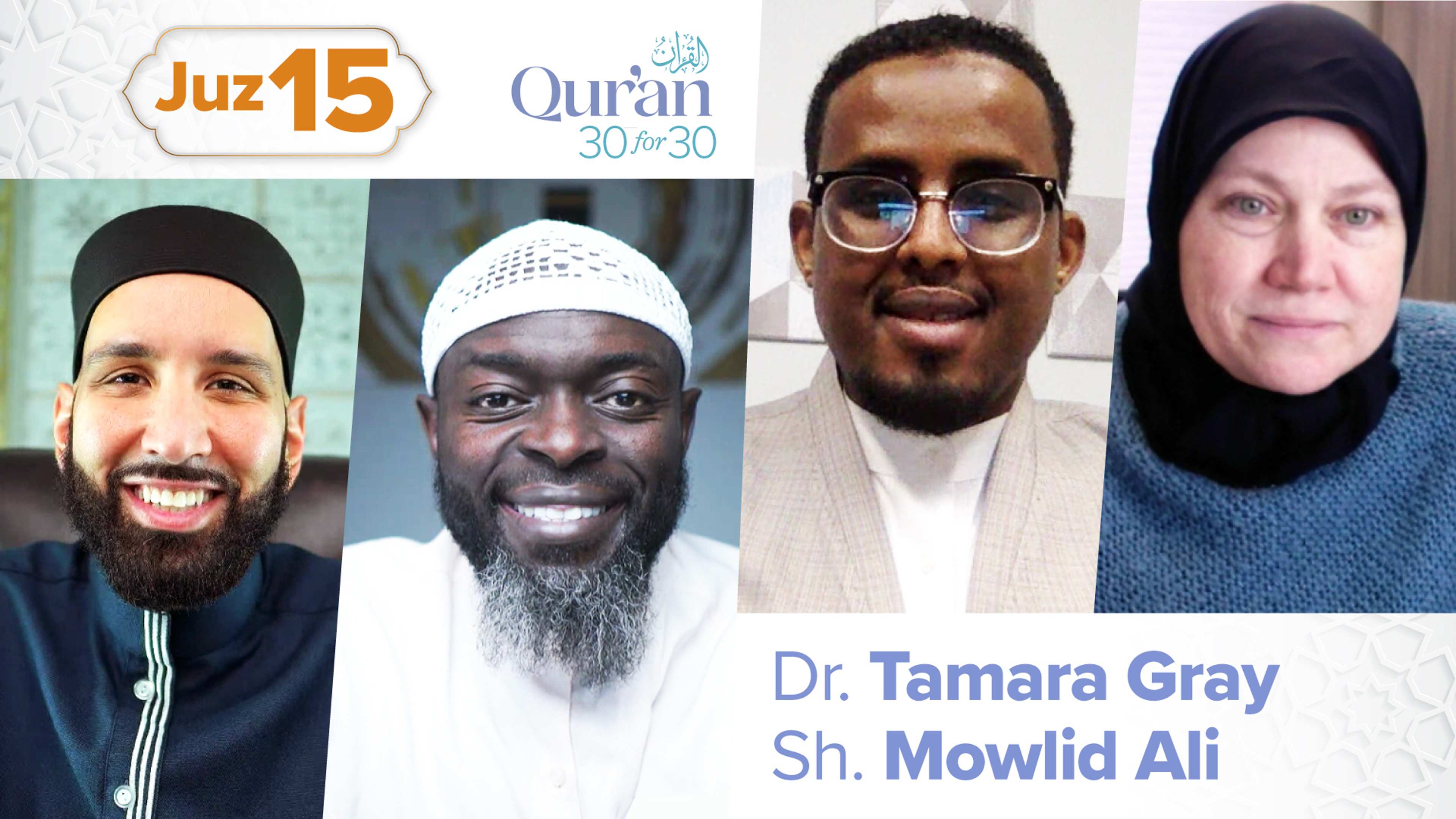
Juz’ 15: Dr. Tamara Gray and Sh. Mowlid Ali | The Many Insights of Surah al-Kahf
Trailer | Qur’an 30 for 30 Season 4
Trailer | Qur’an 30 for 30 Season 4

Juz’ 1 with Imam Tom Facchine | Diseases of the Heart, Identity, & the Choices We Make
Juz’ 1 with Imam Tom Facchine | Diseases of the Heart, Identity, & the Choices We Make

Juz 2: Dr. Tesneem Alkiek | Love, Devotion, & Sacrifice
Juz 2: Dr. Tesneem Alkiek | Love, Devotion, & Sacrifice

Juz 3: Dr. Tahir Wyatt | Remembering Resurrection, Maintaining Faith
Juz 3: Dr. Tahir Wyatt | Remembering Resurrection, Maintaining Faith

Juz’ 4 with Sh. Yasir Fahmy | A United and Saved Community
Juz’ 4 with Sh. Yasir Fahmy | A United and Saved Community

Juz’ 5: Ust. Youssra Kandil | Gender Roles & Upholding Justice
Juz’ 5: Ust. Youssra Kandil | Gender Roles & Upholding Justice

Juz’ 6: Sh. Yaser Birjas & Dr. Ahmed Khater | Our Deen is All About Caring For Each Other
Juz’ 6: Sh. Yaser Birjas & Dr. Ahmed Khater | Our Deen is All About Caring For Each Other

Juz’ 7 with Sh. Mohammad Elshinawy | Greatness is Never Forgetting God is Great

Juz’ 7 with Sh. Mohammad Elshinawy | Greatness is Never Forgetting God is Great

Juz’ 8: Dr. Farah Islam | Guidance & Reviving Hearts
Juz’ 8: Dr. Farah Islam | Guidance & Reviving Hearts

Juz’ 9: Sh. Suleiman Hani and Sh. Mustafa Umar | The Believer's Worldview

Juz’ 9: Sh. Suleiman Hani and Sh. Mustafa Umar | The Believer's Worldview

Juz’ 10: Dr. Haifaa Younis | The Connection Between Heart and Ritual

Juz’ 10: Dr. Haifaa Younis | The Connection Between Heart and Ritual

Juz’ 11: Sh. Ibrahim Hindy and Ust. Nuriddeen Knight | Allah’s Promise is True
Juz’ 11: Sh. Ibrahim Hindy and Ust. Nuriddeen Knight | Allah’s Promise is True

Juz’ 12: Sh. Belal Assaad | Grief, Patience, and the Story of Yusuf (as)

Juz’ 12: Sh. Belal Assaad | Grief, Patience, and the Story of Yusuf (as)

Juz’ 13: Ust. Sarah Sultan | False Idols and Emptiness
Juz’ 13: Ust. Sarah Sultan | False Idols and Emptiness

Juz’ 14: Ust. Najwa Awad | The Blessings of the Bee

Juz’ 14: Ust. Najwa Awad | The Blessings of the Bee

Juz’ 15: Dr. Tamara Gray and Sh. Mowlid Ali | The Many Insights of Surah al-Kahf
Playing

Juz’ 15: Dr. Tamara Gray and Sh. Mowlid Ali | The Many Insights of Surah al-Kahf

Juz’ 16: Sh. Ismail Kamdar | Alone with Allah
Juz’ 16: Sh. Ismail Kamdar | Alone with Allah

Juz’ 17: Sh. Joe Bradford and Sh. Yousef Wahb | Angels and Messengers
Juz’ 17: Sh. Joe Bradford and Sh. Yousef Wahb | Angels and Messengers

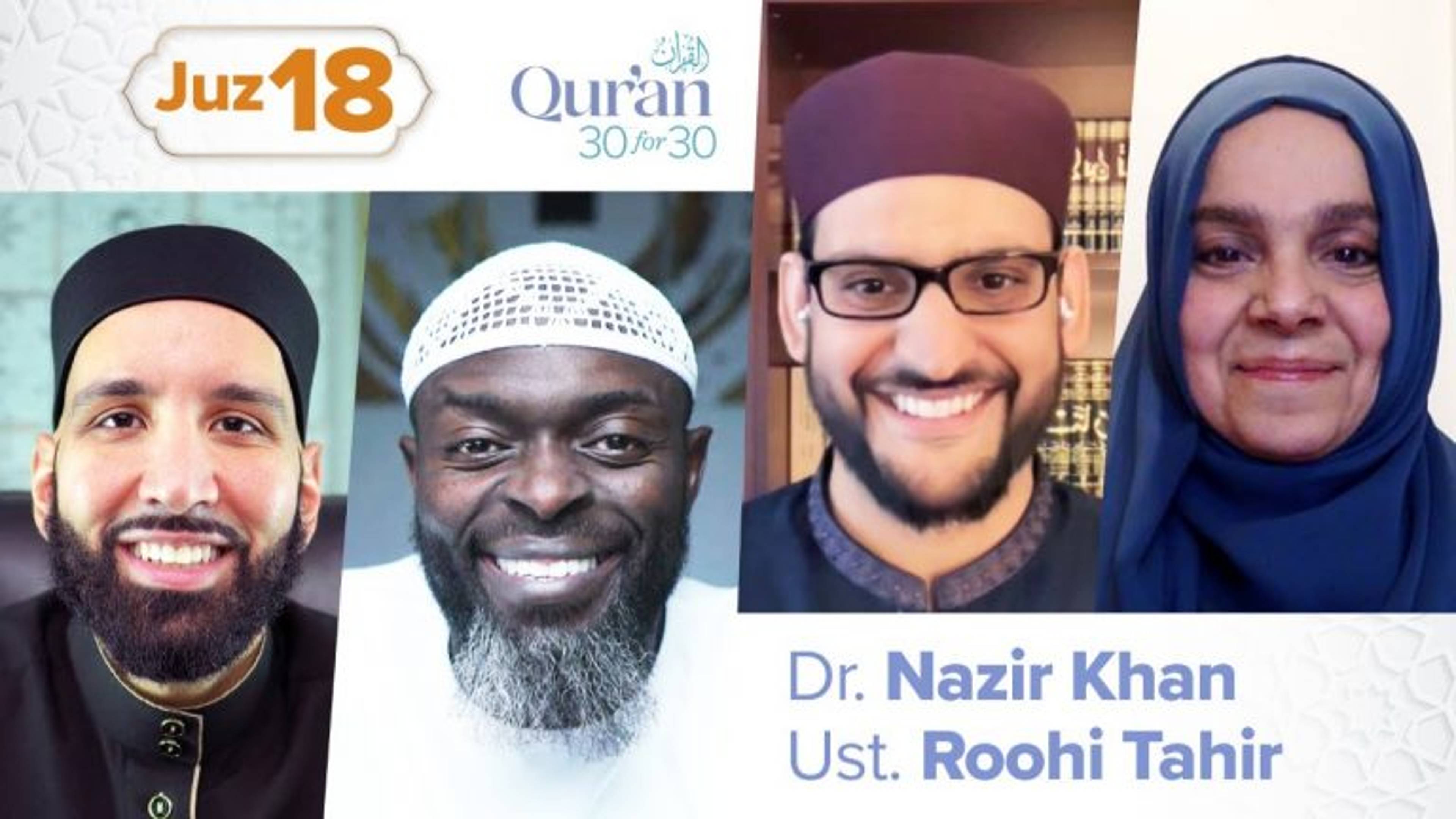
Juz’ 18: Dr. Nazir Khan and Ust. Roohi Tahir | Protecting Your Light

Juz’ 18: Dr. Nazir Khan and Ust. Roohi Tahir | Protecting Your Light

Juz’ 19: Dr. Jinan Yousef and Dr. Omar Husain | Mercy and Regret
Juz’ 19: Dr. Jinan Yousef and Dr. Omar Husain | Mercy and Regret

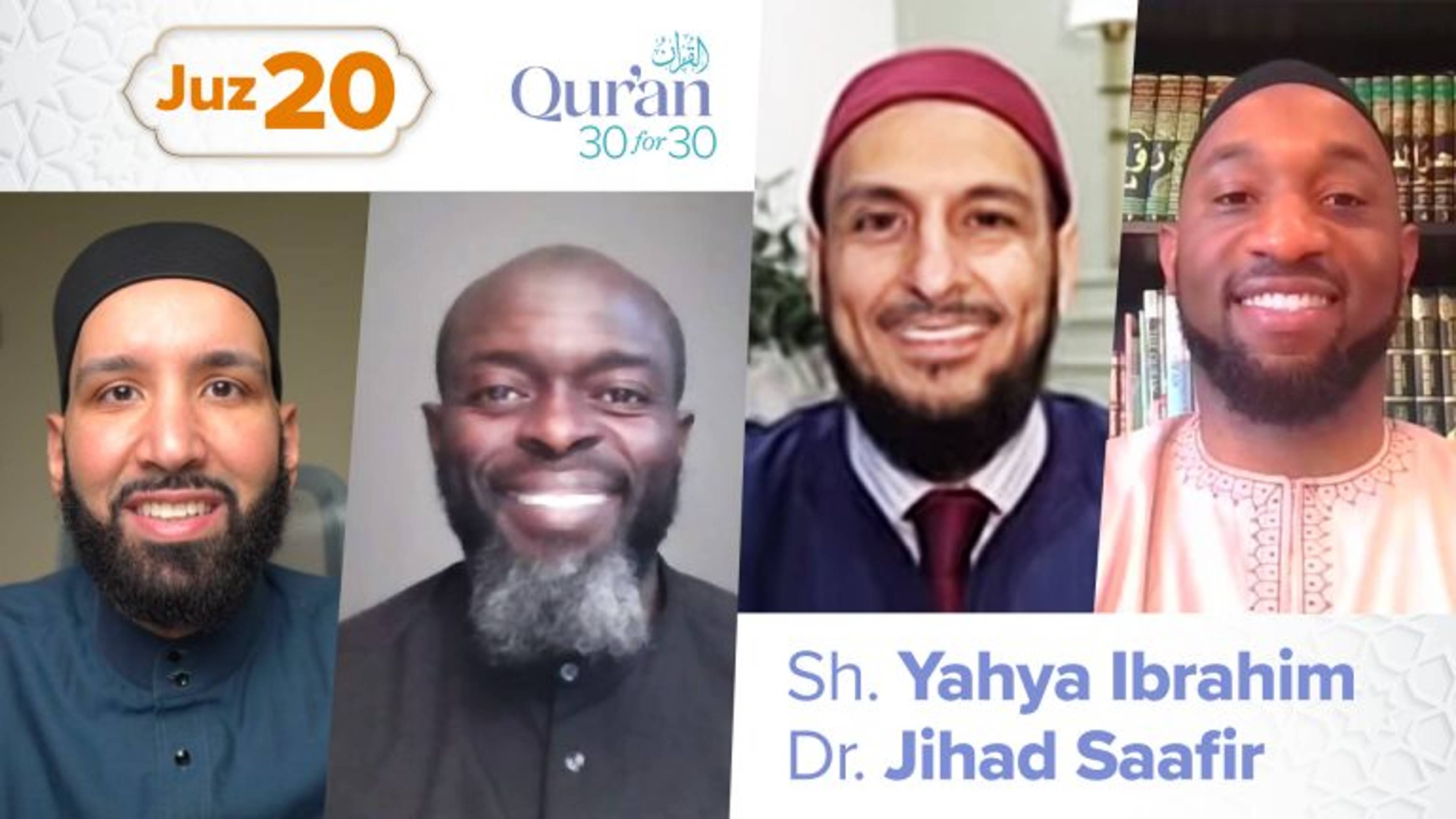
Juz’ 20: Sh. Yahya Ibrahim and Dr. Jihad Saafir | Musa and Qarun
Juz’ 20: Sh. Yahya Ibrahim and Dr. Jihad Saafir | Musa and Qarun

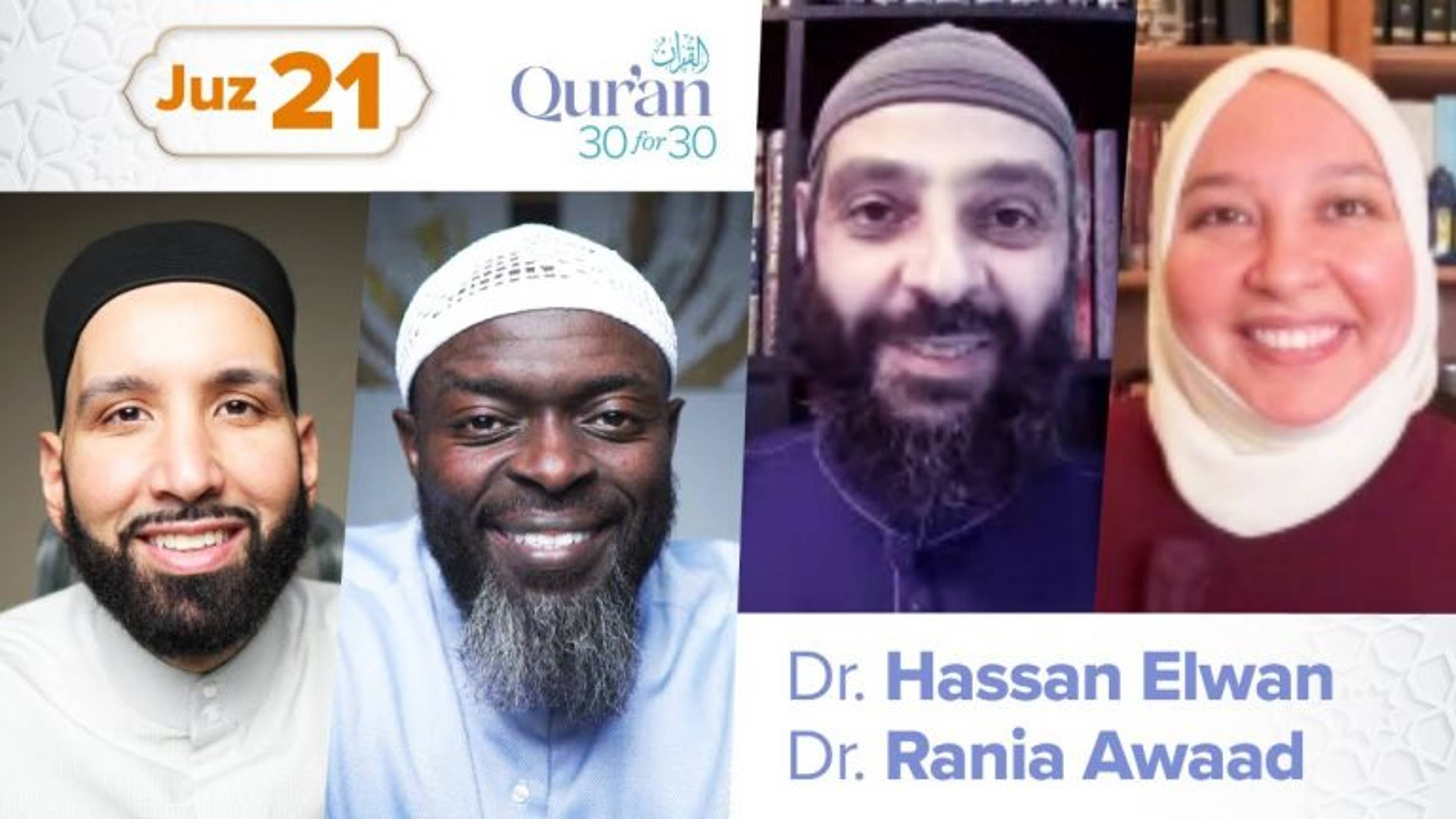
Juz’ 21: Dr. Hassan Elwan and Dr. Rania Awaad | Wisdom, Leadership and Awareness
Juz’ 21: Dr. Hassan Elwan and Dr. Rania Awaad | Wisdom, Leadership and Awareness

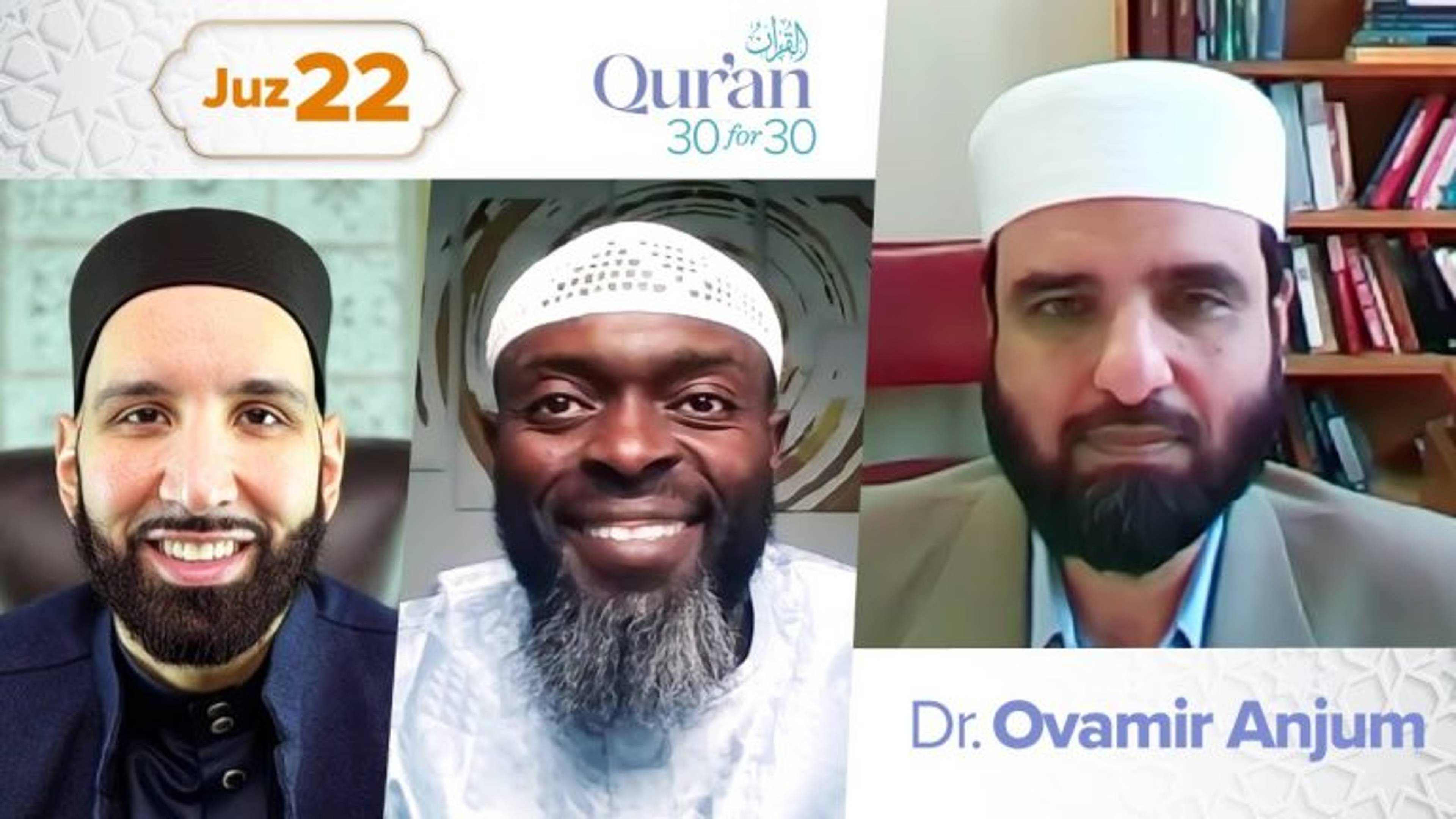
Juz’ 22: Dr. Ovamir Anjum | True Masculinity

Juz’ 22: Dr. Ovamir Anjum | True Masculinity

Juz’ 23: Sh. Furhan Zubairi | Balancing Hope and Fear
Juz’ 23: Sh. Furhan Zubairi | Balancing Hope and Fear

Juz’ 24: Dr. Usaama al-Azami and Sh. Abdirahman Kariye | Don't Just Be Righteous, Be a Rectifier
Juz’ 24: Dr. Usaama al-Azami and Sh. Abdirahman Kariye | Don't Just Be Righteous, Be a Rectifier

Juz’ 25: Ust. Faatimah Knight
Juz’ 25: Ust. Faatimah Knight

Juz’ 26: Mufti Abdul Rahman Waheed and Dr. Zohair Abdul Rahman | Our Afterlife and Our Purpose
Juz’ 26: Mufti Abdul Rahman Waheed and Dr. Zohair Abdul Rahman | Our Afterlife and Our Purpose

Juz’ 27: Ust. Lobna Mulla | Has Not the Time Come for the Hearts to be Humbled?

Juz’ 27: Ust. Lobna Mulla | Has Not the Time Come for the Hearts to be Humbled?

Juz’ 28: Sh. Ammar Alshukry and Dr. Osman Umarji
Juz’ 28: Sh. Ammar Alshukry and Dr. Osman Umarji

Juz’ 29: Ust. Zaynab Ansari | His Majesty and His Mercy
Juz’ 29: Ust. Zaynab Ansari | His Majesty and His Mercy

Juz’ 30: Sh. Majed Mahmoud and Ust. Dania Tbakhi | Eid Special

Juz’ 30: Sh. Majed Mahmoud and Ust. Dania Tbakhi | Eid Special

Qur'an 30 for 30 | Season 4

Juz’ 15: Dr. Tamara Gray and Sh. Mowlid Ali | The Many Insights of Surah al-Kahf

Juz 15 may be considered miraculous—full of stories that leave us in awe of the power and might of Allah. And in Surah al-Kahf in particular, the lessons we learn and the insights we gain can't be counted. Dr. Tamara Gray and Sh. Mowlid Ali join Dr. Omar Suleiman and Sh. Abdullah Oduro to delve into just a few of the learnings we can implement in our lives after reflecting on this juz.

0:00 - Intro
4:24 - Dr. Omar Suleiman reflects on the "miracle juz"
11:30 - Sh. Mowlid Ali reflects on two verses in Surah al-Kahf
19:52 - Dr. Tamara Gray reflects on the purpose of Ramadan
29:32 - Sh. Abdullah Oduro reflects on the reality of the dunya
38:43 - Final reflections

Download our FREE eBook “Qur’an 30for30: Judgment Day Edition”.

This Ramadan, help support free content and resources like this. Donate today!
This transcript was auto-generated using AI and may contain misspellings.
00:01 Assalamualaikum warahmatullahi wabarakatuh, everyone. Welcome back to Qur'an 30 for 30. Alhamdulillah wa salatu wasalam wa rasulullah wa ala alihi wa sahbihi man walah. We're blessed,
00:11 mashaAllah, to have Minnesota's finest, mashaAllah, Dr. Tamara and Shaykh Maureed with us, alhamdulillah. It's the first time in the history of Qur'an 30 for 30 we've had two
00:22 people from Minnesota at the same time. So it's a sign, it's a sign of things to come. And obviously we're blessed to have you both, alhamdulillah. Dr. Tamara, your tahajjud series ran just once
00:34 again before Ramadan, alhamdulillah, and a lot of people are still watching it now and benefiting from it now. May Allah subhanahu wa ta'ala bless you. And Shaykh Maureed, mashaAllah, you skipped
00:45 the year. We didn't have you last year, we had you the year before. So we're signing the contract for you to be with us every year for Qur'an 30 for 30 as well, inshaAllah, from Mazda Abu Bakr, our beloved brother, mashaAllah, in Minnesota as well, alhamdulillah. How are you both doing?
01:06 Shaykh Abdullah, how are you today? Alhamdulillah, I just want to know, so what would you call a person from Minnesota? Are they Minnesotan? Yes. They're awesome, actually. What you call them are awesome.
01:19 Awesome. So I wasn't, you know, I have to do this because you're both from Minnesota. I was thinking about, you know, a way to open this in a lighthearted way, but everything about Minnesota,
01:30 all the jokes about Minnesota involve ice, right? And I realized there's a really famous meme about Minnesota that I think, can we put it up on screen, inshaAllah, and you guys can just
01:39 see how you agree with this. Meanwhile in Minnesota. Yeah, so I think that's the best way to describe Minnesota, right? It's summer, spring, it's always cold. The coldest winter
01:53 wonderland. In winter, we have the four most beautiful seasons in the country, actually. News for me.
02:05 But we love Minnesota, mashaAllah. It is definitely, I'll say, one of the most beautiful Muslim communities, for sure. One of the most beautiful Muslim communities. In fact, it is, and I've told Sheikh Maureed this too, my favorite place to teach, inshaAllah. When I taught
02:19 Al-Maghreb, I had behind the scenes, which was a summary of Muqtasim al-Haj al-Qasidin. The first time I taught it was in Houston. And, you know, we've already established Houston as restaurants
02:30 and traffic, right? Second time was in Minnesota. And I've never seen more excited students. And I think that the excitement around ilm, around knowledge in Minnesota, is unmatched. And it's
02:42 a credit to the work that you all are doing, alhamdulillah, what I mean, over there, but also the beautiful community there, alhamdulillah. But it's still cold. It's still really cold. And well, in the winter, when it's supposed to be cold.
02:58 We'll accept it. In Dallas, we get all four seasons, Dr. Tamara, in a day. In Dallas? Yeah, 80 degrees in the morning, and then it'll be 40 degrees by Asr, and then it'll be a tornado and a snowstorm by Ra'icha, you know, all in one day, you know, so it's...
03:13 Yeah, I like my seasons in their months. Sheikh Maureed, how long have you been in Minnesota now?
03:25 So, since 2019, I came back to Minnesota in 2019. So, about three, four years now. But I used to be in Minnesota, then I went to North Carolina.
03:38 Right, yeah. I remember visiting your beautiful community there as well. Yeah, I still remember that, actually, you gave me a series. It was the History of the Companions, right?
03:52 Correct. Yes, yes, yes, the history. Yeah, yeah. So, we talked about Tanweer al-Ghabash, the History of the Companions. Yes, absolutely. Jazakumullah khair. Well, it's wonderful to have you both. Inshallah ta'ala, we'll go ahead and
04:06 we'll get started. Alhamdulillah ibn al-Amin with Juz 15 now, inshallah.
04:17 So, subhanAllah, this Juz is the miracle Juz, truly. It's a Juz about miracles. It's a Juz about the way that Allah subhanahu wa ta'ala lifts his prophets and lifts his pious
04:31 friends out of the most desperate of situations in ways sometimes that maybe they cannot even appreciate and understand in the moment. And you'll see, subhanAllah, the connection between
04:41 Surah al-Isra where Allah subhanahu wa ta'ala is elevating the Prophet ﷺ out of a desperate
04:49 moment and giving him this incredible ascension to the heavens where the Prophet ﷺ now meets the Prophets. I mean, subhanAllah, if you think about this, he meets the Prophets that have been
05:01 revealed to him in these last 10 years in their most difficult moments. So, you're meeting Yusuf ﷺ right after hearing the story of Yusuf ﷺ. You're meeting Ibrahim ﷺ after hearing about
05:16 what he was going through in Mecca. You're meeting Yaqub ﷺ. You're meeting Isa ﷺ. You're meeting Musa ﷺ, the most spoken about man in the Qur'an. You're meeting Yunus ﷺ. So, this is
05:26 really something for the Prophet ﷺ out of a deep, deep moment of desperation to have this divine ascension through the heavens. First from, of course, Mecca to Jerusalem and Jerusalem through
05:39 the heavens. And then Surah al-Kahf, the cave, where you hear the stories of pious people that are going through various situations and maybe they don't appear to be blessings in the moment.
05:53 These miracles that are happening to them don't appear to be blessings in the moment, but Allah ﷻ is in fact always blessing them. And of course, it's connected to Surah Maryam, right, where Maryam ﷺ does not realize that this blessing that's coming to her in the form
06:07 of Isa ﷺ in her stomach, in her womb, which seems like a curse, which seems like a difficult thing to bear in the moment, is actually the greatest blessing that can be given to her.
06:18 It is still yielding her the blessings today, subhanAllah, that she carried in her stomach, in her womb, the blessed Prophet Isa ﷺ. So, the miracles are being worked in your life,
06:29 whether you can recognize them immediately as miracles or not, or whether they are, you know, in the form of hardship or in the form of obvious ease. And subhanAllah,
06:41 one of the things that I feel like is very beautiful when you connect these miracles, a lot of times you'll find that people demand miracles as a condition for them to obey Allah
06:52 ﷻ. Meaning, oh God, if you show me a miracle, I'll turn back to you. If you give me this, I'll do this. If this happens for me, then you'll see righteousness as a yield from me.
07:03 But what you'll notice in the case of the Prophet ﷺ, in the case of the seven sleepers, in the case of, and of course Allah knows if they're seven or not, in the case of, you know, the man with the garden, in the case of all of those people, in the story of al-Khadr
07:17 ﷺ, in the case of Dhul Qarnayn, in the case of Maryam ﷺ and Zakariya ﷺ, in all of these situations, you have righteousness that precedes the miracle. So, in the reverse, you have people
07:30 that demand miracle as a condition for righteousness, but here Allah is showing righteousness that precedes miracle, and that is the consistent case for all of these miracles
07:41 from the Prophet ﷺ to the unnamed pious people who are losing a child or who are going through something very difficult in their lives, that the righteousness precedes the miracle,
07:53 and Allah ﷻ works for them what is in their favor as they are always in a state of trying to please Allah ﷻ and trying to do that which will bring them to the highest favor of that
08:06 rank on the Day of Judgment and that rank in al-Firdos al-'Ala with the Prophet ﷺ. So, that's one thing, an attitude shift, right, a mindset. Don't demand a miracle from God in order to start worshiping Him. Instead, exert yourself in righteousness and the miracles and
08:20 the blessings will come to you even if they're not obvious in their immediate manifestation. The second thing is that every single miracle is tied to one of two things. It's tied to du'a,
08:30 or it is tied to determination. Du'a, people that ask Allah ﷻ directly for something and Allah ﷻ honors them by answering their du'a in the best of ways, or people that remain devoted
08:45 and dedicated to Allah ﷻ through all circumstances. Hence, Allah ﷻ sends them a miracle or a blessing
08:54 that brings them through to the next stage. And this is the case of the Prophet ﷺ in al-Isra. If you think about if his journey would have started with al-Isra, like think about,
09:07 subhanAllah, the difference in the psyche of the Muslim community if Allah just took the Prophet ﷺ on that journey as soon as he gave him the wahi, if the wahi even started from that place. But look
09:18 at all the lessons that are learned in the process. Look at the types of people, the types of gems that are generated in that hardship and in that devotion. And so al-Isra becomes a miracle not
09:28 just for the Prophet ﷺ but for this entire group of people to now cling to Allah ﷻ and to have that next level. So that when Badr comes and Uhud comes and the next trial and tribulation comes,
09:40 these people have a certain commitment to Allah ﷻ that's unmatched. And the same thing with all these other people, subhanAllah, that you find, their devotion precedes that which comes to them. The last thing that I'll say in this regard, bismillahirrahmanirrahim, and then I'll pass it on
09:54 inshaAllah to Shaykh Mureed, you know, you'll notice that Allah ﷻ is working miracles and
10:03 blessings for each of these people. And it doesn't always seem that way as it's initially
10:10 happening, but Allah ﷻ is ma'as sabireen and Allah is ma'al muttaqeen. Allah is innaAllaha ma'as sabireen innaAllaha ma'al muttaqeen. Allah establishes His being with the patient and His being with
10:24 the pious. And so whether Allah ﷻ is taking you on a journey through the heavens or Allah ﷻ is having holes drilled into your ship to sink it, Allah is with you. Allah is with you
10:39 if you are from as-sabireen, if you're from the patient, and if you are from al-muttaqeen, if you are from the pious. But that's not always going to look the same. However,
10:49 righteousness, righteousness is not ambiguous. So while Allah's plans for us and Allah's miracles and Allah's blessings for us sometimes are not comprehensible to us, what we need to do to be
11:02 with Him ﷻ in the sense of being in His pleasure and attaining His favor is never ambiguous. Allah sends us messengers and prophets and signs about exactly how to do that. So may Allah ﷻ make us
11:15 from as-sabireen and make us from al-muttaqeen. Allahumma ameen. InshaAllah ta'ala with that I'll pass it off to Sheikh Malik.
11:20 Bismillahirrahmanirrahim. In the name of Allah, the Most Compassionate, the Most Merciful.
11:30 Alhamdulillahi Rabbil Alameen. Wasalatu wasalamu ala Rasoolillah wa ala alihi wa sahbihi wa maw'ala.
11:36 InshaAllah ta'ala my role in this Quran 30 for 30 for today inshaAllah ta'ala is to reflect on two
11:46 ayat from surah al-kahf and subhanAllah the Quran is kareem, the Quran is generous you know perhaps
11:55 you know Quran 30 for 30 last year we had maybe other imams and scholars who reflected in the same surah but every time we come back to the Quran, the Quran gives us new insight, new reflections
12:07 and this is the beauty and also the miracle of this Quran as Ahmad Shawqi who was a great poet he said
12:20 the Quran speaks to every moment, every second, every generation so this is the karama and the generosity of the Quran my reflection today inshaAllah ta'ala pertains to the ayah
12:44 ...
12:58 subhanAllah you look at the compassion and the mercy and also you find beauty in this speech on how Allah subhanahu wa ta'ala is addressing humanity
13:11 Allah subhanahu wa ta'ala is telling us remember your origin, your beginning the noble beginning, the nobility and the dignity that Allah subhanahu wa ta'ala bestowed upon you as children of Adam Allah says
13:27 and remember when Allah subhanahu wa ta'ala said to the angels make sujood to Adam, prostrate to Adam and all the mala'ika they did, they submitted to Allah subhanahu wa ta'ala to the will of Allah subhanahu wa ta'ala
13:41 except Iblis, he was from the jinn ... he disobeyed the command of his Lord and now look here Allah subhanahu wa ta'ala is telling us in this ayah
13:54 would you take your enemy who denied your nobility, your honor, your dignity your true identity your enemy, would you take your enemy and his offsprings, his pardoning
14:08 awliya' as friends besides Allah subhanahu wa ta'ala ... while in reality, they are your enemies
14:22 look at the conclusion of this ayah ... what a bad choice for the wrongdoers and can even someone take an enemy if you look at your common sense
14:37 anybody taking enemy as a friend that would be ghayru ma'qul it would be preposterous it would be something that goes against logic but then Allah subhanahu wa ta'ala is reminding us in this ayat that where do we come from
14:51 Allah subhanahu wa ta'ala is reminding us about origins of history and the Quran gives us that this is your beginning once you have this understanding of who you are as human beings and you believe in this
15:06 in this story and in this beginning and you also understand that your enemy is Iblis shaytan, the devils who want to take that true identity away from you once you have that understanding that is the beginning of the guidance
15:20 that is the beginning of hidayah that is the beginning of gratitude when you know that Allah subhanahu wa ta'ala has honored Adam and the children of Adam that's the beginning of shukr and gratitude the reason I chose this ayat
15:34 is that because I see in the west the beginning of their deviation and their confusion again when they deny this noble creature Adam alayhi salam when they deny this authentic and noble beginning
15:48 of human beings Allah subhanahu wa ta'ala says o humanity o human beings will you take your enemy as your friend
16:03 what a bad choice for the wrongdoers subhanallah if you look at the next ayah the next ayah speaks to every time every generation Allah says anybody who is attempting to deny
16:17 the existence of Adam or the creation of Adam Allah says Allah subhanahu wa ta'ala did not hold him did not hold those people as a witness to the creation of the heaven and the earth
16:31 or the creation of themselves they were not there as a witness when Allah was creating Adam when Allah subhanahu wa ta'ala created the heaven and the earth so who are you
16:45 to come and to deny the existence of Adam like Iblis denied that existence of Adam that Allah subhanahu wa ta'ala teaches us in these two ayat in the middle of surat al-kaf it's a reminder for the humanity
17:00 it's a reminder for us that in the society in the people you will find people who will be following speculations theories about the human beings and their origins but the Quran teaches us
17:14 no theory no human being was there as a witness when it comes to the beginning of the creation of the beginning of Adam Allah subhanahu wa ta'ala says that assumptions and theories
17:29 is the truth so these two ayat it's a reminder for us as Muslims and for every human being that your true beginning and your true history
17:43 it begins with Adam and once you recognize that and you recognize that Allah subhanahu wa ta'ala created us in that fashion and in that purpose then that is the beginning of guidance that's the beginning of Hidayah
17:57 you see that Allah is telling us you take Iblis and his progeny as awliya, friends, allies and you leave Allah subhanahu wa ta'ala
18:14 and we see in societies we find people following the devils and the shaytan and Iblis and they leave Allah who gave them that true beginning and that nobility and dignity so as I was reading Surah Al-Kahf
18:29 these were the two ayat that I thought this is the call that every human being needs to hear and this is perhaps the missed call that we have in the Quran JazakAllah khair
18:43 you know Shaykh Malik subhanallah it's the first time I ever reflected on maashatum khalqas samawati wal ardi in comparison to everything else in the surah may Allah reward you because how can you appreciate the qadr of Allah, the decree of Allah if you're not recognizing that He created
18:57 what you could not see and when you could not see then how can you appreciate that He decrees when you cannot see so it's a beautiful connection I think to all the other stories and episodes that are coming up in this and it's not just a refutation of the theory
19:11 of evolution and this idea that we evolved from other than Adam a.s. but it's also this idea that Allah who created you from Adam a.s. and the unseen dignifies you when you worship him الذين يخشون ربهم بالغيب
19:26 worship him in the unseen and you will find happiness and joy only through that connection, may Allah reward you, beautiful beautiful powerful reflection, I personally never have made that connection so you gave me something in surah al kahf now that I can think about
19:40 as well, may Allah reward you JazakAllah khair Dr. Tamara please Salam alaikum I think when I think about surah al kahf or the 15th jizah
19:55 in Ramadan, I'm always thinking about the purpose of Ramadan this idea that we are growing in Ramadan, growing our taqwa and that in that
20:09 so when I'm reading the Quran throughout Ramadan, I'm always thinking what are the messages that Allah has for me what are the things that Allah is how am I being spoken to so that I can grow in my taqwa
20:23 and when I think about surah al kahf I think about many things, but for today I want to share three things and one of those is that Allah speaks to us about how we plan I'm a big planner and I think
20:37 planning is important and the lesson of which is I never say of anything I never do this tomorrow
20:52 except for that we say inshallah we talk about this a lot I suppose when we talk back and forth does inshallah mean maybe or does inshallah mean for sure as long as Allah
21:04 wills but here and in this context I want to think about this differently I want to think about it as I am I'm I'm responding to Ramadan I'm working to
21:17 become a person of taqwa so I'm planning my Ramadan I'm planning it out and I'm saying ya Allah inshallah ya Allah will me to be a person in this month of
21:32 tahajjud will me to a person in this month of Quran pull me into the space ya Allah so that I can plan this month to grow personally to become a
21:45 person of tahajjud Quran dhikr a person who is who is a person with the attitude that brings me to Jannah so that's one and then the next thing that I see in
21:59 this surah is a call to us a reminder to us of the company that we keep that when we want to develop ourselves if you want to be people of taqwa it's very
22:11 important that we reflect on the company that we keep and who we spend time with when we say wasbir nafs when Allah SWT says to us wasbir nafsika maa allatheeni
22:22 yad'ooni rabbuhum bilghadati wal'ashi yuridooni wajhah patiently stick with those patiently be with those wasbir nafsika hmm hold yourself maa allatheeni
22:37 yad'ooni rabbuhum with the people who call upon their Lord in the morning in the evening yuridooni wajhah yani find the people that want God and when you look
22:51 at your who your jalees is the person who sits with you that makes all the difference in the world and how and how our life is becoming a life of taqwa
23:03 because I was reading the other day about vicarious dissonance I believe that's the right thing and there's a lot of there are a lot of studies out there
23:11 about this which and the summary of it is who we sit with our deepest values
23:19 will adjust if we sit with people whose values are different than ours and that blew my mind actually because I think we're you know we're always struggling
23:32 and striving and then to think that the human being when we sit with people and their values are very different than us that's going to affect us so much that our own value system can shrink then this verse becomes even more important
23:46 wasbir nafsika maa allatheeni yad'ooni rabbuhum be patient hold yourself be patient be around the people who are remembering Allah SWT in the morning in the evening and the verse goes on
23:58 wala ta'du aynaka anhum turidu zeenat alhayat al dunya and don't let your eye slide over don't let your eye slide over to the ones who really what
24:10 they want is zeenat alhayat al dunya just the decorations of this life the luxuries the decorations of this life stick with the ones who want Allah stick with the ones who want Allah SWT because if we are all of a subject to
24:25 vicarious dissonance that means that we all want to be very careful who we put next to us we want to make sure that those who are with us are those who are going to help us walk on this path that verse just to finish it
24:39 wala tu'ti' man aghfalna qalbahu an dhikreena and don't obey those whose hearts have become that have been made heedless of the remembrance of God
24:54 wa tab3a hawwa and they follow their desires wakana amruhu furuta and they're just lost so that's the completion of the idea that we want to pay attention like look to your right and look to your left
25:08 who who's sitting with you in real life who's sitting with you in your digital spaces who are the people that you're engaging with make them of the people of God make them of the awliya make them of the people
25:21 yaj'oon rabbuhum bilghadati wal'ashi make them of the people who are calling upon Allah SWT morning and evening and then just to continue this surah or
25:32 this part of the section that is calling upon us to be of the people of taqwa this development of the self that I personally see we can jump to the verse
25:43 al maal wal banoon zeenat al hayat al dunya so we're just told don't sit with the people that the zeenat al dunya the decorations of this life are the thing
25:54 that attracts them and then we're being told what is that al maal money wal banoon
26:00 children that's mind-blowing because when we think about how much effort and
26:10 time we put into growing our money and raising our children and then Allah SWT is telling us zeenat al hayat al dunya well then what should we be
26:20 focused on? wal baqiyatu salihatu khayrun عند ربك ثوابا وخير أملا so it is this thing called al baqiyatu salihatu so what is that?
26:34 what are those things? so the companions have given us some clues about this Ibn Abbas radiallahu anhu said those things are the things that last and they
26:45 are the five daily prayers that sticking to the five daily prayers is what's going to grow us and develop us also Ibn Abbas told us to say subhanallah
26:57 alhamdulillah la ilaha illallah allahu akbar these are the things that last so now in other words becoming of the people who remember Allah is a thing that lasts Asmaa Ibn Affan said to say la ilaha illallah subhanallah alhamdulillah
27:10 allahu akbar and la hawla wa la quwwata illa billah al aliyyul azeem are of the things that last and Ali radiallahu anhu adds to that la ilaha illallah allahu akbar
27:20 subhanallah alhamdulillah la hawla wa la quwwata illa billah istaghfirullah and to do salawat on the Prophet ﷺ and then he increases also
27:30 other good deeds and the last one that I'll share is Al-Aufi says that it is good words the things that last because that's different and special so I'll
27:41 make sure to share that the good words are of these things that last so to summarize as we're thinking about becoming people of taqwa and we want to
27:51 grow our taqwa we want to start out by thinking about how are we planning to do that take steps plan and say yeah Allah help me to fulfill this second we want
28:04 to look at who is with us here in space and in our digital spaces how are they helping me along this path make sure they are the people of the kid and third
28:14 we want to become of those who hold on to that which lasts and that which last is in our prayer our adhkar our good words and our worship and all of that
28:28 together inshallah we will leave this month as the muttaqeen another jam that you bring forward is that when people think of miracles they think of miracles
28:40 happening to the individual but surah al-kahf actually starts with a group of people that were doing wasp or no second they literally were worshipping Allah together and Allah gave them that
28:53 miracle together as a result of their righteous companionship and Allah knows how they were inspiring one another and feeding off of one another in that journey towards Allah and that miracle comes to them so may Allah bless you
29:05 another inshallah I feel deeply enriched from both of you and surah al-kahf thus far it's another layer for us to consider because we always just look at the miracles the miracles the miracles but what precedes it
29:19 Sheikh Abdullah last but never least please take us away Alhamdulillah rabbil alameen wa salallahu wa sallam wa barak ala nabiyyina muhammad wa ala alihi wa sahbihi ajma'ina ma ba'ad
29:33 just great reflections mashallah tabarak Allah and the the rabt of you know the the ideas that were presented from those whom you're around and a sister dr. Tamera mentioned in regards to the friendship I was just
29:48 thinking about you know in Arabic it's such a rich language that there will you will find a number of words for one particular thing so for friend you have
29:57 rafiq, sadiq and you have khalil and as soon as she mentioned the study that she was talking about the Prophet I thought of the hadith of the Prophet sallallahu alayhi wa sallam where he said
30:08 al mar'u ala deeni khalilihi fal yanzur ahadikum man yukhalil and if you look at the kha and lam subhanAllah even vinegar is called khal
30:20 and when you look at the origin of these letters it has to do with permeation penetration blend so it is as though you're always around that person to the degree to where your values will be compromised and that was a beautiful point
30:34 that she mentioned and then just tying it into the beautiful the beautiful ayah from Allah subhanahu wa ta'ala you know and it's the best of speech Allah subhanahu wa ta'ala reward you for that I want to capitalize on a verse the verse
30:48 that she mentioned at the very end the last verse where Allah subhanahu wa ta'ala says aftaAAudhu billahi minash shaitanir rajim in verse number 46 where Allah subhanahu wa ta'ala
30:57 says al malu wal banuna zinatu al hayati al dunya wal baqiyatu al salihatu khayrun inda rabbika thawaban wa khayrun amala Allah subhanahu wa ta'ala mentions this
31:09 verse when talking about the reality of the dunya because right before that he gives a beautiful beautiful parable of the dunya and I wanted to mention it but this parable we would go so long on that but just comparing it to agriculture and
31:22 how it will dry and how the dunya is something that is temporary but there are things that are everlasting which was mentioned earlier Allah subhanahu wa ta'ala mentions al malu wal banuna money and children and if you find
31:36 throughout the Quran Allah subhanahu wa ta'ala mentions these two things together and he mentions money before children now scholars have dipped into this and then they you know ask the question why is money mentioned before children
31:49 primarily some of the mentioned because that is a must book that is that which is precedes children meaning that if you were to ask someone in a college you
32:00 know our man he wants to get married and they say well why why do you why can't you get married or why do you not want to get married at the moment he says I don't have any money many of those that are fathers-in-law or future father-in-law
32:12 is just the indirect advice that you know you want to ask the men what are your plans to provide for my daughter so money precedes that before proceeds that banoon before precedes the children because in Islam we see that there is
32:26 from the objectives of the Sharia from them is have the nestle preservation of the lineage and the lineage the key to that is marriage and the key to marriage is provision that the man takes the effort to provide for his family so that
32:41 is one of the wisdoms behind al-maloo Kabul al-banoon that money is mentioned for before children another interesting fact is what one of my my shifts used to say in Al Medina when he said subhanAllah they call mal which has
32:54 numerous words for it as well man the end of alba yami Louie Lee because the heart leans towards it and I always say this at my particular message especially in fundraisers fundraisers that the pocket is put here right by your hearts
33:08 because we put the money right there so Allah subhan Allah the word and man because I'll be mean the heart inclines towards it it's an inclination if we look at the verb of this word so when Allah subhanahu wa'ta'ala is mentioning
33:22 al-maloo al-banoona Zena to the Hayati dunya that it is from the beautifications of this life the beauties of this life you know Allah subhanahu wa'ta'ala mentions this in other chapters and as a matter of fact
33:33 when he talks about that which could even be a distraction and the verb for distraction is al-ha you'll he that which distracts you basically takes you
33:42 away from traction and traction is that which you can hold on to distraction takes you away from that the for Allah uses al-ha you'll he here al-ha
33:52 kum a taqas or you have been distracted and diverted by gathering things in abundance and when the scholars talk about the objects of abundance which
34:02 leads to Fokhar which leads to bragging money and children money and lineage the tangible things which you can get other tangible things which will make you look
34:14 bigger than you are or people will look at you and that can divert them from the remembrance of Allah subhanahu wa'ta'ala so Allah subhanahu wa'ta'ala even says in the chapter of al-munafiqoon after audhubillahi minash shaitanir rajeem
34:29 ya ayyuha allatheena amanoo la tulheekum amwalukum wala awladukum an dhikri Allah oh you who believe and this is for the people who believe that have a
34:41 connection with Allah subhanahu wa'ta'ala do not allow your money and your children to divert you from the remembrance of Allah subhanahu wa'ta'ala this is so
34:53 important because when we look in this world and we just say what are the things that I cherish are my children who are a part of you and the money that I have attained to protect to provide and further preside over them so when
35:07 Allah subhanahu wa'ta'ala is saying these two things these two objects zina tul hayati dunya that they are beautifications of this earth what is important here is what Allah subhanahu wa'ta'ala says after that
35:19 wal baqiyatu as-salihatu khayrun inda rabbika that the everlasting things or the things that will stay here forever baqiyat as-salihat the righteous
35:31 deeds that are everlasting that will stay with you what is beautiful about a science called usul of fiqh which are the the origins of fiqh or let's say the
35:41 code or the process to obtain a ruling in Islamic law is they talk about what is known as af'al al-mukallafeen the actions of the responsible parties and
35:52 subhanAllah one beautiful thing one beautiful thing that I learned in my in in the College of Sharia College of Islamic law as they say that the rulings in Islam mutta'al liqatun bi af'al al-mukallafeen that the rulings in
36:06 Islam halal haram and things that nature predominantly are those that deal with actions of the responsible party so I have money money in and of itself could be used for good or could be used for evil Sheikh Omar talked about that
36:21 yesterday when we mentioned the animals in the livestock and the milk and liquor could be used for that which is wrong or that which could be for that which serves some level of benefit but here we're talking about money in and of
36:32 itself it could be used for that which is halal or that which is haram depending on your actions with that particular object children do we order them to pray do we before they reach the age of puberty and discernment do we
36:45 get them involved in prayer bringing them to taraweeh getting them used to the masjid or do we say khali huwa sagheer and he's 15 years old or do we leave them to do actions that are not in their best benefit and their best from
36:59 the salihat it is the actions that will go with you after you die what the actions meaning here is are there actions that serve as an investment in this life or the next life and that is khair that is better
37:13 thawaban wa khairun amala and Allah mentions this is better for them in reward and better amala and I like amala and I'll end here because you know you know when we were younger probably till today we ask our children what do you
37:27 want to be with you when you grow up what are your hopes and aspirations you know when someone says as a young man I want to be an imam or I want to be someone that serves my family my husband and my children or I want to
37:39 serve my family you know we look at that as a demeaning term as something that is second-class or that is mafdool that which is not preferred but in actuality any action that serves directly in serving people and serving the deen of
37:53 Allah this is the best thing and that is the best thing to hope for so to ensure that the things that we hope for have a direct connection to the salihat
38:05 any action that we hope and strive for to particularly have that inculcated within our youth and as parents and influencers and people of knowledge and those alike in the community any type of person that has a level of influence to
38:19 make sure that we call them to the baqiyat salihat from the friends that you keep from the hopes that you that you ascertain may Allah Subhanahu wa ta'ala make us of those that understand that the objects in this earth are here as a
38:32 test to see which one of us are best in our actions and those actions inshallah I'll be from the baqiyat salihat, barakAllah for you, beautiful beautiful reflection
38:43 Sheikh, subhanAllah as you're talking about maal and the meaning of money and where it's placed yeah I was thinking about something that one of my teachers had also reflected on this is 20 years ago and I remember him saying it like tangent
38:57 in a dars and those are usually the best ones right just a tangent and he said subhanAllah money is the most inconsistent of the blessings in our lives yet it's the one that people hold on most to like if you think about the
39:11 health and everything else that we've been given health children everything else like the the way money oscillates in our entire lives the way it goes up and down it's it's so inconsistent we trade we lose we gain it's the most
39:23 inconsistent blessing we have in our lives subhanAllah it's the one that people hold on to and end up you know until as the Prophet Sallallahu Alaihi Wasallam said until his mouth is filled with dirt right
39:38 he's given a valley of gold and I want another one another one another one until it's just it's dirt in the mouth and that's when you realize it's like a lot showing you a sign and how temporary your money is by how inconsistent it is
39:49 subhanAllah people hold it so tightly may Allah protect us from that addiction and that attachment beautiful reflection subhanAllah I benefited incredibly from all three of you and just leave it open for any final
40:03 thoughts dr. Tamra, Sheikh Maulid, Sheikh Abdullah please share any final thoughts and well if I may say I because I feel embarrassed that you I came back and I
40:13 looked like I was on my phone I wasn't really that your talk about this about money and of the Baqiyat al-Salihat reminded me that I'm doing this Iftar on
40:26 Thursday and I had to quickly there's something I had to do that I started doing before we got here and I was just like literally I was listening to you
40:36 and responding immediately to your advice so that's what that was what that was subhanAllah because this this Baqiyat and with money too Sheikh
40:48 I'm like what you just said I recently met someone who is so convinced I mean as we should all be very differently than this world offers us that the way
41:00 to increase her wealth is by giving it away she's really she's right there she was talking about how she needs something for something in her life so I'm really thinking that I'm going to have to give away at least in the
41:13 thousands of dollars I was like subhanAllah oh this is our that's Baqiyat al-Salihat right there that's that thing that's going to last forever but her clarity
41:23 and her yaqeen goes with that her yaqeen and that was just what I've been reflecting on it since she mentioned it actually it's really something the idea of what lasts if we really knew what really lasted how differently would we
41:37 live our lives Sheikh Nusheikh Maureed, any last words for us of wisdom?
41:47 If you look at Surat al-Kahf, subhanAllah, the ayat of Surat al-Kahf, each ayah is in its position
41:59 Kitab al-Hukimat ayat, every ayah comes in its place and if you look at how the tanasub or the thematic connection between the ayat we find and this is my
42:12 my reflection, that there are four stories in Surat al-Kahf that are necessary for every society for every community to understand number one
42:23 is Ashab al-Kahf that represents the companions of the king about the importance of aqeedah, connection with Allah. Second story is
42:33 Qadrib lahum mathala al-rajulayni ja'alna li ahadihima jannatayni min na'anam wa hafafanahuma binakhlin wa ja'alna baynahuma zara'a
42:41 that's wealth, how do we deal with wealth that's the second story and having the right attitude towards the blessings of Allah subhanahu wa ta'ala and then the
42:53 third story is the knowledge we find the story of Musa al-Khidr taking the journey and Khidr telling Musa you come to a domain, a kind of knowledge that you
43:03 have no experience at all. So it's a test to human intellect so we have a limited understanding of everything even prophets
43:15 and messengers and then the last topic which is authority if that's combined with justice then you find the best results and the story of the Qur'an
43:26 exemplifies that. You have a leader who has a connection with Allah, who's obeying Allah and he's also doing something good for the society so if you have authority
43:36 with obedience to Allah then that brings benefit to the society so that's something that I thought about. Imam al-Adil, the first person that is shaded by
43:47 Allah's throne is a gesturaler, subhanAllah, for that reason. Shaykh Abdullah, any last words? No, Alhamdulillah. Can I add something just to it? I just when
44:00 you're talking about that last story of with Musa al-Khidr, that story ever since I became a Muslim almost 40 years ago now, it's been a story that's
44:12 been important to me and it's grown in its different ways of the way I've looked at it and understood it and right now I'm in this place where I feel like
44:21 it's a it's a it's reminding us all to recognize our qadr as our teacher and to
44:30 get curious about what are we called upon to learn and so I just want to share that because you talked about qadr earlier Shaykh Ahmad and a lot of
44:42 people struggle they stop at their qadr, they're stuck and they're so stuck and if we can and that's a little bit like what happened to Musa right he's kind of stuck like wait a minute I don't get this and so it's not like it's not human
44:56 to get stuck but I feel like it's calling upon us to be to be curious and to be at that the place where we're looking at our qadr as our teacher and how are we meant to what are we what are we supposed to learn here how are we
45:11 supposed to grow here amazing reflection very powerful and on that note you know subhanAllah one thing we didn't get to discuss today but inshallah
45:26 ta'ala we'll be discussing in tonight's khatira and you know bring an article on this we've posted about it and I think it's on the hearts and minds of all of the Muslims right now is the aggression against our brothers and sisters in
45:40 Palestine and Palestine particularly Mazal al-Aqsa and Surat al-Isra obviously takes place in that place it is from Mecca to Al-Quds may Allah subhanahu wa ta'ala
45:52 liberate it then to the heavens for a reason and Allah subhanahu wa ta'ala honored that place and so it's impossible for us to read through the section of the Quran without connecting to that place inshallah ta'ala tonight's khatira
46:05 will touch a little bit more on that but please keep our brothers and sisters in Palestine in your du'a, please keep al-Aqsa in your du'a, may Allah subhanahu wa ta'ala liberate it, may Allah subhanahu wa ta'ala allow our brothers and sisters to be
46:18 granted victory over their tyrants over their oppressors may Allah subhanahu wa ta'ala allow us all to pray in a liberated Mazal al-Aqsa, Allahumma ameen Jazakumullahu khayran once again to our guests and you know for the phenomenal
46:31 reflections and as this is a juz of miracles we pray for that miracle in Palestine soon. BarakAllahu fikum all, we'll see you all tomorrow, inshallah, As-salamu alaykum