Read along with us in the Yaqeen Book Club.
Join the book club

The Origin of Hijab in the Qur'an and Sunnah | Real Talk | Dr. Tesneem Alkiek

Real Talk Series

The Origin of Hijab in the Qur'an and Sunnah | Real Talk | Dr. Tesneem Alkiek

Published: November 18, 2026 • Jumada al-Thani 8, 1448

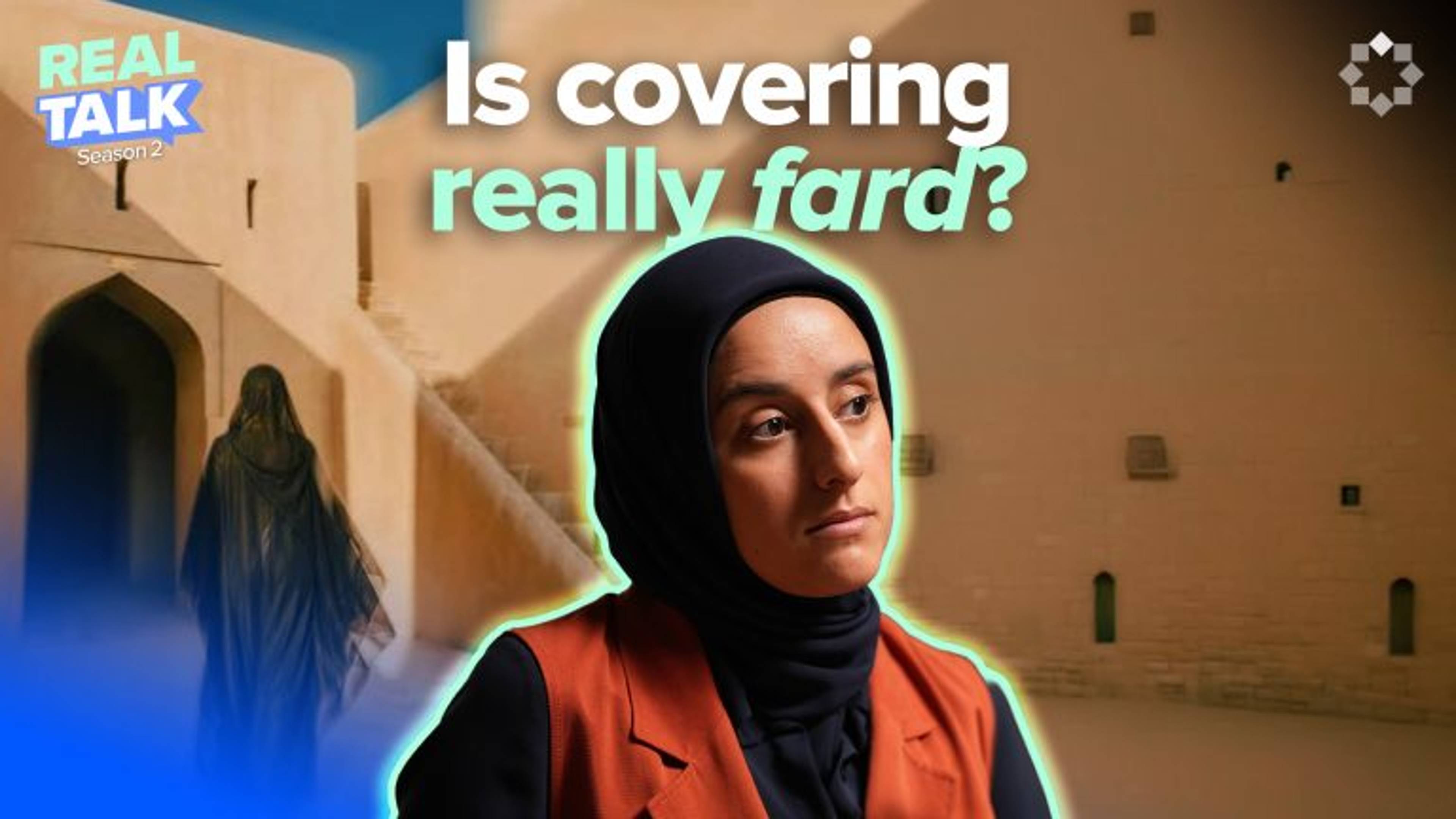
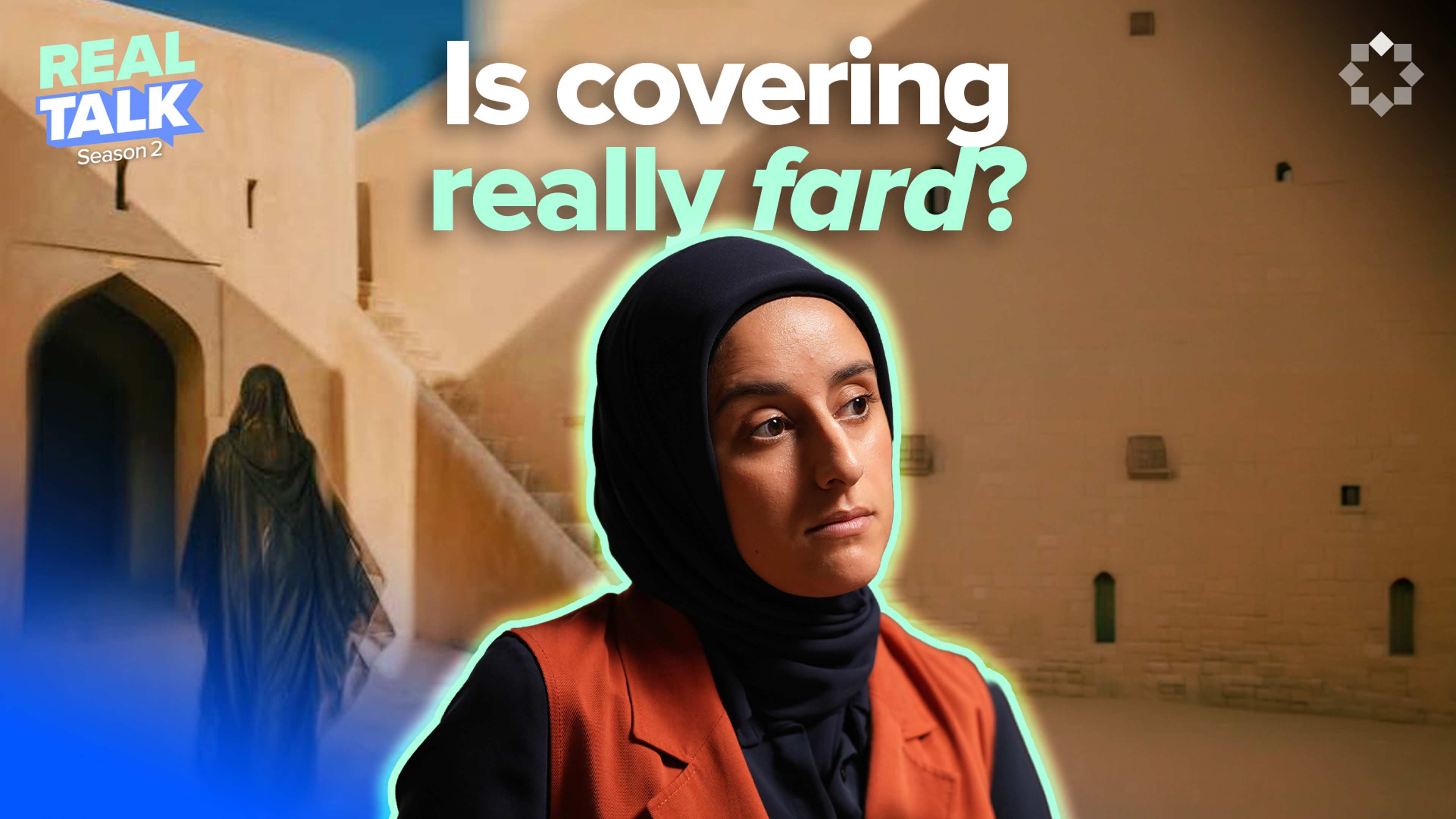
"Is hijab actually fard?" Where is the evidence that hijab is obligatory?

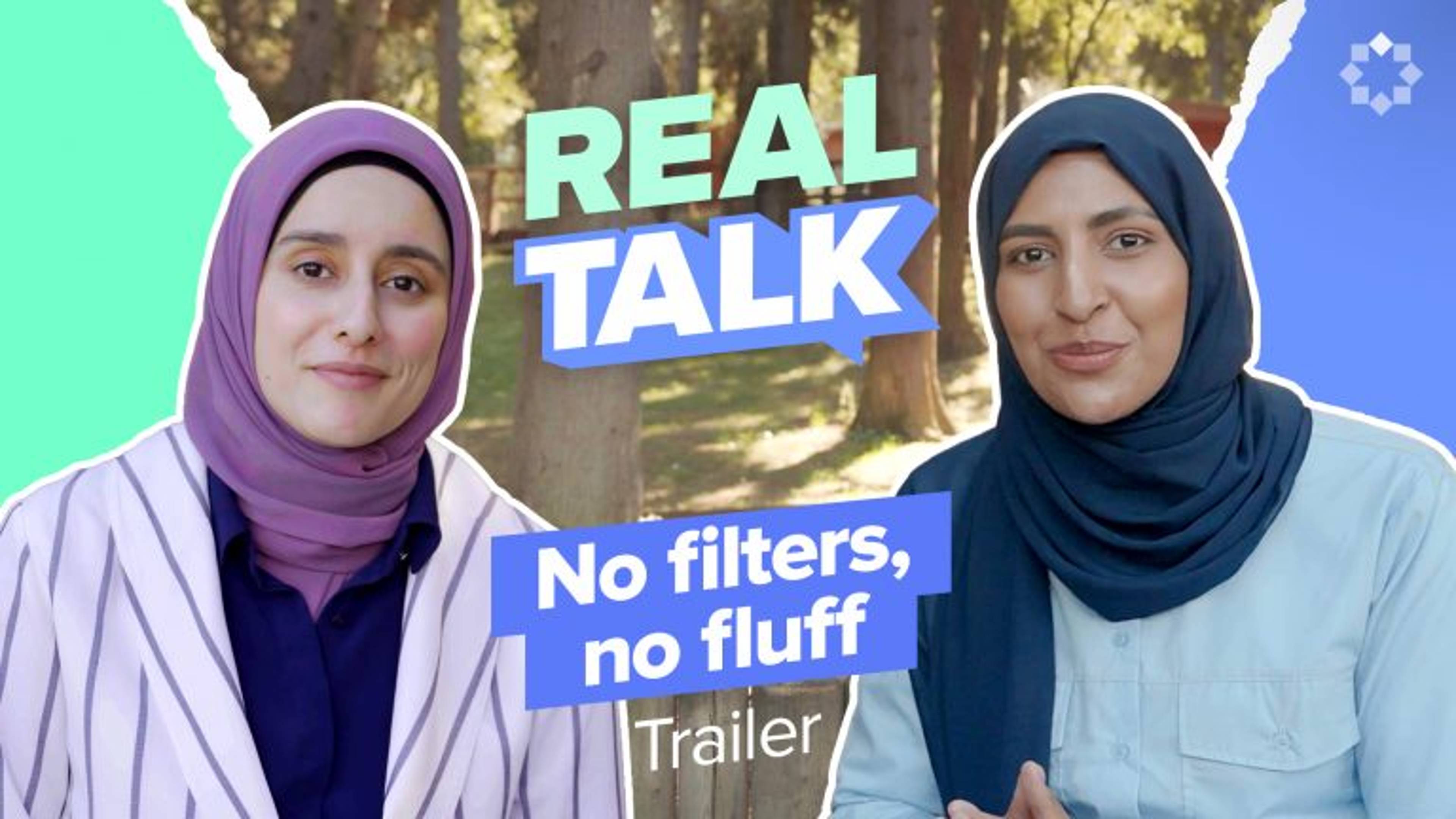
Yaqeen scholar Dr. Tesneem Alkiek and host Cadar Mohamud address the question circulating widely among Muslim women, and trace how colonial-era assumptions about religion and authority shaped the way it gets asked today.

Dr. Alkiek works through the linguistic meaning of khimar and khumur in classical Arabic, the two commands concerning covering in Surah al-Nur, the jilbab verse, and the response of the Muhajirat women the moment the verse was revealed. She then takes up the arguments made against the ruling. Are the Qur'anic verses too ambiguous and the hadith too weak to establish an obligation? Was covering merely an Arabian custom that revelation happened to leave in place? And what does Islamic law offer a woman who fears that hijab makes her a target?

This transcript was auto-generated using AI and may contain misspellings.
00:00We've woken up and now decided to ask the question: is hijab obligatory or not? Nowadays everything feels like, I don't know if I can do it. What do people who argue that hijab is not obligatory say?
00:13Did you know that the great-granddaughter of the Prophet ﷺ supposedly didn't wear hijab? Naqab is cultural, hijab is cultural. Are we cultural? Like, what is going on? Look, you and I wear hijab. Yeah.
00:26We've both experienced harassment before. I'm not perfect, but I'm trying, and I know that means something to Allah. Sister, you're from Philly, should I be? Should I be from Philly? Biggest honor you could get.
00:38Because they're looking at me thinking, "Oh, this girl's wearing naqab, she's confident, she's wearing Jordans."
00:43Dr. Tasneem, I'm really excited about the conversation we're about to have about hijab.
01:00And the reason for that is that back in the day, when we used to talk about hijab or ask questions, it was always about what's the ruling about hijab? What do you cover, what do you not cover? But today, the conversation is entirely different.
01:14People are asking a different question. Is hijab even an obligation? And I have to say, I'm shocked, right?
01:27I never even thought that was a reality, that the Qur'an would not even make it an obligation. And so now people are asking if hijab is just cultural, not religious. Where does that come from?
01:41I think you're right, the conversation has entirely shifted. There is an obsession with Muslim women's dress. And I don't think it came out of nowhere, right? We have a long colonial history in the Muslim world, meaning you have colonial powers who
01:55come to the Muslim world to do what? To impose their moral frameworks, right? To impose their set of standards and ethics. And so when Western powers show up to the Muslim world, they're looking at Muslim women and men, asking, what is it that you believe?
02:10Why is it that you dress this way, right? And so now you have the stereotype of the barbaric, violent Arab man. You have stereotypes of Muslim women: they're oppressed, they're always hidden, they're part of a harem.
02:24Look, I don't think these tropes are going away. And the way they continue to influence how we think today is in ways we're not expecting. And so now suddenly we're asking, is hijab even fard?
02:39Is that something Muslim women just one day woke up to, or Muslim communities overall just one day woke up and said, let's ask this question from the beginning? No, I don't think so.
02:48There is a larger conversation happening that is being influenced from so many directions. I don't know if you were old enough to remember, but post-9/11, Laura Bush comes out and says,
03:00in order to invade Afghanistan, what was the excuse? We've got to save their Muslim women, right? So I think it's important, because I don't think these questions are happening in a vacuum,
03:11that we've woken up and now decided to ask the question, is hijab obligatory or not? I think naturally, implicitly, maybe sometimes even subconsciously, we're thinking
03:22about this stuff because of all of the influence we're hearing around us, right? And so now my whole set of assumptions has shifted, and I'm thinking to myself, what is it about
03:35my experiences as a Muslim woman? And look, the reality is a lot of Muslim women have had negative experiences with the Muslim community, right? It might be just a simple hiccup or a simple bad experience, right?
03:48But because now we're being influenced by this larger conversation around us, we're thinking, was that simple, or maybe not so simple? Was it a negative experience that I had as a Muslim because of my religion, or is it because I'm
04:02really oppressed, right? Was it because of that one person, or is there a larger thing that I'm missing in this conversation, right? And so now the conversation is shifting, where instead of asking, okay, what is it that I have to cover?
04:16It's, do I even have to cover at all, right? And where's the first place we're going to now to find clarity? Qur'an, right? Qur'an is our main source of guidance. And so a lot of individuals are now coming back and saying, let's open the Qur'an.
04:28Let's check for ourselves to see what it is that Allah tells us to do, what God tells us to do. You're picking up the Qur'an, you're flipping through the Qur'an. Lo and behold, you're not going to find hijab in the Qur'an. Why?
04:42Because we're looking for the word hijab. And in Arabic, hijab means something different than how we use it today, right? So if you look for hijab in the Qur'an, you're going to find that hijab is a physical barrier.
04:56It's a barrier between the people of hellfire and paradise. It's going to be like a metaphysical barrier, the barrier that is between believing hearts and disbelieving hearts.
05:08And then you're going to have the hijab that was mandated upon the wives of the Prophet, that they had to have literally a curtain between themselves and other men. So now you're like, where is it at? Right?
05:21That's the first dead end you're going to hit, because you are looking for what we call hijab today, but that's not how the Prophet referred to it. That's not how Allah referred to it. So that's your first challenge right there.
05:33It's funny, because what I've seen online is that this is the question. Well, show me where hijab is in the Qur'an, right? And then people are like, obviously it's there, and they're flipping through, right? And then in real time, they can't find it.
05:47And somehow that's evidence that it's not there. If hijab is not the word we're looking for, then where does the ruling live in the Qur'an?
06:02There's one explicit verse, okay? And I'm emphasizing the one and the explicit on purpose, right? Because I think a lot of times the conversation gets lost, where it's like, well, maybe there's this one verse and this other verse. No, it's clear. It's a single verse.
06:17And that's enough to establish the obligation of hijab. And that's in Surah An-Nur, verse 31. There are two important clauses in this verse for us to consider.
06:28The verse starts off, "And tell the believing women..." Clause number one: do not show their zina. We'll talk about what zina means in a second. Do not show their zina except what has to show.
06:43Zina is usually translated as beauty, adornment. What exactly that means, we'll get to. The second one is to take their khumur and to now cover their chest with it.
06:56Let's look at the second one for a moment here. Take your khumur and cover your chest with it. I still don't see any part that talks about covering your head, right? And this is the catch here.
07:08Because what we call hijab today is practically speaking actually khimar in Arabic, right? Khumur is the plural of the word khimar. And khimar literally means a head cover.
07:21And we know this, and you have to clarify now, because some individuals argue, well, you have no proof that khimar means to cover your head. Well, actually, we have a lot of proof, right? A lot of proof. The most basic evidence is the fact that khimar
07:34comes from the root letters kha-mim-ra. Does that bring to mind any words you've heard before in Arabic? I'm scared to say it, but alcohol? Alcohol, right?
07:47In the Qur'an, it's the same root letters, khamr. And if you look at Arabic dictionaries, what is it about khamr that has anything to do with covering your head? And scholars come back, grammarians and linguists come back and say,
08:00well, khamr is something that covers your mind, right? Because obviously it fogs your mind and prevents you from thinking. So that's why it shares the same root letters.
08:11And then you have a narration from Bilal, the companion, who's describing the Prophet, peace be upon him, performing wudu. And in this specific hadith, the Prophet, peace be upon him, is wearing a turban.
08:25And so what does Bilal use to describe the process of the Prophet wiping his turban? He refers to it as a khimar, right? So look, we have a lot of different evidence,
08:38corroborating evidence that comes back and tells us khimar means something specific. And the way scholars have understood it is based on the practice of the Prophet, peace be upon him, the scholarship of Arabic grammar,
08:53and the reality that Arab women at the time covered their hair with something called a khimar. And now Allah, subhanahu wa ta'ala, is saying, hey, that khimar you already have on your head,
09:04take it, keep it, and now make it longer, extend it around the body. So at its surface, it's clear, it's explicit, and it's direct. But a lot of times the confusion comes from the assumption that khimar means something that's negotiable.
09:18But we know from other evidence, it's referring to something that's already covering the head. That logically makes sense because the ayah says something being pulled down over your chest. So naturally, you just think something starting from the head all the way down.
09:31So that tracks with me personally. But the ayah also says, except what necessarily appears. So my next question is, what can we show?
09:47Yeah, let's go back to that other clause, right? That you should not show of your zeenah except what has to show. So zeenah here is now beauty, adornment, right?
10:01Basically, you're beautiful. Ladies, right? The concept of beauty, I don't think it requires that much translation because what's more important here is illa ma zahara minha. What exactly can show? That I think is what's more important.
10:15You've got two major opinions, right? Two camps within Islamic law. So you have the first major camp led by, I would say, the companion Abdullah ibn Mas'ud.
10:26Major Qur'an scholar, major fiqh scholar, so Islamic law. And his interpretation, his understanding, again, based on the precedent that he learned from the Prophet, peace be upon him, and through his tafsir, is that what shows,
10:40what illa ma zahara minha, what can show is your outer garments. So it's referring to all of your clothing that can show. His opinion is you cover everything, face and hands included. That's the first camp.
10:53The second camp, you have the opinion, I would say, it's sort of led by the companion Abdullah ibn Abbas, who's another major figure in the tafsir tradition, a major companion,
11:04who understands this to mean that everything must be covered except that. And he says something specifically that's very interesting. He says the kuhl and the khatam. What's kuhl? What you put on your eyes? Eyeliner.
11:19Kuhl, eyeliner. Khatam, what you put on your finger. And so scholars, that gives credence to the opinion that everything is covered except eyes and hands. And then you have others who build on this.
11:31And some narrations attributed to Aisha, Allahu anha, and to other major companions that come back and say, that's referring to mahal al-kuhl, mahal al-khatam, right? The place where you put a ring, the place where you put kuhl, and the argument goes
11:45that that includes the entire face and the hands. Okay, okay. Now, you have other ways of also building out these opinions. So you have a lot of discussion in the legal books, the law books. It's interesting, the places where you find this.
12:00One example is business law. So scholars come back and say, well, it makes sense, for example, that hands and face must show, right, illa ma zahara minha is like what has to show.
12:14Because for some schools of law, when you engage in a business transaction, you need to have your face uncovered to be able to verify who's doing the purchase. And presumably, you would have your hands uncovered to take and give the item that's happening, right?
12:30It's the same logic of like, what needs to show in terms of like, how do you conduct basic functioning in your life, that scholars, you have some of the Hanafi scholars, some of the Maliki scholars who come back and say, well, that includes your feet as well.
12:44Because women at the time didn't have shoes. And when they would walk, their feet would have to just show because that's life. And so you have this understanding that of darura, of necessity, that's filling in the gaps here.
12:58That's helping us understand why there's a difference of opinion and the range of opinions that scholars had, again, within this framework. So now if you're going back to this verse, we know that for sure your head is covered.
13:10And now you're extending it and you're lengthening it to cover even more. The question becomes, what has to show in order to have that normalcy to be able to conduct day-to-day activities? And you get all of those opinions that I just shared.
13:25So I actually have a funny story. So I see hijab kind of like a spectrum. There's always more we can do with hijab. Obviously, I wear niqab. And I remember I wanted to do more. I was like, well, what else can I do?
13:38Because I have friends who wear niqab, who wear gloves. So naturally, I was like, let me try gloves. And so one hot summer day, it was the first day I decided to wear gloves. And for some reason, I stopped hearing, stopped listening.
13:52It was affecting all my senses. So you put the gloves on? I put the gloves on, and I couldn't hear people. It was sensory overload. I was like, listen, I have to wear hijab for the rest of my life. If this is unnecessary, I got to retract. And it was just, it was a lot for me.
14:07And it became genuinely overwhelming. And so I began to learn the rulings: do I have to? And this is why it's important, right? Because Allah doesn't want to make this religion hard on us, right? And so for me, I remember like, okay, this is interesting.
14:21That was one step too far. It was a step where I wasn't functioning anymore. And I need to be a functioning human being. So subhanAllah, yeah, for me personally, it was. Do we have any evidence of how these ayahs were actually implemented?
14:35Can you tell me some stories, some evidence? There is no better evidence to confirm our understanding of this hijab than how the companions reacted to it. And before I share how the female companions reacted to it, I want to give some context here.
14:50Because you know the verse on khamr, right? There are multiple verses that slowly lead you, and you're like, okay, I'm not going to do this. There are multiple verses that slowly, gradually prohibit intoxicants, alcohol in Islam, right? And the third verse that comes out is very clear, explicit. It's absolutely prohibited, right?
15:04No exceptions. And then you have a narration from the companions where essentially they're describing the streets of Medina. It's flowing with alcohol because everyone's dumping the reserves. Wow.
15:18So now it's flowing. And I always remember this narration because I feel like it's such powerful imagery that shows you how the companions responded with clarity, with certainty. There was no doubt about it, right?
15:32Yeah. We have something similar for the verse on hijab, right? The verse that we just shared. And that's the muhajirat, those women who migrated to Medina. Aisha, Allahu anha, was amazed by that. Allahu Akbar.
15:46Yarhamu Allahu nisa'al-muhajirat. She's just like in awe. May Allah subhanahu wa ta'ala have mercy on these women. They heard this verse and within seconds they were like, we heard it. We hear and we obey. They tore their waist wraps and used them to cover themselves, because, right?
16:02They needed that extra coverage, that extra length. They used that to extend their khimar to cover themselves. Subhanallah. Look, that's fantastic evidence for us because they weren't sitting back like, okay, one second, let's go double check with the Prophet peace be upon him.
16:15What did he mean by that? Because guess what? There are incidents where they had to do that. Where something was revealed and they're like, one second, we're not really sure what that means.
16:28Ya Rasulallah, can you clarify? But this instance, they didn't have to do that. It was a clear ayah. It was unambiguous. They knew what to do. And I think that's something we can appreciate because, again, there are a lot of different areas of law, different areas of the way we act
16:40that you do need that clarity on. But their precedent tells us something very important. This is clear, no questions asked, and we know how to react to this legislation. But their precedent tells us something very important.
16:54This is clear, no questions asked, and we know how to react to this legislation. And I have to say, I love that moment in our tradition. So much so, I used to say, if I ever make the Jannah, I would ask Allah subhanahu wa ta'ala
17:08to show me that, like I'm watching a film. Because it teaches us more than just about like, you know, how they understood it, but their spirit. Their spirit as Muslim women. Like, yeah, I want to obey Allah subhanahu wa ta'ala, right? Nowadays everything feels
17:23like, I don't know if I can do it. But it's like, they had a spirit of, I'm going to figure it out. But I'm going to start with trying. And I love that. I want that confidence. Yes, I need it. I want to be that confident. I want to believe in Allah subhanahu wa ta'ala
17:34in that manner. So I kind of use it as like my inspiration. And I guess it kind of confuses me today because people are debating it. Like, people are debating the verses, the commands
17:46Allah subhanahu wa ta'ala has legislated. It's just, it's always up for debate. I'm just kind of like dumbfounded by it. Right, exactly. Like how? How are you debating it when you've got that clear evidence? And
17:58by the way, there's still more. There's still more to come, right? And look, we even have another verse in the Qur'an, in Surah Al-Ahzab, where Allah subhanahu wa ta'ala says, يَا أَيُّهَا النَّبِيُّ
18:07O Prophet of God, tell your wives, your daughters, and the believing women to يُدْنِينَ عَلَيْهِنَّ مِنْ جَلَابِيبِهِنَّ
18:17To take it, and wear an outer garment. The exact definition of jilbab has been debated as well. Is it something that covers your entire body, including your face? Is it something
18:28that is just an outer garment that goes down to the floor, that goes down to your calf? So let's put the details of exact definition of jilbab aside for a second here, and appreciate
18:39the fact that this verse now is coming back and saying, look, we established you cover your hair. And now this concept of modesty is emphasized in this ayah. You now have an
18:49added layer to what you're wearing, right, to cover up. You got that example. You got the famous narration from Umm Atiyah, who, she's describing what's happening on the
19:00Day of Eid. Now, women pre-Islam, oftentimes, if you were menstruating, so you're on your period, you don't go out. And there was like a category of women who were described as,
19:13essentially, like they were virgins, so they weren't married. And that's al-khudur, like they were often secluded, right? Whole bodies, maybe. They don't go out, right? It was a
19:23cultural practice where you're young, you're not married yet, you stay home, right? It's the Day of Eid, and a woman asked the Prophet, like, okay, well, we heard this verse about
19:34take a jilbab and cover yourself with it. What if we don't have a jilbab? Like, should we just stay home? It wasn't that big of a deal to stay home, because you already had a culture of a lot of women staying home, if you're on your period, or if you're not
19:45married, right? And the Prophet, peace be upon him, I think it's such an incredible moment, because he could have just said, you're right, just, I mean, stay back, it's fine. He said, you don't have a jilbab, you go to your sister, you go to your friend, you go
19:57to your neighbor, and you get something from her, everyone come out. Every single, I don't even care if you're not praying, you come out to join us for Eid, so that you can witness
20:06the supplication, the gathering of Muslims on this day. And this tells us a lot of things. Number one, it emphasizes the Prophet, peace be upon him, like, he didn't say, oh, by the way, no, it's cultural, it's fine, you don't actually have to wear it, that's not, you
20:19misunderstood the verse. No, he affirms the understanding that we have. And now he's also coming back and saying, everyone needs to come out. What is the purpose of hijab? What
20:30is the purpose of jilbab? Right? You cover yourself, you have this modesty, and then you go out, that is what carries you out. Right? Because a lot of times when we talk
20:42about the more modest we are, it's like, oh, that means you should never leave your house, right? Like, almost like that's, it's supposed to be hidden. Yeah, like, okay, hijab is meant to hide you, hide you, make you secluded, make you, like, encourage you to not leave,
20:56right? And I think, I think it's just beautiful, because hijab is our means to go outside, of going out, of engaging in the world in a way that's modest, in a way that's appropriate. So it's empowering, in a sense, right? You've got that narration, you've got other narrations
21:11of women being described as going out for fajr, and you can't, you know, because of the darkness, and because of the way they're dressed, you can't make them out. Yeah. Right? So you have all of these, like, contextual factors that come back and tell you that how
21:25the women reacted, how they began to dress, how they responded, and how the Prophet affirmed that. And then you have other, then you have other ways of understanding, like, look what I'm doing here. What I'm doing here is I'm trying to, to verify whether or not this understanding
21:40is correct. So you're taking, like, different hadith, different quotes, different puzzle pieces, and you're trying to connect them all together. Am I understanding this correctly
21:49or not? Right? And so now, you're trying to gather as much evidence for or against your case. And you have a hadith where the Prophet, peace be upon him, is describing the people
22:01of, the people who will not smell paradise, right? Yeah. So what do we take from this? Right. We don't want to be among these people. And one category that he describes is kasiyat
22:13ariyat, women who are clothed but naked. What does that mean? You're wearing clothes, but you can see everything, right? Maybe it's referring to transparency, maybe it's referring
22:24to tightness, but essentially, you can look at a hadith like that and still use that as evidence because now we're thinking to ourselves, that's clearly something that is not appropriate,
22:34right? It's like this concept of mafhum al-mukhalifah, like, you understand the opposite here, that the Prophet is condemning this practice, which means you don't wear clothing that is tight
22:44or transparent, right? You want it to be loose and you want it to be not see-through. That's
22:52another piece of evidence. Another example is the hadith of Asma' bint Abi Bakr, where the Prophet, peace be upon him, tells Asma' that when a woman reaches puberty, she should
23:05cover everything except this, and he points to his hands and to his face. So now we're like, okay, this is further evidence. And now you're starting to take all these puzzle pieces, putting them together to get this understanding of what's the range we're talking
23:18about, what's the baseline framework of covering, and from there, how did the companions understand and react to it? I want to add a piece of reflection here because it made me think
23:29of the saying that people say, come as you are, right? If you don't want to wear a hijab, and I support this religion for people that are trying, but I like how the Prophet was like, well, just borrow it. If you need something like a hijab to come to an important place,
23:43try to meet those standards, not just show up kind of like, oh, I'm just going to see, but try. You know the hijab is necessary? Try wearing it and showing them and coming
23:55as you are in that way that you're a trying Muslim. That's what I kept thinking about right now. But also, with that hadith about Asma', from my understanding, that hadith is graded weak. Why are we considering that hadith for this conversation?
24:15You're right, right? A lot of scholars have graded it weak. You know, it's funny because I know people have come back and said, look, it's weak. That's not good evidence. And those are people who deny the obligation of hijab. Don't give me that evidence. It's weak. Sure,
24:28it is weak, actually. You know who else uses that hadith as evidence? People who argue that covering your face and hands is an obligation actually look back and say the same thing. Yeah, it is weak. Therefore, you actually have to cover even more, right? So it's pretty
24:43ironic, right? Because the same hadith that's used by those who say hijab is not obligatory is used by people who say no, that means you do even more, right? And I think it's important
24:53regardless because I wanted to intentionally use a hadith that's weak. Some scholars have given it a higher grading, but many have come out and graded it as weak. It's because what
25:08I've seen happen is a lot of times it's like that one hadith that you have is weak. There's not enough evidence, right? But if you paid attention to what I was doing earlier, I was
25:22trying to show what scholars did themselves because this is how I see it and I think it's a very bad argument where Muslims who are trying to say hijab is fard will come back
25:34and say, sisters, there's an ijma' on this. There's consensus of the scholars. All scholars agree. What are you arguing against? Are you going against the consensus of the scholars?
25:45The majority, yeah. There's an ayah in the Qur'an that Allah describes those who go against the way, the path of the believers, that there's a punishment for that. That is
25:58dalal, that is a source of error, of misguidance, right? Because there's value to upholding our tradition collectively. There's something powerful about scholars from all different
26:11types of backgrounds who come back and agree on something despite all the different types of evidence. We can talk about that in detail in a second, but so someone comes down, someone comes and says, oh, look, there's an ijma'. The way I think people use it wrong today
26:26is to shut down a conversation and mainly because when you come back and say, look, there's an ijma' on hijab, stop asking questions. What ends up happening is that you are presenting
26:37the obligation for hijab as though it's rooted in consensus. And I think that's where like the injustice happens because that's not how scholars, like that's not how consensus works.
26:49The way scholars apply consensus is exactly the opposite. It's when you have one ayah and other hadith that may, like a hadith that's weak that you are now trying to figure out
27:02what is the way to interpret it. So now you have to look at all of the evidence and anything that's ambiguous, right? Anything that's not really clear, you have to take that into consideration.
27:14And so now you're weighing all very valid evidence, but you're trying to come to a conclusion. What exactly do we agree this means? And that's when you get the scholarly consensus that
27:24we have this framework. Everything must be covered except for the bare minimum: hands, face and feet can show. And of course we have within that framework, other scholars who
27:35say no even more, right? But that consensus gives us the framework. It gives us the boundaries in which we have this discussion. It's not coming out of thin air. That's my point. They're using all that evidence I presented to make a clear case. Like we're going to look back,
27:49take all that evidence, put it together and now come back and say, this is clear. We all agree on it. And there's room for debate within what we have agreed upon. See how different that is. It's not like, oh, we just got into a room and like, do, do, do like, now we're
28:04going to agree that this is what women should wear and dress. It's based on evidence that comes afterwards to affirm that understanding. I just want to point out, I guess the bizarreness
28:18of people's perspective that, you know, a bunch of men came into a room and decided something that half the ummah was going to do very frivolously. Like it wasn't a big deal, especially when we talk about consensus. I think everybody understands what consensus
28:31means, you know, that it has this process. And so for me, I just find it like, you know, how did we, how did we just assume, yeah, this is, this consensus should be up for debate.
28:41Well, I think a part of it is that a lot of us had that reality, lived reality, right? So like for better or for worse, we have that experience on something else where now
28:54that's what's happening in our masjids or in our communities. And we're transferring that negative experience to all of the tradition. I can see how it happens. It's not very far-fetched
29:04for me, but like, I do, I do want to appreciate the fact that when we say that scholars reach consensus, like agreed on something, look, they disagree in a lot of things. They
29:16disagreed very strongly in terms of the, within that boundary over the details of hijab, right? They disagreed a lot on zakah, on the details of salah, on like, there's so much debate,
29:30so much so that people always ask, like, why is there so much difference of opinion, right? And so when they do agree, it's a, it's a really like a big deal, right? And the Prophet
29:40peace be upon him says that, that his ummah will not agree upon error. Like this is something that's been lifted from the community of the Prophet peace be upon him. Like, it's not possible, right? Wait, the ummah will not? The ummah will never agree on something that
29:54is wrong. Allahu akbar. Right? So there's value to it. Subhanallah. A part of this conversation is having sort of like this intellectual humility because we're living in a world where, I mean,
30:06I can ask ChatGPT anything, right? I can get on my phone and frankly, I do this for a lot of things, right? I want to know, like, I'm looking up facts about like airplanes just because I'm like, oh, now I want to know about aerospace engineering, whatever. Like I can,
30:20I have access to anything I want right now, right? To your fingertips, yeah. Fingertips. I can make ChatGPT. I've learned all the ways that I can make an AI bot tell me exactly
30:30what I want to hear, right? And sometimes I do it intentionally. I'm like, no, no, argue, make this case, argue for it. And sometimes it happens because that's how they're programmed,
30:40look, I think it's so hard to step back and say, look, I don't know. I'm going to trust that a scholarly class will know despite any negative experience. I look also as, as, as individuals
30:54living in, in North America, you and I, we have inherited the collective trauma from the Christian community who had a very negative experience with the scholarly class over throughout history.
31:06Right. And so there's this push in the U.S. at least, like there's like this natural, like the visceral reaction, but you get triggered when you talk about authority, scholarly authority, because the Christians had such a bad experience with it, right?
31:20Because it was abused. Yes, it was not to digress there. But the point is, is that we have that, that, that reaction, but we need to be able to distinguish between like the reality on the ground, have the intellectual humility to be able to recognize that AI can't
31:35answer everything that we have, like knowledge provides us with something that cannot be replaced and just like reflect on the reality of the world. I think about SubhanAllah, like,
31:46how is it that millions, if not billions of Muslim women in the United States, in Malaysia,
31:52in Sweden, in Nigeria, in, in so many countries around the world, all have practiced a form of
32:03covering. Yeah. And like, I'm not saying that that's a good argument, like face value, right? We're not like a populist religion where whatever people do, that's like, that that's affirms that,
32:14but like, as just a point of reflection, I find it hard to believe that we all made a mistake for hundreds of years by, by understanding this, right. We, as women have also been engaged in
32:27the process of responding to these ayat, responding to these hadith of the Prophet. And like I mentioned earlier, the way the companion, the female companions responded,
32:38all of that has trickled down for generations. And I think there's value in just reflecting, like, what does it mean that scholars across time and space have agreed on this, that Muslim women across time and space have, have adopted these practices. It just, again,
32:51not as a legal argument, but just something to think about, like, that still has weight to it. That still has value to it. I think also what's on the rise is alternative living. And we're also
33:03seeing Muslims discussing alternative ways to be Muslim in practice. I'll be honest, right? Yeah. I guess my question is, is like, what are people's actual, like, best case when it comes to hijab,
33:14not being fucked? Like, what are they arguing? Like, what's the alternative opinion? Okay, great. Let's look at the counter argument. What do people who argue that hijab is not obligatory
33:25say? And I would, I would argue that, that their response has two major, like, points. Number one,
33:35they criticize the sources themselves. So one of the big points is khimar is ambiguous. The ayat are not clear. The hadith involved are problematic or weak, etc., etc. That's one
33:49major bucket of the argument. The second major argument is that hijab is cultural. Hijab is something that is, like, it's what we call, like, our 'urfi argument. That's something that Arab
34:03women used to do. That was their form of modesty, and therefore it's irrelevant for us today. So let's look at them as these two points, the two major points. We'll get into detail and look at them separately. The first one, right? Look, I hope I made a good case at this point.
34:17But khimar is only ambiguous, this verse is only ambiguous if you are neglecting all of the traditions that surround our understanding of Qur'anic ayat and our understanding of prophetic hadith, right?
34:30I mean, you have, like, if you study anything in our tradition, like, usulis, like legal theorists, they created the science of 'ilm al-wad'.
34:42It's literally how you understand words, like, it's a very complicated science. How does a lafẓ, a phrase, relate to its maʿnā, its meaning?
34:54And what ends up happening is that you have all of these, like, incredible ways that they break it down. If a lafẓ is, if a phrase is used in this context, is it symbolic? Is it metaphorical? Is it an allegory?
35:07When do we know it's direct or indirect? Then you have, like, four different levels of, is it clear? Is it super clear? Is there ambiguity?
35:16Is it great? Look, I can, I can, you can take courses for weeks and months on end to study the science. But, like, I feel like part of this just doesn't give credit to everything that Muslim scholars have done to be able to understand it.
35:30Khimar is only ambiguous if you don't look at tafsir, right? Khimar is only ambiguous if you don't know Arabic grammar or linguistics.
35:38Khimar is only, the ayah is only ambiguous if you refuse to acknowledge hadith as a source of knowledge, right?
35:47I'm not telling you to take weak hadith, but you can't tell me the four or five other hadith that I can list off that are relevant to this conversation. They're always dismissed as, well, there's problematic or there's a bigger context or there's a story to it.
35:59Look, at the end of the day, what you're doing is you're coming with a different epistemology. You're coming from a different source of knowledge. You're not accepting the basis that we have as Muslims.
36:12You're rejecting, in a way, the authority of the hadith. You're rejecting all of the different ways that we understand Qur'an. And so we're coming from different places. So the problem isn't the sources themselves.
36:26The problem is that you're not accepting valid ways of understanding them. I'll give you one example that made it crystal clear for me.
36:36Did you know that the great-granddaughter of the Prophet ﷺ supposedly didn't wear hijab? What? Neither did I, right? So I'm reading through these arguments.
36:47I'm trying to figure out, like, OK, make a good argument, and, you know, we'll go from there. And this is something that I've seen come up in multiple sources.
36:57Suqayna bint al-Husayn, or Sakina in some versions, the daughter of Husayn, the granddaughter of Fatimah and Ali, right?
37:09So the great-granddaughter of the Prophet, peace be upon him, did not wear hijab, supposedly. And not only did she not wear hijab, she was very open about it. Like, to the point where she had, like, famous hairstyles, and everyone in the city would copy her,
37:22and she was very proud of her hairstyles. And she was known for it. Known for it, all of this stuff. SubhanAllah. And, you know, I first read this, and I was like, it's a pretty good argument, right? It is a good argument.
37:34If you're going to come back and say that the Prophet, peace be upon him, family, they generally are going to have an extra layer of protection. She's doing that? Because if she's doing that, then, well, maybe it wasn't actually false.
37:47Maybe it wasn't obligatory or that clear-cut. There's clearly room for a difference of opinion. And maybe we imposed a certain opinion, et cetera, et cetera. So, like, it got me thinking. I was like, yeah, it's actually, like, let's talk about it, right?
38:00So I was like, wait, let me just see where, like, let me find the source of this argument. Because this is, like, one of the central arguments that I've seen presented. Yeah, because I'll be honest with you. If I heard this opinion, and it was an opinion, and it was true, I would take that opinion.
38:15It's the great-granddaughter. Who am I? I'll be honest with you. Who am I? Who am I, right? So I was like, okay, let me just look at the source real quick to see what book this is in. It's not in a hadith book. It's not in a tafsir book.
38:29It's not in a history book. So where is it? It's in Kitab al-Aghani, the book of songs by Abu al-Faraj al-Isfahani. Not to be confused, by the way, with Raghib al-Isfahani. He's a different scholar. It's in a book of songs.
38:43It's literally a compilation of, like, poetry and music, entertainment. And I'm thinking to myself, like, what? Right?
38:50And the best part is you have famous hadith narrators, right, of scholars who come back and, like, assess, like, is a narrator reliable or not? You have famous hadith scholars, including Ibn al-Jawzi, who comes back and say, by the way, don't take narrations from this guy.
39:04He's not reliable. Yeah. Like, if that doesn't scream something about your choice of information, I'm not sure what does, right? Because, look, at the end of the day, you're making an active decision.
39:18You're choosing to take a narration where scholars said, look, he's not reliable. This is not a book of history. It's not a book of hadith. It's not a book where we can comfortably and confidently say we know where this came from. It's got an authentic chain.
39:32Back to the Prophet, peace be upon him. Or, in this case, back to her time. We don't. Wow. So you're willing to take that.
39:42But the other hadith are now suddenly problematic or weak. Look, a weak hadith is going to be much more reliable than a narration found deep in a book of songs, right?
39:57My point is that you're making an active decision here in terms of what you choose to trust, what sources of knowledge that you turn to.
40:05And I just don't find that to be a very good argument when now you're looking back and saying, well, the hadith are ambiguous or problematic. The ayat are ambiguous or problematic.
40:14That's not the case if you're turning to authentic sources of knowledge as Muslim scholars in our tradition have.
40:27I have to say, who you take your religion from, what you learn, what you take from the religion is serious business. I wish people would take it a lot more seriously, SubhanAllah. I actually have a story. It's not funny. I was going to say a funny story, but it's not funny.
40:41Obviously, I wear niqab, as you can see. And I take, I believe that niqab is sunnah. I don't believe it to be obligatory. I wear it because I want to draw closeness to Allah subhanahu wa ta'ala.
40:55And one day, I was seeking advisement from someone who worked in media. They were also a person that knew the religion pretty well.
41:04But instead of giving me media advice, he talked to me about my hijab. Particularly, I have to say, it was about my niqab.
41:13And he looked at me, he said, first, why are you wearing that? I'm talking to a Muslim. I said, that? I'm looking behind me because there's no way he's talking about what's in front of him. So, I'm looking behind me.
41:27And he says, no, you're in niqab. Why are you wearing that? And I said, oh, because, you know, it's from our tradition, and I'm trying to draw closeness to Allah. But I don't believe it to be obligatory, subhanAllah. It has served me in so many great ways. Really. He says to me, but it's not from our tradition.
41:40It's cultural. I kid you not. I thought I was being punked. Okay, I thought I was being punked.
41:47There's no way this person that I'm coming to, to actually respect, would tell me that what I'm wearing, my niqab, mind you, is cultural. But I quickly learned that a lot of people believe a lot of things. Okay.
42:00There's also debate whether hijab, which is obligatory, I believe to be obligatory, is also cultural. We're all confused. Niqab is cultural. Hijab is cultural. Are we cultural? Like, what is going on? I'll be honest with you.
42:15This is a big, big problem. And that's why it needs to be addressed because even me as a person sitting before you who loves hijab, and I'm being told that. Yeah. I'm being told that.
42:27No, I think one of the biggest arguments I see today is that it was cultural. Because we know that women at the time would cover their heads. And so the association, the assumption is that that was how the women at the time would be modest.
42:41What Allah is asking of us is to be modest. And that modesty can look different across time and space. So different culture, different forms of modesty.
42:53There's a difference, though, when Allah takes something that's cultural and brings it into the religion.
43:03Because the way that Islamic law addresses these situations, there are different scenarios. One, you have cultural practices that existed during the time of the Prophet, peace be upon him, that Islam came in and said, absolutely not. Out.
43:17Female infanticide, right? Killing female girls, baby girls, right? Islam is very clear, prohibited. There's a cultural practice. Islam had something to say about it.
43:29Number two, Islam is going to take something that was their cultural practice and totally accept it. So the example of Diya, of paying blood money for accidentally murdering someone, right?
43:43Like, especially in battle. So you might have accidentally killed someone who was on your side without realizing it. The idea that you would now pay compensation for that, that was a pre-Islamic practice.
43:56The Jahili Arabs used to do this all the time. Islam came and said, this is something we're adopting fully. That's two. So either we reject it entirely or we accept it entirely.
44:07And the third one is we're going to take some things and we're going to reform it. We're going to restrict it. We're going to change it up. And hijab is one of them. Hijab is, we use the word today. You women at the time, you used to do something.
44:21We're going to take that and we're going to add a little more to it, right? We're going to change it up a bit. So Allah subhanahu wa ta'ala in this ayah, right? You women, you're wearing it. We're affirming that.
44:32Now we're going to change it up a bit because this is what Islam is requesting. So, yeah, I mean, it's true. Of course, it's a cultural practice. But the way Islam interacts with culture isn't just like a totally separate sphere.
44:45A lot of times it adopts a practice, right? And in this case, it's very obvious that it's adopting a practice because it's affirming it and now legislating it. Look, otherwise you can say this about anything.
44:57Honoring your parents was cultural during the time of the Jahili Arabs. Being generous and kind was cultural, right?
45:05Like anything that existed during the Jahili Arabs, just because it was cultural, does that mean we now as Muslims say that's not what we do? No, right? You actively have to respond to it. Do you accept it or do you not?
45:17Does it contradict the objectives of our religion or does it not? Yeah. Right? And a lot of areas that are going to be up for debate.
45:26In fact, within hijab itself, culture does have a huge role to play because the way I'm going to dress is going to look different than someone in Medina, than someone in Mauritania, somewhere like anywhere in the world, right?
45:38That's where culture comes into play. We've got the fixed boundaries. We've got that framework. Now within it, OK, colors are going to differ.
45:48I mean, that point comes home to me because I'm from Somalia. We love to wear color. Right. And obviously I wear niqab and people might think, you know, you're supposed to wear black. But I'm like, from where I'm from, you know, color is normal.
46:02But in other places, color is immodest. Yeah. So I understand that point. Yeah. And so like the difference here now is that we've got our boundaries. Yeah. Within those boundaries, there's a lot of room for like those differences.
46:15And so scholars relied on a different principle in this regard. What is it? What is it that draws, attracts attention in your culture, in your society?
46:26So don't wear green when you're going to certain places that would not tolerate green, right? Like respecting those differences is important as well. But there's room. There is room for cultural differences within the boundaries, right?
46:39But relying on this argument that, oh, women at the time did it and therefore it's no longer applicable, it simply is just a bad argument because, again, you can say that about anything. Islamic law, the Prophet, peace be upon him, himself, came in and decided,
46:52this is something we take, this is something we don't take, and here are all the different reasons. And this ayah is clear in that we take what you're doing, and now we're going to reform it in a way that is more modest.
47:11This is an argument I've heard, especially in Surah Haza where it talks about jilbab, the verse that talks about jilbab. Some people say that that verse was for actually free women, to distinguish the free women from the slave women. Yeah. Like, what about that argument?
47:24Yeah, okay, so this is where it gets interesting because in that verse, in Surah al-Ahzab, the Prophet is told, tell your wives, your daughters, the believing women, to wear the jilbab.
47:39It's better for them so that they are known and they are not harmed. Let's focus on this clause for a second. It's better for them to cover so that they are known and not harmed. The context of this verse is very interesting. Yeah.
47:53Because at the time before this verse is revealed, what's happening is that at nighttime, those who are looking for a particular relationship are going out at night, and they're dressed a certain way.
48:06Now, women at the time were not fully covered, Muslim women at the time were not fully covered, and so when they would go out, those who are looking to do corrupt acts and fill in the blanks
48:16are essentially going after the women, like looking to see who's interested. And so now you've got Muslim women who are going out to use the restroom, they're going out to relieve themselves at night,
48:30are being mistaken for those other women because they all look the same. And so now the Jilbab verse is coming in to say,
48:40okay, in order for you to look distinct, to not be confused with this other group of women, dress differently, distinguish yourself. So now, that is the context, right?
48:54Yeah. So now you hear that and you're thinking, okay, no one's harassing me because I'm dressed this way. That's a certain context.
49:04And I think that means that's no longer applicable, right? And I think this is where a very basic concept gets mixed up a bit
49:16because there's a context, there's a sabab for a verse being revealed. We have the whole genre of asbab al-nuzul. Something happens in the Prophet's community, sallallahu 'alayhi wa sallam, and that triggers often Allah subhanahu wa ta'ala revealing something to correct
49:30or to inform the Muslim community. So that's one thing. And then there's the illah, the effective cause.
49:38What an illah means is that that is the reason a legal ruling exists. The legal rule, you only wear jilbab exclusively because you don't want to be harmed
49:51and you want to be known. This phrase, this clause in this ayah is not an illah. No scholar has come back and said this is the illah. Why?
50:03One of the basic requirements of the illah is that it has to be consistently applied. So for an order, like look, there's a whole science behind it. Takhreej, tanqeeh, tahqeeq al-manat, this idea that you have to,
50:17like scholars were obsessed with finding this stuff. They were obsessed with finding what is it that triggers this legal ruling and what is it that, and is it consistent across the board.
50:29So if I would say, here's our case, our test study. The other verse, the one that's very clear about covering. Is there any mention of, ذلك أدنى أن يعرفن فلا يؤذين
50:41Is there any mention of being protected from harm or being known or whatever the case is? None. The hadith we saw, was that ever coming up? None.
50:50So that automatically throws it out of the picture as an effective cause, as an illah. Meaning, we know that this is a wisdom. It's a sabab, it's the context for revelation.
51:03But if that's gone, that doesn't make the legal ruling gone. So this is important, right? Because there's a concept in Islamic law, العبرة بعموم اللفظ لا بخصوص السبب
51:16That you give consideration to the generality of the phrase, not the specifics of the context. Because at the time of the...
51:26Prophet, peace be upon him, everything is being revealed for a reason. We have, again, a whole... What is the tafsir tradition? What is it that scholars are doing when they're looking at the Qur'an and trying to interpret it?
51:40They're looking at the history of all the different reasons a verse was revealed. Does that mean every other verse in the Qur'an is irrelevant because it was revealed at a certain time for a certain reason? No, right? Scholars understood that.
51:53That Allah subhanahu wa ta'ala is speaking to us across time and space. He's not going to mention something that has zero relevance for us today. The Qur'an is not a history book in the sense that it's just historical facts that you're learning about the time of the Prophet.
52:08No, it's guidance for us today, right? All of this is to say that the challenge becomes... This is where people get confused, is that they assume that it is the illah. It's not the illah. No scholar has said it's the illah. It is the context for revelation.
52:22It's a wisdom behind revelation. And because of that, even if you drop this ayah, even if you drop the reason behind this ayah, the ruling still exists, right? And I just... Sorry, last thing I want to point out, because I do...
52:36I understand why people have this confusion because of the amount of times it's emphasized, you wear hijab so you're not harmed. Look, you and I wear hijab.
52:49We both experienced harassment before. I don't even know your whole life story, but I'm confident, right? Because... We have that shared... And so then people come back and say, oh, well, this is causing harm. Therefore, that's the purpose of it.
53:04I'm going to now remove it. Yeah. Look, now you're conflating two things because we as a Muslim community overemphasize it. So I think we need to have a balanced approach. It's not that you're known necessarily in and of itself.
53:16You don't wear hijab so you're known simply for that. You don't simply wear hijab to protect you from harm. Those are all sometimes beautiful wisdoms that have a role to play in life, right? Sometimes it does help you become known and it's beautiful.
53:30Sometimes it does protect you from harm and that's beautiful. But that's not the reason you wear it. You wear it because Allah said so. That's the end of the sentence. Oh, that's beautiful. I just also want to add just... And this is just my personal reflection, right? When I wore...
53:44When I started to wear the niqab, again, I do believe it's sunnah for me. I'm not gonna lie, the first day I exited my house and I went to the park I've been going to since I was 14 years old. I mean, when you go to the same place your whole life, you feel really safe there. What can happen there?
53:59I'm the king of this place. You know what I'm saying? I'm like... Queen. I'm the queen of this place. I never worry about anything. The first day I wore niqab, I stepped outside. I was deciding whether I was going to wear it. So I was trying to figure out how I feel about it. I go outside, I go to the park, I go to a place I felt comfortable and safe in. I was harassed there.
54:13Imagine, I've been going there my whole life and I was hanging over a bridge or a river. I was looking over and I saw a man on a bike. It was in the morning. And he gets off his bike, frustrated, angry with me and he says to me, why are you wearing this? They already make it hard for us.
54:27So he's already... We're immigrants. We're both immigrants. We came here. Why are you making it hard for all of us? And I could smell the alcohol on him. So I instantly was like, oh, I'm in danger. He's about to throw me off this bridge. What am I going to do?
54:39Alhamdulillah, Allah subhanahu wa ta'ala, and I really believe, he sent these random two hijabis. Came out of nowhere. At the same time I was standing there, they defended me and they protected me.
54:50And at first I remember thinking, oh, maybe I can't do this. I'll be honest with you. I had that conversation. I think I've gone too far. I can't. The khimar, the hijab is already difficult and I'm adding this added layer.
55:04Is it safe? But then I've also experienced, right? I've traveled the world a bit and obviously, you know, I have a podcast and people know me as the niqabi that does a podcast.
55:16Like literally, I'm the girl, especially with my glasses. And so this is a funny thing that people say. If you see a niqabi with glasses, it's probably Azar. I feel so sorry for my best friend Safiyyah because she also wears glasses as a niqabi and they think it's her. It's me, it's her.
55:29So it became, you know, kind of a funny commentary. But as I was traveling the world, I met sisters who said that they started to wear niqab because they saw me wear it. They saw me travel. They saw me engage with the world. They saw me and never let it hold me back.
55:42They just started to have deeper conversations about their hijab. And so when you're talking about the wisdom part, you're saying there's wisdom there at the bottom line, though, it's a commandment of Allah subhanahu wa ta'ala. We accept that command, whether we recognize that wisdom or not.
55:57But I'm just sharing that I have seen the wisdom by the mercy of Allah subhanahu wa ta'ala. He's shown me different ways that I'm on the right track personally. And nothing is more meaningful to me than someone saying, I'm so inspired by the way
56:09that you wear hijab that I'm thinking about wearing niqab. Niqab is sunnah. Okay. I'm not saying I'm flexing, because Allah subhanahu wa ta'ala guides. I'm not saying that. What I'm saying is there's deep wisdom that may not be apparent to all of us all the time,
56:23but there's wisdom there. And that makes me emotional. Like meeting a bunch of girls and women who say, look, I'm wearing niqab by the way, it's my first day. I'm meeting you. I want to let you know, like, this is where I'm at. And I'm like, wow, I have no words. And I understand there's a bigger meaning.
56:38And you might be listening to this and thinking, I don't know why I'm going through this. But sometimes you're not always going to know why. And sometimes Allah subhanahu wa ta'ala might tell you why.
56:51But remember that we're all doing this together. You know, you're not alone. I think a lot of women feel that way. Like I'm going through this difficulty alone. I went through the harassment in the park by myself, you know, but then I also experienced a lot of good and a lot of happiness afterwards.
57:06What is more pleasing and fulfilling than going to bed at night believing that I did something for the sake of Allah subhanahu wa ta'ala and that Allah might be pleased with me. Like that helps me sleep soundly at night. So I'm trying.
57:21I'm not perfect. But I'm trying and I know that means something to Allah. May Allah accept. Look, I'm so glad you shared that experience because I think a lot of times when we talk about the obligation of hijab, it almost feels like we're neglecting like the lived
57:35experience in reality of hijab. We know that like, we know all the ups and downs that come with it, right? We've been there. We live through it. We know how it's socially costly. It's personally costly.
57:48The weight of it when you walk into, you know, a job interview or you're applying to jobs or you're just trying to fit in at school like, look, I hope at the expense of talking about something like the legal debates are on this.
58:02We're not neglecting like that feeling and that's why I'm so happy you shared that story because we're literally living it day in and day out, right? We know what that's like and I don't want to take away from that.
58:12I think that deserves its own conversation because that's what makes hijab so beautiful. That's what makes the sacrifice and the effort in it. Because again, it's like we're driving ourselves. We're pushing ourselves. It's not easy.
58:25But we're pushing ourselves in the direction of we have a greater purpose. How do we uphold ourselves with dignity? Because that's what Allah asked of us. And how does that help us define the decisions we make in our lives, right?
58:37I think that's important to reflect on. But I think also just tying it into the fact that, because I see this argument a lot that
58:45look, hijab is, I didn't have those two girls to come back up here and save me, right? I've been harassed and actually have feared for my life, right? That's real, right? It's very real.
58:59Look, I have now, I'm living through, inshallah we'll see the end of it, the second Trump era in the United States. I was in middle school when 9/11 happened. I know what it's like to look over your shoulder constantly.
59:11I know what it's like to run to your car after getting groceries at a random store because you're not sure of who's around, right? That's real, right? So you've had your experiences too, but I want to make a distinction here because I
59:26think one argument that I see a lot now as well is that if we're assuming the harm element is there, then can we take off, like, can hijab just not be felt? Like can it not be an obligation?
59:38Because look, we're not living through one Trump era, sorry, I'm speaking from a very American perspective. We're living through two, right? And Allah knows, only Allah knows what's going to happen next. We don't know if it's going to be roses and flowers on the other side by any means, right?
59:52So there's that experience and now you're thinking like, look, this is day in and day out. I'm tired. I'm exhausted. I don't want to look over my shoulder anymore, right?
01:00:03And so that has been a reason why people have come back and argued that hijab, the obligation for hijab altogether can be lifted, right? Because of this constant fear, constant harm.
01:00:16I want to point out that yes, Islamic law has something called a rukhsa, right? It has specific dispensations, fancy word for saying exceptions, right?
01:00:27There are certain exceptions where a legal ruling can change. And in the case of hijab, if you are in immediate danger because of your hijab, right? If you, like, I'll give you an example.
01:00:40I know someone who was hiking in a place she shouldn't have been hiking in, in the sense that it was an area where Muslims were being targeted, right? She was with other friends. She wasn't by herself.
01:00:53But they were hiking in a safe place until they reached a point where, like, the land shifts like a different, it's on territory lines and the neighboring country severely hates Muslims. Okay, without giving too much detail, right?
01:01:08In this case, she rips off her hijab and puts her hoodie on, right? Because she saw, they saw men from a distance and, you know, this was now it became dangerous. It became dangerous. Their life is at risk. Their life is actually at risk.
01:01:22This is a serious situation. Yeah. Besides the fact that she probably shouldn't have done it in the first place, whatever. It's a different conversation that we love to troll her about. But the point is, is like in those scenarios, if you are in immediate danger, of course
01:01:35you can take off your hijab, right? Of course that law can accommodate specific situations. If you're dying and the only thing around is pork for you to eat, of course you can eat the pork, right?
01:01:47So Islamic law is not like, do it and die, right? It's like do it at any, like in any situation, you can take that exception if that's what you want. Try as much as possible to avoid those situations if you can.
01:02:02But the reality is some people can't, right? Okay. But the difference here now is we're talking about specific situation with immediate danger.
01:02:13The way the conversation often shifts today is that there's like the aura of danger, the aura of harm, of fear. It's real. It's there.
01:02:24But Islamically speaking, legally speaking, that doesn't justify uprooting an obligation from its roots altogether to say now hijab is not fard or is not required simply because
01:02:37of the, the, the fear of harm that, that doesn't add up. So the fear is there. No one's denying that. We live through that.
01:02:46But to make a legal argument to say now hijab is not required doesn't add up. So that's the difference there. Can I also add, you know, when I think about the hijab, being able to even freely wear
01:03:01it, the ability to wear it, you know, I don't think people realize because, you know, we live in North America, you know, we could still wear hijab, go into government buildings, become lawyers, but there's places in the world that you can't.
01:03:13I think about often my, our French sisters, right? I did an episode called Up Until the Front Door, where sisters were wearing their hijab up until they couldn't. And when I think about it, I actually get emotional because, you know, some of us, harm
01:03:28is real. I'm not complaining about those two experiences, but people are fighting to protect their right to wear. Yeah. To protect their right to practice their religion. And there are sisters who are like, wish they could do it. Yeah.
01:03:41They would, you know, and this is why it's so important from the legal argument, like to be able to put our life first if it's necessary. I think we still have this like laissez-faire attitude about it. Like we always want to find an exemption so we don't want to practice, we don't want to make our life uncomfortable.
01:03:55Can I be real? Yeah. To make our life outside of harm. There are many of us who just don't want to wear it because it's not cute, it's not aesthetic, it's not trendy. I look pretty. And they're just dealing with their nafs. Right? It's hard. They're dealing with their nafs and that's because I feel that way too.
01:04:08Sometimes I just want to be, you know, pretty. And I want to just be outside. You know what I mean? Like it's a reality. I'm not going to deny it. Sounds great. I know right now it looks like hijab is easy for me. It's not. It's not. It's not easy for me. Even though I'm wearing it.
01:04:23I know, like, sometimes there's an assumption, like it's fun. I do it because I'm just trying to draw closer to Allah because I feel the opposite. Yeah. Does that make sense? I'm doing more because I feel less. Yes. Does that make sense? Yes.
01:04:36What changed me truly was learning about the sisters who are striving. We talked about earlier: the women, the Ansar women, the women in Medina who heard the verse and they obeyed. Right?
01:04:50They trusted the wisdom of it. And there are women who already know that and they're being tested with that wisdom and they can't practice it and they're doing it anyway. And I think looking up at them, it makes you kind of look at yourself. What is my real issue with hijab? Yeah.
01:05:05And I love the fact that you're mentioning it's not easy. We're not coming here to say, oh, just get over yourself. No, we know what that's like. Right?
01:05:15I think you and I don't want that experience of being able to walk out freely in whatever we want to wear. Of course we do. Right? Yeah. You know what reminds me of this conversation? It reminds me of the first time I moved to Philadelphia. We're about to move there.
01:05:29So we were checking out apartments. And we were out all day, and time for Salah came in. So with my husband, I was like, all right, let's go just find a masjid so we can pray and continue. We're about to start looking and we see like a Muslim brother on the street just like a block away.
01:05:43We're like, oh, just pull up and ask him. Yeah. Right? Wearing a thawb. He's got a thick, long beard. It's dyed with henna, like the Prophet, peace be upon him, wearing a kufi. Okay. Okay? My husband rolls down the window, peace be upon you, brother.
01:05:57How are you? Right? Peace be upon you, brother. Right? Yeah. Brother, it's nice to see you. Like the culture is amazing, right? Hey, it's time for, you know, it's time for first of all, like, where's the nearest masjid?
01:06:09He's like, oh, see, see, brother, I'm sorry, I'm Muslim. You go ask that dude down the street, right? Go ask that brother down the street. And my husband's like, yeah, okay. So, right.
01:06:22And then we turn around and we look at each other and we're like, what? What's going on? My man, you look Muslim. You look real Muslim, right? And then we saw it everywhere. Right? And we started paying attention. It was like a niqabi bus driver. Yeah.
01:06:36That was really cool. He had hijabi women plastered all over billboards. Oh my goodness. Thick bearded men everywhere. Kufis everywhere. Yeah. Black Muslims in Philly owned that city.
01:06:49It was incredible. Lived there for five years. And like to this day, I'm so fascinated because you know what? The black community in the United States obviously has had it hard.
01:07:02You don't have to explain the violence, the persecution, the systemic and systematic racism that the black community in general has faced. And now add Muslim to it. And that just complicates things even more. Right? It does.
01:07:16That, like, they actively chose to embrace a Muslim identity in a way that went beyond a lot of Muslim communities in the United States.
01:07:29A lot of even immigrant Muslim communities. They were proud of their thick beards. They were proud to cover their heads. Whether it was with a kufi or with a hijab. This is who they were and they embraced it fully.
01:07:42So much so that they essentially created a counterculture in the city. Yes. Look, have you been to Philly before? No. Not yet? I'm hoping to. You got to do it. It's incredible. Right?
01:07:55Philadelphia, Pennsylvania is not ranked as the safest city in the world. Right? Or in the United States. In fact, in some neighborhoods, it's known for its crime and high danger rates.
01:08:09Right? Can I tell you, I have never felt more safe and confident in any city in the world because of my hijab. Because you know what? You know what I mean? Like, I knew there are certain streets you don't cross.
01:08:24But like the amount of confidence I had walking those streets, because I was in hijab, because I knew if a Black Muslim brother who was on every corner,
01:08:35saw anyone try to mess with me, they'd get my back like this. Because again they had that, they had izzah. They had a sense of honor and dignity. Like I think of the
01:08:49words of Umar ibn al-Khattab who says ... Allah subhanahu wa ta'ala because of our religion gave us izzah, gave us confidence, honor, dignity. If we choose, these are the words of Umar ibn al-Khattab, if we choose izzah from other things,
01:09:03Allah subhanahu wa ta'ala is going to bring us down. And the Black Muslim community in Philly, they understood that through and through. We don't care what you think. We don't care what you say. This is who we are. You take it or leave it. And now to the extent that non-Muslims are
01:09:17coming in and like, we want to be like these people. Yeah, it's part of the aesthetic. They made it cool. They made it chic. They made it so cool. And I love this, like I loved my time
01:09:28in Philly because it gave me so much hope. It gave me so much inspiration of like who we can be. They taught me something that I didn't know I needed, right? Like, because look, look, look,
01:09:41this is different. It's like, I can grow up in a setting where I'm constantly told like, please be careful. It's dangerous. Just the way you interact and sometimes just pull up your hoodie
01:09:55and many times I heard that growing up. And if you constantly hear that and that's all you hear, you're suddenly like, hijab, Muslim, everything is always like, please, like you shrink,
01:10:07you physically shrink. But then there's the Islam that you see in Philly, right? And they're like, I don't care what you think. I don't care what people say to you. You do it and you do it proud.
01:10:19And now every single time I'm walking out, that's what I'm hearing. I don't care what you think about. Every single time you actively walk out of the house, you are building resilience. You're building confidence. You're growing, you're standing
01:10:33higher. You're not shrinking, right? That's what it means to have like, there's just two different worlds you can live in and you can actively choose to like push against like the constant feeling of
01:10:46being small and like think like the Black Muslims in Philly: build that resilience, really root yourself in that sense of izzah. Can I also say, you know, when I started to like really feel confident in my hijab, I felt like I felt real confident. I started to, you know,
01:11:01wear what I like and stuff like that. I went to New York. I've never been to Philly, okay? May Allah bring me to Philly. And whoever's listening, shout out to big Philly. I'm giving you your flowers because you guys deserve all of it. I remember I went to New York, you know, I'm wearing
01:11:15my clothing, I'm wearing my niqab, I'm trekking down Harlem. And someone said to me, sister, you're from Philly. Should I be? Should I be from Philly? Biggest honor you could get. Because they're looking at me thinking, oh, this girl's wearing niqab. She's confident. She's wearing
01:11:30Jordans. You know, she look, she doesn't, she's not a coward. I think because at that time I was like, I was like, this is who I am. I was coming to my full avenger self, okay? Full max, right? And I
01:11:40remember thinking like, this is attributed to Philly. This look, this confidence, this unapologetic energy was attached to Philly and said that I need to be in Philly. I'm the wrong, and I'm
01:11:51from Canada, right? It took me a minute to get here, by the way. And so I knew instantly, I was like, oh, something's going on in Philly. And so what I do, I started Googling Philly. I said, what's going on? All I kept seeing was sisters in niqab, jilbab. And I mean, like, these people are
01:12:06dressed full on hijab. I'm thinking, oh, they probably have to go. No, they're unapologetically Muslim. And they, they, they're, they're funny. They're fun. They're family oriented. I remember even my brother was saying, he went to Philly, and he was saying Asalaamu Alaikum to this brother,
01:12:20same situation. He said, I am Muslim, brother. But I got you. So this is the aesthetic, a beard, you know, so, you know, like, but he was wearing like, his passport. And it was just a cultural
01:12:34phenomenon. It was cool to be Muslim. Imagine if I felt that and I saw that when I was in grade six. Yeah, or even in university when I was struggling with hijab. Changes who you are. I don't think I would have been struggling as much because I would have had a culture that
01:12:47said this is cool. So cool that even non-Muslims want to be part of the club. Which is such a beautiful, beautiful takeaway from Philly. I love shout out to the people in Philly. We love you down big time.
01:13:08Before we end this episode, I have one burning question. When I was first learning about hijab, okay, it was often framed to me that I was wearing hijab to avert the male gaze.
01:13:23I wasn't meant to tempt them. You know, I don't want to tempt them. So I need to cover and that's part of the whole ordeal that I'm wearing hijab because men can't control themselves. Yeah, I'm saying they can't control so we cover a lot of non-Muslims think the same way. Oh, you wear hijab
01:13:36because of men. Right? Because you can't control your men. That's why you're wearing like that. I've heard that all the time. And there's a lot of Muslims who've also thought that. And so I just want to know plainly, is that the case? Are we wearing hijab? Because of the male gaze?
01:13:49This is a great question. And I think you know where it comes from a lot is because of the overemphasis of you wear hijab because of men, right? Might it be a wisdom? Might it be a
01:14:01practical reality in some situations? Sure. Is it a blanket reason? No, right? Let's keep that orientation. We do it for God. Okay, everything else is a side perk, right? And I think
01:14:16like, I want to actually kind of like recenter how the Qur'an and how the Prophet peace be upon him had a very balanced approach in terms of men have responsibilities, women have responsibilities.
01:14:29And the same ayah that centers hijab, right? It comes only after Allah says tell the believing
01:14:37men to lower their gaze, right? So before women and Allah says anything to women about how they should act, he first starts with men. And you know, you actually see this in the life of the Prophet
01:14:49peace be upon him. Because if there's a theme that's happening here is that oftentimes anything directed towards women is sort of overemphasized, put under our microscope, whatever the case is. And then you lose sight of all the different ways the Prophet peace be upon him also spoke to men
01:15:03in similar manner. I think of one like one hadith, for example, the Prophet sallallahu alayhi wa sallam seeing that his male companions and they're all just hanging out on the street, chit-chat.
01:15:14That was their place to go. That was that's where they hung out at. And so the Prophet sallallahu alayhi wa sallam says like, essentially saying, why are you guys sitting on the street here?
01:15:26Like, go find somewhere else to hang out. Men, right? Like you are here, that might not be the most ideal place. Who would you usually think the Prophet peace be upon him is telling scooch out,
01:15:40go home, right? You think it'd be only to women, right? Telling the men like, this is really the best place for you guys to be sitting and talking. The companions respond like, we're just hanging out, like this is our place, right? And so the Prophet sallallahu alayhi wa sallam responds, if you're
01:15:54going to be out here sitting on the streets and hanging out, then you have to give the street its right. You have a part to play. So one of the main rights the street has,
01:16:06meaning the people walking on the street, including women, is you lower your gaze. The Prophet peace be upon him is looking at these men and saying, you have a part to play. You too have to lower
01:16:17your gaze. He's not turning to the women only and saying, go home, or cover more, or you men first. They have a right, those who are walking on the street, they can expect to be safe from your gaze,
01:16:30right? The onus is on the man, right? So many different hadith where the Prophet tells men to avert their gaze, look away, right? I can give example after example, and I'll just give one more
01:16:42for the sake of explanation, but there's one in which the Prophet peace be upon him says that every single human being will engage in some type of zina, fornication. I've seen the
01:16:56viral videos that are now going out about the hadith on the Prophet peace be upon him saying when a woman walks out with perfume, it's like zina, right? It's equivalent to zina, fornication.
01:17:09We'll save that one for another episode, even though it's a pretty short and easy answer, but I think it's fascinating because now it's like this whole uproar about why is it that
01:17:18women are always, you know, sources of zina, fornication. Why are we like associated in the same sentence, in the same term, just because of what we're doing and how we're acting? Of course,
01:17:31women, women, women, right? That's the reaction I saw online, and I think to myself, what about the hadith of the Prophet peace be upon him? He says men and women, right? Everyone will have their
01:17:43share of zina because you know what? The eyes can commit zina when they look at something they shouldn't be looking at. The ears can commit zina when they're listening to something
01:17:52they shouldn't be listening to. The tongue, the feet, the hands, every part of your body can engage in zina, right? Based on your situation, based on your actions. You ever look at that hadith and think,
01:18:05why would the Prophet say that what I'm looking at is zina or what I'm hearing is zina? We don't think that way because we don't take that, we don't have that consistency in how we apply our understanding to these hadith. In fact, a lot of people probably have never heard this
01:18:18hadith itself. Prophet peace be upon him is speaking to men here too, right? It's not exclusive. His directives, his advice is not exclusive to women. We as a community might have, you know, coincidentally
01:18:33hyper-focused on certain ones but let's do the Prophet peace be upon him justice because he communicated, right? Equivalently to all of us and of course focused on certain aspects related to men and to women in different occasions. That's the brilliance of the Prophet peace be upon him
01:18:48but I share these hadith because again what's happening here is that these are the examples we often miss with the Prophet. You know, we cite the Qur'an, right? We cite the fact that the ayah of lowering your gaze comes to men first all the time. I've heard that
01:19:00one but we don't talk about all the time that the Prophet peace be upon him turns to men and says lower your gaze. You have a part to play that you need to, you know, take that extra precaution
01:19:12and so the way I think of this, the concept of like women wear hijab, men have to lower their gaze, men have to act modestly and with dignity as well. What I would say is that Islam has like
01:19:24an ethic of like mutual responsibility. We all have a part to play. Those parts are going to look different. Yeah. But we all have a part to play and it's that sort of like complementary
01:19:38action that makes us stronger, right? It makes us stronger and really it's not at the expense of one or the other. I think this is where it gets a little complicated because people will come
01:19:51back and say men should just control themselves. You know what I'm gonna say? Of course they should and Islam will say that. Of course men have to control themselves but I think we can say two
01:20:01things at once without contradicting ourselves. We can come back and say a man is responsible for his actions, for his gaze, for his conduct and at the same time we can, as women, can still
01:20:16take precautions, still dress modestly, still do our part, right? It's that complementarity that
01:20:22I'm talking about here. I'll give an analogy. Think about theft, okay? We can still say when a thief
01:20:33steals something, they're entirely responsible but what do we do? We still say you should lock your door, you should have a security system, you should not put your jewelry out on the table.
01:20:45We still take precaution but guess what? If a thief goes into someone's house that wasn't locked and the jewelry is on the table, we don't look at the person living in the house and say too bad,
01:20:56your fault, right? We don't. We can say two things at once. It's good to take precaution but the thief is 100% at fault here. There's no blame associated with the person in that house.
01:21:09Okay, I'm not comparing men to thieves, okay? Please don't misunderstand that but I'm trying to like communicate like a moral principle here. We can say, look, we take precaution
01:21:22but if a man, for example, were to assault a woman because she wasn't wearing hijab, do we look at the woman and say, my bad, you should have worn? No. No, we don't. No,
01:21:32you cannot say that, right? Yeah. A man has full moral responsibility to engage in a way that's dignified, to engage in a way that doesn't cause harm to others. That has nothing to do with what
01:21:44a woman is wearing or what she's not wearing, right? So really the idea comes back to how do we both do our part to create a healthy society? How do we both do our part to strengthen and
01:21:58empower one another? It reminds me of the ayah, believing men and believing women. They're allies of one another. We're in it together. We are doing, we are acting in a way
01:22:13that strengthens one another. It's not a us versus them, right? And so you might have heard of one perspective that overemphasizes men's gaze, men's lust. It might have overemphasized
01:22:25harm or you wear hijab so people know you. Look, they might be relevant under certain circumstances but that's not why you wear hijab. You do it for the sake of Allah and you do it to help support
01:22:37a stronger community. It has a ripple effect and I think that's the perspective shift that we really need. Absolutely. I actually want to share a funny, a beautiful story about something similar
01:22:48to this. I was going to the airport and you know when you go through security sometimes they have to pat you down, right? And I was met with a brother in a security uniform and obviously like I'm like, okay well do I tell him? He looked at me and goes, sister, can we have a sister here?
01:23:03And he allowed her to escort me to a private area. I remember thinking like, see he accommodated me. He made sure that I didn't have to reveal my face or be in a position where I felt uncomfortable but except that he realized that's my sister, I'm gonna take care of her. She's on this side, you
01:23:17know, and I just felt like, wow, subhanAllah, we really are allies to each other in every way. And it feels so empowering because I could walk off with more confidence after that. I'm good, you know, subhanAllah. And I love that. I think that's so important to remember that
01:23:30we're not carrying our burdens alone and we're also not responsible for each other's actions. Yep, absolutely. We're not responsible for each other's actions and we have a choice to do good with one another. So may Allah subhanAllah allow us to be people who see each other as allies and
01:23:41recognize that our responsibilities are our own, ours alone, and will be held accountable by Allah subhanAllah alone. I think that's an important message, you know, we're going to be held accountable for our own actions. And there's also an opportunity for us to be good allies to one
01:23:55another. May Allah subhanAllah allow us to remember that and assist where we can. You know, I was scared of this conversation, I'm not gonna lie. I was like, okay, we're gonna talk about hijab,
01:24:07how's this gonna go? It's layered, it's experience, there's legal, there's this, and it's just such a difficult, because sisters are struggling with hijab. Sisters are really struggling with their
01:24:17hijab. I mean, who isn't? And not always are we able to see how the conversation is landing. You know, I'm being real, it's not always landing. But this conversation, I feel so at peace. I feel
01:24:30like you spoke to me too. I'm leaving this conversation like, okay, yeah, I can do this. I can do this. And it's okay to feel low sometimes, it's okay to struggle.
01:24:39Absolutely. But then there's also an opportunity for growth, always. So jazakallah khair for handling this conversation with such wisdom with me, alhamdulillah. Alhamdulillah, it makes me so happy to hear.
01:24:51I really hope inshaAllah, like my hope for this episode is that this is an episode that lives in people's hearts. But if they ever go out in the world, and they're confused, or they need clarification, or they're just feeling low, just low in general, they need that boost,
01:25:05they come to this episode. And they get that. You got this, ladies. Exactly. And they get the boost that they need. And they walk out feeling more confident than they came in, inshaAllah. I pray that's how they feel at the end of this episode. So jazakallah khair, Dr. Tasneem, may
01:25:17Allah strengthen our sisters, may Allah strengthen them all, and their resolve, and their journeys. It's not always linear, but it's not about how you start, it's about how you end. May Allah grant us all the best of endings. Ameen.
01:25:31Ameen, jazakallah khair.