
Jump to:
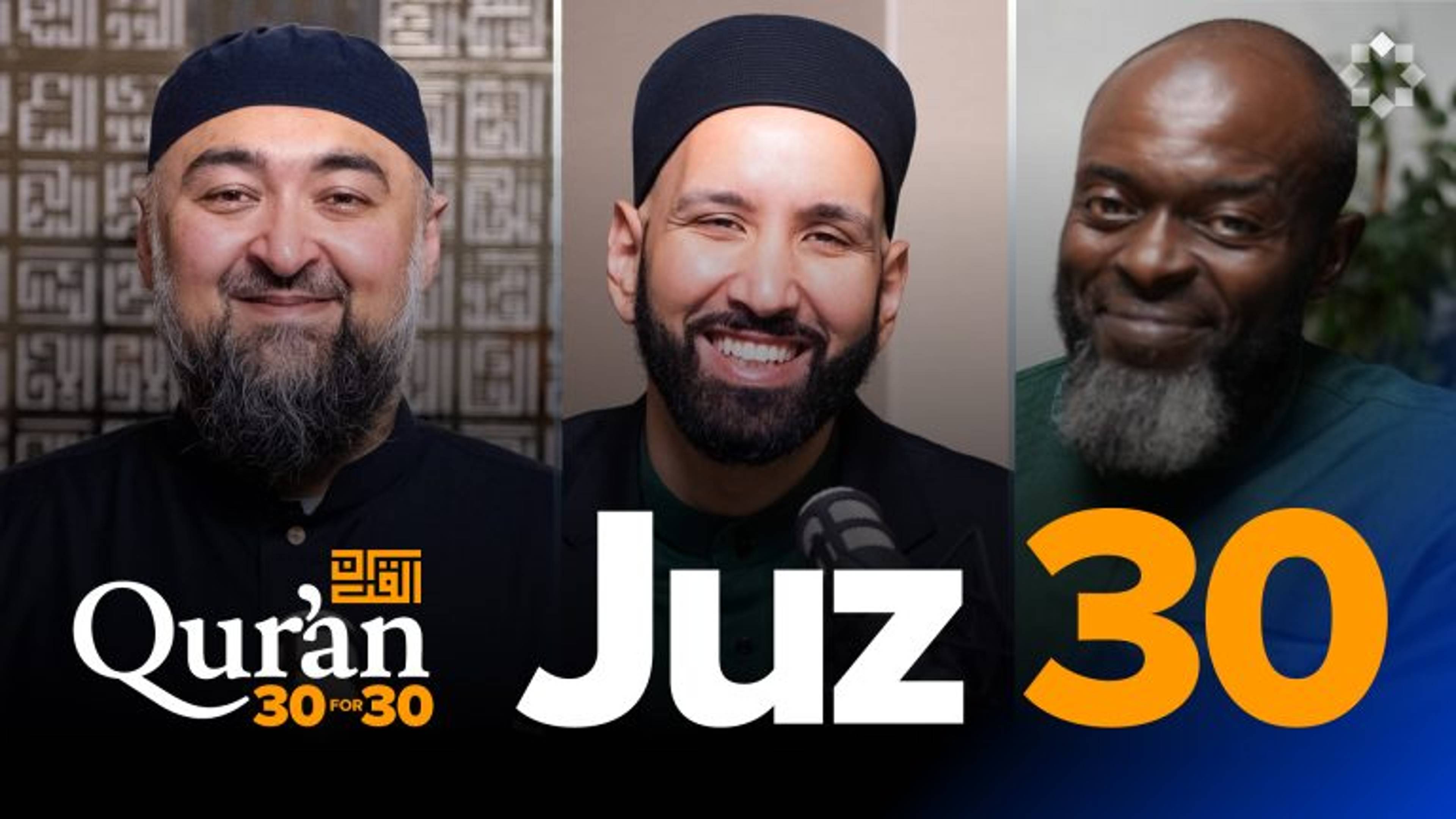
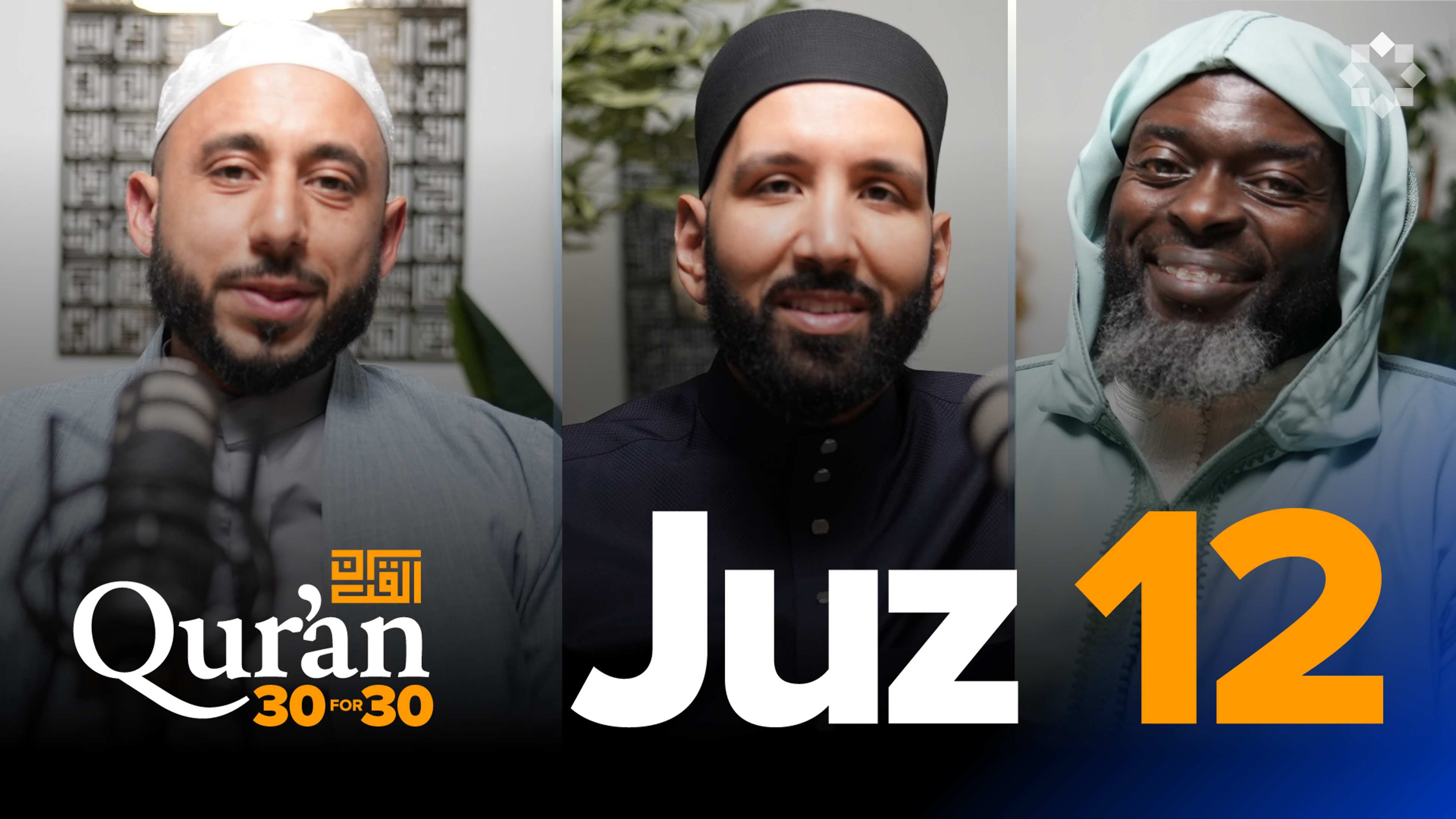
Qur’an 30 for 30 | Season 7
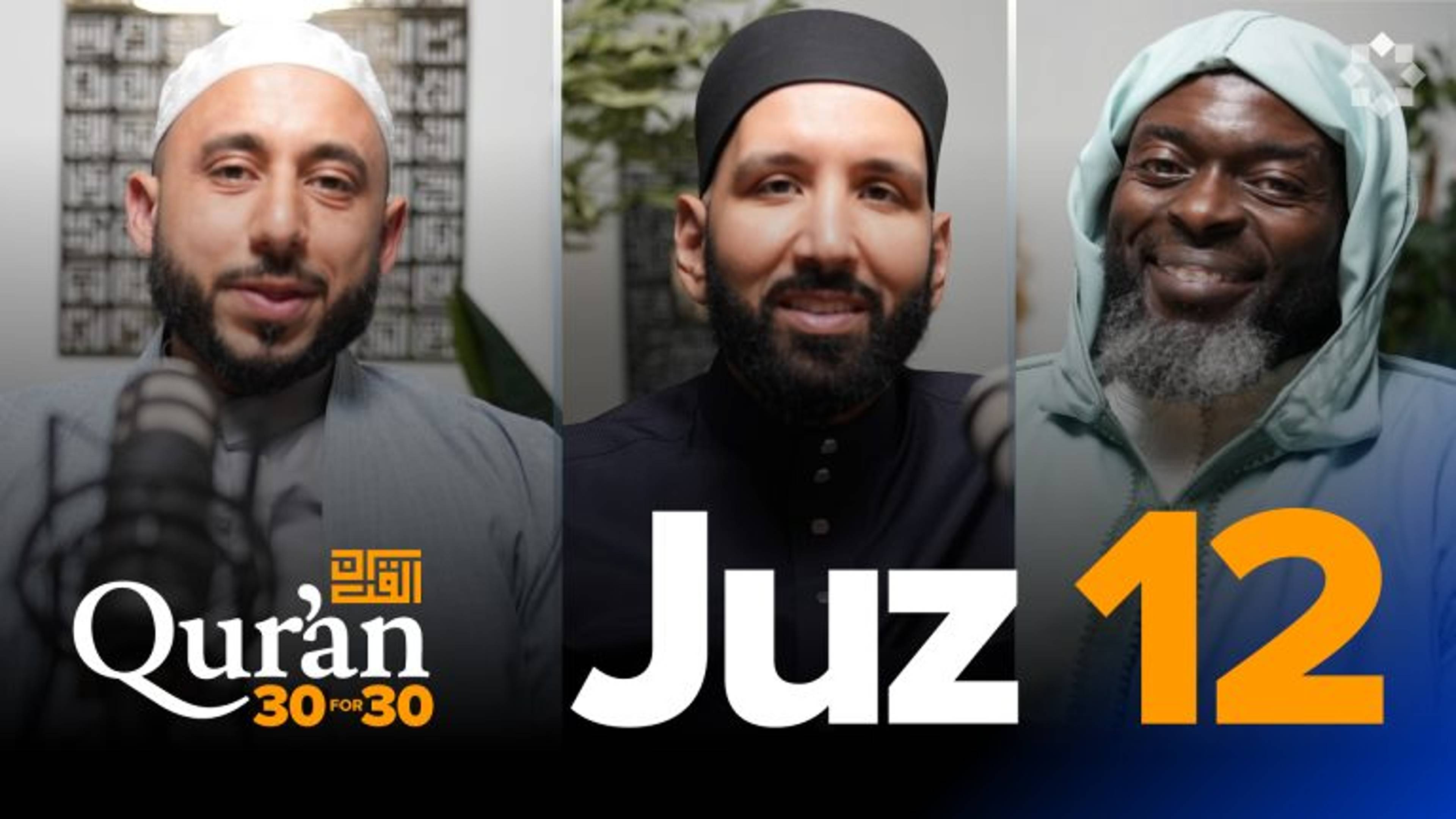
Juz 12: Allah Is Not Far | Sh. Omar Hedroug
What can we learn from past Prophetic experiences?
In reflections on Surah Hud, Sh. Omar Hedroug joins Dr. Omar Suleiman and Sh. Abdullah Oduro and offers insight into verses that highlight what it means when Allah describes Himself as Al-Hafidh, Al-Qareeb (The Most Near) and Al-Mujeeb (The One Who Answers).

This transcript was auto-generated using AI and may contain misspellings.
00:05When you find closeness through your deeds, your du'as are immediately and intensely answered, but with His لطف, with His subtlety. No matter how far you are, all it takes is turning back to Allah عز وجل instead
00:19of turning your back to Allah. One old gentleman used to say to me, he used to say, "We believe in Allah, but do we believe Allah?"
00:32السلام عليكم ورحمة الله وبركاته everyone. Welcome back to Quran 30 for 30. A reminder, إن شاء الله تعالى, to please do donate to Yaqeen as you are in the month of Ramadan, and also keep up, you're in the middle 10 days, don't lose yourselves. بإذن الله تعالى, we have
00:47some special episodes to come. We have with us Shaykh Omar Hedroug, الحمد لله رب العالمين. Half Lebanese and half Algerian, is that it? Half Algerian and half what? Are you just fully Algerian?
00:59Half Lebanese and half Algerian. Yes, sir. Is your dad Algerian or your mom Algerian? My father, رحمه الله. Your father, رحمه الله تعالى. So we got Jazairi here. We got to go to the last episode. We got to go to the last episode, yes, in this last episode I even remember.
01:12Yes, yes. One part, we got the Algerian part last episode. Yeah, yeah, Algerian. Now we got the Lebanese. Just Chicago, just Chicago, just the Windy City. My mom will be happy. Are you dressed in honor of Al-Jazairi here? Is that what's happening here?
01:25Is that Al-Jazairi fit? Not exactly. Marrakesh stand-up. It's close enough. It's close enough, alhamdulillah. Oh man, don't say Moroccan and Algerian are the same thing, that's how you're going to say it. No, no, you said that, I said Moroccan stand-up. I said neighbors, yeah, neighbors. So couscous or jollof?
01:41Jollof, jollof from Ghana then couscous. I can't answer that question, I'll get in trouble if I say that. Is it because of Shaykh Abdullah? Too many other than? You know, there's عضلات بزاف, too many muscles here, man. Come on man, it's alright, you can
01:54مقلوبة. Would you do مقلوبة with couscous or منسف with couscous? I don't know, the Lebanese like to mess things up, like the knafeh is like the bread and like rose. I don't like knafeh so, you know, that's
02:09not my wheelhouse anyway. This is just, alright, this is very problematic. Sweet grilled cheese, that's what it comes down to, that's what it is. This is, you know, I think that the wrong two races. This is sweet grilled cheese. If I wanted grilled cheese, you know. Yes,
02:23but. Shots fired, oh no. My God, I'm sorry I forgot that you're not Palestinian, but you know. And it's solidarity, I'll eat knafeh. Hold on, you live in Chicago though. I do. طيب، فلسطيني يعني. I'm not going to be able to go to Bridgeview anymore. Yeah, this is...
02:37الحمد لله، it's a pleasure to have you, alhamdulillah, welcome back. Shaykh Abdullah, Shaykh Omar, we are in Juz' 12. Juz' 12 is, of course, the Juz', subhanallah, that people
02:50always pay such close attention to because of Yusuf, Surah Yusuf. It's always, I think, subhanallah, if I look over our Quran 30 for 30s, Juz' 12 is always like the best, so, you know,
03:03no pressure, you know, to live up to the best, insha'Allah ta'ala, in terms of just elaborating on Yusuf (عليه السلام). Of course, it gives us the beginning of Surah Yusuf. But big picture, you know, how does
03:17Allah talk about Himself in this Juz'? Allah 'Azza wa Jalla talks about Himself as decreeing with subtlety, His qadr with His lutf, His decree with His subtlety. And so it starts off with Hud, right? And I
03:31feel like every time we cover Juz' 12, we skip Hud and we go straight to Yusuf. But Allah 'Azza wa Jalla says in verse 6: وَمَا مِن دَآبَّةٍۢ فِي الْأَرْضِ إِلَّا عَلَى اللَّهِ رِزْقُهَا that there is no creature on earth except that its rizq is upon
03:46Allah subhanahu wa ta'ala, Allah's taking care of it, every single creature on this earth. And in verse 90 of Hud إِنَّ رَبِّى رَحِيمٌۭ وَدُودٌۭ "Verily, my
03:59Lord is most merciful, most loving." And this is Shu'ayb (عليه السلام) talking to his people and telling them to turn back to Allah سبحانه وتعالى and saying, "My Lord is Rahim, especially
04:12merciful, and to those who turn back to Him." So Rahim is an exclusive type of mercy. And Wadud, and loving, once you cross that station of turning back to Allah سبحانه وتعالى and experiencing
04:27His exclusive mercy, then you also experience His love. Now سبحان الله, look at this in Surah Yusuf, even though we're going ahead, right? إِنَّ رَبِّي لَطِيفٌ لِمَا يَشَاءُ, right?
04:41It's almost like the same scheme of the sentence, that verily my Lord is subtle in what He wills. Of course, this is in the part of Surah Yusuf that comes in Juz' 13, but it's still the same concept, right? That what looks like abandonment
04:55is really Allah سبحانه وتعالى taking care of you. What looks hopeless is actually part of a profound plan. What looks like despair is actually just the beginning of fulfilling some sort of a dream. And even if you
05:09didn't see the dream the way that Yusuf (عليه السلام) sees a dream, that there is some way that this all comes back full circle. That subtle hand of Allah سبحانه وتعالى in His decree is so profound here.
05:22What I was thinking about as well, and insha'Allah ta'ala we can maybe start the conversation because I know this will be a rich conversation bi'idhnillahi ta'ala, Surah Hud is the Surah that gave the Prophet (ﷺ)
05:34gray hair. شَيَّبَتْنِي هُودٌ وَأَخَوَاتُهَا Hud and its sisters gave me gray hair, and it was, of course, Abu Bakr as-Siddiq (رضي الله عنه) who saw the Prophet (ﷺ) suddenly some gray hair, and he said, قَدْ أَسْرَعَ إِلَيْكَ الشَّيْبُ يَا رَسُولُ اللَّهِ "Suddenly I
05:49see, you know, gray hair is appearing upon you, O Messenger of Allah." And the Prophet (ﷺ) responded by saying that Hud and its sisters gave me these gray hairs. And particularly فَاسْتَقِمْ كَمَا أُمِرْتَ, right? The command to the Prophet (ﷺ)
06:02to stay firm as he has been commanded to stay firm. And subhanallah, you look at Yusuf (عليه السلام), the command of istiqamah, the command of staying firm, stay the course, even when the course becomes most difficult, stay the course.
06:17Like, think about how every episode in the life of Yusuf (عليه السلام) would age a person, you know, beyond belief. The shayb, right? Because shayb here, the grays are coming as a result of stress. Think about how stressful
06:32every single situation in Yusuf (عليه السلام)'s life is. It's actually interesting, like I was talking about Umar al-Khattab (رضي الله عنه) and how his life is so glorious that, like, one of his accomplishments could be the
06:45whole story of somebody else, but it's just a chapter in his book, like liberating al-Aqsa. May Allah liberate it once again, Jerusalem, right? The opening of Jerusalem. That's just one chapter in the long sirah of Umar (رضي الله عنه), whereas that is enough to
06:58be, like, the whole life story of someone else, right? And may Allah make it part of our collective story. اللهم آمين In Yusuf (عليه السلام), like, if Yusuf (عليه السلام) just got thrown into a well and found later
07:11and then returned to his father, that's a story. If Yusuf (عليه السلام) just found himself enslaved and then came out of slavery, that's a story. If Yusuf (عليه السلام) was just imprisoned, was just
07:25slandered, right, and absolved, like, each one of these is a story in and of itself. But the shayb, right, the stress keeps on coming, and the entire time Allah 'Azza wa Jalla is present, Allah سبحانه وتعالى is decreeing,
07:38and the command to stay firm is there, and the fruits only show themselves at the end. And so that is the profound, I think, nature of Allah 'Azza wa Jalla's
07:51lutf with His decree, His subtlety with His decree. In this particular Juz', where you are commanded to stay firm, stay the course, and know that Allah سبحانه وتعالى is guiding it the entire time, and be pleased with that outcome.
08:06Even connecting between the surahs, like you did, شيخنا, like these surahs are coming at a time in the life of the Prophet (عليه الصلاة والسلام) that's, like, very difficult. And so while Surah Hud is the Surah that, you know, may have
08:20been the cause of the gray, it was also, I think, a surah that gave the Prophet (عليه الصلاة والسلام) reassurance and hope in his greatest difficulties and struggles. Like, you have in that Surah the story
08:34of, you know, Prophet after Prophet, and Allah عز وجل at the end of the surah, and it's so beautiful, like, kind of ties it all together, like, showing the journeys of these Prophets, and then Allah
08:46is telling the Prophet (عليه الصلاة والسلام) why. The purpose of this is not just to narrate stories and history, but that there is that underlying overarching goal of bringing steadfastness and strength
09:00and reassurance to the heart of the Prophet (عليه الصلاة والسلام), وَكُلًّا نَّقُصُّ عَلَيْكَ مِنْ أَنْبَاءِ الرُّسُلِ مَا نُثَبِّتُ بِهِ فُؤَادَكَ, like, these stories are being given and told in order to give your
09:14heart steadfastness and firmness. And so you find, like, the stories of the Prophets are, you know, mirroring many of the challenges in the life of the Messenger (ﷺ), and showing, like, this is
09:27not just reassurance that things will be better, but also guidance in what you should do in these parallel situations. And so it's like the prophetic experience, but then also by extension for us, like, the human experience as well,
09:40like, what are those same challenges that maybe we face, and how Allah 'Azza wa Jalla gives that type of direction and guidance and hope and reassurance in the darkest of times. And I think one of the ways
09:52He does that through all the Prophets is how they connect people to who Allah is, right, through those names. So I want us to stay with Hud, Surah Hud, because everyone always jumps to Yusuf. So let's look at the names, and hopefully this will enrich even how people
10:06read Surah Yusuf. Allah 'Azza wa Jalla is Al-Hafiz, and this shows up in verse 57. Allah 'Azza wa Jalla protects. He protects your efforts. He protects your deeds. He protects what you have put forth, and He stores
10:21it for its ultimate reward. He protects the honor of the one who is slandered. He protects the safety of the one who is thrown in harm's way. He's ever
10:34watchful. He's ever preserving, subhanahu wa ta'ala. He protects you from the plots of those that plot against you. And this is just such a profound usage. So here, verse
10:4757, Surah Hud, what's the context and what are some lessons we can take from Al-Hafiz here? بسم الله والصلاة والسلام على رسول الله وعلى آله وصحبه ومن والاه أما بعد It's so, I think I mentioned this every 30 for 30, but I can't remember which one
11:01of my, we call them old heads, right? One of the old members in the community. You know, everyone has in their community that the gentleman that has a, you know, he works a nine to five job, but he's had some history in
11:12his life to where he's lived, you know, as his scholars say, تأدب بأسماء الله سبحانه و تَعَالَى, like they, you see that they lived these names and attributes, not of Allah, but they, when it comes
11:24to Al-Hafiz, for example, they truly understand what that means. But he's some guy you just see, brother, you see in the masjid, but sometimes when you stand with him, he gives you words, يعني يكتب بماء الذهب يعني the words that he gives you is from his life experience,
11:38and you find out that he was, you know, he used to be a veteran, or he lost, you know, three of his children, or, you know, some of his children are being affected by evil spirits, you know what I'm saying? But you wouldn't know. So one old gentleman used to say to me, he used to say, "We believe
11:52in Allah, but do we believe Allah?" Like, we believe in Him, we know we're supposed to believe in Him, we believe in His creed, we know He's the creator of the heavens and the earth. But when
12:02He says, "I am this," and then He gives you a story that shows you the actualization of that particular name or names, "I am Al-Hafiz."
12:17As a matter of fact, I'm going to show you the life of a Prophet, and in this context, Hud, to show you how hifz, preservation of creation, preservation of iman, of strength, of trust, and all
12:29the ways that the human being, the stressed human being, can still turn to Allah, and that in and of itself is a struggle, and it can be stressful,
12:40but it's worship and eventually alleviates the heart. With the remembrance of Allah subhanahu wa ta'ala, that brings the اطمئنان, the peace to the heart and the tranquility. Hud, in particular, in this chapter, in these verses, a couple of verses before, where Allah
12:54subhanahu wa ta'ala mentions وَإِلَىٰ عَادٍ أَخَاهُمْ هُودًا, and to the people of 'Ad, Hud was called to them. Allah mentions a dialogue, but for the sake of time, I want to get to a portion of what Hud said and what led to him saying that Allah
13:07is Al-Hafiz. When, subhanallah, that when the people that He called to, they said, إِن نَّقُولُ إِلَّا اعْتَرَاكَ, he said, "All we can say is that some of our gods have afflicted you with evil." بَعْضُ آلِهَتِنَا بِسُوءٍ,
13:21that some of our gods have afflicted you with evil. So they're claiming that Hud has been afflicted with evil, and they're not accepting his message. But what I want to capitalize on is Hud's response. He said, Hud said, "Indeed, I take Allah as my witness, that
13:35verily إِنِّي أُشْهِدُ اللَّهَ وَاشْهَدُوا أَنِّي بَرِيءٌ مِمَّا تُشْرِكُونَ, that verily I take Allah as my witness and you to be my witnesses that I have nothing to do with your association with Allah."
13:49So he makes his stance very clear. He finds his عِزَّة، he finds his honor in sticking with this message. And when we look at all the Prophets, subhanallah, they were of the minority, and this will require that knowledge
14:03of Allah, but then most importantly, you believe in Allah, but believing Him when He says, "I am this and I will protect you." إِنِّي أَسْمَعُ وَأَرَى, for example, He says to Musa and Harun, that verily I hear and I see. So go to فِرْعَوْنَ ۖ إِنَّهُ طَغَىٰ,
14:16can you imagine that? I mean, we can imagine some identical characteristics in our in our time, right? Upon this, He says that I am free from you and what you are associating with Allah, and He says, مِّن دُونِ اللَّهِ ۖ فَكِيدُونِي جَمِيعًا
14:31ثُمَّ لَا تُنظِرُونِ, He challenges them even. Subhanallah, He says, uh, that I am free from what you're associating other than Allah subhanahu wa ta'ala, then Him and His divinity, so conspire against me, all of you, and give me
14:43no respite. Give me no respite. Conspire against me. يعني as one of my brothers, he's a barber in our community, he said, إشرب بحر ما في مشكلة, and he said, go and drink the sea. I don't care, you know, it doesn't matter. I'm not
14:55afraid of you. And for those brothers and sisters, I just want to give, you know, a high level of respect to those brothers and sisters, this name Al-Hafiz, subhanallah, for those that do ruqyah, those that read
15:08on individuals that have been mamsus bil jinn, that have been affected by the jinn or been affected by some level of sorcery, for those that hold that strong opinion, and they have the courage and trust in Allah subhanahu wa ta'ala that He will preserve them by helping this
15:22person that has been afflicted. And we've probably seen some of those people, and they also know that Allah subhanahu wa ta'ala, with His knowledge and wisdom and preservation, that He will preserve that person even if they're in
15:34that state of affliction. And I've had, you know, by the fadl of Allah to see this in person, and subhanallah, it is a true test, you know, and understanding that Allah is Al-Hafiz at that moment
15:46requires you to believe Him when He says that. So Hud continues on to say, you know, when He says in this beautiful verse, a couple of verses later, He says, فَإِن تَوَلَّوْا۟ فَقَدْ أَبْلَغْتُكُم مَّآ
16:00أُرْسِلْتُ بِهِۦٓ إِلَيْكُمْ ۚ He says, if you then turn away from the truth, He's saying this with integrity, know that I have delivered the message with which I was sent to you. Now my Lord will set up other people in place of you,
16:15and you shall have no way to be able to harm Him. Surely my Lord keeps a watch over everything. So He is making His claim to them, and He is showing that I do not fear you. I trust in Allah subhanahu wa ta'ala, and if you turn away from this message,
16:29then Allah subhanahu wa ta'ala will bring people other than you. I'm not worried about you. It's not up to me. I'm fulfilling my responsibility. And this is important as well for we as Muslims to hold our integrity, whether we're on college campuses or whether we're talking
16:41to our relatives. Sometimes we have Muslim relatives, and they may not, you know, may not believe that we are trying to be our best in coming back to Allah سبحانه وتعالى. But in seeing and understanding that Allah will preserve me as long as I am
16:55following His message, and I can't rely on what I see or what I encounter when it comes to people's reactions and responses to my adherence to Allah, to my adherence to Islam. So when looking at Allah
17:10subhanahu wa ta'ala being the one that preserves, Al-Hafiz, it is important to know that He will preserve you. And He preserves those that disbelieve as well, but there could be an, it's in a different way and a different motive that the disbelievers have to where Allah سبحانه وتعالى, as the scholars say, الْجَزَاءُ مِنْ
17:24جِنْسِ الْعَمَلِ, that the reward is contingent upon the action and also the intention behind the action, which Al-'Alim is well aware of, the All-Knowing is well aware of. But when understanding that Allah is the one that preserves, it's important for us to know that when
17:39we continue on the mission of fulfilling the mission that Allah has set for us individually and collectively, regardless of what you see and what you see of what may be considered disadvantageous or may be considered
17:52harmful at the particular moment, know that Allah subhanahu wa ta'ala will preserve you and preserve those around you. And the last point is important to know that the way that He preserves can be in different manifestations.
18:05Like, what you may see something that is harmful to you, but that's how Allah chooses to preserve that person. That's how Allah chooses to protect that person. When we look at the other names that we've covered, Allah's knowledge is that He is implementing it in a way that you
18:19may see it as harmful at the moment. Everyone is against you at the moment, but because you preserved your deen, your grandparents, your grandson, your granddaughter will be a scholar of Islam. So the way that الله سبحانه وتعالى preserves, it is not up to us
18:33to domesticate it to our own logic, our own experience, our own minds. It is to trust in the one that created all of these things and to know that we believe in Allah and also to believe Allah
18:46سبحانه وتعالى when He says that. So when we look at Hud, سبحان الله, how he had this integrity and honor and strength within His heart, it's important for us to remember that and know that this name Al-Hafiz is a great manifestation and sign of that. سبحان الله. I mean,
18:59Allah was preserving, Al-Hafiz was preserving Yusuf (عليه السلام) in the well, preserving him in the house of Al-'Aziz, preserving him in prison, right? So he was being preserved the entire time. So Shaykh Omar, I'll just
19:12jump right off, I'll jump right over to you. A few verses later, another two names show up, Al-Qarib, Al-Mujib. And subhanAllah, Dr. Awaimer, in the last juz', he actually said those were his two favorite names. I forgot to ask
19:26you what's your favorite name of Allah subhanahu wa ta'ala is اللطيف, Al-Latif. Masha'Allah. It keeps on, it keeps on, you know, flowing with the ajza', alhamdulillah Rabbil 'Alamin. So, you know, this
19:38comes up in the capacity of, or in the context of Saleh (عليه السلام) calling his people to Allah subhanahu wa ta'ala. It's like he's introducing his people to these layers of Allah subhanahu wa ta'ala. So, uh, explain the
19:52context and what they mean and what benefit we can have, knowing what comes before and after in this particular juz', Allah, Al-Qarib, Al-Mujib, close and answering. Shaykh Abdullah, I mean, I think it goes right off of that.
20:05Like each of these prophets are introducing their people to Allah in different ways, or Allah is showing us how they introduced their people to Him. Uh, so one of the things that Hud said is إِنَّ رَبِّي حَفِيظٌ,
20:19that Allah 'Azza wa Jalla is Al-Hafiz. And like you mentioned Yusuf (عليه السلام), إِنَّ رَبِّي لَطِيفٌ, and Shu'ayb, إِنَّ رَبِّي رَحِيمٌ وَدُودٌ, so, you know, there's this like ربي، ربي. So they know Allah subhanahu wa
20:32ta'ala, right? And they have that like personal connection with Allah 'Azza wa Jalla. And so, like the Prophet (ﷺ), used to say, like أَنَا أَعْلَمُكُمْ بِاللَّهِ, like I know Allah 'Azza wa Jalla the most. And so to trust not just their knowledge of Allah,
20:46but their experience with Allah subhanahu wa ta'ala. And so I think Saleh here is coming to a people that we know obviously are rebellious. The camel, I mean, they're rejecting maybe one of the clearest miracles that
20:59will come. So that just shows like where they're at. And so one of the first things that he brings to them, uh, is that door of coming back to Allah subhanahu wa ta'ala. فَاسْتَغْفِرُوهُ ثُمَّ تُوبُوا
21:12إِلَيْهِ, he tells them. He says, like, seek forgiveness from Allah 'Azza wa Jalla and تُوبُوا to Him. Really, what he's telling them is to is to turn back to Allah, right? And, you know, maybe a people like
21:24that, they themselves would feel like, how's that going to happen? Or there's no interest in that. But then why, or what's the mechanism? He tells them then, he says, إِنَّ رَبِّي, again, قَرِيبٌ مُجِيبٌ, my Rabb is
21:38قريب. So no matter how far you are, all it takes is turning back to Allah 'Azza wa Jalla instead of turning your back to Allah, right? Like when Allah is describing Himself as قَرِيبٌ and مُجِيبٌ, and His messenger
21:53is describing Him as قَرِيبٌ, these are names of constancy and permanence. It's not like sometimes He's close, sometimes He's answering. This is who He is. He's always close, and He's always answering. So all
22:07that takes then is you to turn back to Allah, right? Like no matter how far you've gone, and we're the ones who've created that distance, right? It's like no matter when, when you turn back to Allah 'Azza wa Jalla, He's قَرِيبٌ, right? And it's not
22:22just, you know, like it's even beautiful, you know, the pairing of the names, which I'm sure comes up in this series all the time. But, you know, when He says قَرِيبٌ, because someone may be close in proximity, right? You feel, okay, physically they may be close or whatever,
22:35but maybe it's someone who ignores you, someone you don't benefit from. But then He says مُجِيبٌ, so it's not just a closeness of proximity, but it's a closeness of accessibility, right? That Allah 'Azza wa Jalla is close,
22:48and He doesn't even say like سَمِيعٌ here. He says مُجِيبٌ, right? So it's like He's not just listening, but He's responding, and He's answering, سُبْحَانَ الله, right? So it's like this, like at any moment, all it takes,
23:02whether it's the one who is so far from Allah 'Azza wa Jalla and doesn't feel like there's hope for them, or if it's the one who's experiencing a great level of tragedy or difficulty or hardship, I think those two things is usually what a person feels
23:16like. I feel alone, like I don't feel like there's anyone there who's close, who understands me, who's nearby, and I feel like no one is listening, right? No one can hear me or understand me.
23:30So it's like those two names, سبحان الله, answers both of those things, right? The closeness of Allah عز وجل, and then the response, right? And then, you know, even some of the scholars, they said like the قُرْب, and this is what gives us then an
23:41action item, because they said, يعني نتيجة القُرْب الإجابة, like the results of قُرْب. So the closer then that you come to الله عز وجل, the more that you will get the response, or it will be at like
23:55that higher level, right? So it's like these names of Allah that they can be more meaningful the closer that then that you are. And then you just connect to even so beautiful, like it all
24:08like fits together, you know, that hadith of like the wali of Allah, who becomes the wali of Allah, and how what's that path? And the Prophet (عليه الصلاة والسلام), he said, you know, through the فرائض, through those obligatory actions, and then you keep doing
24:22the actions that are beloved to Allah until Allah 'Azza wa Jalla loves you. And then the result of that is what, like, that's the highest level of closeness. What does the Prophet (ﷺ) say? حَتَّىٰ كُنْتُ سَمْعَهُ
24:35الَّذِي يَسْمَعُ بِهِ، right? وَبَصَرَهُ الَّذِي يُبْصِرُ بِهِ، right? So he says, I become the, you know, the hearing that this person hears with, and the seeing that they see with, and the grasp that they grasp with.
24:48Like, what level of closeness, right, other than that spiritual guidance from Allah 'Azza wa Jalla? It's the highest. And then right after he says, وَإِنْ سَأَلَنِي لَأُعْطِيَنَّهُ، same thing, Mujib, right? So if he asks me, I
25:00give. So it's like that's the ultimate, subhanallah, like, like manifestation of قريب مجيب. It is the one whose closeness is always there, and then it's the response that never fails, subhanallah.
25:14Beautiful. ما شاء الله، تبارك الله. You didn't let down, man. You kept up the standard of juz' 12, masha'Allah. جزاك الله خيرا. And you know, subhanallah, like I, as you're mentioning, every hadith that speaks about du'a as a means of قُرْب
25:30has something that highlights what you just said. Like the person who's the opposite of قريب, the one whose clothes are haram, whose food is haram, who's nourished in everything haram, and he's raising his hands in the desert, فَأَنَّى يُسْتَجَابُ لَهُ؟ Like why would, on what basis would he
25:45be responded to, right? When you're that far away from Allah subhanahu wa ta'ala, why do you expect Allah 'Azza wa Jalla to answer you with anything? And the distance is being created by your own deeds, right? So you create distance with your deeds, and then your du'as become
25:58ineffective. When you find closeness through your deeds, your du'as are immediately and intensely answered, but with His لطف, with His subtlety, right?
26:11He is اللطيف. So sometimes He's answering you in a way that, to the outside, it looks like you're not being answered. Like that hadith of a person raising their hands and saying, يَا رَبِّ يَا رَبِّ, you could see a believer that is قريب and that is
26:25actually experiencing المجيب, but no one else sees it except Allah subhanahu wa ta'ala, right? How many people in Gaza, right, look like that, right? يَا رَبِّ يَا رَبِّ, but they're not abandoned, you know? So there's something
26:38deeply profound about that. May Allah subhanahu wa ta'ala bless you. Any final thoughts, insha'Allah ta'ala? Yeah, this is this is beautiful. It's a beautiful concept because it's like قريبٌ, it's like it's almost almost a قريب شرط الإجابة, you know, because when you think about it, you mentioned,
26:53you know, the أحاديث that speak about دعاء, but really when you look at the فضائل الأعمال, the virtuous actions, it talks about whoever does this, gets this. That action that you are doing, as long as it has the intention to Allah
27:06subhanahu wa ta'ala, that's an act of coming closer to Allah. When you come to the masjid and you pray, for instance, 25 to 27 blessings in jama'ah. The seven that are shaded under the throne of Allah is the one that comes to the house of Allah. And you know,
27:20uh, any of those seven, that they do any of those seven, they'll be under the shade of Allah. So that's the إجابة. Allah's giving you His فضل, He's giving you His virtue, He's answering your du'a at the end of the- any of these actions that you're doing to come closer to Allah subhanahu wa ta'ala.
27:33So it's kind of that ترغيب, to kind of entice you and to push you to do that action of good. The other thing I was thinking of, subhanallah, ولله المثل الأعلى, Allah is a much greater example, a lot much greater than in comparison to His creation, is
27:48when we think about our mothers. Hmm, we think about our mothers. Like when you're alone, if you were to think of anyone that would listen to me, anyone, if I was to call
28:00and they would answer me, it would be my mom. Right? So when you, you know, individuals, they lose their mother, it's tough, especially when you start to think about them in those moments you had. So when
28:13you're close, you know that you could easily come close to your mother and she would respond to you. There's no way she would leave you. And there's so much wisdom in the Prophet (ﷺ) mentioning the mother three times when he was asked, من أحق الناس
28:25بحسن صحابتي؟ Who has the right to my close companionship, صحابتي؟ Companionship. He said, your mother. And then he asked again, your mother. So it shows the importance of the mother. ولله المثل الأعلى, and
28:39Allah is a much greater example. And I love you gave the example too of the person that tries to come back to Allah. This is the month to do it. And it's a catalyst. We don't want it to be seasonal, right? This is the month that you look at
28:52those shortcomings you had, the successes that you've had, and you come close to Allah. And Allah subhanahu wa ta'ala, Al-Hafiz, the one that preserves, He will never, never leave you. So just remembering that is beautiful. And knowing that when you make that effort and you come to Him walking, Allah, He will come to you هرولة،
29:07He will come to you, insha'Allah. So may Allah subhanahu wa ta'ala accept it from us. آمين. جزاكم الله خيرا مشايخ. We're out of time. Barakallah fiikum, Shaykh Omar, for being with us. أكرمكم الله. إن شاء الله تعالى، we'll see you all tomorrow. والسلام عليكم ورحمة الله وبركاته.