fbpixel
7 Ways Islam Dealt with Slavery (And Why It Matters Today) | Sh. Mohammad Elshinawy
Becoming a Friend of Allah - Sh. Omar Suleiman | Khutbah
Becoming a Friend of Allah - Sh. Omar Suleiman | Khutbah

Overcoming Compassion Fatigue, Numbness, and Burnout - Sh. Omar Suleiman | Khutbah

Overcoming Compassion Fatigue, Numbness, and Burnout - Sh. Omar Suleiman | Khutbah

Speaking a Word of Truth to a Tyrant - Sh. Omar Suleiman | Khutbah

Speaking a Word of Truth to a Tyrant - Sh. Omar Suleiman | Khutbah

What Do You “Smell” Like? - Sh. Omar Suleiman | Khutbah

What Do You “Smell” Like? - Sh. Omar Suleiman | Khutbah

A Living Heart Under Siege | Khutbah

A Living Heart Under Siege | Khutbah

Don't Forget Your Mistakes, Learn From Them | Khutbah
Don't Forget Your Mistakes, Learn From Them | Khutbah

Repentance Delayed and Denied: Learning from a Dying Pharoah | Khutbah
Repentance Delayed and Denied: Learning from a Dying Pharoah | Khutbah

“There is no refuge or escape from you, except to you...” | Khutbah
“There is no refuge or escape from you, except to you...” | Khutbah

How Istighfar Clears the Fog | Khutbah

How Istighfar Clears the Fog | Khutbah

Don't Minimize Your Pain, Seek its Reward | Khutbah

Don't Minimize Your Pain, Seek its Reward | Khutbah

How Aisha (ra) Became a Doctor | Khutbah

How Aisha (ra) Became a Doctor | Khutbah

Stop Trying To Escape Death. Just Make The Most of Life | Khutbah
Stop Trying To Escape Death. Just Make The Most of Life | Khutbah

You Will Never Be As Alone Or Desperate As Yunus (as) | Khutbah
You Will Never Be As Alone Or Desperate As Yunus (as) | Khutbah

Do You Think You Will Enter Jannah? | Khutbah
Do You Think You Will Enter Jannah? | Khutbah

A Message Regarding the Muslims in France | Khutbah
A Message Regarding the Muslims in France | Khutbah

“Indeed, Your Enemy is The One Cut Off” | Khutbah
“Indeed, Your Enemy is The One Cut Off” | Khutbah

Maintaining Character in Chaos and Confusion | Khutbah
Maintaining Character in Chaos and Confusion | Khutbah

Allah Spared Me, Why Would I Dip my Tongue in it?  | Khutbah
Allah Spared Me, Why Would I Dip my Tongue in it? | Khutbah

Allah Laughs at This Awkward Meeting | Khutbah

Allah Laughs at This Awkward Meeting | Khutbah

Black Friday: Fear of Missing Out on Good Deals or Deeds | Khutbah
Black Friday: Fear of Missing Out on Good Deals or Deeds | Khutbah

Don’t Wait For Others To Ask | Khutbah
Don’t Wait For Others To Ask | Khutbah

Your Father: The Middle Gate to Jannah | Khutbah
Your Father: The Middle Gate to Jannah | Khutbah

Do Not Curse Time: What A New Year Really Means | Khutbah
Do Not Curse Time: What A New Year Really Means | Khutbah

Three Moments That Lead to Paradise | Khutbah
Three Moments That Lead to Paradise | Khutbah

Owning Our Mistakes | Khutbah
Owning Our Mistakes | Khutbah

Serving the “Undeserving” | Khutbah
Serving the “Undeserving” | Khutbah

“A Life Cut Short...” | Khutbah
“A Life Cut Short...” | Khutbah

Before Our Hearts Were Hardened | Khutbah
Before Our Hearts Were Hardened | Khutbah

Wash Our Hearts With Water, Snow, and Hail | Khutbah
Wash Our Hearts With Water, Snow, and Hail | Khutbah

Let Your Water Flow To Your Neighbor | Khutbah
Let Your Water Flow To Your Neighbor | Khutbah

The Blessing You Won't Forget Next Time | Khutbah
The Blessing You Won't Forget Next Time | Khutbah

"Am I Really Sincere?" | Khutbah
"Am I Really Sincere?" | Khutbah

Forbidden From Qiyam For Questioning His Sincerity | Khutbah
Forbidden From Qiyam For Questioning His Sincerity | Khutbah

Am I Accountable for My Thoughts? | Khutbah
Am I Accountable for My Thoughts? | Khutbah

Two Conditions For Forgiveness in Sha'aban | Khutbah
Two Conditions For Forgiveness in Sha'aban | Khutbah

The Knots, Whispers, Sticks & Stones of Shaytan | Khutbah
The Knots, Whispers, Sticks & Stones of Shaytan | Khutbah

From Bad To Better & Good To Great | Khutbah by Dr. Omar Suleiman
From Bad To Better & Good To Great | Khutbah by Dr. Omar Suleiman

The Best Forms Of Dhikr In Ramadan | Khutbah
The Best Forms Of Dhikr In Ramadan | Khutbah

What Are You Willing To Give Up For Allah? | Khutbah
What Are You Willing To Give Up For Allah? | Khutbah

5 Best Things To Do On Laylatul Qadr | Khutbah

5 Best Things To Do On Laylatul Qadr | Khutbah

The Effect Of Laylatul Qadr On The Heart | Khutbah
The Effect Of Laylatul Qadr On The Heart | Khutbah

Al Aqsa Will Always Matter To Us | Khutbah
Al Aqsa Will Always Matter To Us | Khutbah

Learning Courage from Palestine & Our Predecessors | Khutbah
Learning Courage from Palestine & Our Predecessors | Khutbah

David and Goliath in Islam | Khutbah
David and Goliath in Islam | Khutbah

Dua to Overcome Feeling Helpless | Khutbah
Dua to Overcome Feeling Helpless | Khutbah

Sins We Commit When We’re Scared and Vulnerable | Khutbah
Sins We Commit When We’re Scared and Vulnerable | Khutbah

How Paradise Keeps Us Patient | Khutbah
How Paradise Keeps Us Patient | Khutbah

The Du’a Taught to Only 1 Prophet | Khutbah
The Du’a Taught to Only 1 Prophet | Khutbah

How Allah sends Salah upon you | Khutbah
How Allah sends Salah upon you | Khutbah

One Ummah, One Body | Khutbah
One Ummah, One Body | Khutbah

When Your True Colors Show | Khutbah
When Your True Colors Show | Khutbah

The First Footstep Of Shaytan | Khutbah by Dr. Omar Suleiman
The First Footstep Of Shaytan | Khutbah by Dr. Omar Suleiman

Virtues of Ashura and How to Observe It | Khutbah
Virtues of Ashura and How to Observe It | Khutbah

When You Hit Your Lowest Point | Khutbah
When You Hit Your Lowest Point | Khutbah

The Highest Degree of Love for Allah | Khutbah
The Highest Degree of Love for Allah | Khutbah

Friends That Hold You Back | Khutbah by Dr. Omar Suleiman
Friends That Hold You Back | Khutbah by Dr. Omar Suleiman

When People Keep Letting You Down | Khutbah by Dr. Omar Suleiman
When People Keep Letting You Down | Khutbah by Dr. Omar Suleiman

How Tahajjud Removes Stress and Sins | Khutbah
How Tahajjud Removes Stress and Sins | Khutbah

How Would The Prophet ﷺ Advise You? | Khutbah
How Would The Prophet ﷺ Advise You? | Khutbah

Inscribed on the Sword of the Prophet Muhammad ﷺ | Khutbah
Inscribed on the Sword of the Prophet Muhammad ﷺ | Khutbah

A Believer Cannot Be A Liar | Khutbah
A Believer Cannot Be A Liar | Khutbah

'I guarantee Jannah for the one who…' | Khutbah
'I guarantee Jannah for the one who…' | Khutbah

Quenching Our Humanity | Khutbah
Quenching Our Humanity | Khutbah

What Makes You Cry |  Khutbah
What Makes You Cry | Khutbah

7 Ways To Increase Baraka In Your Time | Khutbah
7 Ways To Increase Baraka In Your Time | Khutbah

Do Not Aid an Oppressor | Khutbah
Do Not Aid an Oppressor | Khutbah

Virtual Reality & the Fitna of Dajjal | Khutbah
Virtual Reality & the Fitna of Dajjal | Khutbah

Seeing With The Light of Allah | Khutbah

Seeing With The Light of Allah | Khutbah

Allah’s Name: At Tawwab - The One Who Accepts Repentance | Khutbah
Allah’s Name: At Tawwab - The One Who Accepts Repentance | Khutbah

Gems from the Miracles and Manners of Jesus (as) | Khutbah
Gems from the Miracles and Manners of Jesus (as) | Khutbah

But You Want Something Else From Allah | Khutbah
But You Want Something Else From Allah | Khutbah

Allah’s Guidance | Khutbah
Allah’s Guidance | Khutbah

Do Not Belittle the Efforts of Others | Khutbah
Do Not Belittle the Efforts of Others | Khutbah

Don’t be Hasty | Khutbah by Sh. Ibrahim Hindy
Don’t be Hasty | Khutbah by Sh. Ibrahim Hindy

Is Allah Punishing Me? | Khutbah
Is Allah Punishing Me? | Khutbah

Turning Your "Waste" Into Rewards | Khutbah
Turning Your "Waste" Into Rewards | Khutbah

New Beginnings with the Messenger ﷺ | Khutbah
New Beginnings with the Messenger ﷺ | Khutbah

To Truly be Free | Khutbah
To Truly be Free | Khutbah

Dangerous Assumptions | Khutbah
Dangerous Assumptions | Khutbah

Resting the Soul and Avoiding Burnout | Khutbah

Resting the Soul and Avoiding Burnout | Khutbah

The Day of Judgement as if You Can See it | Khutbah
The Day of Judgement as if You Can See it | Khutbah

Let's Let Go of Our Ego  | Khutbah
Let's Let Go of Our Ego | Khutbah

How To Start Ramadan Right  | Khutbah
How To Start Ramadan Right | Khutbah

Fasting is a Shield  | Khutbah

Fasting is a Shield | Khutbah

Al-Aqsa, Indian Muslims and Ramadan Silence  | Khutbah
Al-Aqsa, Indian Muslims and Ramadan Silence | Khutbah

What Allah Decides for you on Laylatul Qadr  | Khutbah
What Allah Decides for you on Laylatul Qadr | Khutbah

Was my Ramadan Accepted?  | Khutbah
Was my Ramadan Accepted? | Khutbah

Fighting the Ramadan Blues  | Khutbah
Fighting the Ramadan Blues | Khutbah

Our Priorities as an Ummah  | Khutbah
Our Priorities as an Ummah | Khutbah

3 Ways to Save Yourself from Fitna  | Khutbah
3 Ways to Save Yourself from Fitna | Khutbah

Social Media, Misinformation, And The Assassination of Uthman (ra)  | Khutbah
Social Media, Misinformation, And The Assassination of Uthman (ra) | Khutbah

Do Not Compromise Your Deen  | Khutbah
Do Not Compromise Your Deen | Khutbah

Why the Shaheed would want to come back  | Khutbah
Why the Shaheed would want to come back | Khutbah

The Benefits of Hasbunallahu Wa Ni'mal Wakeel | Khutbah
The Benefits of Hasbunallahu Wa Ni'mal Wakeel | Khutbah

Our Father Ibrahim (as) Still Cares About Us | Khutbah
Our Father Ibrahim (as) Still Cares About Us | Khutbah

What to do on 'Arafah | Khutbah
What to do on 'Arafah | Khutbah

The Du'as of the Salaf on Arafah | Khutbah
The Du'as of the Salaf on Arafah | Khutbah

Uniting Our Ummah When Politics Divide | Khutbah
Uniting Our Ummah When Politics Divide | Khutbah

Your Image of Allah and Attachment to Him | Khutbah
Your Image of Allah and Attachment to Him | Khutbah

The 3 Keys to Human Excellence | Khutbah

The 3 Keys to Human Excellence | Khutbah

Life Only Starts When You Die | Khutbah
Life Only Starts When You Die | Khutbah

Why Ashura is so important | Khutbah
Why Ashura is so important | Khutbah

Will Anyone Remember Me? | Khutbah
Will Anyone Remember Me? | Khutbah

Learning to Trust Allah’s Timing | Khutbah
Learning to Trust Allah’s Timing | Khutbah

Defining Masculinity Through Qur’an | Khutbah
Defining Masculinity Through Qur’an | Khutbah

Vocabulary of a Narcissist | Khutbah
Vocabulary of a Narcissist | Khutbah

The Sin of Using People | Khutbah
The Sin of Using People | Khutbah

Think Well of Allah | Khutbah
Think Well of Allah | Khutbah

O Allah, I Love You Even Though I Disobey You | Khutbah
O Allah, I Love You Even Though I Disobey You | Khutbah

Why Don't We All Have the Same Blessings? | Khutbah
Why Don't We All Have the Same Blessings? | Khutbah

A World Without Muhammad ﷺ | Khutbah
A World Without Muhammad ﷺ | Khutbah

The Advice You Need to Hear | Khutbah
The Advice You Need to Hear | Khutbah

The Pursuit of Balance | Khutbah
The Pursuit of Balance | Khutbah

The Good Deed That Ruins You | Khutbah
The Good Deed That Ruins You | Khutbah

A Summary of Islam by the Prophet ﷺ | Khutbah
A Summary of Islam by the Prophet ﷺ | Khutbah

Tired of Being Taken Advantage Of | Khutbah
Tired of Being Taken Advantage Of | Khutbah

Lost Without Allah | Khutbah
Lost Without Allah | Khutbah

How To Diagnose Your Heart | Khutbah
How To Diagnose Your Heart | Khutbah

The Fear of Living an “Ordinary” Life | Khutbah
The Fear of Living an “Ordinary” Life | Khutbah

How To Change Your Desires | Khutbah
How To Change Your Desires | Khutbah

Is All Knowledge Good? | Khutbah
Is All Knowledge Good? | Khutbah

What Causes Du‘as to Be Unheard? | Khutbah
What Causes Du‘as to Be Unheard? | Khutbah

What the Prophet ﷺ Wished He Hadn't Asked | Khutbah
What the Prophet ﷺ Wished He Hadn't Asked | Khutbah

Negative Speaking and Belittling Blessings | Khutbah
Negative Speaking and Belittling Blessings | Khutbah

When Forgiving Is Complicated | Khutbah

When Forgiving Is Complicated | Khutbah

When Parents Beg Their Kids To Believe | Khutbah
When Parents Beg Their Kids To Believe | Khutbah

Why Allah Allows Earthquakes and Suffering | Khutbah
Why Allah Allows Earthquakes and Suffering | Khutbah

Would You Pass This Test | Khutbah

Would You Pass This Test | Khutbah

Your Time to Shine #Sha'ban | Khutbah
Your Time to Shine #Sha'ban | Khutbah

Your Heart Isn’t Ready for Ramadan Unless… | Khutbah
Your Heart Isn’t Ready for Ramadan Unless… | Khutbah

A Jannah Worth Chasing | Khutbah
A Jannah Worth Chasing | Khutbah

Your Ramadan Uniform | Khutbah
Your Ramadan Uniform | Khutbah

Your Greatest Motivation | Khutbah
Your Greatest Motivation | Khutbah

Getting Past the Mid-Ramadan Dip | Khutbah

Getting Past the Mid-Ramadan Dip | Khutbah

When Allah Gifts You With Tranquility | Khutbah
When Allah Gifts You With Tranquility | Khutbah

The New You | Eid Khutbah
The New You | Eid Khutbah

AI and ChatGPT: Spiritual Resilience and Ethics | Khutbah

AI and ChatGPT: Spiritual Resilience and Ethics | Khutbah

Feeling Paralyzed by Stress and Fitna? | Khutbah
Feeling Paralyzed by Stress and Fitna? | Khutbah

The Qur’an and Intellectual Humility | Khutbah
The Qur’an and Intellectual Humility | Khutbah

Wasted Potential | Khutbah
Wasted Potential | Khutbah

Your Lord Doesn’t Forget | Khutbah

Your Lord Doesn’t Forget | Khutbah

Who Should You Really Care About? | Khutbah

Who Should You Really Care About? | Khutbah

Where Has Your Tongue Taken You? | Khutbah

Where Has Your Tongue Taken You? | Khutbah

Why Would A Man Sacrifice His Son? | Khutbah
Why Would A Man Sacrifice His Son? | Khutbah

How To Make Du'a For Barakah | Khutbah

How To Make Du'a For Barakah | Khutbah

Do You Love To Argue? | Khutbah

Do You Love To Argue? | Khutbah

Missed Opportunities | Khutbah
Missed Opportunities | Khutbah

When Allah Guides Through You | Khutbah
When Allah Guides Through You | Khutbah

The Ashura Within | Khutbah
The Ashura Within | Khutbah

Allah Appreciates Your Smallest Deeds | Khutbah
Allah Appreciates Your Smallest Deeds | Khutbah

Islam's Cure for Depression | Khutbah
Islam's Cure for Depression | Khutbah

Conquering Your Insecurities | Khutbah

Conquering Your Insecurities | Khutbah

Allah Will Honor You | Khutbah

Allah Will Honor You | Khutbah

How Allah Uses “Tomorrow” in the Qur’an | Khutbah

How Allah Uses “Tomorrow” in the Qur’an | Khutbah

When Love Makes You Crazy | Khutbah

When Love Makes You Crazy | Khutbah

Natural Disasters & The Day of Judgment | Khutbah
Natural Disasters & The Day of Judgment | Khutbah

What Are Your Real Intentions? | Khutbah

What Are Your Real Intentions? | Khutbah

How to Make The Most of your Salah | Khutbah
How to Make The Most of your Salah | Khutbah

Palestine Khutbah Outside the White House | Dr. Omar Suleiman
Palestine Khutbah Outside the White House | Dr. Omar Suleiman

"What's the Point?" | Khutbah
"What's the Point?" | Khutbah

How Palestine Exposes Hypocrisy | Khutbah
How Palestine Exposes Hypocrisy | Khutbah

Feeling Helpless While Watching Oppression | Khutbah
Feeling Helpless While Watching Oppression | Khutbah

Palestine Awakens the Ummah | Khutbah
Palestine Awakens the Ummah | Khutbah

What Does Islam Say About War and Justice? | Khutbah
What Does Islam Say About War and Justice? | Khutbah

Your Leg is Already in Paradise | Khutbah
Your Leg is Already in Paradise | Khutbah

The Value of Just One Righteous Life | Khutbah
The Value of Just One Righteous Life | Khutbah

Media Martyrs and Symbolic Resistance | Khutbah
Media Martyrs and Symbolic Resistance | Khutbah

Staying Sincere for the Cause | Khutbah
Staying Sincere for the Cause | Khutbah

Do You Doubt the Return? | Khutbah
Do You Doubt the Return? | Khutbah

When Laws are Held Hostage | Khutbah
When Laws are Held Hostage | Khutbah

It Actually Starts with Tahajjud | Khutbah
It Actually Starts with Tahajjud | Khutbah

The Most Underestimated Major Sin | Khutbah
The Most Underestimated Major Sin | Khutbah

How Allah will Mock Them | Khutbah

How Allah will Mock Them | Khutbah

Is It All Our Fault? | Khutbah
Is It All Our Fault? | Khutbah

Why this Sha'aban is so Important | Khutbah
Why this Sha'aban is so Important | Khutbah

What Happens on the 15th of Sha'aban? | Khutbah
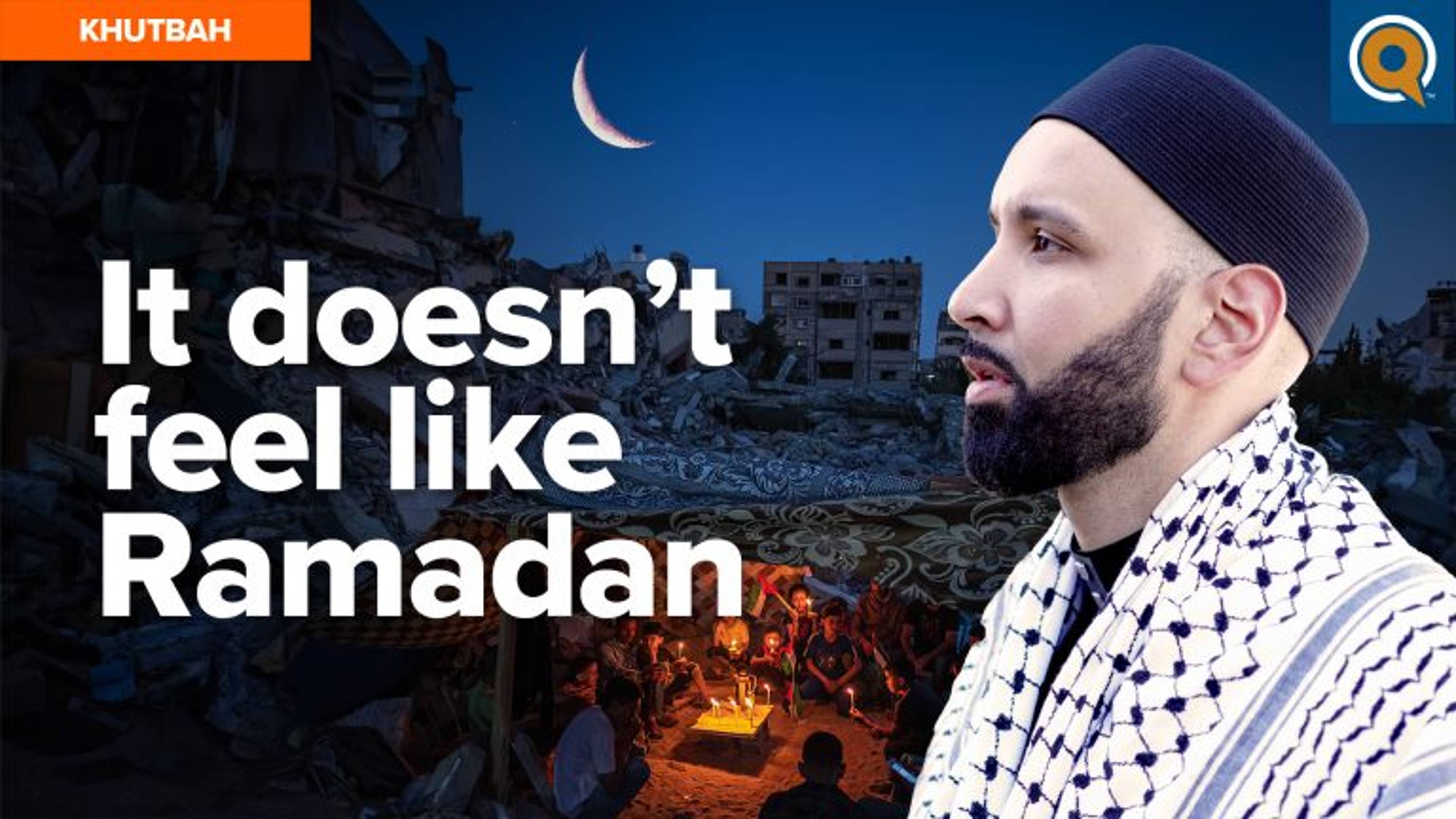
What Happens on the 15th of Sha'aban? | Khutbah

Ramadan Joy and Gaza Depression | Khutbah
Ramadan Joy and Gaza Depression | Khutbah

How to Make this Your Best Ramadan | Khutbah
How to Make this Your Best Ramadan | Khutbah

Setting Character Goals in Ramadan | Khutbah
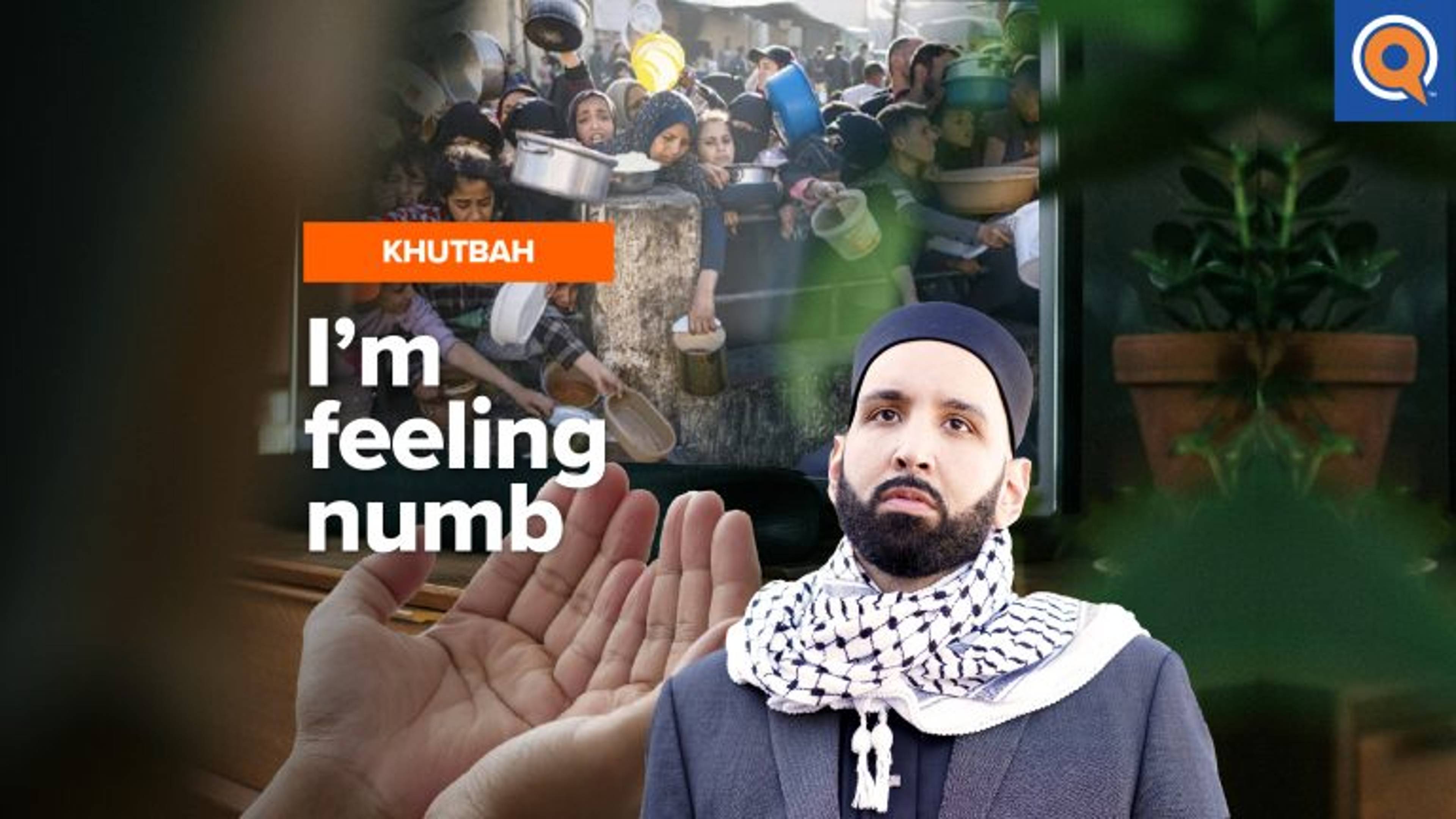
Setting Character Goals in Ramadan | Khutbah

When Your Heart is On Empty | Khutbah
When Your Heart is On Empty | Khutbah

Those Who are Deprived on Laylatul Qadr | Khutbah
Those Who are Deprived on Laylatul Qadr | Khutbah

When the Decree Shocks Everyone on Laylatul Qadr | Khutbah
When the Decree Shocks Everyone on Laylatul Qadr | Khutbah

A Night Even Better than Laylatul Qadr | Khutbah
A Night Even Better than Laylatul Qadr | Khutbah

Is the End Near? | Khutbah
Is the End Near? | Khutbah

"Don't Move!" - Gaza Encampment at Northwestern University | Khutbah
"Don't Move!" - Gaza Encampment at Northwestern University | Khutbah

Act and Allah Will Unlock Success | Khutbah
Act and Allah Will Unlock Success | Khutbah

Overcoming Despair When We See Mutilated Bodies | Khutbah
Overcoming Despair When We See Mutilated Bodies | Khutbah

Resistance in Exile: from Hijra to Nakba | Khutbah
Resistance in Exile: from Hijra to Nakba | Khutbah

The Inner Strength to Keep Fighting | Khutbah
The Inner Strength to Keep Fighting | Khutbah

Will Gaza be Israel's Downfall? | Khutbah
Will Gaza be Israel's Downfall? | Khutbah

When Allah Tests You with the Truth | Khutbah
When Allah Tests You with the Truth | Khutbah

Hidden Causes of Disconnect from Allah | Khutbah
Hidden Causes of Disconnect from Allah | Khutbah

How Close Are You to the Prophet (as)? | Khutbah
How Close Are You to the Prophet (as)? | Khutbah

The Most Important Ashura of Our Lives? | Khutbah
The Most Important Ashura of Our Lives? | Khutbah

Is Allah Really with Us? | Khutbah
Is Allah Really with Us? | Khutbah

The Real History of Palestine in the Qur'an | Khutbah
The Real History of Palestine in the Qur'an | Khutbah

The One Child Pharoah Didn't Kill | Khutbah
The One Child Pharoah Didn't Kill | Khutbah

The Art of Finding Closure | Khutbah
The Art of Finding Closure | Khutbah

Don't Let them Steal your Revolution | Khutbah
Don't Let them Steal your Revolution | Khutbah

Thank God We're Not Them | Khutbah
Thank God We're Not Them | Khutbah

What If I Can't Look Anymore? | Khutbah
What If I Can't Look Anymore? | Khutbah

Wounds That Aren't Meant To Heal | Khutbah
Wounds That Aren't Meant To Heal | Khutbah

Your False Sense of Security: From Gaza and Beyond | Khutbah
Your False Sense of Security: From Gaza and Beyond | Khutbah

Hind Rajab to Aafia Siddiqui: Re-humanizing the De-humanized | Khutbah
Hind Rajab to Aafia Siddiqui: Re-humanizing the De-humanized | Khutbah

When It’s Hard to say Alhamdulilah | Khutbah
When It’s Hard to say Alhamdulilah | Khutbah

Israel Has the Right to Defend Itself? | Khutbah
Israel Has the Right to Defend Itself? | Khutbah

Is Revenge Worth it? It Hurts You More Than You Think | Khutbah
Is Revenge Worth it? It Hurts You More Than You Think | Khutbah

Earning Jannah While Watching a Genocide | Khutbah
Earning Jannah While Watching a Genocide | Khutbah

What if Oppression is Our Destiny? | Khutbah
What if Oppression is Our Destiny? | Khutbah

Who Do I Vote For? A message to American Muslims | Khutbah
Who Do I Vote For? A message to American Muslims | Khutbah

What are Your True Intentions? Goodwill VS Ego | Khutbah
What are Your True Intentions? Goodwill VS Ego | Khutbah

Allah Will Surprise You - Embracing the Unknown | Khutbah
Allah Will Surprise You - Embracing the Unknown | Khutbah

Allah WILL Test You With Your Words | Khutbah
Allah WILL Test You With Your Words | Khutbah

Just When You Thought It Was Over | Khutbah by Dr. Omar Suleiman
Just When You Thought It Was Over | Khutbah by Dr. Omar Suleiman

You Need to Love Allah More | Ramadan Prep Khutbah by Dr. Omar Suleiman
You Need to Love Allah More | Ramadan Prep Khutbah by Dr. Omar Suleiman

Beyond Halal & Haram: Are You Numbing Your Heart? | Ramadan Khutbah by Dr. Omar Suleiman
Beyond Halal & Haram: Are You Numbing Your Heart? | Ramadan Khutbah by Dr. Omar Suleiman

Who are the human devils amongst us? | Ramadan Khutbah by Dr. Omar Suleiman
Who are the human devils amongst us? | Ramadan Khutbah by Dr. Omar Suleiman

The Amazing Connections Between Jumah and Laylatul Qadr | Ramadan Khutbah by Dr. Omar Suleiman

The Amazing Connections Between Jumah and Laylatul Qadr | Ramadan Khutbah by Dr. Omar Suleiman

Do Not Abandon the Masjid After Ramadan | Khutbah by Dr. Omar Suleiman
Do Not Abandon the Masjid After Ramadan | Khutbah by Dr. Omar Suleiman

What is your biggest fear? A wake up call amidst collapse | Khutbah by Dr. Omar Suleiman
What is your biggest fear? A wake up call amidst collapse | Khutbah by Dr. Omar Suleiman

Your Future Self Is Not Who You Think It Is | Khutbah by Dr. Omar Suleiman
Your Future Self Is Not Who You Think It Is | Khutbah by Dr. Omar Suleiman

How to Deal With Angry People | Khutbah by Sh. Mohammad Elshinawy
How to Deal With Angry People | Khutbah by Sh. Mohammad Elshinawy

"If Only I Had the Strength…" | Khutbah by Dr. Omar Suleiman
"If Only I Had the Strength…" | Khutbah by Dr. Omar Suleiman

How Allah Defends Those Who Believe | Khutbah by Dr. Omar Suleiman
How Allah Defends Those Who Believe | Khutbah by Dr. Omar Suleiman

India VS Pakistan: The Deadly Cost of Nationalism | Khutbah by Dr. Omar Suleiman
India VS Pakistan: The Deadly Cost of Nationalism | Khutbah by Dr. Omar Suleiman

How the Plot of Israel Will Backfire | Khutbah by Dr. Omar Suleiman

How the Plot of Israel Will Backfire | Khutbah by Dr. Omar Suleiman

Are You Waiting to Become a Victim? | Khutbah by Dr. Omar Suleiman
Are You Waiting to Become a Victim? | Khutbah by Dr. Omar Suleiman

Why is the World Falling Apart? | Khutbah by Dr. Omar Suleiman
Why is the World Falling Apart? | Khutbah by Dr. Omar Suleiman

Ashura is Not Nostalgia | Khutbah by Dr. Omar Suleiman

Ashura is Not Nostalgia | Khutbah by Dr. Omar Suleiman

"What I Saw in Bosnia." 30 Years After the Genocide | Lecture by Dr. Omar Suleiman
"What I Saw in Bosnia." 30 Years After the Genocide | Lecture by Dr. Omar Suleiman

Are You Willing to Truly Sacrifice for Allah? | Lecture by Dr. Omar Suleiman
Are You Willing to Truly Sacrifice for Allah? | Lecture by Dr. Omar Suleiman

Practicing Detachment: A Daily Guide to Freeing Your Heart for Allah | Khutbah by Dr. Omar Suleiman
Practicing Detachment: A Daily Guide to Freeing Your Heart for Allah | Khutbah by Dr. Omar Suleiman

The Crime of Hunger | Khutbah by Dr. Omar Suleiman
The Crime of Hunger | Khutbah by Dr. Omar Suleiman

Don’t Just Exist—Live for What Allah Created You For | Lecture by Dr. Omar Suleiman
Don’t Just Exist—Live for What Allah Created You For | Lecture by Dr. Omar Suleiman

Gaza Is Starving — But Allah’s Promise Has Not Failed | Sh. Mohammad Elshinawy
Gaza Is Starving — But Allah’s Promise Has Not Failed | Sh. Mohammad Elshinawy

The Qur’an They Can’t Bomb: Stories from Gaza | Dr. Omar Suleiman
The Qur’an They Can’t Bomb: Stories from Gaza | Dr. Omar Suleiman

Do People Have Hope In You? | Dr. Omar Suleiman
Do People Have Hope In You? | Dr. Omar Suleiman

How You Should Eat While Gaza Starves | Khutbah by Dr. Omar Suleiman
How You Should Eat While Gaza Starves | Khutbah by Dr. Omar Suleiman

Are You a Mediocre Muslim? | Khutbah by Dr. Omar Suleiman
Are You a Mediocre Muslim? | Khutbah by Dr. Omar Suleiman

Does Allah Want You to Feel Better | Khutbah by Dr. Omar Suleiman
Does Allah Want You to Feel Better | Khutbah by Dr. Omar Suleiman

Have Some DIGNITY Oh Muslims! - ICNA Keynote Address by Dr. Omar Suleiman
Have Some DIGNITY Oh Muslims! - ICNA Keynote Address by Dr. Omar Suleiman

Are All Deaths Equal? How the Prophet ﷺ Would've Responded | Khutbah by Dr. Omar Suleiman

Are All Deaths Equal? How the Prophet ﷺ Would've Responded | Khutbah by Dr. Omar Suleiman

Better Than 1,000 Worshippers | Khutbah by Dr. Omar Suleiman
Better Than 1,000 Worshippers | Khutbah by Dr. Omar Suleiman

The Master’s Plan, Not the Master Plan | Dr. Omar Suleiman

The Master’s Plan, Not the Master Plan | Dr. Omar Suleiman

In Defense of the Quiet Muslim | Khutbah by Dr. Omar Suleiman
In Defense of the Quiet Muslim | Khutbah by Dr. Omar Suleiman

From Flotillas to Yajuj & Majuj: How Gaza's Siege Will End | Khutbah by Dr. Omar Suleiman
From Flotillas to Yajuj & Majuj: How Gaza's Siege Will End | Khutbah by Dr. Omar Suleiman

When the War Ends: For Gaza and For You | Khutbah by Dr Omar Suleiman
When the War Ends: For Gaza and For You | Khutbah by Dr Omar Suleiman

Why the Qur'an Says Little About Dajjāl and the Future | Khutbah by Dr Omar Suleiman
Why the Qur'an Says Little About Dajjāl and the Future | Khutbah by Dr Omar Suleiman

Was It Really Worth It? Re-evaluating What We Fight Over | Khutbah by Dr Omar Suleiman
Was It Really Worth It? Re-evaluating What We Fight Over | Khutbah by Dr Omar Suleiman

Are You A Helper of Allah? | Lecture by Dr. Omar Suleiman
Are You A Helper of Allah? | Lecture by Dr. Omar Suleiman

How Much Du’a Do You Make for Others? | Khutbah by Dr. Omar Suleiman
How Much Du’a Do You Make for Others? | Khutbah by Dr. Omar Suleiman

A Unique Way Of Holding Yourself Accountable | Khutbah by Dr. Omar Suleiman
A Unique Way Of Holding Yourself Accountable | Khutbah by Dr. Omar Suleiman

Let Allah See Your Energy and Effort | Khutbah by Dr. Omar Suleiman
Let Allah See Your Energy and Effort | Khutbah by Dr. Omar Suleiman

From Enemies to Brothers: The Miracle of Unity | Lecture by Dr. Omar Suleiman
From Enemies to Brothers: The Miracle of Unity | Lecture by Dr. Omar Suleiman

When Allah Hits You With A Wall | Khutbah by Dr. Omar Suleiman
When Allah Hits You With A Wall | Khutbah by Dr. Omar Suleiman

You Can Be Punished With Comfort | Khutbah by Dr. Omar Suleiman
You Can Be Punished With Comfort | Khutbah by Dr. Omar Suleiman

You're Being Tested AND Trained | Khutbah by Dr. Omar Suleiman
You're Being Tested AND Trained | Khutbah by Dr. Omar Suleiman

Win Your Quiet Battles Against Your Enemies | Khutbah by Dr. Omar Suleiman
Win Your Quiet Battles Against Your Enemies | Khutbah by Dr. Omar Suleiman

What’s Your Personal Brand? | Lecture by Dr. Omar Suleiman

What’s Your Personal Brand? | Lecture by Dr. Omar Suleiman

Is New-age Spirituality Harming Us? | Lecture by Dr. Omar Suleiman
Is New-age Spirituality Harming Us? | Lecture by Dr. Omar Suleiman

Training Your Nafs in Sha'ban | Lecture by Dr. Omar Suleiman
Training Your Nafs in Sha'ban | Lecture by Dr. Omar Suleiman

Surround Yourself With Truth | Lecture by Dr. Omar Suleiman
Surround Yourself With Truth | Lecture by Dr. Omar Suleiman

Signs That Allah Is At War With You | Lecture by Dr. Omar Suleiman
Signs That Allah Is At War With You | Lecture by Dr. Omar Suleiman

How to Use the 15th of Shaʿbān to Prepare for Ramadan | Khutbah by Dr. Omar Suleiman
How to Use the 15th of Shaʿbān to Prepare for Ramadan | Khutbah by Dr. Omar Suleiman

What It Means to Endure | Lecture by Dr. Omar Suleiman
What It Means to Endure | Lecture by Dr. Omar Suleiman

If You Really Cared About Ramadan | Khutbah by Dr. Omar Suleiman
If You Really Cared About Ramadan | Khutbah by Dr. Omar Suleiman

Has Allah Chosen You This Ramadan? | Khutbah by Dr. Omar Suleiman
Has Allah Chosen You This Ramadan? | Khutbah by Dr. Omar Suleiman

Ramadan Prep 2026: A Complete Guide | Special Lecture by Dr. Omar Suleiman
Ramadan Prep 2026: A Complete Guide | Special Lecture by Dr. Omar Suleiman

How Every Day of Ramadan is Worth 70 Years | Khutbah by Dr. Omar Suleiman

How Every Day of Ramadan is Worth 70 Years | Khutbah by Dr. Omar Suleiman

The Math of Allah's Mercy | Khutbah by Dr. Omar Suleiman
The Math of Allah's Mercy | Khutbah by Dr. Omar Suleiman

How to Build Your Laylatul Qadr Du'a List | Khutbah by Dr. Omar Suleiman
How to Build Your Laylatul Qadr Du'a List | Khutbah by Dr. Omar Suleiman

The Secret to Allah’s Forgiveness | Khutbah by Dr. Omar Suleiman
The Secret to Allah’s Forgiveness | Khutbah by Dr. Omar Suleiman

New Eid Khutbah 2026 | How Do The Angels See You Now? - Dr. Omar Suleiman
New Eid Khutbah 2026 | How Do The Angels See You Now? - Dr. Omar Suleiman

Do You Only Worship Allah When Life Is Easy? | Khutbah by Dr. Omar Suleiman

Do You Only Worship Allah When Life Is Easy? | Khutbah by Dr. Omar Suleiman

Easter & The Illusion of Victory | Khutbah by Dr. Omar Suleiman
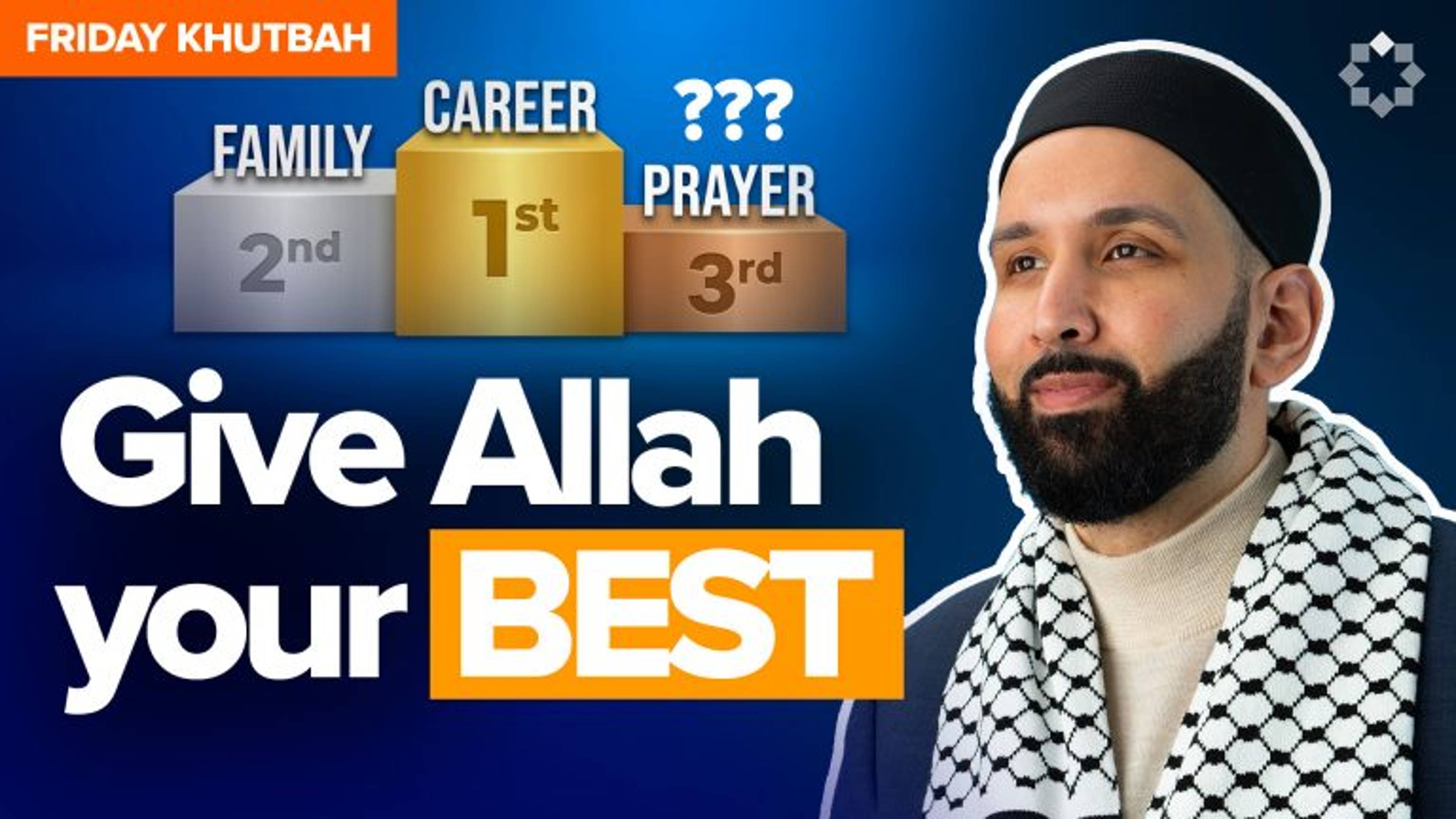
Easter & The Illusion of Victory | Khutbah by Dr. Omar Suleiman

Are You Giving Allah Your Leftovers? | Khutbah by Dr. Omar Suleiman
Are You Giving Allah Your Leftovers? | Khutbah by Dr. Omar Suleiman

What Did You Call Me?! | Khutbah by Dr. Omar Suleiman
What Did You Call Me?! | Khutbah by Dr. Omar Suleiman

A Love Story In The Year of Grief | Khutbah by Sh. Elshinawy
A Love Story In The Year of Grief | Khutbah by Sh. Elshinawy

They Are Allah's Wake-Up Call to You | Khutbah by Dr. Omar Suleiman
They Are Allah's Wake-Up Call to You | Khutbah by Dr. Omar Suleiman

You're Not A Lost Cause | Khutbah by Sh. Elshinawy
You're Not A Lost Cause | Khutbah by Sh. Elshinawy

Dhul Hijjah: Don't Miss The Point | Khutbah by Dr. Omar Suleiman
Dhul Hijjah: Don't Miss The Point | Khutbah by Dr. Omar Suleiman

From 9/11 to San Diego: The Cost of Looking Away | Khutbah by Sh. Mohammad Elshinawy
From 9/11 to San Diego: The Cost of Looking Away | Khutbah by Sh. Mohammad Elshinawy

King Sulayman (AS) and The Ant That Spoke Up | Khutbah by Sh. Mohammad Elshinawy
King Sulayman (AS) and The Ant That Spoke Up | Khutbah by Sh. Mohammad Elshinawy

What If I've Lost Motivation? | Khutbah by Dr. Omar Suleiman
What If I've Lost Motivation? | Khutbah by Dr. Omar Suleiman

5 Ways to Have A Good Ending | Khutbah by Dr. Omar Suleiman
5 Ways to Have A Good Ending | Khutbah by Dr. Omar Suleiman

Only Allah Knows What You Went Through | Khutbah by Dr. Omar Suleiman
Only Allah Knows What You Went Through | Khutbah by Dr. Omar Suleiman

Don't Talk To People Like You Talk to ChatGPT | Khutbah by Dr. Omar Suleiman
Don't Talk To People Like You Talk to ChatGPT | Khutbah by Dr. Omar Suleiman

The Reward of Your “Invisible” Work | Khutbah by Sh. Mohammad Elshinawy
The Reward of Your “Invisible” Work | Khutbah by Sh. Mohammad Elshinawy

Ask Allah To Change YOU Instead | Khutbah by Dr. Omar Suleiman
Ask Allah To Change YOU Instead | Khutbah by Dr. Omar Suleiman

The Life of Abu Bakr As-Siddiq (ra) | Khutbah by Sh. Ibrahim Hindy
The Life of Abu Bakr As-Siddiq (ra) | Khutbah by Sh. Ibrahim Hindy

When Your Sin Reaches The Land and Sea | Khutbah by Sh. Ibrahim Hindy
When Your Sin Reaches The Land and Sea | Khutbah by Sh. Ibrahim Hindy

7 Ways Islam Dealt with Slavery (And Why It Matters Today) | Sh. Mohammad Elshinawy
Playing

7 Ways Islam Dealt with Slavery (And Why It Matters Today) | Sh. Mohammad Elshinawy

Khutbahs

7 Ways Islam Dealt with Slavery (And Why It Matters Today) | Sh. Mohammad Elshinawy

There's a version of history where slavery just sort of ends, where enough people had a change of heart and the world moved on. That's not what happened. Every legal and religious system on earth treated it as permanent, inevitable, untouchable—except one.

In this episode, Shaykh Mohammad Elshinawy traces how Islamic law approached slavery from its very first rulings, why total abolition wasn't immediate, and how the religion built a structure that made the institution's disappearance a matter of time.

This episode covers:

— Slavery before Islam, and why almost every civilization had it

— What the Bible and Roman law actually permitted regarding slaves

— The Quranic pathways out of bondage and who was obligated to fund them

— What the Prophet ﷺ's final words reveal about his priorities

— How a single marriage freed an entire tribe

This transcript was auto-generated using AI and may contain misspellings.
00:00Tonight, we are going to be speaking about Islam and slavery.
00:10And you know, even preachers struggle to talk about this. Because of the very jarring images that come to us,
00:23that come to mind about the horrendously cruel treatment of slaves that they've been subjected to throughout the centuries.
00:32Especially in the United States of America, which was one of the most atrocious, worst, most racist, most heartless forms of slavery in all of human history. And so, you don't even want to broach it.
00:46But we're going to have to. But why? Before we get into the justification and the clarification, we're going to jump straight to the application.
00:57What is the application of this subject in our day and age? Does Islam encourage slavery? No. So it doesn't have to have an application in that sense.
01:09Does Islam accept the current international ban on enslaving people? Yes, it does.
01:17You guys know the Geneva Conventions, right? They were a set of conventions that took place in Geneva, Switzerland, over the span of decades,
01:25to essentially have the international community negotiate a safe middle ground, a safe set of terms,
01:34that could mitigate, could ameliorate the effects of warfare, modern warfare, and the carnage of modern warfare on both soldiers and civilians.
01:44And a part of that, part of the Third Geneva Convention Articles of 1949, is the humane treatment of prisoners of war,
01:52and that it is required to repatriate them, meaning send them back home, immediately after the end of active fighting,
02:01immediately after the cessation, the ending of hostilities.
02:07So, because obviously the logic is: what's the whole point of keeping them during hostilities? To weaken the opposition into ending the war.
02:17Now that the war is over, we don't want to sort of stoke further tensions and start another war, so we said, okay, we'll all return them immediately. The international community, all the Muslim-majority countries are signatories on these conventions, on these articles.
02:31Do Muslims have to abide by their contracts? Yes, they do. It's that simple, right? يَا أَيُّهَا الَّذِينَ آمَنُوا أَوْفُوا بِالْعُقُودِ "Oh, you who have believed, Allah says, fulfill your contracts."
02:42So if we are bound by this international contract, then what's the application of this? There actually isn't much practical application of this, but there are historical implications. There are theological implications.
02:56Does our religion have anything to do with that? That is the idea. That's why this is important. Dr. Jonathan Brown's book, "Slavery and Islam," is going to be a better resource for you than anything I can provide this evening.
03:10But we want to highlight a few things as the foundation about Islam's head start and Islam's moral high ground.
03:23Not just scripturally, originally in the Qur'an and Sunnah, but historically. Even the prevalent sentiments, the prevalent track record of Muslims throughout the centuries is reflective of, number one, the fact that Islam condemned cruelty.
03:35It's a given in Islam, right? Even cruelty to animals was condemned, let alone human beings whom Allah dignified.
03:46وَلَقَدْ كَرَّمْنَا بَنِي آدَمٍ. Also, Islam condemned racism. But we're talking about the institution of slavery. Did it ever exist as a race-based institution?
03:57The governing laws, the prevalent norms, not at all.
04:05So keep that in mind. It was not a race-based institution to begin with, whatever this institution is that we have yet to define.
04:16Number three, Islam didn't invent slavery. Like, slavery existed before Islam. Islam here, we mean the Prophet Muhammad, ﷺ.
04:28Of course, Adam, peace be upon him, was Muslim. But Islam, as we often think about it, the final iteration of Islam, slavery existed before that. Nearly every single human civilization, right?
04:39Every religion, every nation, every civilization, every system, every culture considered it normal and had it, except maybe for hunter-gatherer societies.
04:49Even the Americas, by the way, pre-Columbian America, before Christopher Columbus came, right? And the transatlantic slave trade started from Africa.
04:59There were slaves there, even then it existed. In non-Muslim Africa, right? This existed. Muslims didn't go there. Much of, you know, like in the Far East, Islam came to a lot of Africa, not through warfare.
05:12And so there wasn't any sort of taking of slaves, let alone race-based institutions for slavery. None of that existed and Islam didn't invent it.
05:23And lastly, Islam actually suffocated the slave institution. And we will talk about this at great length as we proceed in the topic.
05:31We just keep that as a placeholder for now. You know, there were pagan practices in certain, you know, African countries, in certain areas, regions of the Americas.
05:45Pagan practices where a person's slaves would be buried along with the master when the master dies. Practices that in some parts of the world, Islam is actually credited with abolishing this cruelty.
05:56Islam didn't bring it. Islam actually removed it. And I forgot the author's name, Gordon—Arnold Gordon, perhaps?
06:09He wrote about slavery and the Arabs and he speaks about this notion that where Islam went, people actually were able to reverse some of these ignorant practices, this inhumane treatment of slaves. The spread of Islam is credited with ending these practices.
06:20Okay. Let's offer some proof for some of this. Slavery in the Bible.
06:31So what happens when there are slaves taken as per the Old Testament? The Bible says, "Now kill all the boys," speaking to the Israelites, "and kill every woman who has ever slept with a man who is not a virgin,
06:43but save for yourselves every girl who has never slept with a man." And elsewhere in Leviticus it says, "Your male and female slaves are to come from the nations around you. From them you may buy slaves.
06:53You may also buy some of the temporary residents living among you and members of their clans, born in your country, and they will become your property. You can bequeath them to your children as inherited property, and you can make them slaves for life," but you must not rule.
07:07This is the only caveat: "You must not rule over your fellow Israelites ruthlessly." Elsewhere in Leviticus it says, "If it's your fellow Israelites—Israelite to Israelite enslavement—
07:20if you take them as your slave, you pierce their ear as a mark of honor." Why are they piercing the ear?
07:28They say because the ear is what heard the law of God on Mount Sinai. So it's a sign of honor. This is not a normal slave.
07:38This is an Israelite slave. And so you're allowed to take the rest of the world as your cattle, your livestock, your disposables. They are to be enslaved in this way here.
07:48But if it's an Israelite, they get treated less cruelly. What's less cruel? You can imagine what this would be subjected to then. That's in the Bible.
08:00A sample of what exists in the Bible. Let's talk about Christian history or Catholic history. The Roman Catholic Church. The Church did not condemn slavery. Orthodox and heretic, Roman and barbarian alike,
08:14they all assumed the institution of slavery to be natural and indestructible. They couldn't imagine getting rid of it. A few philosophers protested, but they also had slaves. Pagan law condemned to slavery any free woman who married a slave.
08:26And the laws of Constantine, the great Roman commander and emperor, ordered the woman to be executed and the slave to be burned alive.
08:35And the emperor Gratian decreed that a slave who accused his master of any offense had no right to access their courts, right—
08:45any slave who accused his master of any offense except high treason, the only offense we'll listen to is offense against the state— except high treason to the state should be burned alive at once
08:58without inquiring into the justice of the charge. This is not just history either. Today, you know, broken justice systems flood the prisons— these prisons that are owned by the judges and owned by the politicians
09:12in many states around the United States. We have more incarcerated, imprisoned individuals that are systematically pulled from ethnic minorities, right,
09:24by prison systems that are owned by the judges and the politicians. All for what? For new-age slavery, to exploit their labor, free or effectively free labor. It still exists until today.
09:37There are two million people in the U.S. prison systems and they are disproportionately ethnic minorities and effectively enslaved. So this is not just a snapshot from the forgotten past.
09:47Why do I say this? So that you remember and you memorize this: There is no system, whether religious system or political system,
09:59that has ever encouraged promoting or ending slavery or the kind treatment of slaves until they're freed, right,
10:08until their slavery ends, ending slavery, or the kind treatment of slaves—no system has ever done it like Islam. And we'll walk through that, inshallah.
10:21How did Islam do it? So this is a Dutch Orientalist who died in 1936. He says, and you have the quote in front of you, "Setting slaves free is one of the most meritorious, pious works
10:38and at the same time the regular, very common work for certain transgressions of the sacred law." Meaning in Islam we find this to be a very common suggestion
10:50or requirement of people: "Go free a slave, go free a slave." So according to Muhammadan—he means Muslim— principles, slavery is an institution destined to disappear. What is he saying?
11:02He's saying Islam set it up in a way that gradually diminishes, shrinks the slave institution and it enjoined the kind treatment of slaves
11:13for however long the institution is going to survive. You know, how do you picture this? Dr. Hatim Haj says it's basically physics, if you think about it. Before Islam there were so many different ways a person could become a slave,
11:27could fall into the bondage of slavery. You could be abducted and kidnapped. Before Islam there were so many different ways a person could become a slave, could fall into the bondage of slavery.
11:42You could be abducted and kidnapped. You could be an abandoned child that gets picked up and enslaved.
11:53You could be a wife or a child that the husband sells off for money into slavery. This existed. You could be taken by an opposing army, a captive of war, right?
12:05You could be in debt and admit that you're not going to be able to repay the debt or repay it in time, so you subject yourself to slavery for a definite period or an indefinite period.
12:17There were certain crimes that, if you committed them, it was culturally understood that you would be captured and enslaved. All these were ways you could become enslaved. Islam came and abolished all of them.
12:31It outlawed all of them except for one, which was what? Prisoners of war. Okay, now. Bring it to his comment now.
12:42Then Islam opened up all of these pathways to get rid of slaves. So it's like the tributaries, you know, the streams that feed into a river, the river of slavery, right?
12:53There were so many ways you could lose your freedom. Islam tightened them all. And then Islam opened up all of these ways for you to gain back your freedom, right? And so naturally what would happen?
13:07Not enough coming in, so much coming out of the institution. Slavery was destined to disappear. See how that works?
13:19You know, someone could say, but why did it happen gradually? Even the gradualism of it is of great benefit. You know, it benefits the slave, first of all,
13:31that has to wean himself off of being dependent on his master for the sake of his provisions. Because, you know, to suddenly be responsible, to provide for yourself and your family, food, clothing, and shelter,
13:44could be too difficult. You may actually opt back into slavery. This is what Malcolm X used to sort of criticize some of his fellow African Americans and say, are you gonna be a house Negro or are you gonna be a field Negro?
13:55Like put up with the field to, you know, death before dishonor, or are you going to buckle just so you can get back into the house, right? So it's beneficial even for the slave. And of course it's beneficial for the slave master because
14:08he doesn't have to just watch his business, which could be dependent on slaves, implode overnight. That could also create sort of societal resistance to freeing slaves. So that was of the benefits. It's also of benefit to the community.
14:22The community can see that there are people transitioning from the ranks of slaves to the ranks of the free, people who appreciate hard work and people that are trying to make
14:35a means for themselves and their family. So it was set up in the most pragmatic, idealistic way for someone that understands how the real world functions, the realistic nature of the real world.
14:48How did Islam open up all the tributaries? Well, think of the amount of ways Islam calls us to free slaves, right? I mean, you have number one, Allah 'Azza wa Jall says, you need to understand mukatabah.
15:01Mukatabah is basically a payment plan that you give your slave to be able to purchase their own freedom. Allah 'Azza wa Jall said in the Qur'an, those that are under your authority,
15:13if they ask you for a mukatabah, a payment plan, strike a deal with them. Mukatabah like kitabah, right? You're making a contract with them. He says, "Then grant them that plan,
15:27financing their own freedom. If you know there's any good in them, and also support them, O community members, with the wealth of God that He has given you."
15:41Donate towards it as well. And so they purchase their freedom, and the community members are supposed to be supporting them. The slave gets to wean himself off of that dependency, learn a skill, and make their way out.
15:53People see him working hard or her working hard. That's the first one, mukatabah. And some scholars would even say that whoever asks for this deal is obligated to receive it. Because Allah said it in the command,
16:07"Grant them that contract." Here's another one. One of the pillars of Islam is zakat. One of the eight categories, the only eight places you can spend zakat is what? And in the freeing of slaves.
16:21One of the pillars of Islam is to spend in a certain direction, your annual charities. Of the places you must be spending, according to some scholars, or you can be spending this zakat of yours, according to other scholars, is the freeing of slaves.
16:35That's the second one. A third one is kaffarah. What he was referring to here. Kaffarah is atonement. You know, when you sort of commit something, you have to atone for it, an expiation, right?
16:47And to erase the misdeed or the mistake. You kill someone accidentally, tahreer raqabah. You free a slave.
16:59And then you break an oath. You have a qasam ayameen, you break it, you free a slave. Right? If you break your fast, depending on how you broke it, you're freeing a slave.
17:13If you perform dhihar, you know, Surah al-Mujadalah. Dhihar means to basically, loosely translate it, divorce your wife in a vulgar way. Okay?
17:24How do you take that back? It's called freeing a slave. All this is atoned for by emancipation. How else? If you taunt a slave with his freedom.
17:35The Prophet ﷺ said there are three things. Being serious about them counts as serious. And joking about them is also considered serious.
17:48Marriage, divorce, and 'itaq—emancipation. Here's another one. If you strike a slave, the only way to guarantee forgiveness from Allah
18:00is to free them. In Sahih Muslim, the Prophet ﷺ said, "Man dharaba mamlukan, whomever strikes one that they possess, right?
18:10Aw laqamahu, or slaps them on their face, fa kafaratuhu an yu'tiqu. Then the way to atone for this is to free them. The way to atone is to free them.
18:23There is another hadith, actually in Sahih Muslim, also from Abu Mas'ud al-Badri, where he says, I had one slave that I, like, blew a gasket—I got very angry with them— and I was beating them. And I kept hearing a voice from behind me say,
18:36"Unzur Abu Mas'ud, careful Abu Mas'ud." He said, I was so enraged, I didn't know who was talking. Until I finally turned around and realized it was the Prophet ﷺ.
18:47And then when he saw me, he said to me, "Allahu aqdaru alayka minka alayhi. Allah is more capable over you. Allah can do more damage to you,
19:00than you are capable over this slave." He said, "Ya Rasulallah, I free this slave." Look how quickly they acted. This was true piety, right? Got rid of it.
19:12And he said to him ﷺ, "Law lam taf'al aw id lam taf'al la lahabitatkan naar aw lamassatkan naar. Had you not just done that to atone very fast,
19:24the fire would have touched you or the fire would have scorched you." And these are sort of atonements. Then there's a whole other layer of incentives, a whole other layer of encouragements, where the Prophet ﷺ said to us,
19:38"Whomever frees a limb of a slave..."—he's saying what? You can't afford to buy a whole slave? Contribute towards it, as if you're freeing his arm, if you will, right? He's saying don't settle.
19:52Whoever frees the limb of a slave, Allah will free that limb for them on the day of judgment.
20:00And so much more, right? The encouragement in the Qur'an, "Wa la'abdu mu'minun qayrun min mushrikin wa law a'jabakum. And for you to marry a believing slave is better for you than to marry,"
20:15and marry them, integrate them into your families. It's all encouragement. And so you put all of that together, you're shrinking the tributaries, feeding the river of slavery, and you're opening up all of the outlets, right?
20:27Into freedom, into emancipation. This is how it's destined to disappear. People may ask, and there is some truth to this, right? When they say, why didn't Islam abolish slavery fully and immediately?
20:45We addressed it from one angle. Let's address it quickly from another angle. There is some truth to this, but people need to grasp the fact that it was a logical necessity,
20:55sometimes, to not abolish it absolutely until the end of time and immediately from the very first moments of the prophetic mission. What kind of necessity? Well, think about it from one angle.
21:08Muslims would be greatly disadvantaged if they didn't have their own captives of war for leverage. How do I get my mom back? May Allah forbid. How do I get my mom back if I don't have a currency to bargain with, right?
21:21Does anyone really think that Muslims are going to keep an assistant at home and leave their mom in captivity? You're going to have to be able to—
21:31if slavery were to come back, if the Geneva Conventions go up in flames, would we not want to be able to have equal leverage to come to the table and say,
21:43give us our people back? This is a necessity sometimes, right? There is the world as it should be, beautiful, utopian, and the world as it is. And from another angle, even with the captives of war themselves,
21:58the surest way to protect the lives of the prisoners of war was actually this institution. Why? Because we have never imagined what it was like.
22:10First of all, when armies come out and they are defeated or they leave people behind, those people are left to the wolves. Actually, the wolves may not even get to them in time. They may die of starvation in the fields, of starvation in the deserts.
22:23The armies could not be able to provide for them due to the scarcity of resources. This happened, you know, all throughout human history, all across the geography of this planet. That's the nature of war.
22:37So that's one. So they're left to die of starvation, left to die of malnutrition, if the wolves don't get them or they're not abducted by others, right?
22:48And so, okay, how about we take them in and we free them? Well, freeing them isn't always an option because then they could just regroup with the opposing army and launch new attacks. I'm going to keep supplying the army with reinforcements. Is that how it works?
23:01Or is there a more realistic sort of mechanism that has to be at play here? So it actually saves the lives of the slaves in the short term, but also in the long term. How in the long term?
23:15Imam Tawfiq, he says that we should never use the word slave. And it's, I've already used it about 65 times. But he has a good point as to why we should be careful with using this term.
23:29Because people might just shut down. He said the better analog, and there is no perfect equivalent, but the better analog for slavery as it existed within Islamic teachings and Islamic history
23:42is more akin, closer to being refugee resettlement. You know, like when wars happen, what happens after a war?
23:54The fortunate few get to become refugees, right? The rest of the populations are literally left for the wolves. They are massacred, they are trafficked, they are sexually exploited, they are economically exploited.
24:08That's what happens to war-torn countries. The fortunate few make it to the refugee camps. And those refugee camps are what? You should visit a refugee camp.
24:20Those are abysmal conditions, places of disease, places of desperation, places where trafficking happens anyway, right? Where people have no choice but to try to survive and make ends meet by whatever means necessary.
24:35So why can't people just accept them into their populations? We wish they would, but there's always resentment. There's always resistance to integrate them into the mainstream. We want to share our resources with them.
24:48We're going to have to get taxed at higher levels because of them. People are often resistant to this. So what do you do? In Islamic history or in Islam itself,
24:58it proposed that we welcome the refugee in a place of society
25:05that is somewhere between a dignified employee and a family member. It's actually where they sit, somewhere there. And I'll prove this in a bit.
25:19But that is why calling it refugee resettlement is so much better because you're actually getting integrated in society and no other system does this.
25:30You're not ghettoized, you know, like you get added to the family and enjoy basically so much of what the family enjoys. Like people kind of blow a fuse
25:41when they hear that in Islamic history there was something called the Mamluk dynasty, which basically means the slave kings' dynasty. The slaves were kings. Like what do you mean they're slaves? It's not what you think. They're not slaves in that sense.
25:54They share in the status, the social status of whatever house they belong to, whatever family they're associated with, right? And so Dr. Jonathan Brown also makes a great point.
26:07He says that it was so much more socially convenient, even outside of Islamic civilization, to be a slave. Sometimes there were just perks. The word is the tricky part. What is slave? He said there were people, I believe in the 1800s,
26:20who would prefer to be a slave in the Ottoman Empire than to be a free man because it was a tax shelter, legal tax exemption. They wouldn't have to pay taxes. So for them, in their calculus, it was a net positive.
26:32In Islamic civilization, they were the kings, right? They were the inner circle of the kings. Then they overthrew the kings and said, no, we're taking over. We can do a better job than you holding off the Mongols and the Crusader scourges.
26:48And don't take my word for it. Take Napoleon's word for it. And Napoleon, you know, Napoleon, military leader, emperor of France for like 10 years, right? He says in the East, he means the Muslim world,
27:00slavery never had the same characteristics as in the West. Don't get caught off guard by the term he's saying. The slavery of the East is that which is seen in the Holy Scripture. The slave inherits from his master and marries his daughter.
27:13And most of the pashas, you know, the elites of the Ottoman Turkish empire, had been slaves and a great number of grand viziers, ministers, all the Mamluks, Ali Bey al-Kabir, Murad Bey, had all been slaves.
27:27They started by performing the most menial services in the house of their master and subsequently rose in status because of their merit or through favors. In the West, on the other hand, the slave was always below the domestic servant.
27:41He occupied the lowest rank. I have another quote here by William Durant in the Story of Civilization. He says, and he, sallallahu alayhi wasallam,
27:52handled them with a genial humanity that made their lot, made their share of life. No worse, actually better and more stable. The slave had a better life and a more stable life
28:05than a factory worker in 19th century Europe. And it's astonishing how many sons of slaves rose to high places in the intellectual and political world of Islam.
28:16How many, like Mahmud and the early Mamluks, became kings. It's a paradigm shift, right? And then until they're freed, now about the kind treatment of slaves.
28:30And I've said this before, Dr. Hatem al-Hajj often when speaking about slavery says this, don't ever make the mistake when someone asks you the question or you're asked to present on slavery to begin with kind treatment. Because if you say, Islam tells you to be nice to slaves,
28:42but oh my God, he wants us to bring slaves back, just treat them nicer. We're not requiring it, we're not seeking it. But while it's there, this is what Islam teaches about the kind treatment of slaves.
28:56So this is actually a late 18th century—he died 1807-ish—Armenian historian that wrote extensively about the Ottoman Empire because he also served as a diplomat between nations.
29:09And he says, there is perhaps no nation where the captives, the slaves, the very toilers in the galleys, right? Are better provided for or treated with more kindness than among the Muslims.
29:23You know, Ibn 'Abbas, radiyallahu 'anhu, this is unthinkable. He says that on the day of Badr, the Battle of Badr, the Messenger of Allah, ﷺ, instructed us to honor the captives.
29:37These are people whose sword is dripping, right? With the blood of your relatives, the captives. Captives are from the other army. And so he would instruct us to honor them
29:48and so people would give them precedence over themselves at mealtimes. Ibn 'Abbas said this in general. Abu 'Azzaz, he was actually captured at Badr himself.
30:03And he later became Muslim. And you would be very right to predict or assume that it was the way he was treated as a captive that had such a big role influence in him becoming Muslim.
30:17Because he says, I was taken captive on the day of Badr and when the Muslims, it was time to eat, they would keep the dry dates, which is like the lousiest stuff, right? The bare bone stuff that just lasts for a long time.
30:30So they take it with them to war, the shelf life, right? The dry dates, they would keep them. And if there was bread, they would give me the bread and not eat from it. And they would say to me, because you are the entrustment.
30:46You are our responsibility because the Prophet, ﷺ, told us to treat you well. And, you know, it wasn't just one time. He, ﷺ, was always concerned throughout his life and in his Farewell Sermon,
31:00meaning he was keen on picking the times when he would have the largest audiences to say the most important messages. And of them is what? I entrust you to treat the captives well.
31:14And in his dying breaths ﷺ, of all of the things he could have said, of all the things he could have said, 'Ali ﷺ reports that his last words were,
31:29the prayer, the prayer and fear Allah regarding what is under your, those under your control, those under your authority. You know, 'Amr ibn al-Harith, 'Amr ibn al-Harith is important
31:41because al-Harith ibn al-Dinar, his father, this is 'Amr ibn al-Harith. Al-Harith ibn al-Dinar is the leader, chief of Banu al-Mustaliq who were all taken captive, all of them, including him.
31:56They were all freed, including his son and him, 'Amr ibn al-Harith. His sister was taken captive and the Prophet freed her and married her ﷺ, right? Who was it? This was Juwayriyyah.
32:11Remind us to come back to Juwayriyyah at the end. It's so beautiful that 'Amr ibn al-Harith himself tells us that the Prophet ﷺ didn't just tell people be nice to slaves and of course, niceness begins, the kindest treatment you can give a slave is what?
32:26Freedom. It's the best way. That he began with himself. 'Amr ibn al-Harith says the Prophet ﷺ died on the day that he died with no slave, male or female under his authority.
32:39He owned nothing but his armor and his white mule ﷺ. And of the kind treatment that he enjoined us to is that he said to the people,
32:57No one of you is allowed to say, "This is my slave" or "my female slave." No one's allowed to say that. Say "This is my young boy." "This is my young girl." This is sort of my assistant in sort of both senses,
33:11the male and the female sense. And in one narration from Abu Dawood, he said, "Don't call anyone 'my slave,' female, 'my slave,' male, for you are all slaves and the Lord is only Allah ﷺ."
33:26Say "my Ghulam," don't say "my 'Abid," slave. And you know, they used to say and this is in Sahih al-Bukhari and elsewhere, they would not be able to differentiate Abu Dharr ﷺ, the great companion,
33:39from his slaves. Why? Because he used to dress exactly like them. They used to dress exactly like him. So they asked him, like, "Why do you dress this way?" He said, "Because the Prophet ﷺ said to us,
33:53إِخْوَانُكُمْ خَوَلُكُمْ جَعَلَهُمُ اللَّهُ تَحْتَ أَيْدِيكُمْ They are no less than your brothers. These servants of yours,
34:05the only difference is that Allah has placed you in authority over them. Then he said to us, 'So whomever's brother is under his authority, younger brother basically, right?
34:16Then he is to be sure to feed him from what he eats. They're not in the field, they're not in the barn, and they're sitting at the family table, right? Feed them from what you eat and clothe them from what you wear
34:30and do not overwork them beyond their capacity. And if you task them with something that is a burden on them, assist them in it. We're in it together. We're doing the work together, if need be."
34:43And in one final hadith in Sunan at-Tirmidhi, though there is a discussion about its chain of authenticity, but the scholars mention it in the books throughout the centuries
34:54to be acted upon, whether this wording is from the Prophet ﷺ or not. They considered it relevant, which is his statement, "May he be cursed, the one who separates a mother from her child or a brother from his sibling."
35:06And this was of course said in the context of the captives. Okay, moving briskly along. The issue of concubines, right? Concubines are basically the female slave
35:21that is in a sense, as we will argue here, the legitimate partner, the wedded partner to her master.
35:31So, you have to remember everything we said and reapply it now to this subject with the final details that we will add, the nuances that are particular to this, to this issue, the issue of concubines.
35:46First of all, remember, we said this system in its entirety was not introduced by Islam. All the Prophets acknowledged it, all the Prophets used it. You know, Jews and Christians and Muslims all agree
36:00that Hajar, 'alayha salam, was what? Was the concubine of Ibrahim 'alayhi salam. She was gifted to him, wedded to him as a gift, right?
36:13And that took nothing away from her and took nothing away from his children. And the Old Testament, you know, is filled with countless stories about this. Including that of Dawud 'alayhi salam, and Sulayman 'alayhi salam, peace be upon them all.
36:25Having concubines, that's the first thing. The second thing is not introduced by Islam. Freedom is the first option. You want to remember that the Prophet, sallallahu 'alayhi wa sallam,
36:39encouraged the masters to free their female slaves and to marry them. In the hadith, he said, وَرَجُلٌ كَانَتْ لَهُ أَمَةٌ فَغَذَّاهَا فَأَحْسَنَ غِذَاءَهَا ثُمَّ أَدَّبَهَا فَأَحْسَنَ أَدَبَهَا ثُمَّ أَعْتَقَهَا وَتَزَوَّجَهَا
36:53فَلَهُ أَجْرَانِ That, when a man has an ama, has a female slave, right? And he nourishes her. And he educates her. And he excels in doing that. Does so diligently, right?
37:07Not half-baked. He does it with excellence. And then he frees her and marries her. Then he gets double the reward, right? He's trying to say this is a reward. There's no money can buy this. Don't look at this in economical terms.
37:21This is your standing with Allah if you do it this way. And so he's saying that kind treatment starts here. With the freeing her and marrying her option. And he began with himself ﷺ. He did that with Safiyyah. Safiyyah bint Huyayy was freed by him ﷺ.
37:36And then he married her ﷺ. So that's the second thing. Freedom is the first option. Now, so that's what's recommended as the first option. The third option being the so-called concubine. Accepting her as the so-called concubine.
37:50The word "concubine" is very problematic. Because even linguistically it comes from the term that means to be lain with, to lay down with. You know, intimacy essentially, right? But to reduce it to that
38:05also draws a particular image. And so let's talk about it from the lens of Islamic law. Or even biblical law. Like Ibrahim ﷺ has Hajar. Hajar has a child and Sarah has a child.
38:19Right? He has two sons from two women. Those two sons are identical. Those two sons are identical. In the sight of the Bible even. Let alone in the sight of Allah ﷻ. They're legitimate children.
38:33Keep that in mind, right? Because otherwise just to lie with someone how is that not prostitution even without money? Or maybe it is money in the form of food. But when you bring in these other factors it becomes very clear now, right?
38:47This is more so a wife akin to wifehood than anything else. That's number one. And how does this go about? So Islamic law is first going to ask if someone doesn't want to free them yet. Is going to ask, number one, is she currently married?
39:01First question, is she currently married? Why? Because this is like marriage and she can't be married to two. She can't have two partners at the same time. This is an exclusive relationship. Or else why ask that question to begin with? That's the first question.
39:15You know even Abu Umamah al-Bahili the great companion, it is reported about him that he said, a man who receives a female slave from his wife is an adulterer. This man is an adulterer, right?
39:29There is no sharing here. It doesn't work like this. Number two, currently married? Because that would be a deal breaker. Number two, is she in a state of mukātabah? Is she on route to purchasing her freedom? Because if she is on route
39:43then from the moment she enters that contract she is effectively in full swing of being a free woman. So that becomes a deal breaker as well if she is mukātabah. Number three, according to some scholars
39:57like Al-Imam al-Nawawi raḥimahullāh the great Shafi'i scholar, he says is she Muslim or from the People of the Book? It's not just a free for all. Is she Muslim or from the People of the Book? Does she have common values with you to be wedded to you? That's number three. Number four, if she was
40:11previously married, if her husband passed or is her iddah over or not? You know there is a sort of a recovery period, a grace period for the woman that must be honored no matter what in a wife and to marry a woman she can't be
40:25in her iddah, that waiting period that post-death or post-divorce period. She is in her iddah, deal breaker. You can't be wedded to her in that sense. The last one I want to say is a lot. And this is the tricky one.
40:41Does she consent? Consent is a tricky term, but just one step at a time. Why do we even add the word consent? We're going to define it a bit further now because at the end of the day there is a power differential.
40:55Of course, yes, there is an authority differential. There could be a woman that owns a male or a male that owns a female. At the end of the day they're not at the exact same level. And so what about consent? Because think about it. The Prophet
41:09ﷺ says in one hadith, if you have a slave that is not agreeable to you, they frustrate you. Then sell them, he said, and do not torment them. Don't torment them. So where does the whole
41:23idea of sort of aggression come in? He's saying don't torment them if they're not agreeable to you. And Imam al-Shafi'i, he said in Kitāb al-Umm that if a person were to abduct a female slave
41:37and be intimate with her, they would be subjected to the punishment of zinā. They're not allowed to do this against her will or the will of her master. Ibn al-Qayyim, he goes one step further to speak about
41:51intimate relations in general and legitimate relationships in Islam. He says forcing intercourse, I'm so sorry, I'm just going to have to be a little blunt here. Forcing intercourse cannot be allowed in Islam because it is necessarily mutilation. It's damaging. It's physically damaging.
42:05Let alone the psychological elements and you can argue as well if you wanted to. It's physically, observably damaging. Right? When it is forced upon a person and so the person that does this is subjected to ta'zīr, basically a discretionary punishment by
42:19the ruler. She can prosecute you for hurting her. Right? And you've already heard all the hadith about when someone strikes a slave, when someone slaps a slave, when someone taunts a slave. These exist. So what about in a scenario
42:33like this one? And so ultimately, in summation, this is a legitimate partner that enjoys nearly all of the rights and privileges of a wife. She can't be touched by others, by the way.
42:47If she has a child, that child is automatically free and she's no longer sellable. She can't sell her or transact with someone she's no longer sellable. She can't sell her or transact with someone
43:01else. If she's the mother of your child, now there's a whole chapter in fiqh by the way called umm al-walad, the mother of your child. Right? So essentially a wife with some nuances. And also, if she is the mother of your child, not only does that child
43:15become free, but she becomes free upon your death, unless you freed her before that. Upon your death or earlier. Last slide.
43:31You know, if you just leave the slide for a second, we'll wind down with it. Of course, no one will ever listen to someone putting a slide in front of them saying, "Don't read it." So let's just read it then. I see your eyes saying, "Yeah, okay, Sheikh, nice try." We can never
43:45view sexual relations with a female slave nowadays from the same perspective of those who lived during those times. It is illogical to deal with historical matters without understanding their context. Judging a practice as good or bad cannot be done in the
43:59abstract, separate from its context and the norms of the time. Prostitution refers to sex outside of the socially acceptable context. But in ancient times, the concubine, like the wife, was allowed to have sex with the master as a legitimate partner. No
44:13woman would ever be allowed to have two sexual partners during the same time, so this concubine was not a sex tool to be enjoyed by the master and his relatives and friends. She could only be wed to one person, and her rights, along with the rights of her children, were guaranteed. Ultimately, sex
44:27with the female slave provided a way to fulfill her needs as well. And she also gained a special status once she delivered a child who had the same rights as the master's other children, and after bearing his child, she could not be sold and was freed upon the death of the master.
44:41Let me come back to consent very quickly one more time, right? Because it is such a loaded term in, you know, secular liberal times when we always talk about the autonomy of the self.
44:55People marry all the time, and people willingly choose, even if there's some discomfort, even if there's some reluctance, to marry someone or stay married to someone for what they believe
45:09is well worth it. And that's positive. There are people who marry for inheritance, there are people who marry for wealth, there are people who marry for status. There are people who married for beauty, and even after the beauty fades, for social pressure reasons, they're going to stay married, right? Not all homes are based on a Disney story. Rather, most are not, actually. It's just something we're sold for commodification and
45:23commercialization and otherwise, right? So, not all homes are based on love, and this, you know, unrealistic, imaginary notion of, like, consent and willingness happening all the time. Let me be careful in sharing this next example because not all homes are based on love, or at least initially based on love. For sure,
45:37this next example was a home based on love. But it may certainly have started as a what? As a pragmatic relationship, as sort of like a political decision. As something I willingly, open-
45:51heartedly wanted to do for the sake of what I would get out of it. For me and for my people. And this is the marriage of the Prophet ﷺ to Amr ibn al-Harith's sister, Juwayriyyah bint al-Harith. Right? So,
46:05Juwayriyyah bint al-Harith, after the battle of Banu al-Mustaliq, right? These are sort of pagan idolaters that wage war against the Muslims, killed many of them. They lost the battle. Some of them are taken captives, right? Including Juwayriyyah.
46:19Juwayriyyah finds herself under the authority of a man that she can't stand to look at. So, what does she do? She hears good things about the Prophet ﷺ, that he's a noble man. So, she goes to his door. And she knocks on
46:33his door, and eventually he speaks to her ﷺ. And she says to him, "I need your help. I hear you're a man of great generosity— essentially, to buy out my freedom. Out of the kindness of your heart, buy out my freedom. I'm the daughter of the
46:47chief, and it'll be worth your while, and so on and so forth." He said to her, "If you wish, I can do that. And if you wish, I can do something better for you. I can buy out your freedom and marry you."
47:01I want you to pause and imagine that she can't immediately tell how special the Prophet ﷺ is or that he is in fact the Prophet of God yet. Let's just imagine this for hypothetical reasons.
47:15What is this in the context of where she is? This is the last thing she would have ever imagined on the face of the earth. From being taken as a captive by the enemy army that we were just
47:29at war with, to being married to the head of state—someone that does not get anything out of me marrying him. That is sort of the decision-making variables that are likely going through her head.
47:43ever imagined on the face of the earth. From being taken as a captive by the enemy army that we were just at war with, to being married to the head of state of someone that does not get anything out
47:57of me marrying him. That is sort of the decision making variables that are likely going through her head. So she accepts. And for sure the Prophet ﷺ,
48:11the most strategic of all thinkers, knew exactly what he was doing. When he married her, the Muslims started saying, we have all taken captives that are in-laws, by extension the whole tribe are in-laws of the
48:25Prophet ﷺ. And so the entire tribe was emancipated, was free. And so we don't know, the narrator says, of any woman that was a greater source of barakah, greater
48:39source of blessing on her people than Juwayriyyah ibn al-Harith رضي الله تعالى عنها وأرضاها And her father, al-Harith ibn Dhi'rar, what happens then? He becomes Muslim.
48:53And then of course his people become Muslim, the tribe becomes Muslim. And so is it difficult to imagine? Because we've never lived this context? Absolutely. When the man came to the
49:07Prophet ﷺ and he told him, aslim, embrace Islam, submit to Islam. Islam, submission to Allah, right? He said, أجدني كارهة. I find myself reluctant. This is not comfortable for me. He said, أسلم وإن كنت كارهة. Accept
49:21Islam, even if you find some reluctance. Sometimes you have to live Islam to love Islam. I don't mean these contexts necessarily. But certain aspects of Islam unless you live them, you may not be able to appreciate them. And that is what I want to say in the end.
49:35You want to emphasize to people that Islam was very keen on freeing slaves full stop, right? And it taught this throughout the prophetic mission. And that in Islam we believe that the original state and the natural
49:49state in which Allah created people is freedom. And that Allah loves that we work to bring people to that state. To free people from being subjugated by all forms of oppression.
50:03To help people escape all the many forms, by the way, of disguised slavery. Some of which we mentioned in today's talk. That's what Islam is all about. That is the desire of the divine. And Allah also desires that we be an instrument towards that.
50:17That is the bottom line. والله تعالى أعلم. And Allah the Most High knows best. وصلى الله وسلم وبركاته على نبينا محمد وعلى آله وصحبه أجمعين.
50:37Thank you for watching!