Jump to:
The Firsts (Sahaba Stories) | The Forerunners of Islam
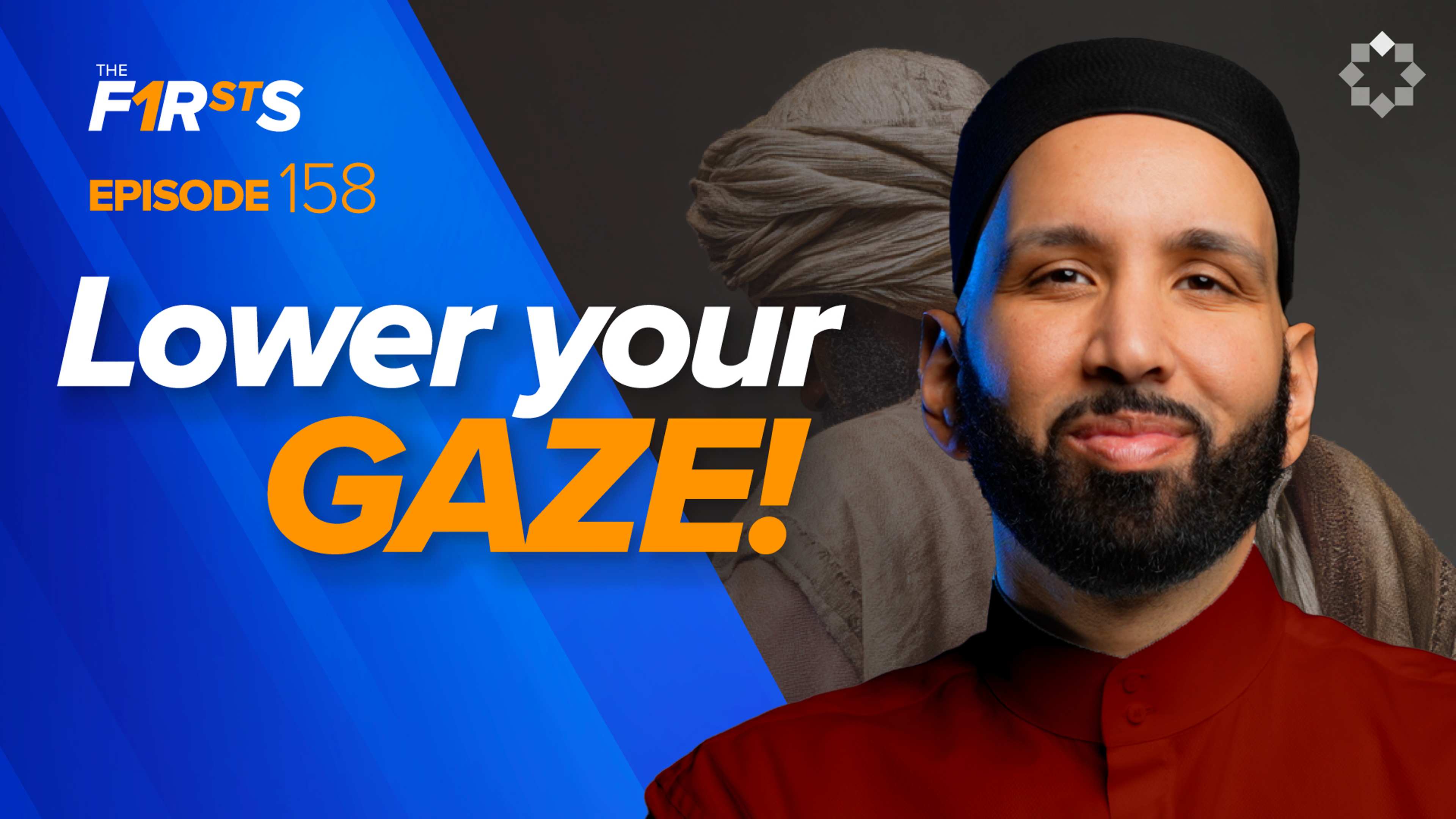
Fadl ibn Abbas (ra): How The Prophet ﷺ Made Him Lower His Gaze | The Firsts
He rode behind the Prophet ﷺ, stood by him in battle, and carried him to his final resting place. Fadl ibn Abbas (ra) may not be well-known, but his life was filled with unforgettable moments: from the powerful lesson behind “lower your gaze” to riding with the Prophet ﷺ on his camel during Hajj. This is the story of the eldest Ibn Abbas.
This transcript was auto-generated using AI and may contain misspellings.
00:00Al-Abadila Alhamdulillah, Rabbul Alameen, we are in the thick of covering Al-Abadila, the four Abdullahs.
00:13Abdullah ibn Abbas, Abdullah ibn Umar, Abdullah ibn Zubair and Abdullah ibn Amr ibn al-'As. May Allah be pleased with them all.
00:21One of the things that I wanted to do was to take a detour to talk about some of the brothers of Abdullah ibn Abbas.
00:31And you'll understand exactly why. It is actually, subhanAllah, one of the most beautiful sections that you can find,
00:38giving you again that insight into the life of the Prophet (ﷺ), how he loved his family, how he treated his family and how Allah ﷻ crafted a path for each one of them for greatness.
00:52So we're actually going to cover, inshaAllah, in three different sections, three brothers of Abdullah ibn Abbas. So three sons of Al-Abbas, three brothers of Abdullah ibn Abbas. May Allah be pleased with them all.
01:05And I want to sort of set the stage by starting off with two things. Number one, if there is ever a family, subhanAllah, that you're reading about in the seerah of the Prophet (ﷺ),
01:18where it just seems like they have it all, like subhanAllah, everyone amongst them is exceedingly good looking, everyone amongst them is exceedingly blessed.
01:28It's like when you see a family and you say that's a beautiful family, mashaAllah, that's the family of Al-Abbas. It's very clear that every single one of them had haybah. Haybah is awe, right? Like that aura that they talk about, right?
01:40That the family of Al-Abbas, when they walked anywhere, everybody talked about them. Everyone looked at Al-Abbas. They thought he was the one that was conquering Jerusalem. They thought he was Umar ibn al-Khattab. When you saw Abdullah ibn Abbas, you said I've never seen anyone like that young man.
01:54And that's how all of his brothers were as well, subhanAllah, in their own way. That's the first thing. The second thing is that, can you imagine how hard it is to be the brother of Abdullah ibn Abbas?
02:05Like think about the story of Yusuf (alayhi as-salam), right? And Yusuf is this perfect young man. And that instigated jealousy on behalf of all the other brothers.
02:16Now if you're the brother of Abdullah ibn Abbas (رضي الله تعالى عنهما), you are meant to be outshined. You can't keep up with this guy. He's too perfect in every regard. But subhanAllah, what you'll find here is that the story is not one of jealousy,
02:30unlike the brothers of Yusuf (alayhi as-salam). The story is one of admiration, and each one of the brothers looking at what Abdullah ibn Abbas was covering and saying, what can I do to cover the rest?
02:42Because clearly, we have in our family a gem, al-bahar. We have the ocean, habr al-ummah, the scholar of the ummah. So how can we each find our place in the life of the Prophet (ﷺ)
02:56and furthering the beautiful religion of al-Islam in a way that Allah subhanahu wa ta'ala would be pleased with us. So those are the first two things that I want us to start off with in terms of a premise.
03:07And the first son that we're going to cover bi-idhnillahi ta'ala is al-Fadl ibn Abbas. RadhiAllahu ta'ala anhuma. Al-Fadl ibn Abbas. And al-Abbas's name is Abu al-Fadl.
03:19Because al-Fadl is the oldest one, radhiAllahu ta'ala anhum. So let's talk about him inshaAllah ta'ala. Al-Fadl ibn Abbas, radhiAllahu ta'ala anhuma, is the oldest son of al-Abbas as well as Lubaba.
03:33May Allah be pleased with them both. And I want to remind you all, if you scroll down the playlist and you go to al-Abbas, radhiAllahu ta'ala anhum. Al-Abbas was blessed with many children.
03:44He was blessed with 15 children, mashaAllah, that we actually know of. And you think about, wa waladun salih yad'u lah. The Prophet (ﷺ) talking about a righteous child that would make du'a for you.
03:55I mean, if you have Abdullah ibn Abbas, you're kind of set in terms of your mizan, in terms of your scale. But Allah blessed him with so many children.
04:05And they're all special in their own right, even though sometimes you'll find just a line about them. So you have al-Fadl, who's the oldest. You obviously have Abdullah. You have Ubaidullah. You have Qutham. You have Abdurrahman.
04:19You have Umm Habib. You have Al-Harith. You have Awn. You have Safiyyah. You have a child named Tammam. And it's said that he was severe in battle, that he was a strong young man. And that's all that you have about him.
04:31But all of them have their pathway. Al-Fadl, though, is the oldest. And because he's the oldest, he carries certain responsibilities from the family of al-Abbas
04:43that make his biography special, even though it's very short. So we're starting off with al-Fadl ibn Abbas. May Allah be pleased with him and his parents.
04:54Now his kunya, kunya means you are named after your oldest son. I realize some people ask me, what is this kunya you keep talking about? His kunya was Abu Muhammad.
05:06Abu Muhammad, the father of Muhammad, even though he never had a son. So al-Fadl will actually only have a daughter named Umm Qutham.
05:17They're all Umm Qutham, Zaynab, Ruqayya, they all kind of go around in the family of the Prophet. So he only will have one daughter named Umm Qutham. His kunya was Abu Muhammad. And some of the scholars say initially his kunya was Abu al-Abbas.
05:31Because the expectation in the culture is that the oldest son is the one who names his oldest son after who? I just want to make sure you all are still awake. The father. The oldest son usually names after his father.
05:44He'll name his first born after his father. But because he did not have a son, Abdullah ibn Abbas named his first son al-Abbas.
05:56So basically he became the Abu al-Abbas of the family. So Abdullah ibn Abbas is Abu al-Abbas, Abdullah ibn Abbas. And in that situation al-Fadl no longer had the nickname or the kunya of Abu al-Abbas.
06:09One more thing in terms of names, and I'm only going to put this out there. And it's very confusing. So if you don't catch what I'm saying, it's alright. But if you were to google al-Fadl ibn Abbas, and this is one of the reasons why, by the way,
06:22you can't rely on AI, because AI is going to mix all this stuff up for you. There is Abu al-Fadl al-Abbas ibn Ali ibn Abi Talib. They keep naming their kids after each other.
06:35And he is one of the great warriors of Karbala, who fought alongside al-Husayn (رضي الله تعالى عنه). And so if you plug in al-Fadl ibn Abbas, you're going to get a bunch of Karbala stuff and a bunch of stuff from the son of Ali ibn Abi Talib.
06:49And it's not the same person. This is the oldest son of al-Abbas and the cousin of the Prophet (ﷺ). So let's talk a little bit about him insha'Allah ta'ala.
07:01His title is Ridfu Rasulillahi (ﷺ). Ridfu Rasulillahi (ﷺ). Which means the riding companion of the Prophet (ﷺ).
07:13And you're going to get that look into the life of the Prophet (ﷺ) anytime we're talking about young people, especially from his family, that the Prophet (ﷺ) was taking these young people and he was putting them on his back
07:24and he was riding with them and he was giving them all personal advice. Every single one of them has their precious moments with the Prophet (ﷺ). And he was very mindful of that (ﷺ).
07:36So Ridfu Rasulillahi (ﷺ) al-Fadl ibn Abbas, the oldest cousin of the Prophet (ﷺ) from the side of al-Abbas. He was born about 614.
07:48614, so about four years after the Prophet (ﷺ) received revelation. His description according to Abdullah ibn Abbas is that he was extremely handsome.
08:02So he attracted a lot of attention to himself because of the good looks that Allah ﷻ blessed him with. Remember al-Abbas is a good looking man and the family of the Prophet (ﷺ), they all have beauty, subhanAllah.
08:15It's within their family as a whole. So he is noted for how attractive he is and that's going to play a part in the most prominent narration about him. So he's a very handsome young man
08:29and he went alongside his father in all of the affairs of al-Abbas to basically grow up to be his number two. So I want you to actually see life through his lens,
08:40especially when you have a short biography and let your mind paint the picture. Al-Abbas takes him to everything that al-Abbas has to do to basically raise him to be his replacement when that time comes.
08:54So he's the one that's attending the tribal meetings. He's the one that is attending some of the important negotiations alongside his father, (رضي الله تعالى عنه).
09:03And he will stay with his father until the farewell hajj. I'm sorry, until Fath Mecca, until the conquest of Mecca.
09:14So he lives in Mecca while the Prophet (ﷺ) is in Medina. He doesn't grow up with the Prophet (ﷺ). He grows up with his father al-Abbas.
09:24And he does not announce his Islam, publicize his Islam until the Prophet (ﷺ) comes back to Mecca victorious, which was also the case of his father.
09:36So how Muslim was he before Fath Mecca? Allah wa'ala. We don't know. Before the conquest of Mecca, how much Islam he actually practiced, right? We know that al-Abbas (رضي الله تعالى عنه) was concealing his Islam
09:49and we know that Lubaba (رضي الله تعالى عنها) was not concealing her Islam, that she was actually publicly Muslim. So where he leans, we're not really sure, but his story starts with the Prophet (ﷺ) coming to Mecca.
10:01The Messenger of Allah (ﷺ) comes to Mecca and he immediately brings al-Abbas (رضي الله تعالى عنه) close to him and the Prophet (ﷺ) appoints al-Abbas to be basically his ambassador,
10:12his spokesperson, his emissary to everyone and everything around. You want to get to the Prophet (ﷺ), you have to go through al-Abbas. You want to send messages to him, you go through al-Abbas. The Prophet (ﷺ) sends messages through him.
10:25So al-Fadl recalls that this was the point in which the Prophet (ﷺ) started to make me his riding companion. So you know the famous narration of the Prophet (ﷺ) and Abdullah ibn Abbas where they're riding together?
10:38Al-Fadl is the most prominent son of al-Abbas to ride alongside the Prophet (ﷺ). The most common child that you'll see riding alongside the Prophet (ﷺ). So the Messenger of Allah (ﷺ) has his cousin again
10:51and he rides with him in Fath Mecca. And then immediately after the conquest of Mecca comes the Battle of Hunayn.
11:03So quick recap, when the Prophet (ﷺ) conquered Mecca once again, opened Mecca once again, they then went out to foil the plot of some of the Bedouin tribes, the Hawazin,
11:17who were plotting a nasty plot against the Prophet (ﷺ). So the Messenger of Allah (ﷺ) took the Muslims that he came with from Medina, as well as the new Muslims of Mecca, and they went out to the Battle of Hunayn.
11:30And this is one of the most difficult battles in the life of the Prophet (ﷺ). Allah Azawajal mentions it that, أَعْجَبَتْكُمْ كَثْرَتُكُمْ You were amazed by your numbers,
11:42you thought, well we're too many to be defeated here. But when you're talking about going into the desert and fighting these tribes and things of that sort, you have to actually be very prepared because even though they were less in number, they had all sorts of tricks up their sleeves.
11:56And Allah Azawajal is teaching the Muslims a lesson that it was never your numbers that won anything. It's when Allah Subhanahu Wa Ta'ala is with you. So this was a difficult battle,
12:07where the Prophet (ﷺ) was riding and he had with him Al-Fadl. (رضي الله تعالى عنه) And in that battle, Al-Fadl becomes a first. The first what?
12:19He was the first one to carry the raya of Banu Hashim, the standard of Banu Hashim, the flag of Banu Hashim, after Islam. So he's the flag bearer of Banu Hashim.
12:32And the messenger of Allah (ﷺ) is keeping his family close. And remember the Prophet (ﷺ) is overjoyed that he now has around him his cousins, who were holding out on Islam, and now they were reunited,
12:46and they are close to the messenger of Allah (ﷺ). And it was in that battle, the Battle of Hunayn, that when things became difficult, people fled in all directions.
12:58The messenger of Allah (ﷺ) found himself standing in the middle of the battlefield saying, أنا نبي لا كذب, أنا ابن عبد المطلب I am the Prophet, there is no lie.
13:09There is no lie, I am the son of Abdul Muttalib. And the Prophet (ﷺ) found himself with only eight people that stood right around him, as thousands were around,
13:23and then eventually they reconvened. But there were eight people who stood with the Prophet (ﷺ) in those difficult moments of battle. One of them was Al-Fadl ibn Abbas.
13:35So he kind of earned another layer of love and respect from the messenger of Allah (ﷺ) by standing there alongside the Prophet (ﷺ) in that difficult moment, and proving his courage and his sincerity immediately
13:49after the advent of Islam. And of course there were others like Al-Abbas, like Ali, like Abu Sufyan ibn Harith, the twin of the Prophet (ﷺ) who we spoke about before.
14:01The family of the Prophet (ﷺ) that stood close to him in those moments. And this was the first moment of Al-Fadl with the Prophet (ﷺ). When is the second moment? And the most prominent moment,
14:15it is in the Hajj of the Prophet (ﷺ), in the Hajj of the messenger of Allah (ﷺ). So Al-Fadl ibn Abbas (رضي الله تعالى عنهما), he says that
14:27أَفَاضَ رَسُولُ اللهِ ﷺ مِنْ عَرَفَاتٍ وَرِطْفُهُ أُسَامَةُ بْنُ زَيْدٍ The Prophet (ﷺ) during Hajj,
14:38he left Arafah and his riding companion, the one that was riding on the camel with him was Usama ibn Zaid (رضي الله تعالى عنهما). The beloved one, the son of the beloved one of the Prophet (ﷺ),
14:52the son of Zaid ibn Harith. Zaid was family to the Prophet (ﷺ). Zaid was the adopted son of the Prophet (ﷺ). Zaid ibn Muhammad before, he went back to be Zaid ibn Harith but still the family of the Prophet (ﷺ).
15:06So I want you to imagine the Hajj playing out. We're not too far from Dhil Hijjah. Arafah to Muzdalifah, the Prophet (ﷺ) put Usama ibn Zaid behind him.
15:17Imagine being the one guy out of 144,000 people that gets to ride behind the Prophet (ﷺ) on his camel. It's an incredible honor, right?
15:29And so the Prophet (ﷺ) was giving the family members, each one of them, their share. And that's how mindful he is (ﷺ) of every single step. So I want you to imagine the scene of Hajj.
15:41He said that the Prophet (ﷺ) put Usama ibn Zaid on his back on the day of Arafah
15:48and he bolted towards Muzdalifah (ﷺ) extremely fast. So the sunnah, we know, even the speeds between Hajj,
16:00the sunnah of the Prophet (ﷺ) was to proceed quickly from Arafah to Muzdalifah. That he was moving his camel (ﷺ) quickly and Usama ibn Zaid was on his back. So that's the first ride.
16:14Now, he mentions, (رضي الله تعالى عنه), that أردفني رسول الله ﷺ من جمع إلى منا.
16:25The Prophet (ﷺ) took me as his riding companion from Muzdalifah to Mina. So I got that honor to be the one holding on to the Prophet (ﷺ) from Muzdalifah to Mina.
16:39قَالَ فَلَمْ يَزَلْ يُلَبِّ حَتَّى رَمَى الْجَمْرَةِ ﷺ The Prophet (ﷺ) kept on saying, لَبَّيْكَ اللَّهُمَّ لَبَّيْكَ لَبَّيْكَ لَا شَرِيكَ لَكَ لَبَّيْكَ
16:51إِنَّ الْحَمْدَ وَالنِّعْمَةَ لَكَ وَالْمُلْكَ لَا شَرِيكَ لَكَ until he threw the stones at Jamrat al-'Aqaba. And then the Prophet (ﷺ) changed and said,
17:03اللَّهُ أَكْبَرُ اللَّهُ أَكْبَرُ اللَّهُ أَكْبَرُ لَا إِلَهَ إِلَّا اللَّهُ You take that from Al-Fadl. So I want you just to appreciate how your fiqh comes to you.
17:16Like now you have millions of people doing this, and it comes from Al-Fadl riding behind the Prophet (ﷺ) and narrating every word that he was saying. So he said, we did the Talbiya until we stoned Jamrat al-'Aqaba,
17:29and then we started to do Takbirat. But that's not where the most famous incident of Al-Fadl comes. Al-Fadl is forever associated with lower your gaze.
17:42How? Many of you have heard the story, but now you'll get some more context to it. Al-Fadl (رضي الله عنه), he was riding with the Prophet (ﷺ), and Abdullah ibn Abbas, his brother,
17:55he narrates that Yawm al-Nahr, the day of Eid, that Al-Fadl was on the back of the Prophet (ﷺ). قَالَ وَكَانَ الْفَضْلُ رَجُلًا وَضِيءًا
18:09Fadl was a super good looking man, extremely handsome young man. So he said, فَوَقَفَ النَّبِيُّ صَلَى اللَّهُ عَنِهِ وَسَلَّمَ لِلنَّاسِ يُفْتِيهِمْ
18:22By the way, this is all taking me back to Hajj, subhanAllah. May Allah grant us all an accepted Hajj. Allahuma Ameen. Said that the Prophet (ﷺ) got down from his camel, I'm trying to give you the visual, and he started to give the people fatwa.
18:35I mean, subhanAllah, that one Hajj of the Prophet (ﷺ) has guided people now for over a thousand Hajj's. They only got one Hajj with him (ﷺ). So the Prophet (ﷺ) stood on the day of Al-Nahr,
18:49on the day of the sacrifice, the day of Eid, and he started to answer the people's questions. So Al-Fadl did what? Al-Fadl held the camel of the Prophet (ﷺ), while the people came to the Prophet (ﷺ) one by one,
19:02and they started to ask the Prophet (ﷺ) questions. Everyone's coming to him (ﷺ) with the smallest issues. I can tell you, subhanAllah, that in Hajj, every Muslim is a baby.
19:16What do I mean? It's like, you know, someone's trying to learn how to do salah and things of that sort. If you've never done Hajj before, it's an overwhelming experience. Did I break my ihram? Can I do this? Wait a minute, we went here first. What do we do now?
19:29People are panicking. The Prophet (ﷺ) doesn't have a WhatsApp group to communicate to everyone at the same time. He also is going to slaughter with his hand (ﷺ),
19:4063, right? With his own hand (ﷺ). He's going to make his own du'a. He's going to talk to everybody. He has to give the khutbah of Arafah, the khutbah of Eid. Incredible.
19:54(ﷺ) So al-Fadl is standing there, and the people are coming, lining up to ask the Prophet (ﷺ) their questions about Hajj. So, Abdullah says, فأقبلت امرأة من خثع
20:08There is a woman that came from Khath'am, a young woman from a tribe of Khath'am. So he said, وضيئة And she was also extremely attractive. She was very good looking. So al-Fadl is a very good looking young man.
20:22She's a very good looking young woman. تستفت رسول الله ﷺ And she was asking the Prophet (ﷺ) a question. فجعل الفضل ينظر إليها So al-Fadl started to look at her.
20:36And on top of that, وتنظر إليه And she was looking at him. He's attractive, she's attractive, right? So they started to look at each other. And the Prophet (ﷺ),
20:50he looked at al-Fadl, he put his hands on his cheek, and he turned his face that way. And he went back to talking to the woman. And then he did it again. So the Prophet (ﷺ) went,
21:03kindly, let's adjust your face this way young man. Went back talking to the woman. He did it three times (ﷺ) And al-Fadl just got the message, lower your gaze. Keep your eyesight down.
21:17And this is subhanAllah, one of the most beautiful hadith of the tarbiyah of the Prophet (ﷺ). Just as you see the Prophet (ﷺ) speaking to Abdullah ibn Abbas and giving him attention. This is also tarbiyah in how you correct,
21:30like how he's admonishing his young cousin. He's not smacking him, he's not saying, اتق الله اعوذ بالله and yelling at him. Nor is he ignoring him. Like there's a lot going on right now. The Prophet (ﷺ) could ignore him, technically, right?
21:44Like the elements are pretty overwhelming. But the Prophet (ﷺ) gently just moves his face to the side. Moves his face to the side. Moves his face to the side. And afterwards, al-Fadl then narrates,
21:58فَقَالَتْ يَا رَسُولَ اللَّهِ إِنَّ فَرِيدَةَ اللَّهِ فِي الْحَجِّ عَلَىٰ عِبَادِهِ أَدْرَكَتْ أَبِي شَيْخًا كَبِيرًا That, O Messenger of Allah, the fard of hajj, which Allah ﷻ has made mandatory
22:12upon all of His servants, has reached my father, while he is an old man, and she said, لَا يَسْتَطِيعُ أَن يَسْتَوِيَ عَلَىٰ الرَّاحِلَ Like he's too old to get up on the riding animal. Like he can't do hajj.
22:26He's really, really, really struggling. So, فَهَلْ يَقْضِي عَنْهُ أَن أَحُجَّ عَنْهُ So would it be sufficient if I was to perform hajj on his behalf? My father can't do hajj, can I perform hajj on his behalf?
22:40And the Prophet (ﷺ) said, Yes, you can do hajj on his behalf. So, the حُكُم the ruling of a person doing hajj on behalf of their parents after they've done their own hajj, or on behalf of the deceased, also comes from this hadith.
22:52You can see how we learned our deen. The way to gently admonish, the order to lower your gaze, the way that the Prophet (ﷺ) dealt with so many different people at the same time, all of it is taken from
23:06this particular narration. And in one narration, and in the Sunnah there is a weakness, but it's mentioned in Thiqat ibn Hibban and others, ibn Hibban, that the Prophet (ﷺ) said to Al-Fadl after that, يَبْنَ أَخِي O son of my brother,
23:20إِنَّ هَذَا يَوْمٌ مَن مَلَكَ فِيهِ سَمْعَهُ وَبَصَرَهُ وَلِسَانَهُ غُفِرَ لَهُ Like, O my nephew. Right? Or, O, you know, like he's speaking to him in a loving way (ﷺ). Like, after the woman went away.
23:34O my nephew, this is an incredible day. Like, we're all going to slip in our lives, but don't slip on Arafah or on Hajj. Like, this is not a day that you want to ruin the reward.
23:47So, O my nephew, this is a mighty day in the sight of Allah ﷻ. Whoever controls their eyes and controls their ears and controls their tongue, will be forgiven on this day.
23:59So, basically, like, don't be offended. I'm not trying to humiliate you. I'm trying to preserve your ajr for you. I'm trying to preserve your reward for you. (ﷺ). وَرَضِيَ اللَّهُ تَعَالَى عَنهُ So, he is forever documented
24:13as the sahabi and lowering the gaze. Like, that is his one major hadith, incident that includes al-fadl. (رضي الله تعالى عنه) But, of course, there's so much more in his relationship
24:26with the Prophet (ﷺ). Where else did he get to be with the Prophet (ﷺ)? He accompanied the Prophet (ﷺ) in his very last days and his last moments. And so, there is an incident
24:40where a member of the Prophet (ﷺ) could no longer walk. And he had to be carried (ﷺ) by two men. The two men that were carrying him were Ali and al-fadl. Ali ibn Abi Talib
24:54(رضي الله تعالى عنهم) and al-fadl ibn Abbas (رضي الله عنهما) So, he got to be with the Prophet (ﷺ) carrying him to his final resting place (ﷺ). He carried him (ﷺ) to the house of Aisha
25:07(رضي الله تعالى عنها) وعن أبيها where the Prophet (ﷺ) would pass away. He participated then. So, he was with the Prophet (ﷺ) when he passed away.
25:18He is the only child of al-Abbas who participated in every single aspect of the funeral of the Prophet (ﷺ). Because again, he is the oldest. So, he washed the body of the Prophet (ﷺ).
25:31He got to walk the Prophet (ﷺ) home. He got to wash the body of the Prophet (ﷺ). He got to enter into the grave of the Prophet (ﷺ). Receive the body of the Prophet (ﷺ) and lay the lahd of the Prophet (ﷺ).
25:44So, he participated in every single element of the passing of the Messenger of Allah (ﷺ). And then after the Prophet (ﷺ) passed away al-Fadl (رضي الله تعالى عنه)
25:57what's narrated about him. Again, that courage that he showed in the battle of Hunayn. He took part. Jihad في سبيل الله Constant battle في سبيل الله. And subhanAllah, there is something that's just going to, that clicks
26:11at some point where you start to realize the geography of the Sahaba. He fought under Abu Ubaidah (رضي الله تعالى عنه) in the opening of Ash-Sham. So, he was largely involved in the conquests and in the battlefields
26:24going into Ash-Sham. And he fought in Yarmouk in particular the famous battle of Yarmouk with the shield of the Prophet (ﷺ). So, he had some of the armor of the Messenger of Allah (ﷺ).
26:38So, you think about like the armor of the Messenger (ﷺ) and his cousin going out to Ash-Sham and participating in these battles. And particularly, he was involved
26:52in the Fath of Amman. SubhanAllah. So, now you go to Jordan, you go to Al-Urdun. Obviously, it was all Ash-Sham. And you see Amman. The opening of Amman, he was in the front lines of the opening of Amman fighting
27:06against the Roman soldiers. And one of the narrations about him is that Al-Fadl and Al-Zubair (رضي الله تعالى عنه) were in the front lines. And each one of them was fighting like a thousand men. Extremely brave, extremely courageous.
27:20And you imagine like the opening of that place with the armor of the Prophet (ﷺ) and like a thousand men going forth for the sake of Allah. And as the soldiers would flee them,
27:32then you had other of the sahaba that would go forth until Al-Zubair (رضي الله تعالى عنه) managed to kill the commander of the Byzantine army that day in Amman.
27:44And that was the opening of what is now Amman in Jordan. So Al-Fadl was there in the opening of Amman. Right? And he passes away (رضي الله تعالى عنه) either in battle, in the battle of Yarmouk.
27:58Some of the scholars say he died in the plague of Amwas. As a shaheed in the plague of Amwas. Like many of the other companions. SubhanAllah who you would have thought would have died in the battlefield, but they succumbed to the plague of Amwas.
28:12And so he's buried in Al-Sham (رضي الله تعالى عنه). So this is the oldest son of Al-Abbas noted for his courage. He carries that bravery alongside the Prophet (صلى الله عليه وسلم)
28:25in the battle of Hunayn. And he also gives us one look at the life of the Prophet (صلى الله عليه وسلم) in his Tarbiyah (رضي الله تعالى عنه) Rasulullah (صلى الله عليه وسلم)
28:39the companion of the Prophet (صلى الله عليه وسلم) on his camel. Al-Fatiha.